• Home
  • Latest
  • Fortune 500
  • Finance
  • Tech
  • Leadership
  • Lifestyle
  • Rankings
  • Multimedia

Trendingnow

1

MacKenzie Scott alone accounted for one-third of America's $19.2 billion in megagifts last year

2

Philanthropy leader at Warren Buffett and Bill Gates’ Giving Pledge says children of billionaires are pushing them to give their wealth away faster

3

Elon Musk on MacKenzie Scott giving away $26 billion of her fortune: 'Sadly,' it makes the world a worse place

1

MacKenzie Scott alone accounted for one-third of America's $19.2 billion in megagifts last year

2

Philanthropy leader at Warren Buffett and Bill Gates’ Giving Pledge says children of billionaires are pushing them to give their wealth away faster

3

Elon Musk on MacKenzie Scott giving away $26 billion of her fortune: 'Sadly,' it makes the world a worse place
PoliticsU.S. Politics

How the Iowa caucuses work—and what’s new for 2020

By
Gregory Korte
Gregory Korte
and
Bloomberg
Bloomberg
Down Arrow Button Icon
By
Gregory Korte
Gregory Korte
and
Bloomberg
Bloomberg
Down Arrow Button Icon
February 2, 2020, 2:00 PM ET
Add Fortune on Google for similar content.

The Iowa caucuses, on Feb. 3, will start the process of anointing the Democrat who will take on President Donald Trump in November. A vestige of old-style organizing in an age when most political action has moved online, Iowa’s caucuses can seem obscure and anachronistic to outsiders. Some changes this year in response to long-running criticism of Iowa’s importance and procedures might make things even more complicated.

1. What’s meant by a caucus?

The state-by-state contests that the Democratic and Republican parties rely on to choose their presidential candidates come in two varieties: a primary election, in which voters select their preferences on ballots in private, or a caucus, where voting is public and participatory. Caucuses were once the norm, requiring more time and effort than merely casting a vote in a polling place. A decades-long movement toward greater participation has made them an endangered species. On the Democratic side, only Iowa and three other states — Nevada, North Dakota and Wyoming — will hold caucuses rather than primaries this year. And Republicans have canceled caucuses in many states as part of an effort to clear Trump’s path to re-nomination.

2. How does a caucus work?

At 7 p.m. Central Time on Feb. 3, Iowans in 1,683 precincts will convene in schools, libraries, church basements and private homes to register their preferences for president. Republican caucuses will be relatively straightforward, confirming Trump as their party’s candidate. For Democrats, the process is more complicated. After some introductory business, participants physically divide themselves, Westminster-style, into groups according to their candidate preferences. The process can be chaotic, with precinct captains using all manner of persuasion — up to and including baked goods — to win over supporters. Some participants might even form an uncommitted caucus as a protest or out of indecision, inviting entreaties from candidate groups.

3. So that’s it?

Not quite. That initial division is called the first allocation, and it determines which candidates are viable. Those that fail to make the threshold — set at 15% to 25%, depending on the size of the precinct — have a choice to make: Try to win enough new members to become viable, join the caucus of their second choice, become uncommitted, or even go home. There’s intense face-to-face lobbying as candidate surrogates try to woo supporters of non-viable candidates into their camps. In this re-alignment, a non-viable candidate could gain enough supporters to win delegates, but a candidate that was viable in the first round can’t lose support in the second round. Following this one round (and only one round) of re-shuffling, a final allocation tally is taken to determine the number of precinct delegates sent to later county conventions.

4. How are the results reported?

That could get confusing this year. Historically, the Iowa Democratic Party has reported the results in terms of state delegate equivalents — an estimated number of delegates each candidate will get to the state convention June 13. But there’s a wrinkle this time. In the interest of greater transparency, the party will release three numbers: The first allocation (the number of caucus goers supporting each candidate before non-viable candidates are eliminated); the final allocation (the number supporting viable candidates); and the state delegate equivalents. If those numbers differ, candidates could cherry-pick the number that suits them best. The Associated Press, the de facto arbiter of how election results are reported, will continue to use state delegate equivalents, as will the state and national parties.

5. What’s different this year?

In a bid to increase participation, Iowa’s Democratic Party is holding a number of “satellite caucuses” in nursing homes and union halls in hopes of including people who otherwise would have difficulty traveling to their precinct caucus site or getting time off from work at 7 p.m. Some of those caucuses will even take place out of state to accommodate snow birds and college students, and for Iowa expatriates in Paris, in Glasgow, Scotland and as far away as Tblisi, Georgia. Iowa Democrats abandoned plans for a “virtual” caucus held by telephone, because of concerns over security.

6. Why is Iowa so important?

Only because it’s the first state to vote. It’s not because Iowa is a representative cross-section of America; about 90% of the population is white. It’s not because of its voting strength; Iowa will send just 49 of the 4,746 delegates to the national convention. And it has a pretty poor record of picking winners. Since 1972, only three presidents have won both the Iowa caucuses and the presidency: Jimmy Carter, George W. Bush and Barack Obama. But even if Iowa doesn’t always pick winners, it does eliminate losers. The axiom is that there are “three tickets out of Iowa,” and it’s mostly true. John McCain is the exception that proves the rule — he finished a close fourth in Iowa and won the nomination in 2008. That track record has led to criticism that Iowa has too much influence and should give up or share its first-in-the-nation status with more diverse states.

More must-read stories from Fortune:

—2020 candidates’ positions, and records, on economic issues that affect women
—Bernie Sanders wants the future of the far left to be female. Is that enough?
—Michael Bloomberg’s radical plan to cut prescription drug costs
—Fortune Explains: The debt ceiling
—Millions have been purged from voter rolls—and may not even realize it

Get up to speed on your morning commute with Fortune’s CEO Daily newsletter.

About the Authors
By Gregory Korte
See full bioRight Arrow Button Icon
By Bloomberg
See full bioRight Arrow Button Icon
Add Fortune on Google for similar content.

Latest in Politics

Finance
Lorem ipsum dolor sit amet, consectetur adipiscing elit, sed do eiusmod tempor incididunt ut labore et dolore magna aliqua. Ut enim ad minim veniam
By Fortune Editors
October 20, 2025
Finance
Lorem ipsum dolor sit amet, consectetur adipiscing elit, sed do eiusmod tempor incididunt ut labore et dolore magna aliqua. Ut enim ad minim veniam
By Fortune Editors
October 20, 2025
Finance
Lorem ipsum dolor sit amet, consectetur adipiscing elit, sed do eiusmod tempor incididunt ut labore et dolore magna aliqua. Ut enim ad minim veniam
By Fortune Editors
October 20, 2025
Finance
Lorem ipsum dolor sit amet, consectetur adipiscing elit, sed do eiusmod tempor incididunt ut labore et dolore magna aliqua. Ut enim ad minim veniam
By Fortune Editors
October 20, 2025
Finance
Lorem ipsum dolor sit amet, consectetur adipiscing elit, sed do eiusmod tempor incididunt ut labore et dolore magna aliqua. Ut enim ad minim veniam
By Fortune Editors
October 20, 2025
Finance
Lorem ipsum dolor sit amet, consectetur adipiscing elit, sed do eiusmod tempor incididunt ut labore et dolore magna aliqua. Ut enim ad minim veniam
By Fortune Editors
October 20, 2025

Most Popular

Finance
Lorem ipsum dolor sit amet, consectetur adipiscing elit, sed do eiusmod tempor incididunt ut labore et dolore magna aliqua. Ut enim ad minim veniam
By Fortune Editors
October 20, 2025
Finance
Lorem ipsum dolor sit amet, consectetur adipiscing elit, sed do eiusmod tempor incididunt ut labore et dolore magna aliqua. Ut enim ad minim veniam
By Fortune Editors
October 20, 2025
Finance
Lorem ipsum dolor sit amet, consectetur adipiscing elit, sed do eiusmod tempor incididunt ut labore et dolore magna aliqua. Ut enim ad minim veniam
By Fortune Editors
October 20, 2025
Finance
Lorem ipsum dolor sit amet, consectetur adipiscing elit, sed do eiusmod tempor incididunt ut labore et dolore magna aliqua. Ut enim ad minim veniam
By Fortune Editors
October 20, 2025
Finance
Lorem ipsum dolor sit amet, consectetur adipiscing elit, sed do eiusmod tempor incididunt ut labore et dolore magna aliqua. Ut enim ad minim veniam
By Fortune Editors
October 20, 2025
Finance
Lorem ipsum dolor sit amet, consectetur adipiscing elit, sed do eiusmod tempor incididunt ut labore et dolore magna aliqua. Ut enim ad minim veniam
By Fortune Editors
October 20, 2025
Fortune Secondary Logo
Rankings
  • 100 Best Companies
  • Fortune 500
  • Global 500
  • Fortune 500 Europe
  • Most Powerful Women
  • World's Most Admired Companies
  • See All Rankings
  • Lists Calendar
Sections
  • Finance
  • Fortune Crypto
  • Features
  • Leadership
  • Health
  • Commentary
  • Success
  • Retail
  • Mpw
  • Tech
  • Lifestyle
  • CEO Initiative
  • Asia
  • Politics
  • Conferences
  • Europe
  • Newsletters
  • Personal Finance
  • Environment
  • Magazine
  • Education
Customer Support
  • Frequently Asked Questions
  • Customer Service Portal
  • Privacy Policy
  • Terms Of Use
  • Single Issues For Purchase
  • International Print
Commercial Services
  • Advertising
  • Fortune Brand Studio
  • Fortune Analytics
  • Fortune Conferences
  • Business Development
  • Group Subscriptions
About Us
  • About Us
  • Press Center
  • Work At Fortune
  • Terms And Conditions
  • Site Map
  • About Us
  • Press Center
  • Work At Fortune
  • Terms And Conditions
  • Site Map
  • Facebook icon
  • Twitter icon
  • LinkedIn icon
  • Instagram icon
  • Pinterest icon

Latest in Politics

US President Donald Trump during a Presidential memorandum signing in the Oval Office of the White House in Washington, DC, US, on Monday, June 29, 2026.
PoliticsDonald Trump
Inside Trump’s finances: World Cup tickets, a $250,000 golf sculpture, over $1 billion in crypto earnings, and a merch machine
By Eleanor PringleJuly 1, 2026
5 hours ago
senate
CommentaryCongress
One rare bipartisan AI bill is moving through Congress. Here’s why it deserves to pass
By Neil Björkman and Betsy BrewerJuly 1, 2026
6 hours ago
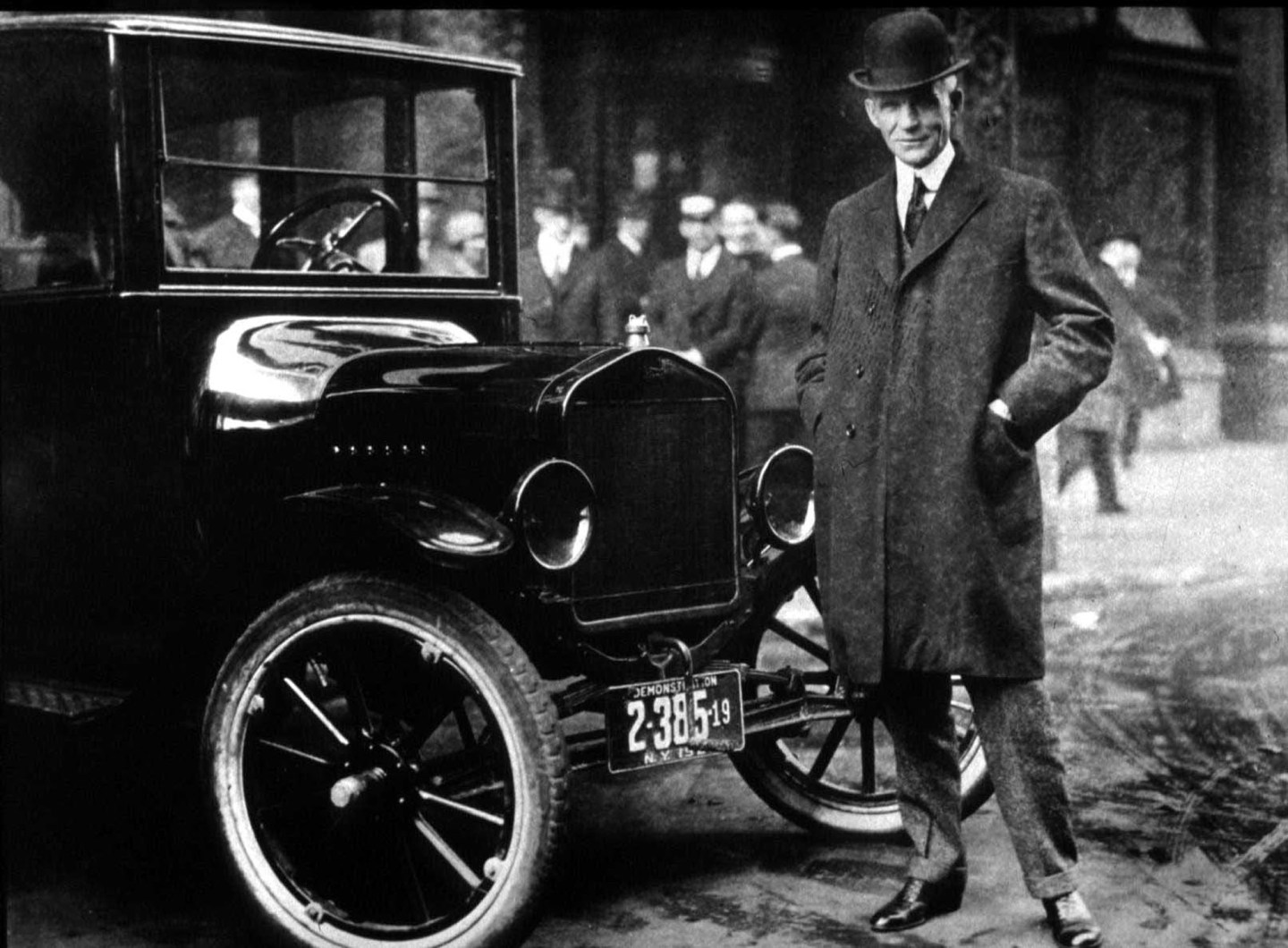
Henry Ford, Steve Jobs, William Boeing: These Fortune 500 founders are the American-born children of immigrants
PoliticsImmigration
Henry Ford, Steve Jobs, William Boeing: These Fortune 500 founders are the American-born children of immigrants
By Catherina GioinoJuly 1, 2026
10 hours ago
Russian President Vladimir Putin
EconomyRussia
It started with one viral influencer complaining about Russia’s economy. Now a record 60% of Russians are pessimistic about their country’s outlook
By Tristan BoveJune 30, 2026
23 hours ago
Image of colored bar charts with one being pushed up.
NewslettersEye on AI
AI is minting billion-dollar companies faster than before
By Beatrice NolanJune 30, 2026
24 hours ago
kean
PoliticsCongress
Tom Kean discloses depression diagnosis behind 4-month absence from Congress: ‘until you experience it yourself, it is difficult to fully understand’
By Mike Catalini, Joey Cappelletti and The Associated PressJune 30, 2026
24 hours ago

Most Popular

MacKenzie Scott alone accounted for one-third of America's $19.2 billion in megagifts last year
Success
MacKenzie Scott alone accounted for one-third of America's $19.2 billion in megagifts last year
By Sydney LakeJune 25, 2026
6 days ago
Philanthropy leader at Warren Buffett and Bill Gates’ Giving Pledge says children of billionaires are pushing them to give their wealth away faster
Success
Philanthropy leader at Warren Buffett and Bill Gates’ Giving Pledge says children of billionaires are pushing them to give their wealth away faster
By Preston ForeJune 27, 2026
4 days ago
Elon Musk on MacKenzie Scott giving away $26 billion of her fortune: 'Sadly,' it makes the world a worse place
Success
Elon Musk on MacKenzie Scott giving away $26 billion of her fortune: 'Sadly,' it makes the world a worse place
By Sydney LakeJune 29, 2026
2 days ago
As Big Tech showers employees with perks to win the talent war, Nvidia built a nearly $5 trillion company by making people pay for their own lunch
Big Tech
As Big Tech showers employees with perks to win the talent war, Nvidia built a nearly $5 trillion company by making people pay for their own lunch
By Marco Quiroz-GutierrezJuly 1, 2026
10 hours ago
The U.S. Army is opening military bases to private billions — here's why that changes everything for the next 250 years
Commentary
The U.S. Army is opening military bases to private billions — here's why that changes everything for the next 250 years
By Marc AndersenJune 30, 2026
1 day ago
The Supreme Court's birthright citizenship ruling hands the U.S. economy a $7.7 trillion win
Newsletters
The Supreme Court's birthright citizenship ruling hands the U.S. economy a $7.7 trillion win
By Diane BradyJuly 1, 2026
7 hours ago

© 2026 Fortune Media IP Limited. All Rights Reserved. Use of this site constitutes acceptance of our Terms of Use and Privacy Policy | CA Notice at Collection and Privacy Notice | Do Not Sell/Share My Personal Information
FORTUNE is a trademark of Fortune Media IP Limited, registered in the U.S. and other countries. FORTUNE may receive compensation for some links to products and services on this website. Offers may be subject to change without notice.