• Home
  • Latest
  • Fortune 500
  • Finance
  • Tech
  • Leadership
  • Lifestyle
  • Rankings
  • Multimedia

Trendingnow

1

Microsoft AI chief gives it 18 months—for all white-collar work to be automated by AI

2

The Bezos family just donated $100 million to help achieve one of Mayor Zohran Mamdani’s top campaign promises

3

The top foreign holders of U.S. debt may soon dump Treasury bonds and bring their money back home, potentially spiking borrowing costs

1

Microsoft AI chief gives it 18 months—for all white-collar work to be automated by AI

2

The Bezos family just donated $100 million to help achieve one of Mayor Zohran Mamdani’s top campaign promises

3

The top foreign holders of U.S. debt may soon dump Treasury bonds and bring their money back home, potentially spiking borrowing costs
CommentaryCoronavirus

How to think about COVID-19

By
Sandro Galea
Sandro Galea
Down Arrow Button Icon
By
Sandro Galea
Sandro Galea
Down Arrow Button Icon
February 28, 2020, 2:20 PM ET

Last month, the World Health Organization (WHO) declared the outbreak of respiratory disease caused by a novel coronavirus, recently named COVID-19, a public health emergency of international concern. In the U.S., the Secretary for Health and Human Services declared it a public health emergency for the country. 

Since it was first detected in Wuhan City, Hubei, China, COVID-19 has been found in about 40 countries. Over 80,000 cases have been identified globally, including nearly 3,000 deaths, a death toll higher than that of the 2003 SARS epidemic. The Centers for Disease Control and Prevention (CDC) just announced the US can expect to see new cases within its borders.

Inevitably, there is much fear about COVID-19. This has been reflected in the global economy, as markets react to the disease. Last Monday, the Dow Jones Industrial Average declined over 1,000 points, then slipped more than 800 points the next day. The London-based bank HSBC Holding PLC has lowered expectations for growth in its Asia markets, and Apple has announced the virus will stop the company from reaching its first quarter revenue targets.

Anxieties about COVID-19 have led to many responses, from the precautionary—such as the widespread purchasing of respiratory masks—to the cruelly counterproductive; namely, a willingness to scapegoat people of Chinese descent.

Such scapegoating is, sadly, an old story. When unexpected, large-scale health challenges strike, especially infectious health challenges, the climate of fear and uncertainty can lead to a belief that some people are especially at fault for creating or spreading the disease. This stigmatization can produce new outbreaks—outbreaks of racism, xenophobia, hate.

Often, these outbreaks target groups which are already marginalized and treated as “the other.” When the Black Death struck Europe in the 14th century, for example, ignorance of the disease’s true cause led to increased persecution of Jews, beggars, and foreigners.

The past also teaches that when health challenges like COVID-19 occur, it is not uncommon for pseudoscience and misinformation about disease to spread, as anxiety clouds our judgment about the soundness of the information we consume.

Earlier eras brought quack cures like the belief that drinking vinegar could ward off the Black Death, or the mistaken conviction that cholera was caused by miasma, or “bad air.” Misinformation is hardly less prevalent in the era of “fake news” and “alternative facts,” where the basic standards of truth itself have become, to some, open to debate.

We now see misinformation about COVID-19 infection rates, and conspiracy theories about its cause. In this context, it is important that we take a measured approach to COVID-19, hewing closely to what we know about the disease, rejecting unfounded speculation, and not letting fear eclipse our common sense.

So, here is what we know. COVID-19 is an infectious respiratory disease, not unlike the flu. It spreads mainly through coughing and sneezing. Risk of infection remains low for anyone not in direct contact with a patient. Preventing the disease means embracing the same precautions used against other communicable diseases—hand washing, covering one’s mouth when one coughs, reaching out to a health care provider when feeling sick, and avoiding others if one is infected.

For an up-to-date look at the disease’s symptoms, how COVID-19 spreads, and steps for remaining healthy, visit the CDC’s website. Or join us at the Boston University School of Public Health on March 12, for a seminar on the disease, an event which will also be available via online livestream.

And what are we to do to respond to COVID-19?  What can workplaces and institutions do?  

First of all, the epidemiology of the epidemic is evolving and this answer will change as we know more, as patterns of disease become clearer in the US.   But broadly speaking measures of control are those that make sense for other common respiratory illness. 

Common sense precautions that may extend to limiting large assemblies of people and using distance working tools until the epidemic passes. We are not at that place yet in the U.S., and the next few days and weeks will be telling.

But we do know some things that we should do that will not change. Faced with sudden, large-scale diseases, there is a temptation to divide ourselves into “us” and “them,” to build barriers between the healthy and the sick, or those assumed to be at greater risk of infection.

Part of this comes from the reasonable necessity of quarantine and social distancing, which can indeed help control the spread of disease. But this approach assumes that there are groups that are likelier at risk and who are “dangerous” to others.

Such assumptions are simply wrong. Infectious disease know no boundaries and do not stop with personal identities. Even worse, such approaches result in a climate of fear stoking bigotry and divisiveness. These attitudes are dangerous. Not only do they not keep us healthy, they actively make us sicker.

COVID-19 is a public health threat, worthy of international concern. As individuals, we can take prudent steps to protect ourselves. As communities and nations, we can refuse to embrace stigma, and instead work collectively towards better health for all.

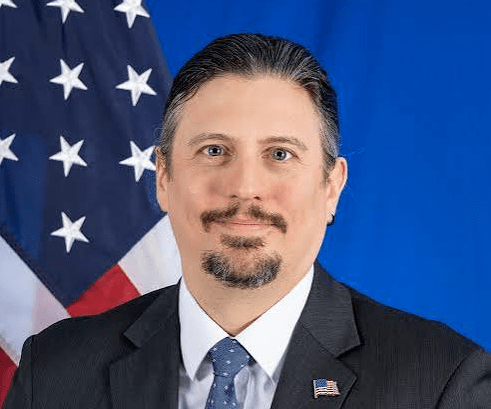
Sandro Galea, MD, DrPH, is Professor and Dean at the Boston University School of Public Health. His recent book is, Well: What we need to talk about when we talk about health. Follow him on Twitter: @sandrogalea
About the Author
By Sandro Galea
See full bioRight Arrow Button Icon

Latest in Commentary

Finance
Lorem ipsum dolor sit amet, consectetur adipiscing elit, sed do eiusmod tempor incididunt ut labore et dolore magna aliqua. Ut enim ad minim veniam
By Fortune Editors
October 20, 2025
Finance
Lorem ipsum dolor sit amet, consectetur adipiscing elit, sed do eiusmod tempor incididunt ut labore et dolore magna aliqua. Ut enim ad minim veniam
By Fortune Editors
October 20, 2025
Finance
Lorem ipsum dolor sit amet, consectetur adipiscing elit, sed do eiusmod tempor incididunt ut labore et dolore magna aliqua. Ut enim ad minim veniam
By Fortune Editors
October 20, 2025
Finance
Lorem ipsum dolor sit amet, consectetur adipiscing elit, sed do eiusmod tempor incididunt ut labore et dolore magna aliqua. Ut enim ad minim veniam
By Fortune Editors
October 20, 2025
Finance
Lorem ipsum dolor sit amet, consectetur adipiscing elit, sed do eiusmod tempor incididunt ut labore et dolore magna aliqua. Ut enim ad minim veniam
By Fortune Editors
October 20, 2025
Finance
Lorem ipsum dolor sit amet, consectetur adipiscing elit, sed do eiusmod tempor incididunt ut labore et dolore magna aliqua. Ut enim ad minim veniam
By Fortune Editors
October 20, 2025

Most Popular

Finance
Lorem ipsum dolor sit amet, consectetur adipiscing elit, sed do eiusmod tempor incididunt ut labore et dolore magna aliqua. Ut enim ad minim veniam
By Fortune Editors
October 20, 2025
Finance
Lorem ipsum dolor sit amet, consectetur adipiscing elit, sed do eiusmod tempor incididunt ut labore et dolore magna aliqua. Ut enim ad minim veniam
By Fortune Editors
October 20, 2025
Finance
Lorem ipsum dolor sit amet, consectetur adipiscing elit, sed do eiusmod tempor incididunt ut labore et dolore magna aliqua. Ut enim ad minim veniam
By Fortune Editors
October 20, 2025
Finance
Lorem ipsum dolor sit amet, consectetur adipiscing elit, sed do eiusmod tempor incididunt ut labore et dolore magna aliqua. Ut enim ad minim veniam
By Fortune Editors
October 20, 2025
Finance
Lorem ipsum dolor sit amet, consectetur adipiscing elit, sed do eiusmod tempor incididunt ut labore et dolore magna aliqua. Ut enim ad minim veniam
By Fortune Editors
October 20, 2025
Finance
Lorem ipsum dolor sit amet, consectetur adipiscing elit, sed do eiusmod tempor incididunt ut labore et dolore magna aliqua. Ut enim ad minim veniam
By Fortune Editors
October 20, 2025
Fortune Secondary Logo
Rankings
  • 100 Best Companies
  • Fortune 500
  • Global 500
  • Fortune 500 Europe
  • Most Powerful Women
  • World's Most Admired Companies
  • See All Rankings
  • Lists Calendar
Sections
  • Finance
  • Fortune Crypto
  • Features
  • Leadership
  • Health
  • Commentary
  • Success
  • Retail
  • Mpw
  • Tech
  • Lifestyle
  • CEO Initiative
  • Asia
  • Politics
  • Conferences
  • Europe
  • Newsletters
  • Personal Finance
  • Environment
  • Magazine
  • Education
Customer Support
  • Frequently Asked Questions
  • Customer Service Portal
  • Privacy Policy
  • Terms Of Use
  • Single Issues For Purchase
  • International Print
Commercial Services
  • Advertising
  • Fortune Brand Studio
  • Fortune Analytics
  • Fortune Conferences
  • Business Development
  • Group Subscriptions
About Us
  • About Us
  • Press Center
  • Work At Fortune
  • Terms And Conditions
  • Site Map
  • About Us
  • Press Center
  • Work At Fortune
  • Terms And Conditions
  • Site Map
  • Facebook icon
  • Twitter icon
  • LinkedIn icon
  • Instagram icon
  • Pinterest icon

Latest in Commentary

murdochs
CommentaryMedia
OpenAI paid $100 million for a talk show. James Murdoch is eyeing an even bigger deal. The hot new asset class is humanity
By Lin CherryMay 17, 2026
15 hours ago
dennis
CommentaryAI agents
Freshworks CEO: why agile enterprises are winning the AI race — and what they did differently
By Dennis WoodsideMay 17, 2026
15 hours ago
Mary Moreland-Abbott Executive Vice President of Human Resources.
CommentaryRetirement
Gen X is the most indebted generation in America. Their employers can fix that
By Mary MorelandMay 17, 2026
17 hours ago
liberman
Commentarystart-ups
We watched social media concentrate. The same thing is happening in AI, only at a deeper layer
By David Liberman and Daniil LibermanMay 16, 2026
2 days ago
olivier
CommentaryAnthropic
I’ve been studying Big Tech for a long time. What just happened with Anthropic and the Pentagon terrifies me
By Olivier SylvainMay 16, 2026
2 days ago
lawyer
CommentaryLaw
Would you hire the lawyer who just got sanctioned for using AI?
By Alexandra SmythMay 16, 2026
2 days ago

Most Popular

Microsoft AI chief gives it 18 months—for all white-collar work to be automated by AI
AI
Microsoft AI chief gives it 18 months—for all white-collar work to be automated by AI
By Jake AngeloMay 16, 2026
2 days ago
The Bezos family just donated $100 million to help achieve one of Mayor Zohran Mamdani’s top campaign promises
Politics
The Bezos family just donated $100 million to help achieve one of Mayor Zohran Mamdani’s top campaign promises
By Jake AngeloMay 12, 2026
5 days ago
The top foreign holders of U.S. debt may soon dump Treasury bonds and bring their money back home, potentially spiking borrowing costs
Economy
The top foreign holders of U.S. debt may soon dump Treasury bonds and bring their money back home, potentially spiking borrowing costs
By Jason MaMay 17, 2026
10 hours ago
Former top Russian official admits the country is over Putin and can 'imagine a future without him' — even elites bail as Kremlin seizes their assets 
Politics
Former top Russian official admits the country is over Putin and can 'imagine a future without him' — even elites bail as Kremlin seizes their assets 
By Jason MaMay 16, 2026
1 day ago
'No one was coming to save me': How Reese Witherspoon built a $900 million company from a problem Hollywood wouldn't fix
Success
'No one was coming to save me': How Reese Witherspoon built a $900 million company from a problem Hollywood wouldn't fix
By Sydney LakeMay 17, 2026
17 hours ago
SpaceX heads into a record-shattering IPO with the 'deepest moat that exists today' as investors vow to 'never bet against Elon'
Innovation
SpaceX heads into a record-shattering IPO with the 'deepest moat that exists today' as investors vow to 'never bet against Elon'
By Jason MaMay 16, 2026
1 day ago

© 2026 Fortune Media IP Limited. All Rights Reserved. Use of this site constitutes acceptance of our Terms of Use and Privacy Policy | CA Notice at Collection and Privacy Notice | Do Not Sell/Share My Personal Information
FORTUNE is a trademark of Fortune Media IP Limited, registered in the U.S. and other countries. FORTUNE may receive compensation for some links to products and services on this website. Offers may be subject to change without notice.