• Home
  • Latest
  • Fortune 500
  • Finance
  • Tech
  • Leadership
  • Lifestyle
  • Rankings
  • Multimedia

Trendingnow

1

As Big Tech showers employees with perks to win the talent war, Nvidia built a nearly $5 trillion company by making people pay for their own lunch

2

MacKenzie Scott alone accounted for one-third of America's $19.2 billion in megagifts last year

3

The Supreme Court's birthright citizenship ruling hands the U.S. economy a $7.7 trillion win

1

As Big Tech showers employees with perks to win the talent war, Nvidia built a nearly $5 trillion company by making people pay for their own lunch

2

MacKenzie Scott alone accounted for one-third of America's $19.2 billion in megagifts last year

3

The Supreme Court's birthright citizenship ruling hands the U.S. economy a $7.7 trillion win
Commentarypolice violence

Why police violence against Black people persists—and what can be done about it

By
David A. Harris
David A. Harris
Down Arrow Button Icon
By
David A. Harris
David A. Harris
Down Arrow Button Icon
June 30, 2020, 7:00 PM ET
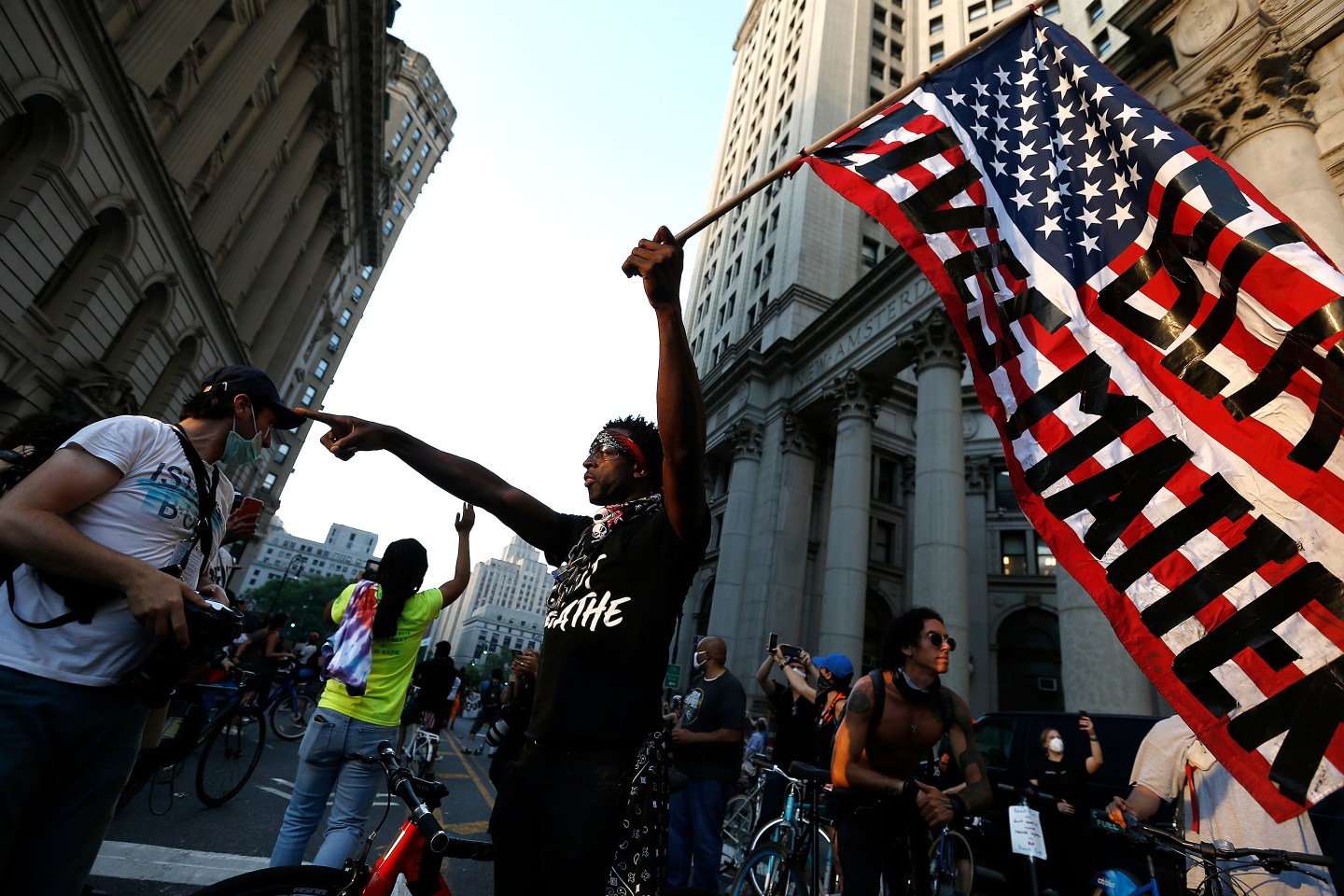
Black Lives Matter protest
Demonstrators march around City Hall demanding that the city defund the NYPD, in New York City US on June 23, 2020. Mayor Bill de Blasio pledged to divert part of the NYPD's 6 billion dollar budget to social services. The proposed action is slated to be finalized by July 1, 2020. (Photo by John Lamparski/NurPhoto via Getty Images)John Lamparski—NurPhoto via Getty Images
Add Fortune on Google for similar content.

We hear the call in demonstrations taking place in big cities and small towns across the country: “Say their names!” “George Floyd!”

And then, “Breonna Taylor” in Louisville. And “Rayshard Brooks” in Atlanta.

And Tamir Rice, and Philando Castile, and Eric Garner, and Stephon Clark, and Laquan McDonald. And so many more.

Beyond the individual deaths, the sheer length of the list of Black people killed by police really stuns. It shows that the central questions should be not just what happened to any individual victim, but why did it happen? And why does it keep happening, across the country, year after year? 

The two main drivers of this situation are the twin toxins of race and fear.

Race runs through the American psyche in deep ways, all rooted to slavery, white supremacy, and Jim Crow. Decades ago, research established that the dominant American stereotypes of Black people cast them as criminal, dangerous, and violent. But the past 20 years of work by social psychologists has yielded insights that might help explain why police are quicker to use deadly force in an encounter with a Black person.

It’s now been documented that when people see Black faces, their visual systems process things differently. They become quicker to see (or think they see) weapons, and become more likely to think about crime. Similarly, when scientists prime experimental subjects with suggestions of crime and violence and then show them pictures of groups of people, the subjects’ eyes move automatically to the Black faces. Blackness, the researchers said, operates as a “visual tuning device.”

Similarly, other research shows that when people see Black children, they tend to see them as older, larger, more muscular, and more threatening than white children, uniformly overestimating their age and bulk. For example, the Cleveland officer who shot 12-year-old Tamir Rice to death fewer than three seconds after driving up next to him described him as approximately 18 years old and 185 pounds.

Add to this the poison of fear—on both sides of any police encounter. 

Anyone who speaks with African Americans about police learns that, for most of them, they have either personally experienced or heard repeatedly from family and friends stories of demeaning treatment, physical abuse, guns pulled, or “less than lethal” weapons used on them, often for small matters or nothing at all. Black parents, knowing that a traffic stop can morph into a deadly encounter in a heartbeat, teach their children how to survive these incidents in “the talk” given to every child of color before parents allow them to drive. For some Black Americans, the threat and danger posed by police in even the most routine matters means they hesitate to call the police when most white people would without hesitation.

But why would there be fear on the part of the police? After all, they display bravery and physical courage all the time; as former President Barack Obama said, they are the ones who “run toward the danger.” Most of the rest of us run away.

This is all true. But the presence of bravery does not mean fear disappears. In fact, present day police training and police culture do much to amp up fear among our officers.

From the academy onward, officers learn from trainers, speakers, and veterans that every encounter with a civilian carries the potential for lethal violence. Not just an extremely small percentage of such encounters, as I documented in my book A City Divided, but every one of them. Academy, in-service, and private training heighten the sense of lethal danger by showing recruits and officers countless videos from squad car dashcam recorders of police officers murdered and assaulted. These videos capture events that are (thankfully) exceedingly rare, and could serve as useful training tools concerning tactical mistakes. But the sheer volume of what trainers show them sends a different message: Everywhere, all the time, civilians will try to kill, maim, and assault you. 

The response to this has been to cultivate the idea of the warrior officer. The warrior is ready, at all times, to respond to the constant lethal threats, present everywhere, with righteous violence. It’s a war; we are the soldiers. 

It is no wonder that when the police perceive a threat, they often respond with violence; it is also not surprising that sometimes, even if the officer’s fear was real, the threat was not. This helps to explain why, in my years of research on police conduct and use of force, the phrase “I was in fear for my life” comes up so often in cases in which police shoot people who turn out to possess no weapons.

There are ways we can move forward from this dangerous, tragic state of affairs and create an environment of real public safety that actually serves and protects everyone.

First, don’t abolish the police. Instead, unbundle what tasks police now do, and ask which of those tasks actually need a police response. A report of a gunfight? Yes. A person in mental health crisis, or an issue with a homeless person or a drug overdose? Mobile units of other professionals, like social workers or mental health counselors, should come to the scene. Not just the funding, but the responsibility, for these issues should be taken from police and given to others more suited.

Second, we must have greater accountability for police misconduct, and transparency about misconduct’s consequences. Police departments are like many other organizations: A small percentage of workers cause a large percentage of the problems. The problem is not, or not only, those “bad apples”; it’s the apple barrel—the department as a whole—that tolerates them and allows them to remain, tainting the entire organization and rotting its culture.

Third, if union contracts make it too difficult to get rid of those who don’t belong in uniform, that is the fault of not just the unions but the cities and political leaders that negotiated those agreements. Those agreements must change. 

Fourth, use of force law must change. The U.S. Supreme Court and some state laws set the bar far too low, allowing more use of force, even deadly force, than is necessary. This can be done through changes in state law, and even by policy in individual departments. 

Unless we are willing to look beyond individual cases, to ask why we keep hearing about unnecessary deaths at police hands, all we’ll get are more names to add to our already horrifying long list. And no one wants that.

David A. Harris is Semenko chair at the University of Pittsburgh School of Law, author of A City Divided: Race, Fear, and the Law in Police Confrontations, and host of the Criminal Injustice podcast.

About the Author
By David A. Harris
See full bioRight Arrow Button Icon
Add Fortune on Google for similar content.

Latest in Commentary

Finance
Lorem ipsum dolor sit amet, consectetur adipiscing elit, sed do eiusmod tempor incididunt ut labore et dolore magna aliqua. Ut enim ad minim veniam
By Fortune Editors
October 20, 2025
Finance
Lorem ipsum dolor sit amet, consectetur adipiscing elit, sed do eiusmod tempor incididunt ut labore et dolore magna aliqua. Ut enim ad minim veniam
By Fortune Editors
October 20, 2025
Finance
Lorem ipsum dolor sit amet, consectetur adipiscing elit, sed do eiusmod tempor incididunt ut labore et dolore magna aliqua. Ut enim ad minim veniam
By Fortune Editors
October 20, 2025
Finance
Lorem ipsum dolor sit amet, consectetur adipiscing elit, sed do eiusmod tempor incididunt ut labore et dolore magna aliqua. Ut enim ad minim veniam
By Fortune Editors
October 20, 2025
Finance
Lorem ipsum dolor sit amet, consectetur adipiscing elit, sed do eiusmod tempor incididunt ut labore et dolore magna aliqua. Ut enim ad minim veniam
By Fortune Editors
October 20, 2025
Finance
Lorem ipsum dolor sit amet, consectetur adipiscing elit, sed do eiusmod tempor incididunt ut labore et dolore magna aliqua. Ut enim ad minim veniam
By Fortune Editors
October 20, 2025

Most Popular

Finance
Lorem ipsum dolor sit amet, consectetur adipiscing elit, sed do eiusmod tempor incididunt ut labore et dolore magna aliqua. Ut enim ad minim veniam
By Fortune Editors
October 20, 2025
Finance
Lorem ipsum dolor sit amet, consectetur adipiscing elit, sed do eiusmod tempor incididunt ut labore et dolore magna aliqua. Ut enim ad minim veniam
By Fortune Editors
October 20, 2025
Finance
Lorem ipsum dolor sit amet, consectetur adipiscing elit, sed do eiusmod tempor incididunt ut labore et dolore magna aliqua. Ut enim ad minim veniam
By Fortune Editors
October 20, 2025
Finance
Lorem ipsum dolor sit amet, consectetur adipiscing elit, sed do eiusmod tempor incididunt ut labore et dolore magna aliqua. Ut enim ad minim veniam
By Fortune Editors
October 20, 2025
Finance
Lorem ipsum dolor sit amet, consectetur adipiscing elit, sed do eiusmod tempor incididunt ut labore et dolore magna aliqua. Ut enim ad minim veniam
By Fortune Editors
October 20, 2025
Finance
Lorem ipsum dolor sit amet, consectetur adipiscing elit, sed do eiusmod tempor incididunt ut labore et dolore magna aliqua. Ut enim ad minim veniam
By Fortune Editors
October 20, 2025
Fortune Secondary Logo
Rankings
  • 100 Best Companies
  • Fortune 500
  • Global 500
  • Fortune 500 Europe
  • Most Powerful Women
  • World's Most Admired Companies
  • See All Rankings
  • Lists Calendar
Sections
  • Finance
  • Fortune Crypto
  • Features
  • Leadership
  • Health
  • Commentary
  • Success
  • Retail
  • Mpw
  • Tech
  • Lifestyle
  • CEO Initiative
  • Asia
  • Politics
  • Conferences
  • Europe
  • Newsletters
  • Personal Finance
  • Environment
  • Magazine
  • Education
Customer Support
  • Frequently Asked Questions
  • Customer Service Portal
  • Privacy Policy
  • Terms Of Use
  • Single Issues For Purchase
  • International Print
Commercial Services
  • Advertising
  • Fortune Brand Studio
  • Fortune Analytics
  • Fortune Conferences
  • Business Development
  • Group Subscriptions
About Us
  • About Us
  • Press Center
  • Work At Fortune
  • Terms And Conditions
  • Site Map
  • About Us
  • Press Center
  • Work At Fortune
  • Terms And Conditions
  • Site Map
  • Facebook icon
  • Twitter icon
  • LinkedIn icon
  • Instagram icon
  • Pinterest icon

Latest in Commentary

senate
CommentaryCongress
One rare bipartisan AI bill is moving through Congress. Here’s why it deserves to pass
By Neil Björkman and Betsy BrewerJuly 1, 2026
19 hours ago
I know how Gen Z can survive the ‘jobpocalypse’ because I built an AI company — in 2015
CommentaryCareers
I know how Gen Z can survive the ‘jobpocalypse’ because I built an AI company — in 2015
By Jeremy FainJuly 1, 2026
20 hours ago
mr
Commentary250 Years of Innovation
America needs 3.8 million manufacturing workers. This CEO has a blueprint to find them
By Mark RayfieldJuly 1, 2026
20 hours ago
usa
Commentary250 Years of Innovation
America at 250: why the Constitution was built to restrain government, not celebrate majority rule
By Steve H. HankeJuly 1, 2026
20 hours ago
t
CommentaryMedia
Netflix could turn NBC into its biggest bet yet — and this time, the math actually works
By Jeffrey Sonnenfeld and Steven TianJune 30, 2026
2 days ago
wb
CommentaryLeadership
I grew BDO from $600 million to $3.4 billion. Here’s the 3-part formula that made it possible
By Wayne BersonJune 30, 2026
2 days ago

Most Popular

As Big Tech showers employees with perks to win the talent war, Nvidia built a nearly $5 trillion company by making people pay for their own lunch
Big Tech
As Big Tech showers employees with perks to win the talent war, Nvidia built a nearly $5 trillion company by making people pay for their own lunch
By Marco Quiroz-GutierrezJuly 1, 2026
23 hours ago
MacKenzie Scott alone accounted for one-third of America's $19.2 billion in megagifts last year
Success
MacKenzie Scott alone accounted for one-third of America's $19.2 billion in megagifts last year
By Sydney LakeJune 25, 2026
7 days ago
The Supreme Court's birthright citizenship ruling hands the U.S. economy a $7.7 trillion win
Newsletters
The Supreme Court's birthright citizenship ruling hands the U.S. economy a $7.7 trillion win
By Diane BradyJuly 1, 2026
21 hours ago
Current price of oil as of July 1, 2026
Personal Finance
Current price of oil as of July 1, 2026
By Joseph HostetlerJuly 1, 2026
18 hours ago
Philanthropy leader at Warren Buffett and Bill Gates’ Giving Pledge says children of billionaires are pushing them to give their wealth away faster
Success
Philanthropy leader at Warren Buffett and Bill Gates’ Giving Pledge says children of billionaires are pushing them to give their wealth away faster
By Preston ForeJune 27, 2026
5 days ago
Elon Musk on MacKenzie Scott giving away $26 billion of her fortune: 'Sadly,' it makes the world a worse place
Success
Elon Musk on MacKenzie Scott giving away $26 billion of her fortune: 'Sadly,' it makes the world a worse place
By Sydney LakeJune 29, 2026
3 days ago

© 2026 Fortune Media IP Limited. All Rights Reserved. Use of this site constitutes acceptance of our Terms of Use and Privacy Policy | CA Notice at Collection and Privacy Notice | Do Not Sell/Share My Personal Information
FORTUNE is a trademark of Fortune Media IP Limited, registered in the U.S. and other countries. FORTUNE may receive compensation for some links to products and services on this website. Offers may be subject to change without notice.