• Home
  • Latest
  • Fortune 500
  • Finance
  • Tech
  • Leadership
  • Lifestyle
  • Rankings
  • Multimedia

Trendingnow

1

Microsoft AI chief gives it 18 months—for all white-collar work to be automated by AI

2

Former top Russian official admits the country is over Putin and can 'imagine a future without him' — even elites bail as Kremlin seizes their assets 

3

The Bezos family just donated $100 million to help achieve one of Mayor Zohran Mamdani’s top campaign promises

1

Microsoft AI chief gives it 18 months—for all white-collar work to be automated by AI

2

Former top Russian official admits the country is over Putin and can 'imagine a future without him' — even elites bail as Kremlin seizes their assets 

3

The Bezos family just donated $100 million to help achieve one of Mayor Zohran Mamdani’s top campaign promises
Commentarynonprofits

Why I’m giving up my board seat to make room for someone from an underrepresented community

By
Tim Disney
Tim Disney
Down Arrow Button Icon
By
Tim Disney
Tim Disney
Down Arrow Button Icon
September 21, 2020, 5:00 AM ET
fortune logo icon (black)

The overriding imperative of not-for-profit governance is fundraising. At both the board and managerial levels, nothing matters more, or occupies more time, energy, or resources—not even the ostensible “mission” of the organization. This is the game not-for-profits must play to survive and execute their work. To play it poorly, or not at all, is to commit institutional malpractice. But succeeding often comes at a terrible cost.

As board chair of California Institute of the Arts (CalArts), and as a board member of Southern California Institute of Architecture, I have participated in countless discussions about fundraising. Two things have become crystal clear to me: Charitable giving is inevitably transactional, and it takes about as much effort to bring in a $50,000 gift as a $50 million gift. 

As a general rule, we expect to get 90% or more of our gifts from 10% or less of our funders. Cold logic therefore dictates that we direct the vast majority of our fundraising efforts toward this small group of big donors, and bend our operational priorities to meet their preferences. 

Very often the most effective way to attract these donors is to offer them seats on our board. Not surprisingly, these folks look more like me—older, whiter, and richer—than the communities we serve. This is a similar dynamic to one seen in corporate America. Board seats tend to go to those who have advanced to positions of power though the familiar pathways of elite schooling and social connections. Despite promises to diversify, nonprofits and corporate boards have largely failed. It’s a feedback loop that leads nowhere. In the end, money trumps all. 

Put simply, we discriminate on the basis of money, and in America, to do so is largely to discriminate on the basis of race. The wealth gap in this country is grotesque, and highly correlated with race. The net worth of the average white family is fully ten times greater than that of the average Black family. As governing boards, we are structures of power that perpetuate an immoral racial bias. We are instruments of systemic racism. This is the terrible cost to which I refer.

The vast majority of charitable donors bring only good intent to their giving and board service. To a person, my colleagues are kind, generous, and decent people who do what they do for the best of reasons, and much good comes of their efforts. We must move past intention and expose the stubborn structures that block real change. 

At the colleges where I serve, we urge our students to manifest “agency” in their lives and work. But as institutions, there is nothing we would rather do than secure a wealthy father figure to rescue us with a giant pile of money and direct us on how to use it. The hypocrisy of this is no longer tolerable.

We will not solve this problem by adding a few “diversity picks” to our boards or participating in implicit bias training sessions. I believe we need to fundamentally reform our governing structures and giving practices.

To start, I recommend four specific courses of action to achieve a more equitable model of governance and giving:

1. Not-for-profit boards should initiate the reform process by separating fundraising from governance and implement new structures in which all stakeholders are entitled to significant representation. While funders are certainly an important stakeholder group and ought to be represented, they should no longer dominate the governing entities.

2. Not-for-profit boards should undertake clear-eyed and thorough audits of their operations and internal structures with a focus on equitable access and inclusion for underrepresented groups, especially for those who are Black, Indigenous, and people of color. Members must insist on reform where problems are found. Boards must lead by example.

3. Not-for-profits should aim to become less reliant on the largesse of a handful of large donors. This may mean significant changes to business models, developing ancillary business lines, and building dramatically broader bases of small donor support. 

4. Donors should cease placing conditions on their gifts and instead support general operating budgets or a menu of giving priorities defined by the institutions. Conversely, not-for-profits must resist contorting their operations at the expense of their beneficiaries in order to receive gifts.

I personally commit to giving up my board seats and chairmanship in favor of new people, ideally people of color, who have previously not had access to such positions. I will step aside as soon as the boards identify successors who are ready to serve. I also commit to continuing my giving to both institutions for five years at the level that I am currently giving.

Philanthropy is a beautiful thing. I am for more of it, not less, especially at this moment of acute need. But one of the more pernicious effects of extreme wealth concentration is the stranglehold a small number of super wealthy people have come to exert over the cultural and civic life of this country through not-for-profit giving and governance. It is time we dismantle these structures. We should ask ourselves if we are truly giving if we are expecting something in return.

Tim Disney is chair of the CalArts board of trustees and board member at the Southern California Institute of Architecture.

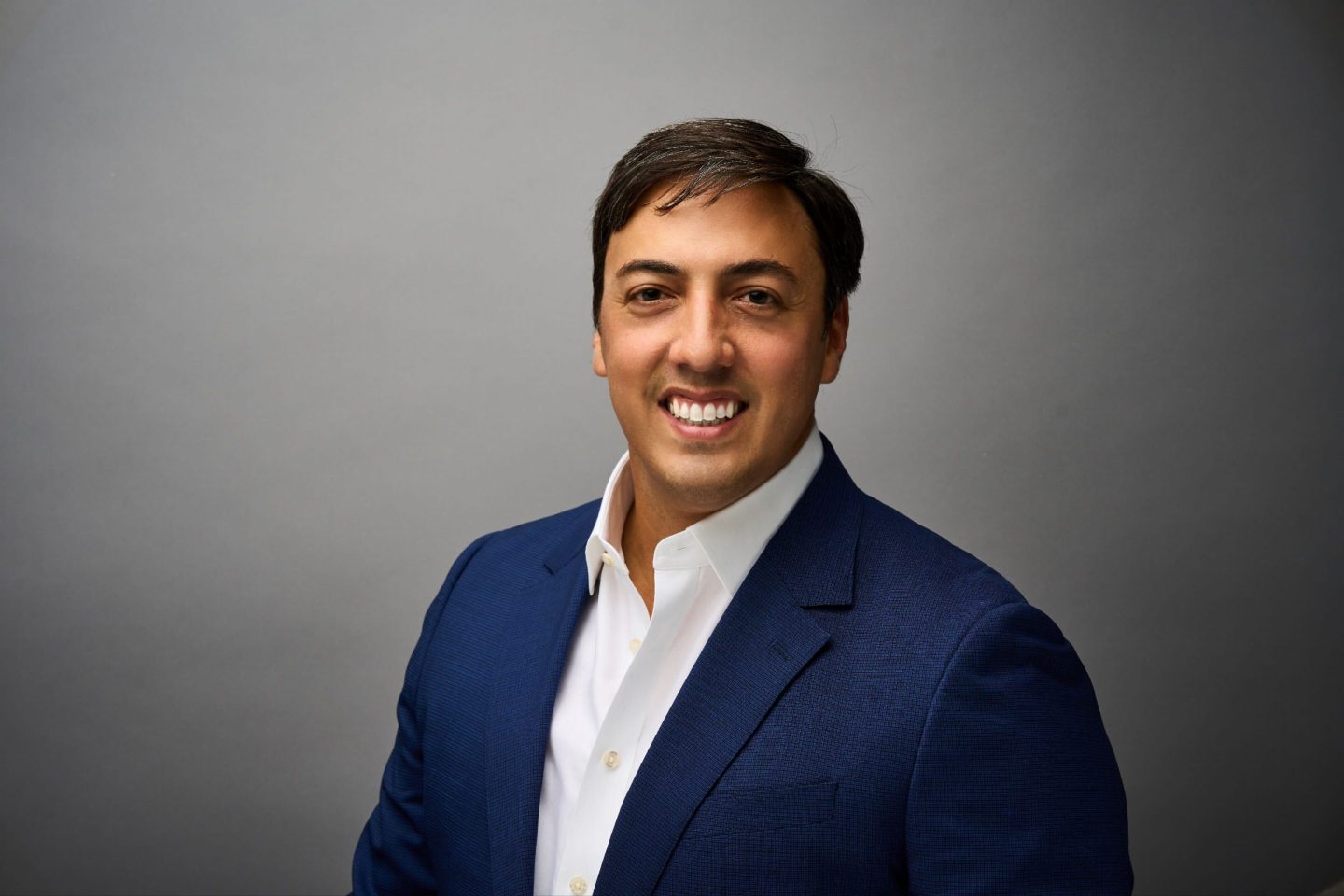
About the Author
By Tim Disney
See full bioRight Arrow Button Icon

Latest in Commentary

Finance
Lorem ipsum dolor sit amet, consectetur adipiscing elit, sed do eiusmod tempor incididunt ut labore et dolore magna aliqua. Ut enim ad minim veniam
By Fortune Editors
October 20, 2025
Finance
Lorem ipsum dolor sit amet, consectetur adipiscing elit, sed do eiusmod tempor incididunt ut labore et dolore magna aliqua. Ut enim ad minim veniam
By Fortune Editors
October 20, 2025
Finance
Lorem ipsum dolor sit amet, consectetur adipiscing elit, sed do eiusmod tempor incididunt ut labore et dolore magna aliqua. Ut enim ad minim veniam
By Fortune Editors
October 20, 2025
Finance
Lorem ipsum dolor sit amet, consectetur adipiscing elit, sed do eiusmod tempor incididunt ut labore et dolore magna aliqua. Ut enim ad minim veniam
By Fortune Editors
October 20, 2025
Finance
Lorem ipsum dolor sit amet, consectetur adipiscing elit, sed do eiusmod tempor incididunt ut labore et dolore magna aliqua. Ut enim ad minim veniam
By Fortune Editors
October 20, 2025
Finance
Lorem ipsum dolor sit amet, consectetur adipiscing elit, sed do eiusmod tempor incididunt ut labore et dolore magna aliqua. Ut enim ad minim veniam
By Fortune Editors
October 20, 2025

Most Popular

Finance
Lorem ipsum dolor sit amet, consectetur adipiscing elit, sed do eiusmod tempor incididunt ut labore et dolore magna aliqua. Ut enim ad minim veniam
By Fortune Editors
October 20, 2025
Finance
Lorem ipsum dolor sit amet, consectetur adipiscing elit, sed do eiusmod tempor incididunt ut labore et dolore magna aliqua. Ut enim ad minim veniam
By Fortune Editors
October 20, 2025
Finance
Lorem ipsum dolor sit amet, consectetur adipiscing elit, sed do eiusmod tempor incididunt ut labore et dolore magna aliqua. Ut enim ad minim veniam
By Fortune Editors
October 20, 2025
Finance
Lorem ipsum dolor sit amet, consectetur adipiscing elit, sed do eiusmod tempor incididunt ut labore et dolore magna aliqua. Ut enim ad minim veniam
By Fortune Editors
October 20, 2025
Finance
Lorem ipsum dolor sit amet, consectetur adipiscing elit, sed do eiusmod tempor incididunt ut labore et dolore magna aliqua. Ut enim ad minim veniam
By Fortune Editors
October 20, 2025
Finance
Lorem ipsum dolor sit amet, consectetur adipiscing elit, sed do eiusmod tempor incididunt ut labore et dolore magna aliqua. Ut enim ad minim veniam
By Fortune Editors
October 20, 2025
Fortune Secondary Logo
Rankings
  • 100 Best Companies
  • Fortune 500
  • Global 500
  • Fortune 500 Europe
  • Most Powerful Women
  • World's Most Admired Companies
  • See All Rankings
  • Lists Calendar
Sections
  • Finance
  • Fortune Crypto
  • Features
  • Leadership
  • Health
  • Commentary
  • Success
  • Retail
  • Mpw
  • Tech
  • Lifestyle
  • CEO Initiative
  • Asia
  • Politics
  • Conferences
  • Europe
  • Newsletters
  • Personal Finance
  • Environment
  • Magazine
  • Education
Customer Support
  • Frequently Asked Questions
  • Customer Service Portal
  • Privacy Policy
  • Terms Of Use
  • Single Issues For Purchase
  • International Print
Commercial Services
  • Advertising
  • Fortune Brand Studio
  • Fortune Analytics
  • Fortune Conferences
  • Business Development
  • Group Subscriptions
About Us
  • About Us
  • Press Center
  • Work At Fortune
  • Terms And Conditions
  • Site Map
  • About Us
  • Press Center
  • Work At Fortune
  • Terms And Conditions
  • Site Map
  • Facebook icon
  • Twitter icon
  • LinkedIn icon
  • Instagram icon
  • Pinterest icon

Latest in Commentary

murdochs
CommentaryMedia
OpenAI paid $100 million for a talk show. James Murdoch is eyeing an even bigger deal. The hot new asset class is humanity
By Lin CherryMay 17, 2026
5 hours ago
dennis
CommentaryAI agents
Freshworks CEO: why agile enterprises are winning the AI race — and what they did differently
By Dennis WoodsideMay 17, 2026
6 hours ago
Mary Moreland-Abbott Executive Vice President of Human Resources.
CommentaryRetirement
Gen X is the most indebted generation in America. Their employers can fix that
By Mary MorelandMay 17, 2026
8 hours ago
liberman
Commentarystart-ups
We watched social media concentrate. The same thing is happening in AI, only at a deeper layer
By David Liberman and Daniil LibermanMay 16, 2026
1 day ago
olivier
CommentaryAnthropic
I’ve been studying Big Tech for a long time. What just happened with Anthropic and the Pentagon terrifies me
By Olivier SylvainMay 16, 2026
1 day ago
lawyer
CommentaryLaw
Would you hire the lawyer who just got sanctioned for using AI?
By Alexandra SmythMay 16, 2026
1 day ago

Most Popular

Microsoft AI chief gives it 18 months—for all white-collar work to be automated by AI
AI
Microsoft AI chief gives it 18 months—for all white-collar work to be automated by AI
By Jake AngeloMay 16, 2026
1 day ago
Former top Russian official admits the country is over Putin and can 'imagine a future without him' — even elites bail as Kremlin seizes their assets 
Politics
Former top Russian official admits the country is over Putin and can 'imagine a future without him' — even elites bail as Kremlin seizes their assets 
By Jason MaMay 16, 2026
20 hours ago
The Bezos family just donated $100 million to help achieve one of Mayor Zohran Mamdani’s top campaign promises
Politics
The Bezos family just donated $100 million to help achieve one of Mayor Zohran Mamdani’s top campaign promises
By Jake AngeloMay 12, 2026
5 days ago
SpaceX heads into a record-shattering IPO with the 'deepest moat that exists today' as investors vow to 'never bet against Elon'
Innovation
SpaceX heads into a record-shattering IPO with the 'deepest moat that exists today' as investors vow to 'never bet against Elon'
By Jason MaMay 16, 2026
1 day ago
Oil markets could be a month away from the moment of truth. Brace for a 'non-linear' price spike and panic buying, analysts warn
Energy
Oil markets could be a month away from the moment of truth. Brace for a 'non-linear' price spike and panic buying, analysts warn
By Jason MaMay 16, 2026
23 hours ago
‘You’re not a hero, you’re a liability’: Shark Tank’s Kevin O’Leary warns Gen Z founders to stop glorifying hustle culture
Future of Work
‘You’re not a hero, you’re a liability’: Shark Tank’s Kevin O’Leary warns Gen Z founders to stop glorifying hustle culture
By Jacqueline MunisMay 16, 2026
1 day ago

© 2026 Fortune Media IP Limited. All Rights Reserved. Use of this site constitutes acceptance of our Terms of Use and Privacy Policy | CA Notice at Collection and Privacy Notice | Do Not Sell/Share My Personal Information
FORTUNE is a trademark of Fortune Media IP Limited, registered in the U.S. and other countries. FORTUNE may receive compensation for some links to products and services on this website. Offers may be subject to change without notice.