• Home
  • Latest
  • Fortune 500
  • Finance
  • Tech
  • Leadership
  • Lifestyle
  • Rankings
  • Multimedia

Trendingnow

1

MacKenzie Scott alone accounted for one-third of America's $19.2 billion in megagifts last year

2

As Big Tech showers employees with perks to win the talent war, Nvidia built a nearly $5 trillion company by making people pay for their own lunch

3

Philanthropy leader at Warren Buffett and Bill Gates’ Giving Pledge says children of billionaires are pushing them to give their wealth away faster

1

MacKenzie Scott alone accounted for one-third of America's $19.2 billion in megagifts last year

2

As Big Tech showers employees with perks to win the talent war, Nvidia built a nearly $5 trillion company by making people pay for their own lunch

3

Philanthropy leader at Warren Buffett and Bill Gates’ Giving Pledge says children of billionaires are pushing them to give their wealth away faster
CommentaryCoronavirus

Getting to the COVID-19 finish line: A drama in three acts

By
Rich Lesser
Rich Lesser
and
Marin Gjaja
Marin Gjaja
Down Arrow Button Icon
By
Rich Lesser
Rich Lesser
and
Marin Gjaja
Marin Gjaja
Down Arrow Button Icon
December 8, 2020, 10:49 AM ET
“We got the best early holiday present possible with the announcement of vaccines that are 95% efficacious,” write the authors. “Now we begin the hard work of managing the greatest logistical challenge of our time.”
“We got the best early holiday present possible with the announcement of vaccines that are 95% efficacious,” write the authors. “Now we begin the hard work of managing the greatest logistical challenge of our time.”Photo-Illustration by Fortune; Original photo: NASA/AFP via Getty Images
Add Fortune on Google for similar content.

Vaccines are coming, and there’s no question that they are our best hope. But simply waiting for their arrival puts us on the road to perdition. In the U.S., hospitalizations are almost double their spring peak, and daily deaths are at a seven-day average of more than 2,000—a high we haven’t seen since late April—and they’re continuing to rise. 

At this pace, at least 200,000 more Americans will die of COVID-19 by spring 2021, adding to the 290,000 deaths to date. Numbers like these bring us close to the losses suffered in the Civil War, our nation’s deadliest conflict, when 620,000 American soldiers died. 

It doesn’t have to be this way.

We think the story of the end of the COVID-19 pandemic must unfold in three acts. To save the most lives and defeat the virus swiftly, we need to understand the coming sequence—even if we will work on all three acts simultaneously. 

We managed to flatten the curve last spring, and we know far more about COVID-19 now than we did then. But flattening the curve in the middle of winter, when people can’t socialize outdoors, is a different story. And we now know that telling millions of young, healthy Americans to stay home indefinitely does not work when they’re at no more risk from COVID-19 than from the seasonal flu. 

These three acts require holistic and responsive strategies that allow us to fight the current crisis while creating a bridge to the vaccines that are months away from broad distribution.

Act I: Mastering “epinomics”

Act One is about balancing epidemiology and socioeconomics (what we call “epinomics”). An epinomic approach involves managing risk—and the recognition that we cannot eliminate it entirely. We need targeted public health measures that decrease risk with the lowest socioeconomic cost. For example, we know that schools are reasonably safe and extremely important. They should mostly be open. Dining out and traveling, however, come with much higher risk and are not as vital in the short term. These activities should be mostly curbed where prevalence is higher. 

For this act to succeed, Congress must pass urgent fiscal stimulus support to give citizens the food, income, and employment security needed to make these measures bearable and compliance possible.  We can also include measures to provide support for the most health-vulnerable populations.

Act II: Virus monitoring

Act Two is about scaling a robust monitoring system of testing and tracing to contain the virus—in particular, by undertaking more proactive screening testing of populations, rather than relying solely on reactive testing for likely cases. 

Once health measures flatten the virus, and as vaccine administration ramps up, public officials will be under enormous pressure to broadly open society and the economy—and citizens will be more than ready for looser restrictions. But it will still be cold in much of the U.S. in February, March, and April, and vaccines will not yet be readily available to much of the population. To manage at this phase, we’ll need strong testing capacity, which we are still sorely lacking in many regions.

We’ve made real improvements with diagnostic testing in cases where there are symptoms or presumed exposure, but we still don’t have enough rapid tests to randomly and broadly screen entire populations, such as nursing homes, schools, and prisons, so that we can find asymptomatic cases and act fast. And it’s not just about quantity of tests. Many of the rapid tests we have aren’t accurate enough, are even less accurate on kids, and need further approvals by the FDA.

We need national guidance and systemic support to get the necessary level of screening testing in long-term care facilities, schools, businesses, and across society at large. Our modeling suggests that regular screening testing of about 3% of the U.S. population would enable us to relax restrictions to the same degree we could by vaccinating about 40% of the population—which makes broader testing an incredibly important strategy while we wait to complete our vaccine rollout. 

Act III: The perfect rollout

Act Three is about completing the administration of vaccines. We got the best early holiday present possible with the announcement of vaccines that are 95% efficacious. Now we begin the hard work of managing the greatest logistical challenge of our time. We need to execute a flawless rollout and provide clear, transparent communications that drive uptake. At the same time, we need to motivate people to continue observing safety measures and maintain virus-monitoring systems until the supply of vaccine doses grows and we can build up to herd immunity in the spring and summer—and declare victory. 

* 

The challenge through these three acts is how to maintain vigilance. Some people may mostly be worrying about when they can get a vaccine and return to normal life—one where they can stop wearing a mask, travel without fear, and see their colleagues and friends in person. But there are 100 million health-vulnerable Americans and more than 50 million exposure-vulnerable workers on the front lines. The pandemic has so far been extremely regressive, impacting these populations at disproportionate rates. If, given what we now know, we fail to take the appropriate actions over these three acts to limit that regressive impact and protect these 150 million, shame on us.  

So what do we do right now? 

Traversing the three acts will take a coordinated, whole-society response. As eyes shift to vaccines, all stakeholders have critical roles to play and should take the following immediate actions:

The federal government must act immediately and pass a robust fiscal stimulus package to provide income, food, and employment security to protect those whose livelihoods are hampered by public health measures. Without it, we risk not only another recession but the loss of hundreds of thousands of additional lives. The government must also provide support to protect the health-vulnerable, further technology and testing capacity, as well as implementation guidelines to support screening testing and school reopening. Finally, it must continue to move at warp speed to complete reviews and deployment of vaccines.

State and local governments must get people to wear masks and progressively reduce those activities that best allow them to optimize the epinomics. They should provide the resources to help reopen schools safely. They must redouble their focus on ramping up screening testing and tracing capacity—especially in communities of color that have borne a disproportionate burden to date—so they are ready to contain the virus when we are at lower community prevalence at the end of Act I. Lastly, they need to prioritize the vaccination of populations that are most health- and exposure-vulnerable, while implementing robust strategies for administration, data collection, and communication. The federal government should explicitly dedicate some of its next stimulus package to support states and municipalities in these vaccination efforts. 

Business leaders must call on Congress to pass a stimulus bill and advocate for sensible public health measures. They should take extra steps to protect their employees and customers, in part by scaling their own virus-monitoring systems. They should also plan for providing time off for eligible employees to be able to get vaccinated, or sick leave for those who have side effects afterward. Globally, in geographies where their employees may have more difficulty accessing vaccines, they can play a role in securing vaccine supply for the communities in which they operate. 

Citizens must wear masks and continue to limit the size, frequency, and duration of gatherings. They should tightly manage an “interactions budget” and only expand it as the virus and public health measures pull back. They should participate in screening testing and support tracing and quarantining efforts, and they should seek access to vaccines as soon as they are eligible. 

We have been limping along on the road to perdition. This is our last chance to take the off-ramp to the finish line. Let’s not waste it. 

Rich Lesser is president and CEO of Boston Consulting Group. Marin Gjaja is a Boston Consulting Group managing director and senior partner and global COVID response leader.

About the Authors
By Rich Lesser
See full bioRight Arrow Button Icon
By Marin Gjaja
See full bioRight Arrow Button Icon
Add Fortune on Google for similar content.

Latest in Commentary

Finance
Lorem ipsum dolor sit amet, consectetur adipiscing elit, sed do eiusmod tempor incididunt ut labore et dolore magna aliqua. Ut enim ad minim veniam
By Fortune Editors
October 20, 2025
Finance
Lorem ipsum dolor sit amet, consectetur adipiscing elit, sed do eiusmod tempor incididunt ut labore et dolore magna aliqua. Ut enim ad minim veniam
By Fortune Editors
October 20, 2025
Finance
Lorem ipsum dolor sit amet, consectetur adipiscing elit, sed do eiusmod tempor incididunt ut labore et dolore magna aliqua. Ut enim ad minim veniam
By Fortune Editors
October 20, 2025
Finance
Lorem ipsum dolor sit amet, consectetur adipiscing elit, sed do eiusmod tempor incididunt ut labore et dolore magna aliqua. Ut enim ad minim veniam
By Fortune Editors
October 20, 2025
Finance
Lorem ipsum dolor sit amet, consectetur adipiscing elit, sed do eiusmod tempor incididunt ut labore et dolore magna aliqua. Ut enim ad minim veniam
By Fortune Editors
October 20, 2025
Finance
Lorem ipsum dolor sit amet, consectetur adipiscing elit, sed do eiusmod tempor incididunt ut labore et dolore magna aliqua. Ut enim ad minim veniam
By Fortune Editors
October 20, 2025

Most Popular

Finance
Lorem ipsum dolor sit amet, consectetur adipiscing elit, sed do eiusmod tempor incididunt ut labore et dolore magna aliqua. Ut enim ad minim veniam
By Fortune Editors
October 20, 2025
Finance
Lorem ipsum dolor sit amet, consectetur adipiscing elit, sed do eiusmod tempor incididunt ut labore et dolore magna aliqua. Ut enim ad minim veniam
By Fortune Editors
October 20, 2025
Finance
Lorem ipsum dolor sit amet, consectetur adipiscing elit, sed do eiusmod tempor incididunt ut labore et dolore magna aliqua. Ut enim ad minim veniam
By Fortune Editors
October 20, 2025
Finance
Lorem ipsum dolor sit amet, consectetur adipiscing elit, sed do eiusmod tempor incididunt ut labore et dolore magna aliqua. Ut enim ad minim veniam
By Fortune Editors
October 20, 2025
Finance
Lorem ipsum dolor sit amet, consectetur adipiscing elit, sed do eiusmod tempor incididunt ut labore et dolore magna aliqua. Ut enim ad minim veniam
By Fortune Editors
October 20, 2025
Finance
Lorem ipsum dolor sit amet, consectetur adipiscing elit, sed do eiusmod tempor incididunt ut labore et dolore magna aliqua. Ut enim ad minim veniam
By Fortune Editors
October 20, 2025
Fortune Secondary Logo
Rankings
  • 100 Best Companies
  • Fortune 500
  • Global 500
  • Fortune 500 Europe
  • Most Powerful Women
  • World's Most Admired Companies
  • See All Rankings
  • Lists Calendar
Sections
  • Finance
  • Fortune Crypto
  • Features
  • Leadership
  • Health
  • Commentary
  • Success
  • Retail
  • Mpw
  • Tech
  • Lifestyle
  • CEO Initiative
  • Asia
  • Politics
  • Conferences
  • Europe
  • Newsletters
  • Personal Finance
  • Environment
  • Magazine
  • Education
Customer Support
  • Frequently Asked Questions
  • Customer Service Portal
  • Privacy Policy
  • Terms Of Use
  • Single Issues For Purchase
  • International Print
Commercial Services
  • Advertising
  • Fortune Brand Studio
  • Fortune Analytics
  • Fortune Conferences
  • Business Development
  • Group Subscriptions
About Us
  • About Us
  • Press Center
  • Work At Fortune
  • Terms And Conditions
  • Site Map
  • About Us
  • Press Center
  • Work At Fortune
  • Terms And Conditions
  • Site Map
  • Facebook icon
  • Twitter icon
  • LinkedIn icon
  • Instagram icon
  • Pinterest icon

Latest in Commentary

senate
CommentaryCongress
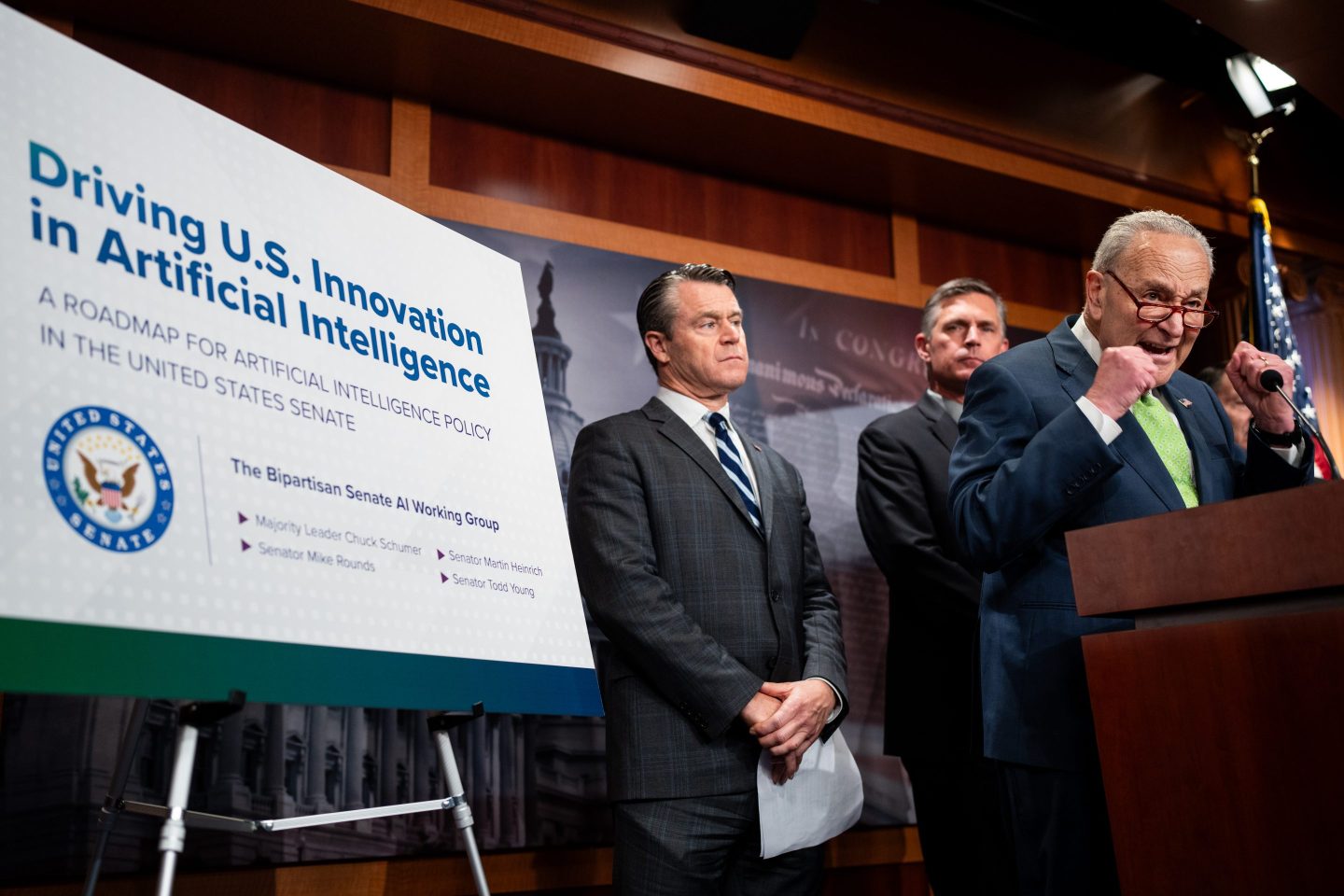
One rare bipartisan AI bill is moving through Congress. Here’s why it deserves to pass
By Neil Björkman and Betsy BrewerJuly 1, 2026
10 hours ago
I know how Gen Z can survive the ‘jobpocalypse’ because I built an AI company — in 2015
CommentaryCareers
I know how Gen Z can survive the ‘jobpocalypse’ because I built an AI company — in 2015
By Jeremy FainJuly 1, 2026
10 hours ago
mr
Commentary250 Years of Innovation
America needs 3.8 million manufacturing workers. This CEO has a blueprint to find them
By Mark RayfieldJuly 1, 2026
10 hours ago
usa
Commentary250 Years of Innovation
America at 250: why the Constitution was built to restrain government, not celebrate majority rule
By Steve H. HankeJuly 1, 2026
10 hours ago
t
CommentaryMedia
Netflix could turn NBC into its biggest bet yet — and this time, the math actually works
By Jeffrey Sonnenfeld and Steven TianJune 30, 2026
1 day ago
wb
CommentaryLeadership
I grew BDO from $600 million to $3.4 billion. Here’s the 3-part formula that made it possible
By Wayne BersonJune 30, 2026
1 day ago

Most Popular

MacKenzie Scott alone accounted for one-third of America's $19.2 billion in megagifts last year
Success
MacKenzie Scott alone accounted for one-third of America's $19.2 billion in megagifts last year
By Sydney LakeJune 25, 2026
7 days ago
As Big Tech showers employees with perks to win the talent war, Nvidia built a nearly $5 trillion company by making people pay for their own lunch
Big Tech
As Big Tech showers employees with perks to win the talent war, Nvidia built a nearly $5 trillion company by making people pay for their own lunch
By Marco Quiroz-GutierrezJuly 1, 2026
14 hours ago
Philanthropy leader at Warren Buffett and Bill Gates’ Giving Pledge says children of billionaires are pushing them to give their wealth away faster
Success
Philanthropy leader at Warren Buffett and Bill Gates’ Giving Pledge says children of billionaires are pushing them to give their wealth away faster
By Preston ForeJune 27, 2026
4 days ago
Elon Musk on MacKenzie Scott giving away $26 billion of her fortune: 'Sadly,' it makes the world a worse place
Success
Elon Musk on MacKenzie Scott giving away $26 billion of her fortune: 'Sadly,' it makes the world a worse place
By Sydney LakeJune 29, 2026
2 days ago
The Supreme Court's birthright citizenship ruling hands the U.S. economy a $7.7 trillion win
Newsletters
The Supreme Court's birthright citizenship ruling hands the U.S. economy a $7.7 trillion win
By Diane BradyJuly 1, 2026
12 hours ago
The U.S. Army is opening military bases to private billions — here's why that changes everything for the next 250 years
Commentary
The U.S. Army is opening military bases to private billions — here's why that changes everything for the next 250 years
By Marc AndersenJune 30, 2026
1 day ago

© 2026 Fortune Media IP Limited. All Rights Reserved. Use of this site constitutes acceptance of our Terms of Use and Privacy Policy | CA Notice at Collection and Privacy Notice | Do Not Sell/Share My Personal Information
FORTUNE is a trademark of Fortune Media IP Limited, registered in the U.S. and other countries. FORTUNE may receive compensation for some links to products and services on this website. Offers may be subject to change without notice.