• Home
  • Latest
  • Fortune 500
  • Finance
  • Tech
  • Leadership
  • Lifestyle
  • Rankings
  • Multimedia

Trendingnow

1

MacKenzie Scott alone accounted for one-third of America's $19.2 billion in megagifts last year

2

As Big Tech showers employees with perks to win the talent war, Nvidia built a nearly $5 trillion company by making people pay for their own lunch

3

Philanthropy leader at Warren Buffett and Bill Gates’ Giving Pledge says children of billionaires are pushing them to give their wealth away faster

1

MacKenzie Scott alone accounted for one-third of America's $19.2 billion in megagifts last year

2

As Big Tech showers employees with perks to win the talent war, Nvidia built a nearly $5 trillion company by making people pay for their own lunch

3

Philanthropy leader at Warren Buffett and Bill Gates’ Giving Pledge says children of billionaires are pushing them to give their wealth away faster
Commentarydata privacy

I used to wiretap. This is why encryption backdoors are dangerous

By
Chris Howell
Chris Howell
Down Arrow Button Icon
By
Chris Howell
Chris Howell
Down Arrow Button Icon
January 18, 2021, 11:00 AM ET
Commentary-cell phone-backdoor security
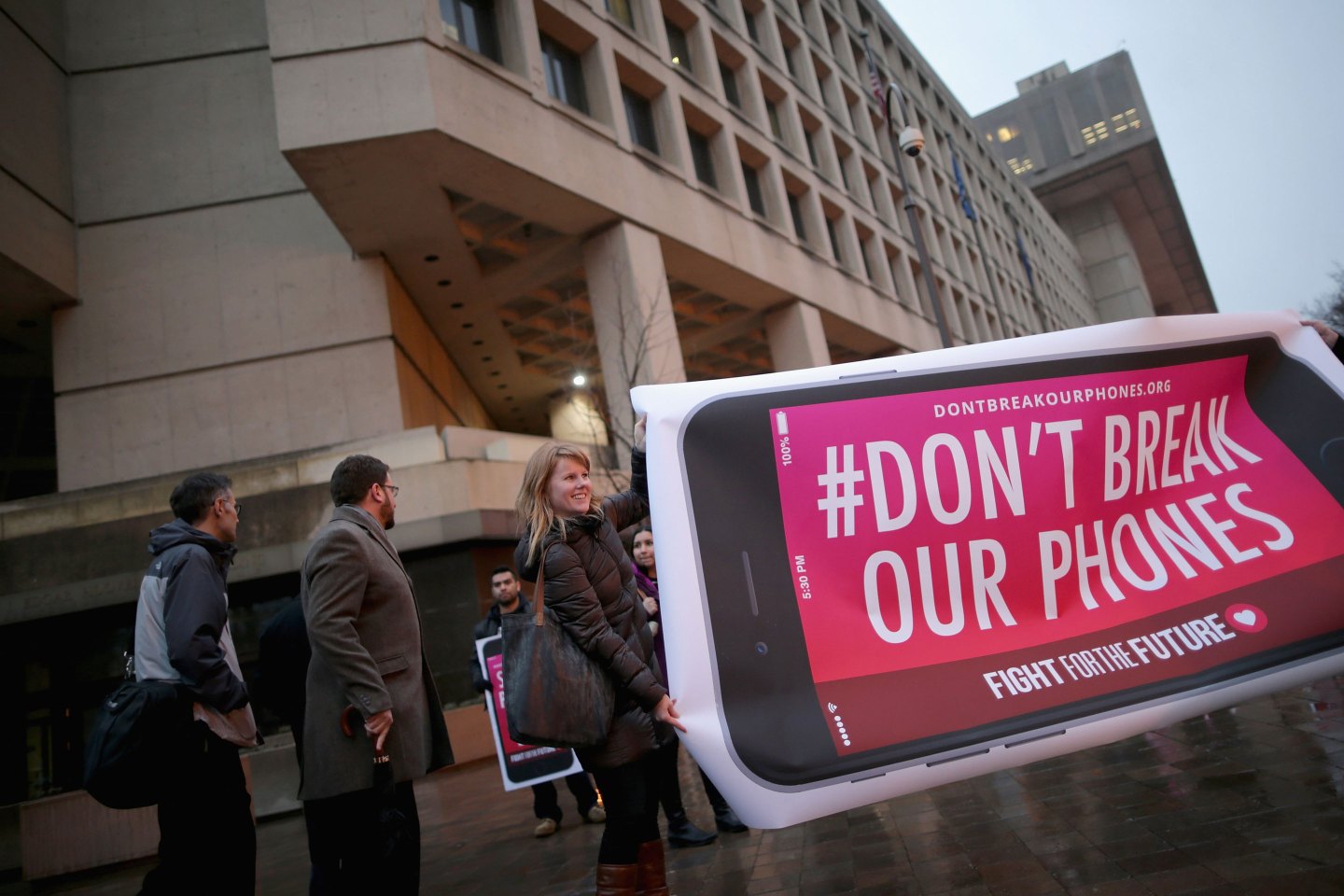
Misguided legislation pushing for backdoors to end-to-end encryption would be a disaster for data privacy, writes Chris Howell.Chip Somodevilla—Getty Images
Add Fortune on Google for similar content.

In my nearly 10 years in state law enforcement investigating computer crimes, I saw the point at which government power and emerging technology converged. I was trained to extract every bit of data from a computer and every ounce of meaning from computer evidence. I had the power to conduct electronic surveillance and compel service providers to share the information on their servers.

But there was a limit. I could analyze data all I wanted, but I couldn’t guarantee it was going to be available. In non-technical terms, I could look for breadcrumbs, but I couldn’t make anyone drop them.

Since moving to the private sector, I’ve watched the technology industry fall deeper and deeper in love with user data. Today, there is an expectation that everything is stored and mined simply because it is easy for the provider to do so and because it is motivated by huge financial incentive. 

This practice, though, has created a monster. Law enforcement agencies—indeed, the entire justice system—have gotten hooked on this ease of access to data like a drug. Now they feel entitled to it.

Some service providers have responded to user demand for increased security by introducing meaningful encryption to their products. Several in the communication space have incorporated “end-to-end” encryption into their products, which renders communications inaccessible to the provider. This also eliminates the threat of malicious actors breaking into the provider’s systems and accessing these communications, which as we have seen in the recent Solarwinds hack, can have catastrophic impact. A side effect of this architecture, of course, is that the communications cannot be exploited by law enforcement either.

In a series of high-profile cases, such as the 2015 San Bernardino, Calif., shooting, law enforcement exerted pressure on service providers to defeat their security mechanisms in order to facilitate government access to user data. Calls have recently intensified thanks to well-intentioned but poorly considered legislation that would require U.S. technology companies to build so-called “backdoors” into their software. If implemented, this legislation will have devastating effects on our society. (Wickr, which provides end-to-end encryption in its products, would suffer from such legislation.)

There is no way to ensure that a backdoor will be restricted to law enforcement use only. Applications would essentially be built broken, and a flaw of that magnitude would be very difficult to hide from others. The risk would go well beyond individual privacy and impact financial transactions, global commerce, and national security, as well as jeopardize innovations in critical industries such as health care, telecommunications, and pharmaceuticals. This would not only increase the risk to businesses, but also remove a critical lifeline for citizens living under oppressive governments.

American companies won’t tolerate the business risk of encryption backdoors either. If U.S. service providers are forbidden from building secure products, then U.S. companies will look for them elsewhere. Enter foreign service providers, who will at best be happy to fill the competitive void in the market and at worst have their own governments’ data mandates to implement. That would likely put U.S. service providers out of business. The lack of trust would also damage our credibility worldwide, essentially turning the phrase “Made in America” into a warning label.

Backdoor proposals also stick service providers in the middle of a more fundamental issue for the country. The real targets of these proposals are people. The average citizen believes that data critical to their personal lives and livelihoods is seriously threatened by thieves, vandals, and nation-states. They also believe that weakening encryption is a path to disaster. Ask your average law-abiding citizen if reducing their cyber, home, or personal security is likely to prevent more crime or cause it.

Government shouldn’t render people unable to secure their communications in a free society. Especially given the fraught political climate, a large segment of the U.S. population is in a heightened state of distrust of government oversight. They fear that the powers of government and Big Tech could converge into a full-blown surveillance state. 

Service providers are willing to pursue other solutions, such as enabling organizations to preserve and protect their own data as required by law. That is not the debate, and there are ways to do this that are far less risky than implementing a mass surveillance regime. 

My time in law enforcement gave me a unique perspective on this debate. I understand how having access to criminals’ communications would make law enforcement’s job easier.

But at what cost? When our national and economic security depend on secure communications, the risk of losing that is too great. Power and people are corruptible. Encryption is not.

Chris Howell is cofounder and CTO of Wickr.
About the Author
By Chris Howell
See full bioRight Arrow Button Icon
Add Fortune on Google for similar content.

Latest in Commentary

Finance
Lorem ipsum dolor sit amet, consectetur adipiscing elit, sed do eiusmod tempor incididunt ut labore et dolore magna aliqua. Ut enim ad minim veniam
By Fortune Editors
October 20, 2025
Finance
Lorem ipsum dolor sit amet, consectetur adipiscing elit, sed do eiusmod tempor incididunt ut labore et dolore magna aliqua. Ut enim ad minim veniam
By Fortune Editors
October 20, 2025
Finance
Lorem ipsum dolor sit amet, consectetur adipiscing elit, sed do eiusmod tempor incididunt ut labore et dolore magna aliqua. Ut enim ad minim veniam
By Fortune Editors
October 20, 2025
Finance
Lorem ipsum dolor sit amet, consectetur adipiscing elit, sed do eiusmod tempor incididunt ut labore et dolore magna aliqua. Ut enim ad minim veniam
By Fortune Editors
October 20, 2025
Finance
Lorem ipsum dolor sit amet, consectetur adipiscing elit, sed do eiusmod tempor incididunt ut labore et dolore magna aliqua. Ut enim ad minim veniam
By Fortune Editors
October 20, 2025
Finance
Lorem ipsum dolor sit amet, consectetur adipiscing elit, sed do eiusmod tempor incididunt ut labore et dolore magna aliqua. Ut enim ad minim veniam
By Fortune Editors
October 20, 2025

Most Popular

Finance
Lorem ipsum dolor sit amet, consectetur adipiscing elit, sed do eiusmod tempor incididunt ut labore et dolore magna aliqua. Ut enim ad minim veniam
By Fortune Editors
October 20, 2025
Finance
Lorem ipsum dolor sit amet, consectetur adipiscing elit, sed do eiusmod tempor incididunt ut labore et dolore magna aliqua. Ut enim ad minim veniam
By Fortune Editors
October 20, 2025
Finance
Lorem ipsum dolor sit amet, consectetur adipiscing elit, sed do eiusmod tempor incididunt ut labore et dolore magna aliqua. Ut enim ad minim veniam
By Fortune Editors
October 20, 2025
Finance
Lorem ipsum dolor sit amet, consectetur adipiscing elit, sed do eiusmod tempor incididunt ut labore et dolore magna aliqua. Ut enim ad minim veniam
By Fortune Editors
October 20, 2025
Finance
Lorem ipsum dolor sit amet, consectetur adipiscing elit, sed do eiusmod tempor incididunt ut labore et dolore magna aliqua. Ut enim ad minim veniam
By Fortune Editors
October 20, 2025
Finance
Lorem ipsum dolor sit amet, consectetur adipiscing elit, sed do eiusmod tempor incididunt ut labore et dolore magna aliqua. Ut enim ad minim veniam
By Fortune Editors
October 20, 2025
Fortune Secondary Logo
Rankings
  • 100 Best Companies
  • Fortune 500
  • Global 500
  • Fortune 500 Europe
  • Most Powerful Women
  • World's Most Admired Companies
  • See All Rankings
  • Lists Calendar
Sections
  • Finance
  • Fortune Crypto
  • Features
  • Leadership
  • Health
  • Commentary
  • Success
  • Retail
  • Mpw
  • Tech
  • Lifestyle
  • CEO Initiative
  • Asia
  • Politics
  • Conferences
  • Europe
  • Newsletters
  • Personal Finance
  • Environment
  • Magazine
  • Education
Customer Support
  • Frequently Asked Questions
  • Customer Service Portal
  • Privacy Policy
  • Terms Of Use
  • Single Issues For Purchase
  • International Print
Commercial Services
  • Advertising
  • Fortune Brand Studio
  • Fortune Analytics
  • Fortune Conferences
  • Business Development
  • Group Subscriptions
About Us
  • About Us
  • Press Center
  • Work At Fortune
  • Terms And Conditions
  • Site Map
  • About Us
  • Press Center
  • Work At Fortune
  • Terms And Conditions
  • Site Map
  • Facebook icon
  • Twitter icon
  • LinkedIn icon
  • Instagram icon
  • Pinterest icon

Latest in Commentary

senate
CommentaryCongress
One rare bipartisan AI bill is moving through Congress. Here’s why it deserves to pass
By Neil Björkman and Betsy BrewerJuly 1, 2026
11 hours ago
I know how Gen Z can survive the ‘jobpocalypse’ because I built an AI company — in 2015
CommentaryCareers
I know how Gen Z can survive the ‘jobpocalypse’ because I built an AI company — in 2015
By Jeremy FainJuly 1, 2026
12 hours ago
mr
Commentary250 Years of Innovation
America needs 3.8 million manufacturing workers. This CEO has a blueprint to find them
By Mark RayfieldJuly 1, 2026
12 hours ago
usa
Commentary250 Years of Innovation
America at 250: why the Constitution was built to restrain government, not celebrate majority rule
By Steve H. HankeJuly 1, 2026
12 hours ago
t
CommentaryMedia
Netflix could turn NBC into its biggest bet yet — and this time, the math actually works
By Jeffrey Sonnenfeld and Steven TianJune 30, 2026
1 day ago
wb
CommentaryLeadership
I grew BDO from $600 million to $3.4 billion. Here’s the 3-part formula that made it possible
By Wayne BersonJune 30, 2026
1 day ago

Most Popular

MacKenzie Scott alone accounted for one-third of America's $19.2 billion in megagifts last year
Success
MacKenzie Scott alone accounted for one-third of America's $19.2 billion in megagifts last year
By Sydney LakeJune 25, 2026
7 days ago
As Big Tech showers employees with perks to win the talent war, Nvidia built a nearly $5 trillion company by making people pay for their own lunch
Big Tech
As Big Tech showers employees with perks to win the talent war, Nvidia built a nearly $5 trillion company by making people pay for their own lunch
By Marco Quiroz-GutierrezJuly 1, 2026
15 hours ago
Philanthropy leader at Warren Buffett and Bill Gates’ Giving Pledge says children of billionaires are pushing them to give their wealth away faster
Success
Philanthropy leader at Warren Buffett and Bill Gates’ Giving Pledge says children of billionaires are pushing them to give their wealth away faster
By Preston ForeJune 27, 2026
4 days ago
The Supreme Court's birthright citizenship ruling hands the U.S. economy a $7.7 trillion win
Newsletters
The Supreme Court's birthright citizenship ruling hands the U.S. economy a $7.7 trillion win
By Diane BradyJuly 1, 2026
13 hours ago
Elon Musk on MacKenzie Scott giving away $26 billion of her fortune: 'Sadly,' it makes the world a worse place
Success
Elon Musk on MacKenzie Scott giving away $26 billion of her fortune: 'Sadly,' it makes the world a worse place
By Sydney LakeJune 29, 2026
2 days ago
The U.S. Army is opening military bases to private billions — here's why that changes everything for the next 250 years
Commentary
The U.S. Army is opening military bases to private billions — here's why that changes everything for the next 250 years
By Marc AndersenJune 30, 2026
1 day ago

© 2026 Fortune Media IP Limited. All Rights Reserved. Use of this site constitutes acceptance of our Terms of Use and Privacy Policy | CA Notice at Collection and Privacy Notice | Do Not Sell/Share My Personal Information
FORTUNE is a trademark of Fortune Media IP Limited, registered in the U.S. and other countries. FORTUNE may receive compensation for some links to products and services on this website. Offers may be subject to change without notice.