• Home
  • Latest
  • Fortune 500
  • Finance
  • Tech
  • Leadership
  • Lifestyle
  • Rankings
  • Multimedia

Trendingnow

1

As Big Tech showers employees with perks to win the talent war, Nvidia built a nearly $5 trillion company by making people pay for their own lunch

2

MacKenzie Scott alone accounted for one-third of America's $19.2 billion in megagifts last year

3

Philanthropy leader at Warren Buffett and Bill Gates’ Giving Pledge says children of billionaires are pushing them to give their wealth away faster

1

As Big Tech showers employees with perks to win the talent war, Nvidia built a nearly $5 trillion company by making people pay for their own lunch

2

MacKenzie Scott alone accounted for one-third of America's $19.2 billion in megagifts last year

3

Philanthropy leader at Warren Buffett and Bill Gates’ Giving Pledge says children of billionaires are pushing them to give their wealth away faster
Environmentbook review

In an important new book, Bill Gates offers a real-world plan for avoiding a ‘climate disaster’

By
Clifton Leaf
Clifton Leaf
Down Arrow Button Icon
By
Clifton Leaf
Clifton Leaf
Down Arrow Button Icon
February 13, 2021, 10:50 AM ET
Add Fortune on Google for similar content.

This article is part of Fortune‘s Blueprint for a climate breakthrough package, guest edited by Bill Gates.

From the first pages of Bill Gates’s third and most impassioned book, How to Avoid a Climate Disaster: The Solutions We Have and the Breakthroughs We Need, one gets the feeling of being on an expedition. That odyssey is Gates’s own—a journey of discovery that seems to enthrall the author even as it becomes clear how monumentally hard it will be to reach the destination.

That promised land—Gates’s Ithaca, if you will—is a place called “zero.” Zero is the amount of greenhouse gases that we can afford to let out into the atmosphere if we are to have any hope of preventing a climate meltdown by century’s end, he says. These gases—notably, carbon dioxide, nitrous oxide, and methane (which climate scientists often shorthand to “carbon dioxide equivalents” or simply, “carbon”)—trap heat and cause surface temperatures to rise. The more such gases there are floating around, the warmer it gets. As Gates writes: “There’s no scenario in which we keep adding carbon to the atmosphere and the world stops getting hotter, and the hotter it gets, the harder it will be for humans to survive, much less thrive.”
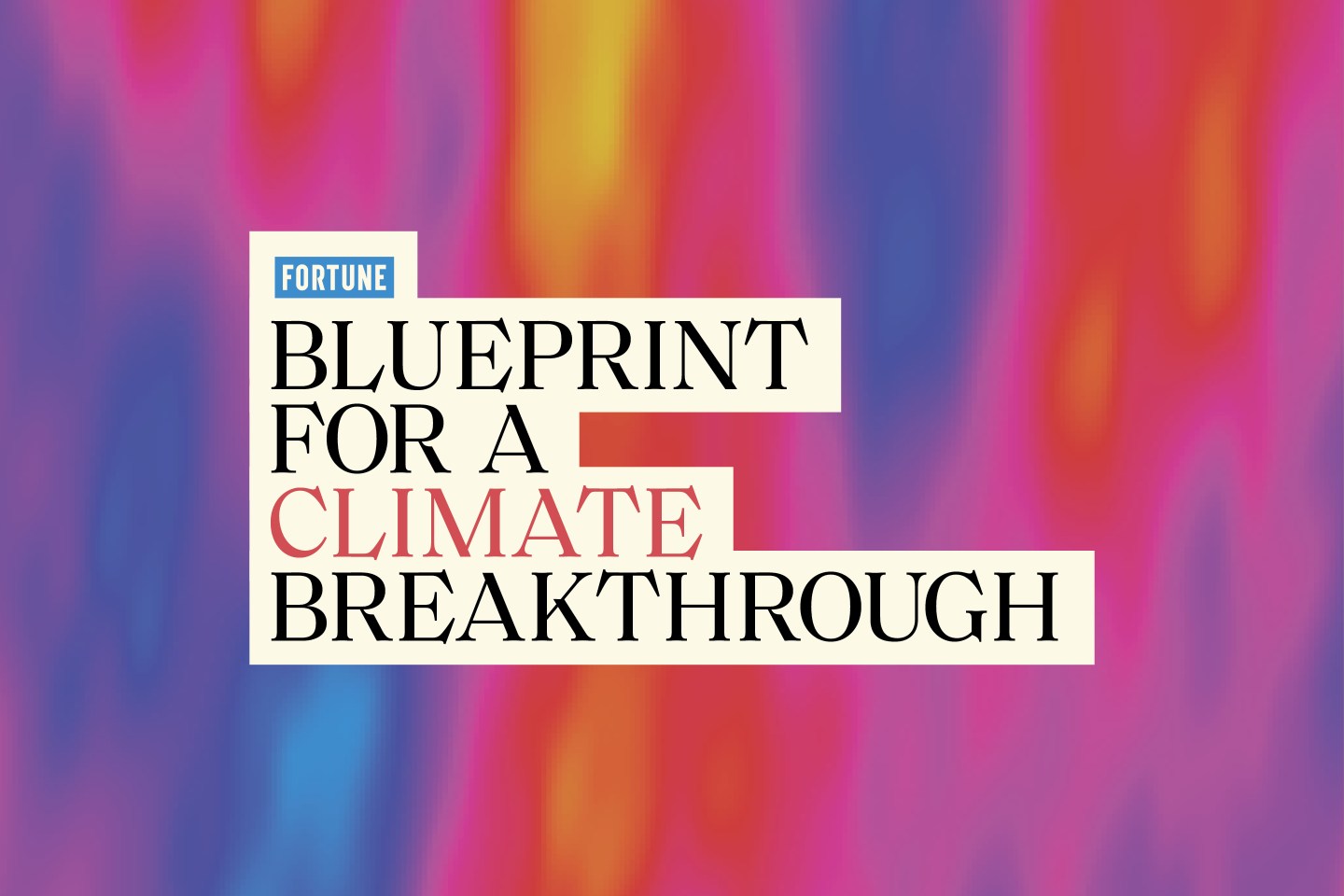
Fortune worked with Bill Gates and his colleagues at Breakthrough Energy and Gates Ventures to put together this extensive package of stories on the signal crisis of our age. That crisis is not the COVID-19 pandemic—it’s climate change. Click the image above to read the rest of the stories.

If we don’t drop our carbon emissions down to zero, we could well see the average global temperature rise by anywhere from 7 degrees to 14 degrees Fahrenheit (4–8 degrees Celsius) by the year 2099. That turn of the thermostat would yield a world of both horrific hurricanes and droughts, parching huge swaths of the planet as other regions drown in rising seas and storms. In parts of the American south and southwest, for instance, residents might spend as much as a third of the year sweltering in temperatures above 90 degrees Fahrenheit. Even by mid-century the effects could be dramatic, making life far more difficult for millions—and leading to economic hardship (arising from everything from farm failures to storm damage) that might surpass that seen during the COVID-19 pandemic.

Such is the harsh cost of not getting to zero, of course. But Gates doesn’t spend much time dwelling on failure. In fact, you hardly hear about that option. As the title spells out, this book—which is being published on Tuesday by Alfred A. Knopf—is a “how to,” and the former Microsoft cofounder and CEO diligently keeps to that playbook, laying out a step-by-step plan, daunting though it may be, for how to get to zero. Each factoid and figure that Gates uncovers along the way is a clue to the path’s direction; each chapter is a mile marker, keeping track of how far away we are to the goal.

What’s remarkable, however, is how easy it all is to read: It doesn’t feel as though the text was scrubbed of technospeak or jargon by a good editor; rather, it feels like it was never in there to begin with. Gates is an uncannily gifted explainer—and the sheer clarity of this book may be the highest of its many virtues. That the author himself seems to revel in the journey, gleefully revealing his own learning curve as he goes, also makes it surprisingly fun to read.

Here’s the billionaire philanthropist, at one point, marveling that gasoline is cheaper than soda, being shocked that automobile fuel efficiency has barely improved since the days of the Model T, sharing the “mind-boggling” fact that the world is on pace to construct the equivalent of one New York City (in building number and size) every month for the next 40 years.

These observations, as with most of the explanations in How to Avoid a Climate Disaster, are tied to energy: how much we expend of it, what it takes to produce it, and what we might do in order to spend less of it achieving the same ends. Each aspect of our lives—where we sleep, what we eat, how we work, travel, and entertain ourselves—uses energy. And the great bulk of that power is produced by carbon-emitting technologies, as Gates painstakingly shows.

While there are earth-friendly alternatives, “most of these zero-carbon solutions are more expensive than their fossil-fuel counterparts,” writes Gates. “In part, that’s because the prices of fos­sil fuels don’t reflect the environmental damage they inflict, so they seem cheaper than the alternative.” Gates calls these additional costs—the delta between our current technology and a zero-carbon equivalent—a “Green Premium.” And it’s a remarkably straightforward device for understanding the cost of the challenges ahead of us.

The Green Premiums (inevitably there are more than one) for electricity in the United States isn’t as onerous as one might think, says Gates. We could probably get “all our power from non-emitting sources, including wind, solar, nuclear power, and coal- and natural-gas-fired plants equipped with devices that capture the carbon they produce.” Even for such a sweeping grid-wide change, a typical U.S. retail customer would pay about 15% more than what they pay today, or an additional 1.3 to 1.7 cents per kilowatt-hour.

By contrast, the Green Premiums are much higher when it comes to how we make things—the part of our everyday existence that accounts for 31% of the 51 billion tons of carbon the world emits each year. (Yes, that’s the 51 billion tons we have to shave to zero.) The Green Premiums for steel and concrete—the miracle materials used to build the forests of office towers across our urban landscape—can be rather high.

Gates takes on the task of accounting for all of this sprawling carbon burden—how we grow things (an estimated 19% of total yearly emissions), how we get around (16%), how we keep cool and stay warm (7%)—and offers his take on what strategies might at least get us close to achieving the same outputs for zero outlay in greenhouse gases. Where there are yet no ideal carbon-free solutions (namely, in producing cement), the author concedes as much—but there’s an implicit promise here, too: For inventors and entrepreneurs, after all, that’s where the great opportunities lie. (One measure of that potential market size: The cost to suck out 5.1 billion tons of carbon annually through a technology called direct air capture would be $5.1 trillion a year—equivalent to about 6% of the world’s economy.)

The roadmap Gates offers for preempting a climate disaster is a genuine public service; the fact that he’s written it in an accessible, even charming, 250-page book designed for lay readers, rather than for policy wonks or academics, makes it all the more valuable. Indeed, one of the most helpful chapters simply lays out five questions each of us should ask when a company, government, or nonprofit organization starts jabbering about what they’re doing to fight climate change. The first of those questions is: “How much of the 51 billion tons are we talking about?” Viewed through this lens, says Gates, the most well-meaning program that allegedly lowers the carbon footprint of an entire industry by millions of tons a year is a drop in the bucket.

Who would’ve thought? When it comes to climate change, this billionaire’s $51 billion question is the reality check we truly need.
Our mission to make business better is fueled by readers like you. To enjoy unlimited access to our journalism, subscribe today.
About the Author
By Clifton Leaf
See full bioRight Arrow Button Icon
Add Fortune on Google for similar content.

Latest in Environment

Finance
Lorem ipsum dolor sit amet, consectetur adipiscing elit, sed do eiusmod tempor incididunt ut labore et dolore magna aliqua. Ut enim ad minim veniam
By Fortune Editors
October 20, 2025
Finance
Lorem ipsum dolor sit amet, consectetur adipiscing elit, sed do eiusmod tempor incididunt ut labore et dolore magna aliqua. Ut enim ad minim veniam
By Fortune Editors
October 20, 2025
Finance
Lorem ipsum dolor sit amet, consectetur adipiscing elit, sed do eiusmod tempor incididunt ut labore et dolore magna aliqua. Ut enim ad minim veniam
By Fortune Editors
October 20, 2025
Finance
Lorem ipsum dolor sit amet, consectetur adipiscing elit, sed do eiusmod tempor incididunt ut labore et dolore magna aliqua. Ut enim ad minim veniam
By Fortune Editors
October 20, 2025
Finance
Lorem ipsum dolor sit amet, consectetur adipiscing elit, sed do eiusmod tempor incididunt ut labore et dolore magna aliqua. Ut enim ad minim veniam
By Fortune Editors
October 20, 2025
Finance
Lorem ipsum dolor sit amet, consectetur adipiscing elit, sed do eiusmod tempor incididunt ut labore et dolore magna aliqua. Ut enim ad minim veniam
By Fortune Editors
October 20, 2025

Most Popular

Finance
Lorem ipsum dolor sit amet, consectetur adipiscing elit, sed do eiusmod tempor incididunt ut labore et dolore magna aliqua. Ut enim ad minim veniam
By Fortune Editors
October 20, 2025
Finance
Lorem ipsum dolor sit amet, consectetur adipiscing elit, sed do eiusmod tempor incididunt ut labore et dolore magna aliqua. Ut enim ad minim veniam
By Fortune Editors
October 20, 2025
Finance
Lorem ipsum dolor sit amet, consectetur adipiscing elit, sed do eiusmod tempor incididunt ut labore et dolore magna aliqua. Ut enim ad minim veniam
By Fortune Editors
October 20, 2025
Finance
Lorem ipsum dolor sit amet, consectetur adipiscing elit, sed do eiusmod tempor incididunt ut labore et dolore magna aliqua. Ut enim ad minim veniam
By Fortune Editors
October 20, 2025
Finance
Lorem ipsum dolor sit amet, consectetur adipiscing elit, sed do eiusmod tempor incididunt ut labore et dolore magna aliqua. Ut enim ad minim veniam
By Fortune Editors
October 20, 2025
Finance
Lorem ipsum dolor sit amet, consectetur adipiscing elit, sed do eiusmod tempor incididunt ut labore et dolore magna aliqua. Ut enim ad minim veniam
By Fortune Editors
October 20, 2025
Fortune Secondary Logo
Rankings
  • 100 Best Companies
  • Fortune 500
  • Global 500
  • Fortune 500 Europe
  • Most Powerful Women
  • World's Most Admired Companies
  • See All Rankings
  • Lists Calendar
Sections
  • Finance
  • Fortune Crypto
  • Features
  • Leadership
  • Health
  • Commentary
  • Success
  • Retail
  • Mpw
  • Tech
  • Lifestyle
  • CEO Initiative
  • Asia
  • Politics
  • Conferences
  • Europe
  • Newsletters
  • Personal Finance
  • Environment
  • Magazine
  • Education
Customer Support
  • Frequently Asked Questions
  • Customer Service Portal
  • Privacy Policy
  • Terms Of Use
  • Single Issues For Purchase
  • International Print
Commercial Services
  • Advertising
  • Fortune Brand Studio
  • Fortune Analytics
  • Fortune Conferences
  • Business Development
  • Group Subscriptions
About Us
  • About Us
  • Press Center
  • Work At Fortune
  • Terms And Conditions
  • Site Map
  • About Us
  • Press Center
  • Work At Fortune
  • Terms And Conditions
  • Site Map
  • Facebook icon
  • Twitter icon
  • LinkedIn icon
  • Instagram icon
  • Pinterest icon

Latest in Environment

t
CommentaryMedia
Netflix could turn NBC into its biggest bet yet — and this time, the math actually works
By Jeffrey Sonnenfeld and Steven TianJune 30, 2026
1 day ago
heat
EnvironmentHeat
America’s getting a heat dome for July 4th — it won’t kill you at 2pm but might at 2am
By Alexa St. John and The Associated PressJune 30, 2026
1 day ago
Photo of a clouded leopard cub
EnvironmentData centers
America’s AI hunger has reached the Nashville Zoo, and its endangered animals may be the ones to pay the price
By Marco Quiroz-GutierrezJune 30, 2026
2 days ago
ac
Commentaryclimate change
Top climate tech exec: Europe is sweating through a heat crisis America solved decades ago
By Taco EngelaarJune 30, 2026
2 days ago
Should you go to work during a heat wave? Your productivity suffers, and GDP tanks when it’s hot
Environmentclimate change
Should you go to work during a heat wave? Your productivity suffers, and GDP tanks when it’s hot
By Catherina GioinoJune 30, 2026
2 days ago
This summer’s heat is a live stress test for data centers—here’s what it’s revealing in real time
AIData centers
This summer’s heat is a live stress test for data centers—here’s what it’s revealing in real time
By Tristan BoveJune 29, 2026
2 days ago

Most Popular

As Big Tech showers employees with perks to win the talent war, Nvidia built a nearly $5 trillion company by making people pay for their own lunch
Big Tech
As Big Tech showers employees with perks to win the talent war, Nvidia built a nearly $5 trillion company by making people pay for their own lunch
By Marco Quiroz-GutierrezJuly 1, 2026
17 hours ago
MacKenzie Scott alone accounted for one-third of America's $19.2 billion in megagifts last year
Success
MacKenzie Scott alone accounted for one-third of America's $19.2 billion in megagifts last year
By Sydney LakeJune 25, 2026
7 days ago
Philanthropy leader at Warren Buffett and Bill Gates’ Giving Pledge says children of billionaires are pushing them to give their wealth away faster
Success
Philanthropy leader at Warren Buffett and Bill Gates’ Giving Pledge says children of billionaires are pushing them to give their wealth away faster
By Preston ForeJune 27, 2026
5 days ago
The Supreme Court's birthright citizenship ruling hands the U.S. economy a $7.7 trillion win
Newsletters
The Supreme Court's birthright citizenship ruling hands the U.S. economy a $7.7 trillion win
By Diane BradyJuly 1, 2026
15 hours ago
Elon Musk on MacKenzie Scott giving away $26 billion of her fortune: 'Sadly,' it makes the world a worse place
Success
Elon Musk on MacKenzie Scott giving away $26 billion of her fortune: 'Sadly,' it makes the world a worse place
By Sydney LakeJune 29, 2026
2 days ago
Current price of oil as of July 1, 2026
Personal Finance
Current price of oil as of July 1, 2026
By Joseph HostetlerJuly 1, 2026
11 hours ago

© 2026 Fortune Media IP Limited. All Rights Reserved. Use of this site constitutes acceptance of our Terms of Use and Privacy Policy | CA Notice at Collection and Privacy Notice | Do Not Sell/Share My Personal Information
FORTUNE is a trademark of Fortune Media IP Limited, registered in the U.S. and other countries. FORTUNE may receive compensation for some links to products and services on this website. Offers may be subject to change without notice.