So, what are we stockpiling today?
That question has felt like the backbeat of our days since the pandemic began. When the first hints of a fast-spreading contagion appeared in early 2020, people around the world greeted the news with an almost universal response: We bought toilet paper. Then we bought up hand sanitizer, masks, pasta and beans, gym equipment, lumber, video game consoles, even puppies.
Now, with an energy crisis gripping much of Europe and a labor squeeze wracking post-Brexit Britain in particular, so-called panic buying has moved into a new realm—one where it can be nearly impossible to tease apart the role and weight of disrupted supply chains and climate change feedback loops in rounds of frantic over-purchasing that seem to blend one into the next. Of course, whether we are packing the freezer full of microwavable meals or sitting in a long line for gas in London, our first question is likely not which of the intertwined causes is most to blame, but something much simpler: Why do we do this to ourselves?
Psychologists, as it turns out, have spent much of the past 18 months studying this question, mapping out what a typical stockpiler looks like and is motivated by; how governments can limit it (hint: they’re not doing great); and why there’s more of this to come in our future. But here’s one surprising conclusion: Just because it’s called “panic” buying doesn’t mean we’re actually being irrational.
The who and the why
When it comes to the archetypal extreme panic buyer, there are few hard-and-fast rules: Several studies have found they tend to be better off—because over-purchasing requires, well, money—and a U.K. study found they’re more likely to have kids. Other studies, including one out of Singapore, found panic buyers are most likely to be motivated by fear, or be motivated by social pressure, as well as the perceived severity of the situation; age and gender didn’t seem to be that indicative.
Some researchers point toward a heightened sense of threat, mistrust of others, or generally higher risk perception as causes. (A study from the University of Cambridge published in March 2021 found that when assessing how an individual perceived pandemic-era risk, the person’s general worldview tended to be the most significant factor—rather than, say, the number of people who had COVID-19 at the time.)
And a study from Australia earlier this year in the Journal of Experimental Psychology posited that panic buying was a reaction to extreme uncertainty—suggesting it gave people an illusion of control, even when they would have been better off sticking with their usual approach. (Anyone who has tried to outsmart a traffic jam will be familiar with this.) On the flip side, the study suggested that in situations of constant gradual change—where quick action is, in fact, required—people may be more likely to stick with the same old thing. (Anyone who has followed climate change policy may also be familiar with this, the researchers suggested.)
Rational panic
Interminable fuel lines and empty supermarket shelves may evoke strong emotions, but popular depictions of panic buying as expressions of craven selfishness and actual panic—think videos of people getting into fistfights in supermarkets—are completely misleading, says Clifford Stott, a professor of social psychology at Keele University in the U.K. who specializes in part in the dynamics of crowd behavior.
“Were they sitting in the car like, ‘AGH!, AGH! I need petrol!’?” Stott asked, referring to recent long lines outside British gas stations.
“No, they weren’t. They were saying, ‘Well, no, I’ve got to go and get to work. Unless I queue up to get this petrol, I’m not going to get the fuel.’ That’s not panic, that’s consideration. So it’s rational.”
The great toilet paper run of 2020, too, was actually pretty rational, he argues. Faced with the prospect of staying at home with the family for weeks or months at a time—including, notably, the shift from going to the bathroom at work or school to using the toilet at home—people’s extreme toilet paper purchases actually made sense.
The lockdowns essentially created “a Christmas”—a time when everyone is at home, using the same toilet—when the supply chain didn’t expect one.
The focus on the phrase “panic,” he argues, plays up the idea that these purchases are irrational and selfish, and reinforces a skewed idea of how people behave in times of crisis. In fact, he points out, during the pandemic, people in the U.K. made sacrifices the government was surprised they were willing to make—such as not seeing loved ones who were in the hospital. And in other crises, like the July 2005 terror attacks on the London tube, bystanders and victims were largely orderly and helpful, an observation backed up by research into how people behave in extreme situations.
Rational, yes, but disproportionate
“It’s not necessarily irrational,” agreed Steven Taylor, a professor and clinical psychologist at the University of British Columbia, whose book, The Psychology of Pandemics, came out in late 2019. “You can panic about things for a very good reason.”
But, he argues, panic buying implies a “disproportionate” reaction.
In the U.K.’s case, for example, deliveries had not significantly dipped when the sharp spike in demand began, spurred at first by warnings of the potential for a shortage. This in turn became an actual shortage.
And while there are clear macro reasons for supply shortages, he argues that on the demand side, governments and individuals have become worse at managing spikes during the pandemic, not better.
“Over the past 18 months or more, panic buying has evolved. It’s gotten worse, and it’s more readily triggered,” he said. “So people only have to hear about a threat, a lockdown, or a shortage for people to proactively go out and start panic buying.”
Why “don’t panic” doesn’t work
If we have a broad picture of why we collectively over-purchase in times of stress or shortage, much of the blame for why it spirals—creating a shortage in and of itself—lies with poor government communication, Taylor argues. It’s the “don’t panic” lecture, in particular, that seems to be so counterproductive. He’s skeptical that altruism, or appealing to people’s sense of community, necessarily works. Ultimately, straight restrictions on how much a single person can purchase are probably more effective, he says, combined with reminding the public that panic-buying episodes usually last only seven to 10 days.
Clear messaging and decisive actions were precisely the path the U.K. government did not take when it addressed the public over the cause of food and fuel shortages. One junior minister quite literally gave the “don’t panic” lecture, saying in a radio interview, “There is no need for people to go out and panic buy.” Last week, Johnson muddied the waters even further, arguing that the current “stresses” were due to a necessary readjustment of the U.K. economy away from cheap labor, while also blaming businesses for underinvesting.
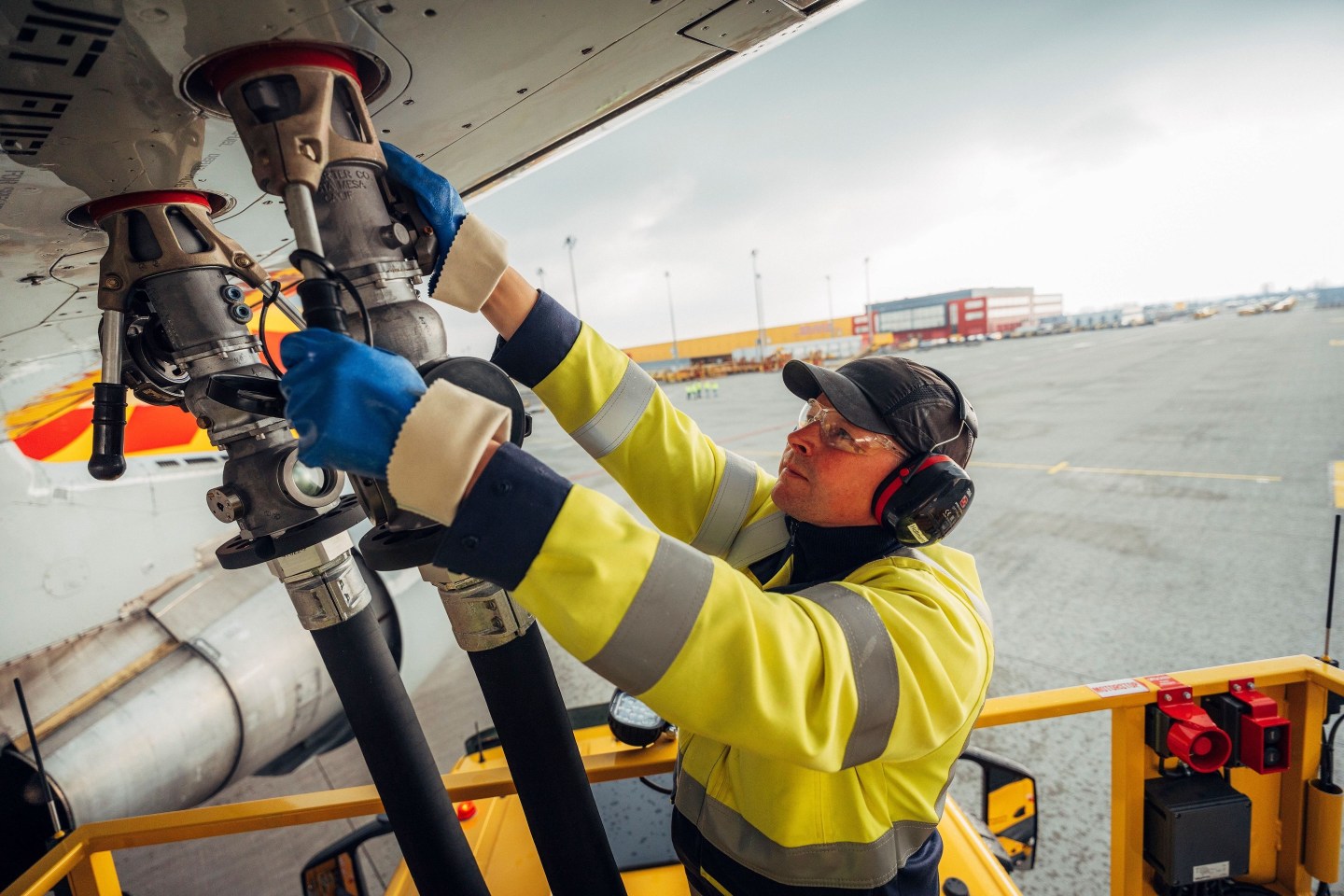
Now that the British public has fixated on the shortages, researchers broadly agree the risks behind them are only going to get worse. The various shortages have highlighted the risks of the “just in time” globalized supply chain, says Stott. And when it comes to energy shortages, the background isn’t just a run on a hot consumer product but serious questions about how we smoothly manage the transition away from fossil fuels to a new, no-carbon energy mix.
“Really the kind of debate that we should be having out of the fuel crisis is that this isn’t an issue of the pathology of society and the selfishness of individuals. It’s an issue of the fragility of supply chains and our dependency on carbon-based energy,” says Stott.
For that transition to be effective, governments and companies will have to figure out how to better communicate, and manage, fluctuations in energy availability in a way that doesn’t threaten our social fabrics and democracies.
To help them do so, psychologists will have to “sharpen up our understanding about what’s happening psychologically,” said Stott. “And recognize, excuse my French, that it’s not f–king panic.”
This article has been updated to correct the spelling of Mr. Stott’s name.
Subscribe to Fortune Daily to get essential business stories straight to your inbox each morning.