• Home
  • Latest
  • Fortune 500
  • Finance
  • Tech
  • Leadership
  • Lifestyle
  • Rankings
  • Multimedia
FinanceEye on Investing

A key stock market metric, Robert Shiller’s CAPE ratio, just hit an alarming new high

Shawn Tully
By
Shawn Tully
Shawn Tully
Senior Editor-at-Large
Down Arrow Button Icon
Shawn Tully
By
Shawn Tully
Shawn Tully
Senior Editor-at-Large
Down Arrow Button Icon
November 5, 2021, 1:15 PM ET

For decades, many of the market’s best minds have prized the CAPE, or cyclically adjusted price/earnings ratio, as a key measure of whether equities are pricey or cheap. Among them are Cliff Asness, cofounder of giant hedge fund AQR Capital, and Rob Arnott, whose firm Research Affiliates oversees strategies for $171 billion in mutual funds and ETFs. Nobel Prize winning economist Robert Shiller developed the CAPE, and at least until recently, the metric proved to be one of the most reliable guides to the returns an investor would pocket five or 10 years hence. Purchase when the CAPE is super-low, and you’d usually get big gains in the out years; buy when CAPE reached towering heights, as prior to the Great Depression and tech bubble, and it could take a decade or much longer to get back to even.

Using the current P/E to gauge if stocks are rich or cheap can be misleading. That’s because when profits hit a trough so low they’re destined to rebound, multiples look artificially high, and when earnings reach unsustainable, bubble territory, P/Es appear deceivingly modest. CAPE adjusts for those distortions by enlisting as the “E” not current earnings but a 10-year average of profits, adjusted upward for inflation. In the past couple of years, the CAPE has stayed well above its historic average and hence is flashing red. But stocks keep climbing anyway. That phenomenon has led analysts, fund managers, and market strategists to argue that the CAPE has become irrelevant. The reason: The new era of Fed-engineered, super-low “real” interest rates justifies multiples far above their former norms.

The CAPE just reached a level that’s scary

It’s important to consider, however, that we’ve witnessed other periods when the CAPE reached seemingly gravity-defying plateaus, and even stayed there for quite a while. But though the reckoning came with a lag, the result was almost always a wipeout that reaffirmed the Shiller P/E’s predictive power. It’s true that extra-slender rates make future earning worth a lot more, hiking valuations for already expensive tech champs further skyward. Still, the CAPE just hit a number so towering and so unusual that investors should take note. In the past, what has followed when you buy stocks at this CAPE isn’t pretty.

At 1 PM on Friday, November 5, the S&P 500 was hovering at 4703; if it closes at that level, the index would notch still another all-time record. The earnings number for the Shiller P/E, based on that 10-year “real” average, is just over $117 a share. Hence, the CAPE crossed 40 to stand at 40.13. That’s its highest reading, and first over 40, in over two decades, since October 2000. What should concern all investors is that over the 149 years and nine months for which Shiller has assembled data, the CAPE has stood at 40 and above only for 21 months. That’s 1.1% of the 1,798-month time frame covered by his numbers. Put differently, one of the most influential metrics in market history now shows that stocks have been this expensive only 1.1% of the time in the past century-and-a-half, and cheaper 98.9% of the time. Even at the summit preceding the crash of 1929, the CAPE reached “only” 33.

The CAPE stayed over 40 during one period: the tech bubble

The 21 months when the CAPE ran at 40 and above formed a single, consecutive span running from January 1999 to September 2000. That period bracketed the dotcom bubble. In fact, after hitting 40.58 around Labor Day 2019, it rose to almost 44 by year-end, lifting the S&P 500 by 19%. That run led to the same talk we hear today, that the CAPE no longer mattered. But the explosion in prices dwarfed what companies could possibly earn going forward, just as the CAPE predicted. Starting in the fall of 2000, stocks went into a belated but deep dive.

So how did the investors who bought an S&P index fund when the CAPE hit 40, as it did today, do five, 10, or more years later? When the Shiller P/E reached the big Four-O for the first time ever in January 1999, the S&P registered 1247. Four years later, in January 2022, it had dropped to 896, shedding over 22%. By January 2007, as markets roared back in the housing craze, the S&P notched 1424, handing those “first-time 40” investors a paltry 14% gain over eight years. Then, the Great Financial Crisis struck. A year later, our class of January ’99 had lost 31%, as the S&P slumped back to 866. It wasn’t until 2012 that their portfolio returned to the black by a puny 15% margin.

From there, the market went on a moonshot that’s lasted to this day. But even when the S&P marked a new peak at the end of 2019, and the CAPE sported a lofty 30, folks who had purchased at the 40 CAPE in 1999 harbored annual returns of less than 5% over those 21 years.

Since then, the market has boomed, sending the CAPE soaring by 10 points to replant the flag at 40. The history of how those who bought when the Shiller P/E notched 40 for the first time ever, almost 23 long years ago, is a lesson in the dangers of buying ultra-high. Their shares have appreciated just 6.5% a year. And it has taken what could be a bubble to lift their returns even to the mid single digits. Wall Street wants you to think the CAPE is old hat, and that it’s different this time. Don’t bet on it.

Subscribe to Fortune Daily to get essential business stories straight to your inbox each morning.

About the Author
Shawn Tully
By Shawn TullySenior Editor-at-Large

Shawn Tully is a senior editor-at-large at Fortune, covering the biggest trends in business, aviation, politics, and leadership.

See full bioRight Arrow Button Icon

Latest in Finance

Finance
Lorem ipsum dolor sit amet, consectetur adipiscing elit, sed do eiusmod tempor incididunt ut labore et dolore magna aliqua. Ut enim ad minim veniam
By Fortune Editors
October 20, 2025
Finance
Lorem ipsum dolor sit amet, consectetur adipiscing elit, sed do eiusmod tempor incididunt ut labore et dolore magna aliqua. Ut enim ad minim veniam
By Fortune Editors
October 20, 2025
Finance
Lorem ipsum dolor sit amet, consectetur adipiscing elit, sed do eiusmod tempor incididunt ut labore et dolore magna aliqua. Ut enim ad minim veniam
By Fortune Editors
October 20, 2025
Finance
Lorem ipsum dolor sit amet, consectetur adipiscing elit, sed do eiusmod tempor incididunt ut labore et dolore magna aliqua. Ut enim ad minim veniam
By Fortune Editors
October 20, 2025
Finance
Lorem ipsum dolor sit amet, consectetur adipiscing elit, sed do eiusmod tempor incididunt ut labore et dolore magna aliqua. Ut enim ad minim veniam
By Fortune Editors
October 20, 2025
Finance
Lorem ipsum dolor sit amet, consectetur adipiscing elit, sed do eiusmod tempor incididunt ut labore et dolore magna aliqua. Ut enim ad minim veniam
By Fortune Editors
October 20, 2025

Most Popular

Finance
Lorem ipsum dolor sit amet, consectetur adipiscing elit, sed do eiusmod tempor incididunt ut labore et dolore magna aliqua. Ut enim ad minim veniam
By Fortune Editors
October 20, 2025
Finance
Lorem ipsum dolor sit amet, consectetur adipiscing elit, sed do eiusmod tempor incididunt ut labore et dolore magna aliqua. Ut enim ad minim veniam
By Fortune Editors
October 20, 2025
Finance
Lorem ipsum dolor sit amet, consectetur adipiscing elit, sed do eiusmod tempor incididunt ut labore et dolore magna aliqua. Ut enim ad minim veniam
By Fortune Editors
October 20, 2025
Finance
Lorem ipsum dolor sit amet, consectetur adipiscing elit, sed do eiusmod tempor incididunt ut labore et dolore magna aliqua. Ut enim ad minim veniam
By Fortune Editors
October 20, 2025
Finance
Lorem ipsum dolor sit amet, consectetur adipiscing elit, sed do eiusmod tempor incididunt ut labore et dolore magna aliqua. Ut enim ad minim veniam
By Fortune Editors
October 20, 2025
Finance
Lorem ipsum dolor sit amet, consectetur adipiscing elit, sed do eiusmod tempor incididunt ut labore et dolore magna aliqua. Ut enim ad minim veniam
By Fortune Editors
October 20, 2025
Fortune Secondary Logo
Rankings
  • 100 Best Companies
  • Fortune 500
  • Global 500
  • Fortune 500 Europe
  • Most Powerful Women
  • Future 50
  • World’s Most Admired Companies
  • See All Rankings
Sections
  • Finance
  • Fortune Crypto
  • Features
  • Leadership
  • Health
  • Commentary
  • Success
  • Retail
  • Mpw
  • Tech
  • Lifestyle
  • CEO Initiative
  • Asia
  • Politics
  • Conferences
  • Europe
  • Newsletters
  • Personal Finance
  • Environment
  • Magazine
  • Education
Customer Support
  • Frequently Asked Questions
  • Customer Service Portal
  • Privacy Policy
  • Terms Of Use
  • Single Issues For Purchase
  • International Print
Commercial Services
  • Advertising
  • Fortune Brand Studio
  • Fortune Analytics
  • Fortune Conferences
  • Business Development
  • Group Subscriptions
About Us
  • About Us
  • Editorial Calendar
  • Press Center
  • Work At Fortune
  • Diversity And Inclusion
  • Terms And Conditions
  • Site Map
  • About Us
  • Editorial Calendar
  • Press Center
  • Work At Fortune
  • Diversity And Inclusion
  • Terms And Conditions
  • Site Map
  • Facebook icon
  • Twitter icon
  • LinkedIn icon
  • Instagram icon
  • Pinterest icon

Latest in Finance

trump
Economynational debt
Trump wants to add nearly $7 trillion to the $39 trillion national debt with his new military budget, watchdog warns
By Nick LichtenbergApril 2, 2026
6 hours ago
paul krugman
EconomyIran
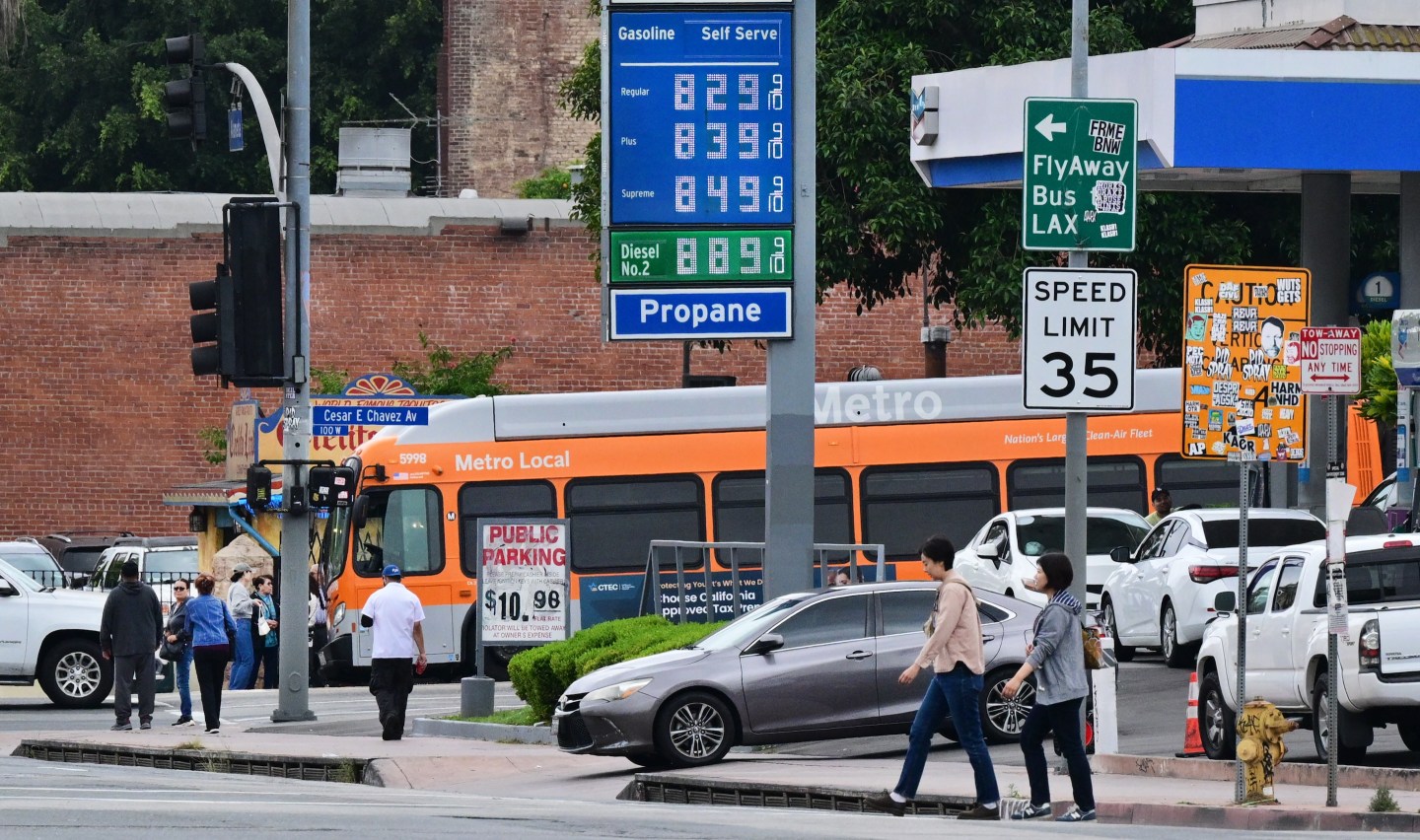
Paul Krugman smacks down Trump speech with argument that $4 gas is ‘less than half’ of the Hormuz hit. Here’s what he’s talking about
By Jake AngeloApril 2, 2026
6 hours ago
picture of the word "solana"
CryptoCryptocurrency
Latest crypto hack sees thieves make off with $280 million from Solana DeFi platform Drift
By Carlos GarciaApril 2, 2026
7 hours ago
kroenke
CommentarySoccer
Why American billionaires are abandoning Wall Street for English soccer clubs
By Andrés MartinezApril 2, 2026
8 hours ago
Workers on the production line of solar panels in China
EnergyRenewables
After renewable power’s record-smashing 2025, the Iran war could accelerate the shift as countries seek ‘structurally more resilient’ energy, UN says
By Tristan BoveApril 2, 2026
8 hours ago
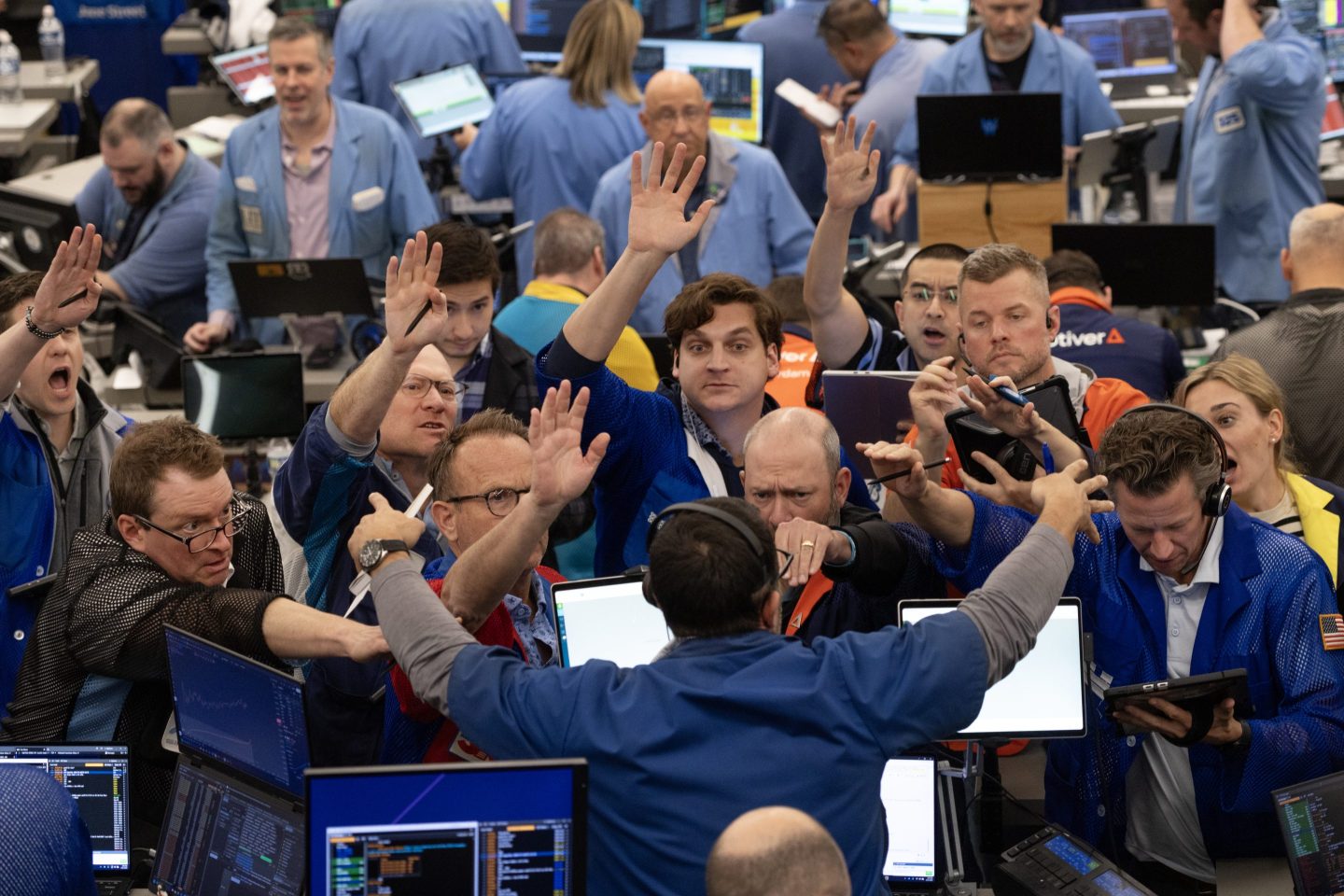
Traders signal offers in the S&P options trading pit at the Cboe Global Markets exchange on March 31, 2026 in Chicago, Illinois.
EnergyIran
Markets rally hard on Iran’s promise to play nice in Hormuz as its leaders pocket billions from the disruption
By Eva RoytburgApril 2, 2026
9 hours ago

Most Popular

Gen Z fled San Francisco for Texas and Florida. Now they’re turning ‘welcomer cities’ into the next big tech towns
Real Estate
Gen Z fled San Francisco for Texas and Florida. Now they’re turning ‘welcomer cities’ into the next big tech towns
By Fortune EditorsApril 2, 2026
19 hours ago
Current price of gold as of April 1, 2026
Personal Finance
Current price of gold as of April 1, 2026
By Fortune EditorsApril 1, 2026
2 days ago
Two-thirds of parents say their adult Gen Z kids still rely on them financially  for support—even though it's putting them under strain
Success
Two-thirds of parents say their adult Gen Z kids still rely on them financially  for support—even though it's putting them under strain
By Fortune EditorsMarch 31, 2026
2 days ago
The tax escape map: Billionaires are bolting for Florida from the West Coast and taking billions in tax revenue with them
Real Estate
The tax escape map: Billionaires are bolting for Florida from the West Coast and taking billions in tax revenue with them
By Fortune EditorsApril 2, 2026
19 hours ago
Deutsche Bank asked AI if it’s true that AI will solve the economy’s inflation problems. The robots answered
Economy
Deutsche Bank asked AI if it’s true that AI will solve the economy’s inflation problems. The robots answered
By Fortune EditorsApril 1, 2026
1 day ago
Major 4-day workweek study suggests that when we work 5 days we spend one doing basically nothing
Success
Major 4-day workweek study suggests that when we work 5 days we spend one doing basically nothing
By Fortune EditorsApril 2, 2026
11 hours ago

© 2026 Fortune Media IP Limited. All Rights Reserved. Use of this site constitutes acceptance of our Terms of Use and Privacy Policy | CA Notice at Collection and Privacy Notice | Do Not Sell/Share My Personal Information
FORTUNE is a trademark of Fortune Media IP Limited, registered in the U.S. and other countries. FORTUNE may receive compensation for some links to products and services on this website. Offers may be subject to change without notice.