• Home
  • Latest
  • Fortune 500
  • Finance
  • Tech
  • Leadership
  • Lifestyle
  • Rankings
  • Multimedia

Trendingnow

1

As Big Tech showers employees with perks to win the talent war, Nvidia built a nearly $5 trillion company by making people pay for their own lunch

2

MacKenzie Scott alone accounted for one-third of America's $19.2 billion in megagifts last year

3

Current price of oil as of July 1, 2026

1

As Big Tech showers employees with perks to win the talent war, Nvidia built a nearly $5 trillion company by making people pay for their own lunch

2

MacKenzie Scott alone accounted for one-third of America's $19.2 billion in megagifts last year

3

Current price of oil as of July 1, 2026
Commentarysupply chains

Trade less, raid less: Decoupling lowers the risk of war with China

By
Alexander William Salter
Down Arrow Button Icon
By
Alexander William Salter
Down Arrow Button Icon
February 3, 2022, 1:30 PM ET
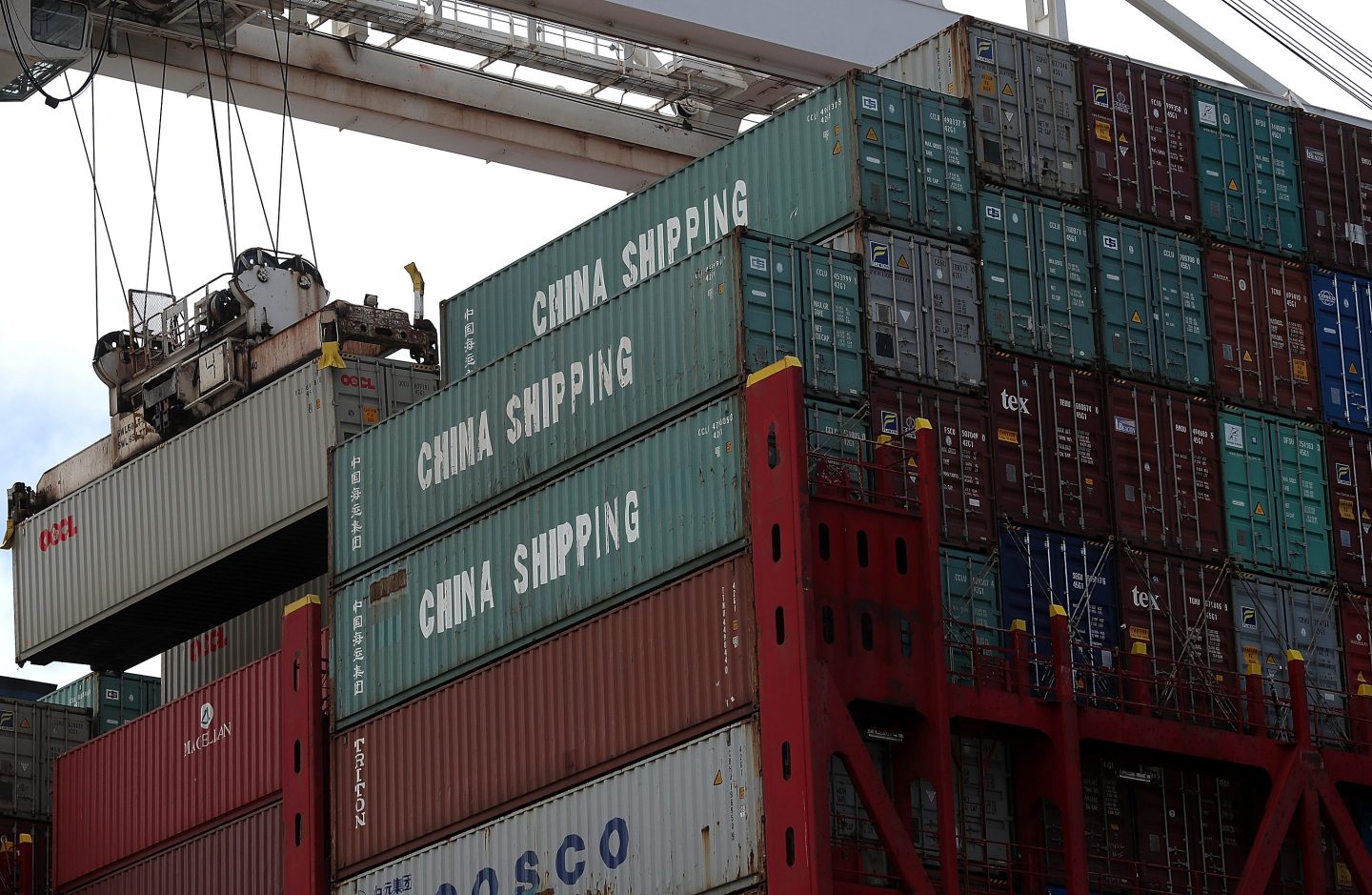
Trade doesn’t always lead to peace. Nations have always waged war to protect commercial interests.
Trade doesn’t always lead to peace. Nations have always waged war to protect commercial interests.Justin Sullivan—Getty Images
Add Fortune on Google for similar content.

America’s geopolitical competition with China will define our foreign policy for years, if not decades. History teaches us great conflicts arise when established superpowers jockey with up-and-coming hegemons.

Any war with China, however limited, would be devastating. We should make every effort to avoid it. The best way to keep the peace is by embracing a counterintuitive strategy: less economic engagement with China.

This runs against conventional wisdom. Commercial ties between nations are widely believed to help keep the peace—the more profitable it is to trade, the costlier it is to raid. This isn’t wrong, but it’s dangerously incomplete. The evidence primarily comes from the era of U.S.-led internationalism after World War II. Statesmen would be wise to take a broader historical view. Thucydides knew commercial appetites and imperial ambitions often went hand in hand. Thomas Jefferson and James Madison understood American trade with the British couldn’t keep the young republic out of war. World War I devastated Europe despite extensive economic integration. Peace through trade is simply too fragile a branch to bear the weight of American strategy.

In fact, commercial engagements could heighten the risk of conflict. Elbridge Colby—recently a deputy assistant secretary of defense and a major architect of U.S. strategy—argues Chinese ambitions for Asian hegemony threaten U.S. interests in his book The Strategy of Denial. The biggest danger is economic. Asia accounts for 40% of global GDP, and its rapid growth suggests this share will grow.

“From a geopolitical perspective,” Colby concludes, “Asia is therefore the world’s most important region.” If China achieves regional hegemony, it could use its power to build a commercial bloc that rewards vassal states and muscles out the U.S. Cutting America off from this economically vital region could be devastating for U.S. households and businesses.

To protect commercial interests, the U.S. may very well go to war. This is exactly what we want to avoid. If Colby is right, we should consider sidestepping, not punching back. There’s no need to fear Chinese economic stonewalling if we economically integrate with other parts of the world, preferably far outside Beijing’s grasp. Public policy should create incentives to do business elsewhere, so the threat of China’s economic shutout rings hollow.

The global division of labor is a good thing. It makes us all wealthier. The trick is protecting supply chains and production lines from political interference. We want to redirect these patterns, not destroy them. The solution is simple: raise the costs of doing business with China. Tariffs and capital controls can help.

As a tool for creating jobs or retaliating against foreign trade restrictions, tariffs are nearly useless. There’s overwhelming evidence restricting trade lowers incomes and employment. But for disengagement with China, that’s a feature, not a bug. U.S. tariffs on friendly nations should be greatly reduced, if not eliminated. Tariffs on China should increase.

Currently, the U.S. taxes Chinese exports at an average of 19.3%. That figure should rise over several years according to a predictable schedule. Again, the goal shouldn’t be to punish China for unfair trade practices, but rather to give cost-conscious firms a reason to create wealth in regions outside the Chinese Communist Party’s influence.

The logic for capital controls is identical. The U.S. Treasury maintains a blacklist of companies involved in the “Chinese military-industrial complex.” American investors are currently prohibited from taking a stake in 60 Chinese conglomerates. This blacklist should be greatly expanded. As Andrew Stuttaford, editor of National Review’s Capital Matters section, wisely argues, “Prohibiting any U.S. investment in Chinese technology companies…must be a priority.” As with tariffs, this should occur gradually. We must balance depriving Beijing of capital with giving investors time to adjust. The purpose is reorientation, not punishment.

Let’s be clear: These adjustments will hurt. Contrary to the neo-mercantilism currently popular on both the right and left, this strategy would cause material hardships. Restrictions on buying and investing will reduce the purchasing power of Americans at a time of surging inflation. These measures may pinch, but they pale in comparison to the misery a future war with China would cause. Even winning wouldn’t spare us the wartime deprivations we hoped would be a thing of the past.

Mr. Colby’s recommendation that the U.S. should serve as the “cornerstone balancer” in an anti-hegemonic coalition against China deserves serious thought. If preparing for a “systemic regional war” with China is prudent, steps to avoid war in the first place are even more so.

Redirecting the international division of labor away from China won’t make us richer. But it will make us safer and freer. We should take that deal.

Alexander William Salter is an associate professor of economics in the Rawls College of Business at Texas Tech University, a research fellow at TTU’s Free Market Institute, a senior contributor with Young Voices, and a senior fellow with AIER’s Sound Money Project.

More must-read commentary published by Fortune:

  • Don’t let crypto mayhem spook retail investors
  • NYSE’s new leader on the three core beliefs that are guiding her
  • Arianna Huffington: It’s time to replace work/life balance with “life-work integration”
  • We need a radical new approach to tackle scientific misinformation online
  • Here’s the proof culture still comes first in the age of remote work

Never miss a story: Follow your favorite topics and authors to get a personalized email with the journalism that matters most to you.


About the Author
By Alexander William Salter
See full bioRight Arrow Button Icon
Add Fortune on Google for similar content.

Latest in Commentary

Finance
Lorem ipsum dolor sit amet, consectetur adipiscing elit, sed do eiusmod tempor incididunt ut labore et dolore magna aliqua. Ut enim ad minim veniam
By Fortune Editors
October 20, 2025
Finance
Lorem ipsum dolor sit amet, consectetur adipiscing elit, sed do eiusmod tempor incididunt ut labore et dolore magna aliqua. Ut enim ad minim veniam
By Fortune Editors
October 20, 2025
Finance
Lorem ipsum dolor sit amet, consectetur adipiscing elit, sed do eiusmod tempor incididunt ut labore et dolore magna aliqua. Ut enim ad minim veniam
By Fortune Editors
October 20, 2025
Finance
Lorem ipsum dolor sit amet, consectetur adipiscing elit, sed do eiusmod tempor incididunt ut labore et dolore magna aliqua. Ut enim ad minim veniam
By Fortune Editors
October 20, 2025
Finance
Lorem ipsum dolor sit amet, consectetur adipiscing elit, sed do eiusmod tempor incididunt ut labore et dolore magna aliqua. Ut enim ad minim veniam
By Fortune Editors
October 20, 2025
Finance
Lorem ipsum dolor sit amet, consectetur adipiscing elit, sed do eiusmod tempor incididunt ut labore et dolore magna aliqua. Ut enim ad minim veniam
By Fortune Editors
October 20, 2025

Most Popular

Finance
Lorem ipsum dolor sit amet, consectetur adipiscing elit, sed do eiusmod tempor incididunt ut labore et dolore magna aliqua. Ut enim ad minim veniam
By Fortune Editors
October 20, 2025
Finance
Lorem ipsum dolor sit amet, consectetur adipiscing elit, sed do eiusmod tempor incididunt ut labore et dolore magna aliqua. Ut enim ad minim veniam
By Fortune Editors
October 20, 2025
Finance
Lorem ipsum dolor sit amet, consectetur adipiscing elit, sed do eiusmod tempor incididunt ut labore et dolore magna aliqua. Ut enim ad minim veniam
By Fortune Editors
October 20, 2025
Finance
Lorem ipsum dolor sit amet, consectetur adipiscing elit, sed do eiusmod tempor incididunt ut labore et dolore magna aliqua. Ut enim ad minim veniam
By Fortune Editors
October 20, 2025
Finance
Lorem ipsum dolor sit amet, consectetur adipiscing elit, sed do eiusmod tempor incididunt ut labore et dolore magna aliqua. Ut enim ad minim veniam
By Fortune Editors
October 20, 2025
Finance
Lorem ipsum dolor sit amet, consectetur adipiscing elit, sed do eiusmod tempor incididunt ut labore et dolore magna aliqua. Ut enim ad minim veniam
By Fortune Editors
October 20, 2025
Fortune Secondary Logo
Rankings
  • 100 Best Companies
  • Fortune 500
  • Global 500
  • Fortune 500 Europe
  • Most Powerful Women
  • World's Most Admired Companies
  • See All Rankings
  • Lists Calendar
Sections
  • Finance
  • Fortune Crypto
  • Features
  • Leadership
  • Health
  • Commentary
  • Success
  • Retail
  • Mpw
  • Tech
  • Lifestyle
  • CEO Initiative
  • Asia
  • Politics
  • Conferences
  • Europe
  • Newsletters
  • Personal Finance
  • Environment
  • Magazine
  • Education
Customer Support
  • Frequently Asked Questions
  • Customer Service Portal
  • Privacy Policy
  • Terms Of Use
  • Single Issues For Purchase
  • International Print
Commercial Services
  • Advertising
  • Fortune Brand Studio
  • Fortune Analytics
  • Fortune Conferences
  • Business Development
  • Group Subscriptions
About Us
  • About Us
  • Press Center
  • Work At Fortune
  • Terms And Conditions
  • Site Map
  • About Us
  • Press Center
  • Work At Fortune
  • Terms And Conditions
  • Site Map
  • Facebook icon
  • Twitter icon
  • LinkedIn icon
  • Instagram icon
  • Pinterest icon

Latest in Commentary

rn
CommentaryCryptocurrency
Former Iran director at NSC: Crypto legislation is a ticket to sanctions evasion
By Richard NephewJuly 2, 2026
7 hours ago
m
Commentary250 Years of Innovation
McKinsey chairs: Building a more resilient industrial base may require $2 trillion in investment
By Eric Kutcher and Shubham SinghalJuly 2, 2026
7 hours ago
em
Commentary250 Years of Innovation
America’s 250th birthday has Elon Musk and a record IPO. Its 15th had Alexander Hamilton — and a stock market bubble
By Owen LamontJuly 2, 2026
11 hours ago
paramount
CommentaryAntitrust
How Paramount’s theater commitments could boost local economies across the nation
By Ike BrannonJuly 2, 2026
11 hours ago
elon
CommentaryChina
China has 400 private space companies. The West is barely paying attention
By Rainer ZitelmannJuly 2, 2026
12 hours ago
senate
CommentaryCongress
One rare bipartisan AI bill is moving through Congress. Here’s why it deserves to pass
By Neil Björkman and Betsy BrewerJuly 1, 2026
1 day ago

Most Popular

As Big Tech showers employees with perks to win the talent war, Nvidia built a nearly $5 trillion company by making people pay for their own lunch
Big Tech
As Big Tech showers employees with perks to win the talent war, Nvidia built a nearly $5 trillion company by making people pay for their own lunch
By Marco Quiroz-GutierrezJuly 1, 2026
2 days ago
MacKenzie Scott alone accounted for one-third of America's $19.2 billion in megagifts last year
Success
MacKenzie Scott alone accounted for one-third of America's $19.2 billion in megagifts last year
By Sydney LakeJune 25, 2026
8 days ago
Current price of oil as of July 1, 2026
Personal Finance
Current price of oil as of July 1, 2026
By Joseph HostetlerJuly 1, 2026
1 day ago
Trump got a $78K pension from the Screen Actors Guild in 2025 because he appeared in Home Alone 2 in 1992
Politics
Trump got a $78K pension from the Screen Actors Guild in 2025 because he appeared in Home Alone 2 in 1992
By Sasha RogelbergJuly 1, 2026
1 day ago
CEO of $248 billion cybersecurity company says workers are about to face a ‘Darwinian moment’ thanks to AI: Evolve or get cut
Success
CEO of $248 billion cybersecurity company says workers are about to face a ‘Darwinian moment’ thanks to AI: Evolve or get cut
By Emma BurleighJuly 1, 2026
1 day ago
Philanthropy leader at Warren Buffett and Bill Gates’ Giving Pledge says children of billionaires are pushing them to give their wealth away faster
Success
Philanthropy leader at Warren Buffett and Bill Gates’ Giving Pledge says children of billionaires are pushing them to give their wealth away faster
By Preston ForeJune 27, 2026
5 days ago

© 2026 Fortune Media IP Limited. All Rights Reserved. Use of this site constitutes acceptance of our Terms of Use and Privacy Policy | CA Notice at Collection and Privacy Notice | Do Not Sell/Share My Personal Information
FORTUNE is a trademark of Fortune Media IP Limited, registered in the U.S. and other countries. FORTUNE may receive compensation for some links to products and services on this website. Offers may be subject to change without notice.