• Home
  • Latest
  • Fortune 500
  • Finance
  • Tech
  • Leadership
  • Lifestyle
  • Rankings
  • Multimedia
CommentarySPACs

The playing field for SPACs is level despite what the SEC thinks

By
Mike Ryan
Mike Ryan
Down Arrow Button Icon
By
Mike Ryan
Mike Ryan
Down Arrow Button Icon
February 4, 2022, 4:30 PM ET
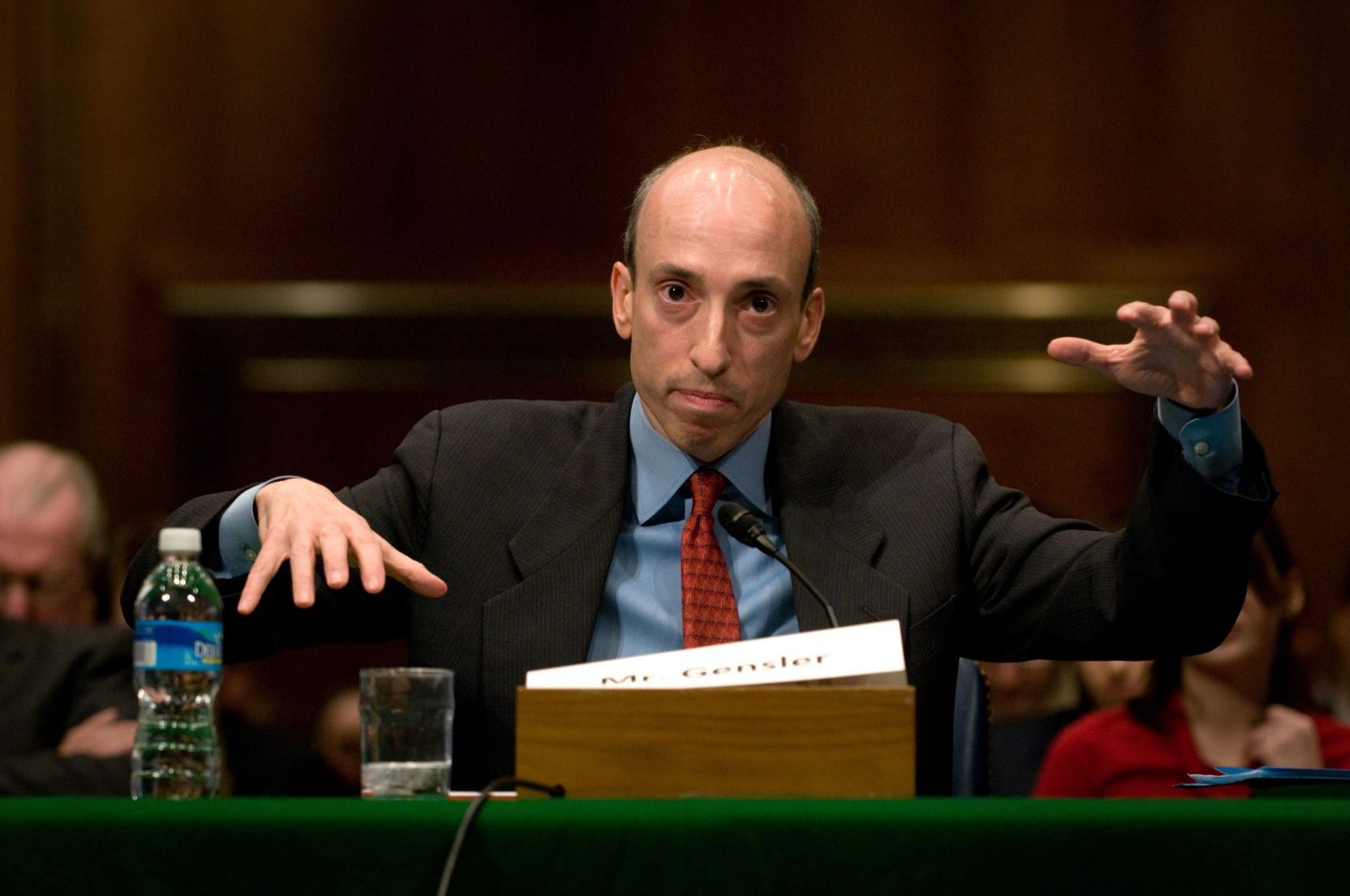
SEC chair Gary Gensler is looking into how to better align the legal treatment of SPACs and their participants with the investor protections provided in other IPOs.
SEC chair Gary Gensler is looking into how to better align the legal treatment of SPACs and their participants with the investor protections provided in other IPOs.Bloomberg/Getty Images

Our regulators seem to ignore the important role SPACs are playing in democratizing access to many of the most transformative companies in the market. No one is against reforming disclosure rules, however…

At December’s Healthy Markets Association Conference, SEC chair Gary Gensler focused on structural differences between traditional IPOs and SPACs, without noting that the increasing volume of SPAC listings is a response to the clubby exclusivity of private capital markets on the one hand, and the shortcomings of traditional IPOs on the other. 

Unfortunately, Gensler’s comments created potential confusion around SPACs without highlighting the robust suitability and disclosure requirements that already govern the SPAC market and all “regular way” IPOs (both of which are liquid, public securities) as well as private equity investments which are typically available only to “accredited investors” or “qualified institutional buyers”).

Chair Gensler’s main point is that “like cases should be treated alike.” The core regulatory principles of limiting information asymmetry, policing against misleading statements, and mitigating conflicts of interest must be maintained regardless of whether a company achieves public listing via a “regular” IPO or a SPAC process. I couldn’t agree more. We need to deter or punish anyone seeking to mislead investors or manipulate markets. In fact, I was disappointed that his remarks on the role of the SEC as “federal cop on the beat” captured only about 100 words in his 2,000-word speech, despite the reality that effective enforcement is by far the most effective way to protect investors. 

Chair Gensler’s comments fail to recognize the robust regulatory framework already in place for private equity investments, IPOs, and SPAC business combinations. He made no mention of the unlevel playing field the current IPO system creates for retail investors seeking exposure to exciting growth companies.

Regulation around investor suitability appropriately limits investment in illiquid, private companies to sophisticated investors who can accept that risk and liquidity profile. In practice, that means institutional and high–net-worth investors have access to private companies and retail investors require public listings to participate.

Today, retail investors have effectively lost access to companies that decades ago would have been listed and available investment options. Microsoft went public at a market capitalization of $525 million. A decade later, public investors could buy Amazon at a $438 million valuation. Both of these market capitalizations pale in comparison to the vast majority of the IPOs priced today. For example, Snowflake’s public market debut in 2020 was at $34 billion (before the 112% day one price increase).

Numerous academic studies have highlighted that IPOs tend to be systematically underpriced resulting in the well-known first-day “IPO pop” (which has averaged 29% in 2021 and has been chronicled consistently since 1985).

My own personal experience as a capital markets professional at Goldman Sachs and an institutional investor at the Harvard endowment suggest that the overwhelming majority of IPO shares are allocated to the underwriting syndicate’s largest clients, many of whom also have access to slide deck presentations, Q&As with company management, and private meetings with Wall Street analysts. Retail investors are typically forced to make decisions without access to this information, and appear to rely heavily on observations, analysis, and opinions published on the internet and social media by investors and others operating outside the regulatory framework. They also tend to buy at higher prices after the “IPO pop” has occurred.

There may well be regulatory changes the SEC could catalyze to help investors reach a more informed decision based on the disclosures associated with IPOs, direct listings, or public listings following SPAC business combinations. With the appropriate vetting process to evaluate unintended consequences, I would be in favor of “treating like cases alike” by requiring companies going public to provide their own forecast projections “on the record” and ensuring that any projections made available to institutional investors are filed with the SEC for all to see at least one full day before the shares begin trading.

If investment banks or SPAC sponsors are providing guidance to institutional investors in private meetings, that guidance should also be made available to all investors. Standardizing the format, timing, and substance of these disclosures and requiring those providing the projections to also provide their key assumptions for various scenarios presented would be a positive step. 

Clear projections (with numbers) and plain English disclosure would enable investors to understand how the company views its own outlook and to see how those with economic incentives related to the transaction support their conclusions. If an investor doubts the credibility of the company projections, the quality of the diligence done by the SPAC sponsor (who will own shares), or the investment banks, accountants, and lawyers (who will earn fees), or simply does not feel comfortable with the potential return associated with the risk of owning equity in the business,  they can redeem their SPAC investment or pass on the IPO.

The real goal of regulation and enforcement is to protect investors and maintain the integrity of the markets without unduly harming the capital formation process. Any changes to disclosure requirements should be based on the principles of giving suitable investors the best available information and holding people accountable for the disclosures they provide.

Mike Ryan is the CEO of Bullet Point Network and board chair of the Alpha Partners Technology Merger Corp. He was previously an investment committee member and head of equities at the Harvard Management Co., and a partner and cohead of equities at Goldman Sachs.

More must-read commentary published by Fortune:

  • The Great Resignation’s culture conundrum
  • How the European gas market fuels Putin’s obsession with Ukraine
  • Arianna Huffington: It’s time to replace work/life balance with “life-work integration”
  • We need a radical new approach to tackle scientific misinformation online
  • How George Washington defeated a pandemic to save the American Revolution

Never miss a story: Follow your favorite topics and authors to get a personalized email with the journalism that matters most to you.


About the Author
By Mike Ryan
See full bioRight Arrow Button Icon

Latest in Commentary

Finance
Lorem ipsum dolor sit amet, consectetur adipiscing elit, sed do eiusmod tempor incididunt ut labore et dolore magna aliqua. Ut enim ad minim veniam
By Fortune Editors
October 20, 2025
Finance
Lorem ipsum dolor sit amet, consectetur adipiscing elit, sed do eiusmod tempor incididunt ut labore et dolore magna aliqua. Ut enim ad minim veniam
By Fortune Editors
October 20, 2025
Finance
Lorem ipsum dolor sit amet, consectetur adipiscing elit, sed do eiusmod tempor incididunt ut labore et dolore magna aliqua. Ut enim ad minim veniam
By Fortune Editors
October 20, 2025
Finance
Lorem ipsum dolor sit amet, consectetur adipiscing elit, sed do eiusmod tempor incididunt ut labore et dolore magna aliqua. Ut enim ad minim veniam
By Fortune Editors
October 20, 2025
Finance
Lorem ipsum dolor sit amet, consectetur adipiscing elit, sed do eiusmod tempor incididunt ut labore et dolore magna aliqua. Ut enim ad minim veniam
By Fortune Editors
October 20, 2025
Finance
Lorem ipsum dolor sit amet, consectetur adipiscing elit, sed do eiusmod tempor incididunt ut labore et dolore magna aliqua. Ut enim ad minim veniam
By Fortune Editors
October 20, 2025

Most Popular

Finance
Lorem ipsum dolor sit amet, consectetur adipiscing elit, sed do eiusmod tempor incididunt ut labore et dolore magna aliqua. Ut enim ad minim veniam
By Fortune Editors
October 20, 2025
Finance
Lorem ipsum dolor sit amet, consectetur adipiscing elit, sed do eiusmod tempor incididunt ut labore et dolore magna aliqua. Ut enim ad minim veniam
By Fortune Editors
October 20, 2025
Finance
Lorem ipsum dolor sit amet, consectetur adipiscing elit, sed do eiusmod tempor incididunt ut labore et dolore magna aliqua. Ut enim ad minim veniam
By Fortune Editors
October 20, 2025
Finance
Lorem ipsum dolor sit amet, consectetur adipiscing elit, sed do eiusmod tempor incididunt ut labore et dolore magna aliqua. Ut enim ad minim veniam
By Fortune Editors
October 20, 2025
Finance
Lorem ipsum dolor sit amet, consectetur adipiscing elit, sed do eiusmod tempor incididunt ut labore et dolore magna aliqua. Ut enim ad minim veniam
By Fortune Editors
October 20, 2025
Finance
Lorem ipsum dolor sit amet, consectetur adipiscing elit, sed do eiusmod tempor incididunt ut labore et dolore magna aliqua. Ut enim ad minim veniam
By Fortune Editors
October 20, 2025
Fortune Secondary Logo
Rankings
  • 100 Best Companies
  • Fortune 500
  • Global 500
  • Fortune 500 Europe
  • Most Powerful Women
  • Future 50
  • World’s Most Admired Companies
  • See All Rankings
Sections
  • Finance
  • Fortune Crypto
  • Features
  • Leadership
  • Health
  • Commentary
  • Success
  • Retail
  • Mpw
  • Tech
  • Lifestyle
  • CEO Initiative
  • Asia
  • Politics
  • Conferences
  • Europe
  • Newsletters
  • Personal Finance
  • Environment
  • Magazine
  • Education
Customer Support
  • Frequently Asked Questions
  • Customer Service Portal
  • Privacy Policy
  • Terms Of Use
  • Single Issues For Purchase
  • International Print
Commercial Services
  • Advertising
  • Fortune Brand Studio
  • Fortune Analytics
  • Fortune Conferences
  • Business Development
  • Group Subscriptions
About Us
  • About Us
  • Editorial Calendar
  • Press Center
  • Work At Fortune
  • Diversity And Inclusion
  • Terms And Conditions
  • Site Map
  • About Us
  • Editorial Calendar
  • Press Center
  • Work At Fortune
  • Diversity And Inclusion
  • Terms And Conditions
  • Site Map
  • Facebook icon
  • Twitter icon
  • LinkedIn icon
  • Instagram icon
  • Pinterest icon

Latest in Commentary

LI
CommentaryLinkedIn
AI adoption isn’t the hard part, it’s building employee agency
By Teuila Hanson and Mohak ShroffApril 3, 2026
1 hour ago
I helped build Uber and Discord and now my tools help fuel billion-dollar unicorns. But Silicon Valley is losing the AI race to itself
CommentarySilicon Valley
I helped build Uber and Discord and now my tools help fuel billion-dollar unicorns. But Silicon Valley is losing the AI race to itself
By Sumeet VaidyaApril 3, 2026
1 hour ago
messi
CommentaryFlorida
Apollo and FC Barcelona just proved legacy markets are losing their grip on business
By Mike SimasApril 2, 2026
19 hours ago
kroenke
CommentarySoccer
Why American billionaires are abandoning Wall Street for English soccer clubs
By Andrés MartinezApril 2, 2026
21 hours ago
wyle
CommentaryTV
What HBO’s ‘The Pitt’ gets right—and wrong—about treating alcohol use disorder
By Jonathan Hunt-GlassmanApril 2, 2026
1 day ago
nic
CommentaryInsider trading
Prediction markets caught insider traders in real time. Congress wants to shut them down anyway
By Nic PuckrinApril 2, 2026
1 day ago

Most Popular

Gen Z fled San Francisco for Texas and Florida. Now they’re turning ‘welcomer cities’ into the next big tech towns
Real Estate
Gen Z fled San Francisco for Texas and Florida. Now they’re turning ‘welcomer cities’ into the next big tech towns
By Fortune EditorsApril 2, 2026
1 day ago
Major 4-day workweek study suggests that when we work 5 days we spend one doing basically nothing
Success
Major 4-day workweek study suggests that when we work 5 days we spend one doing basically nothing
By Fortune EditorsApril 2, 2026
23 hours ago
Current price of oil as of April 2, 2026
Personal Finance
Current price of oil as of April 2, 2026
By Fortune EditorsApril 2, 2026
1 day ago
Paul Krugman smacks down Trump speech with argument that $4 gas is ‘less than half’ of the Hormuz hit. Here’s what he’s talking about
Economy
Paul Krugman smacks down Trump speech with argument that $4 gas is ‘less than half’ of the Hormuz hit. Here’s what he’s talking about
By Fortune EditorsApril 2, 2026
19 hours ago
Current price of gold as of April 1, 2026
Personal Finance
Current price of gold as of April 1, 2026
By Fortune EditorsApril 1, 2026
2 days ago
Deutsche Bank asked AI if it’s true that AI will solve the economy’s inflation problems. The robots answered
Economy
Deutsche Bank asked AI if it’s true that AI will solve the economy’s inflation problems. The robots answered
By Fortune EditorsApril 1, 2026
2 days ago

© 2026 Fortune Media IP Limited. All Rights Reserved. Use of this site constitutes acceptance of our Terms of Use and Privacy Policy | CA Notice at Collection and Privacy Notice | Do Not Sell/Share My Personal Information
FORTUNE is a trademark of Fortune Media IP Limited, registered in the U.S. and other countries. FORTUNE may receive compensation for some links to products and services on this website. Offers may be subject to change without notice.