• Home
  • Latest
  • Fortune 500
  • Finance
  • Tech
  • Leadership
  • Lifestyle
  • Rankings
  • Multimedia

Exclusive

An hour in the Oval Office with President Trump Fortune Editor-in-Chief: Alyson Shontell sat down with President Trump in the Oval Office for an hour. Tariffs, Intel, AI, Boeing, Iran—and the question every CEO eventually has to answer: who's next?

An hour in the Oval Office with President Trump Fortune Editor-in-Chief: Alyson Shontell sat down with President Trump in the Oval Office for an hour. Tariffs, Intel, AI, Boeing, Iran—and the question every CEO eventually has to answer: who's next?

An hour in the Oval Office with President Trump Fortune Editor-in-Chief: Alyson Shontell sat down with President Trump in the Oval Office for an hour. Tariffs, Intel, AI, Boeing, Iran—and the question every CEO eventually has to answer: who's next?

An hour in the Oval Office with President Trump Fortune Editor-in-Chief: Alyson Shontell sat down with President Trump in the Oval Office for an hour. Tariffs, Intel, AI, Boeing, Iran—and the question every CEO eventually has to answer: who's next?

An hour in the Oval Office with President Trump Fortune Editor-in-Chief: Alyson Shontell sat down with President Trump in the Oval Office for an hour. Tariffs, Intel, AI, Boeing, Iran—and the question every CEO eventually has to answer: who's next?

An hour in the Oval Office with President Trump Fortune Editor-in-Chief: Alyson Shontell sat down with President Trump in the Oval Office for an hour. Tariffs, Intel, AI, Boeing, Iran—and the question every CEO eventually has to answer: who's next?

An hour in the Oval Office with President Trump Fortune Editor-in-Chief: Alyson Shontell sat down with President Trump in the Oval Office for an hour. Tariffs, Intel, AI, Boeing, Iran—and the question every CEO eventually has to answer: who's next?

An hour in the Oval Office with President Trump Fortune Editor-in-Chief: Alyson Shontell sat down with President Trump in the Oval Office for an hour. Tariffs, Intel, AI, Boeing, Iran—and the question every CEO eventually has to answer: who's next?

An hour in the Oval Office with President Trump Fortune Editor-in-Chief: Alyson Shontell sat down with President Trump in the Oval Office for an hour. Tariffs, Intel, AI, Boeing, Iran—and the question every CEO eventually has to answer: who's next?

An hour in the Oval Office with President Trump Fortune Editor-in-Chief: Alyson Shontell sat down with President Trump in the Oval Office for an hour. Tariffs, Intel, AI, Boeing, Iran—and the question every CEO eventually has to answer: who's next?

CommentaryFinancial Literacy

Financial literacy education is the key to closing America’s wealth gap

By
Ryan Williams
Ryan Williams
Down Arrow Button Icon
By
Ryan Williams
Ryan Williams
Down Arrow Button Icon
April 1, 2022, 5:00 AM ET
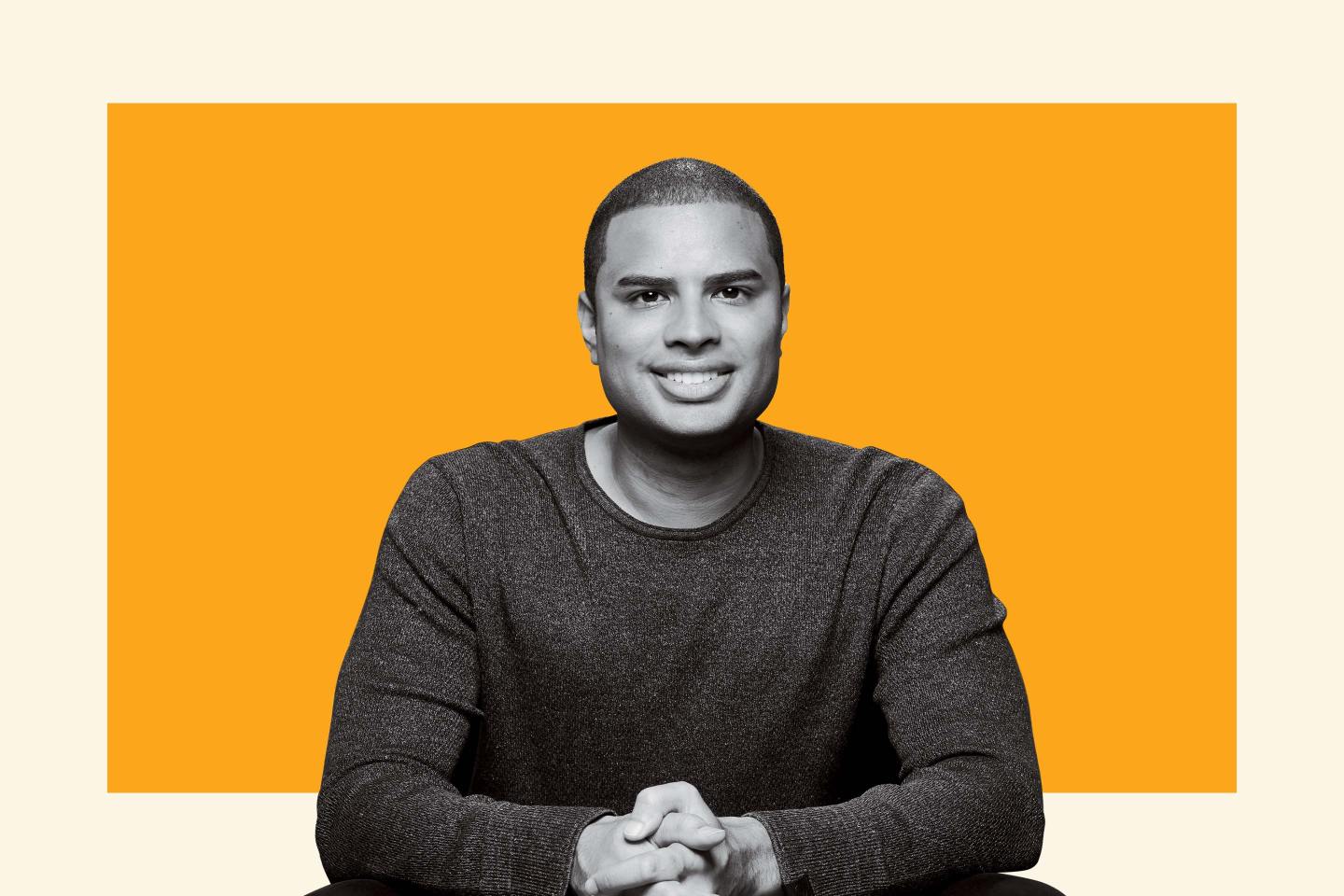
"Financial literacy is a problem for all of America, but it doesn’t impact all Americans equally," writes Cadre CEO Ryan Williams.
"Financial literacy is a problem for all of America, but it doesn’t impact all Americans equally," writes Cadre CEO Ryan Williams. Courtesy of Cadre

In the working-class neighborhood where I grew up, there was virtually no access to financial education. Most people in my community rented their houses and apartments, my family included—and there weren’t a lot of role models in our community to explain the importance of saving, investing, and creating wealth. The result was easy to predict: Most of my childhood friends haven’t had especially successful careers, and those who have made good money haven’t always known what to do with it.

Multiply my own experience by the countless underserved communities across the United States, and it’s no wonder that a recent Federal Reserve study found that more than one-third of U.S. households would need to sell something or borrow money to cover an unexpected $400 expense. And while more than 70% of Americans believe they have a high level of financial knowledge, a FINRA study found that only 40% could correctly answer four out of six basic personal finance questions.

Financial literacy is a problem for all of America, but it doesn’t impact all Americans equally. Unsurprisingly, there are acute disparities across racial and socioeconomic lines. Financial literacy is lowest among Black and Hispanic Americans, women, and young people. I experienced this firsthand as a first-year student at Harvard, when I realized that even at this esteemed university, many underrepresented-minority students had disproportionately lower financial literacy than their classmates. The entrepreneur in me kicked in, and alongside two of my classmates, we founded a financial education group (Veritas Financial Group) especially for students of color at Harvard to tackle a crisis that clearly has deep roots within disadvantaged communities. This organization is now one of the largest pre-professional organizations at Harvard and has empowered thousands of undergraduates to enter the financial services field on a more level playing field.

How can these disparities in access to financial education and financial services play out as young people enter the workforce? In many ways. One is in the meaningful wealth gap growing across our country. White families hold nearly eight times the wealth of Black families and more than five times the wealth of Hispanic families. While multiple factors contribute to this reality, financial literacy is a compounding factor. People with lower levels of financial literacy are more likely to rely on credit cards and less likely to plan for retirement or have an emergency fund. This financial insecurity can follow them into the workplace and negatively impact their career goals, and about 40% of Black and Hispanic employees report that financial stress has a negative impact on their productivity at work.

This matters not just for the individuals and families that are disadvantaged by financial illiteracy and insecurity—it matters for the overall health of the nation. Senior citizens retiring without the means to live comfortably; parents who can’t afford to send their children to college; consumers riddled with insurmountable credit debt—these crises hold back the growth of the entire economy. That’s why dismantling these systemic disparities is so urgent.

But where to start? We all have an innate tendency to think that intractable problems will never be solved, and that the status quo is simply unshakable. We need to challenge that narrative and see financial literacy as the next challenge to conquer. 

First, financial literacy should be part of every school’s curriculum (see: Florida’s new mandate). Right now, 23 states require that students take a personal finance course to graduate. There are still 27 states to go. And we still have a long way to go toward ensuring equitable access—not only to financial education, but also to resources that are inclusive and can speak to students’ specific backgrounds and economic realities. As a participant in the Network for Teaching Entrepreneurship, I was able to hone my skills early on through their leadership classes and with direct involvement and support from the Founder of the organization, Steve Mariotti.

Second, we have better tools than ever before, and these tools are becoming more widely accessible through technology. There are some incredible apps that gamify financial literacy for young people of all ages. Tools like Goalsetter use games and memes to make personal finance fun for teens. For those who are already investing, online investment platforms like the one I founded—Cadre—are making financial investments like commercial real estate more broadly accessible, along with financial education so that investors can continue on their life-long journey of understanding money and markets. Much more is needed. 

Finally, we need to see financial literacy as a necessary but not sufficient piece of the puzzle. That means those who have the means need to actively invest and drive capital into historically marginalized communities. Teaching people how to save, invest, and start a business is vitally important. But if someone is living paycheck to paycheck, they don’t have the luxury of planning for their financial future—they’re just trying to get through the week. Ensuring equitable access to education, capital, and job opportunities is essential to building a strong economic foundation that people can build on.

I am highly conscious that my story as a young Black technology founder is all too rare. I caught the entrepreneurial bug as a teenager and started multiple companies by the time I had entered college. Much of this was self-taught over hours in the library and countless more hours building a network that would support me in my future endeavors. In college, I was fortunate to have a lot of mentors who invested their time and wisdom in me. By standardizing basic financial education, scaling technology in ways that meet people where they are, and investing in marginalized communities, we can make stories like mine a little less unlikely—and strengthen the economy for all of us.

Ryan Williams is the Founder and CEO of Cadre, a technology investment platform that provides access to institutional-quality real estate investments for individual investors.


Never miss a story: Follow your favorite topics and authors to get a personalized email with the journalism that matters most to you.
About the Author
By Ryan Williams
See full bioRight Arrow Button Icon

Latest in Commentary

Finance
Lorem ipsum dolor sit amet, consectetur adipiscing elit, sed do eiusmod tempor incididunt ut labore et dolore magna aliqua. Ut enim ad minim veniam
By Fortune Editors
October 20, 2025
Finance
Lorem ipsum dolor sit amet, consectetur adipiscing elit, sed do eiusmod tempor incididunt ut labore et dolore magna aliqua. Ut enim ad minim veniam
By Fortune Editors
October 20, 2025
Finance
Lorem ipsum dolor sit amet, consectetur adipiscing elit, sed do eiusmod tempor incididunt ut labore et dolore magna aliqua. Ut enim ad minim veniam
By Fortune Editors
October 20, 2025
Finance
Lorem ipsum dolor sit amet, consectetur adipiscing elit, sed do eiusmod tempor incididunt ut labore et dolore magna aliqua. Ut enim ad minim veniam
By Fortune Editors
October 20, 2025
Finance
Lorem ipsum dolor sit amet, consectetur adipiscing elit, sed do eiusmod tempor incididunt ut labore et dolore magna aliqua. Ut enim ad minim veniam
By Fortune Editors
October 20, 2025
Finance
Lorem ipsum dolor sit amet, consectetur adipiscing elit, sed do eiusmod tempor incididunt ut labore et dolore magna aliqua. Ut enim ad minim veniam
By Fortune Editors
October 20, 2025

Most Popular

Finance
Lorem ipsum dolor sit amet, consectetur adipiscing elit, sed do eiusmod tempor incididunt ut labore et dolore magna aliqua. Ut enim ad minim veniam
By Fortune Editors
October 20, 2025
Finance
Lorem ipsum dolor sit amet, consectetur adipiscing elit, sed do eiusmod tempor incididunt ut labore et dolore magna aliqua. Ut enim ad minim veniam
By Fortune Editors
October 20, 2025
Finance
Lorem ipsum dolor sit amet, consectetur adipiscing elit, sed do eiusmod tempor incididunt ut labore et dolore magna aliqua. Ut enim ad minim veniam
By Fortune Editors
October 20, 2025
Finance
Lorem ipsum dolor sit amet, consectetur adipiscing elit, sed do eiusmod tempor incididunt ut labore et dolore magna aliqua. Ut enim ad minim veniam
By Fortune Editors
October 20, 2025
Finance
Lorem ipsum dolor sit amet, consectetur adipiscing elit, sed do eiusmod tempor incididunt ut labore et dolore magna aliqua. Ut enim ad minim veniam
By Fortune Editors
October 20, 2025
Finance
Lorem ipsum dolor sit amet, consectetur adipiscing elit, sed do eiusmod tempor incididunt ut labore et dolore magna aliqua. Ut enim ad minim veniam
By Fortune Editors
October 20, 2025
Fortune Secondary Logo
Rankings
  • 100 Best Companies
  • Fortune 500
  • Global 500
  • Fortune 500 Europe
  • Most Powerful Women
  • World's Most Admired Companies
  • See All Rankings
  • Lists Calendar
Sections
  • Finance
  • Fortune Crypto
  • Features
  • Leadership
  • Health
  • Commentary
  • Success
  • Retail
  • Mpw
  • Tech
  • Lifestyle
  • CEO Initiative
  • Asia
  • Politics
  • Conferences
  • Europe
  • Newsletters
  • Personal Finance
  • Environment
  • Magazine
  • Education
Customer Support
  • Frequently Asked Questions
  • Customer Service Portal
  • Privacy Policy
  • Terms Of Use
  • Single Issues For Purchase
  • International Print
Commercial Services
  • Advertising
  • Fortune Brand Studio
  • Fortune Analytics
  • Fortune Conferences
  • Business Development
  • Group Subscriptions
About Us
  • About Us
  • Press Center
  • Work At Fortune
  • Terms And Conditions
  • Site Map
  • About Us
  • Press Center
  • Work At Fortune
  • Terms And Conditions
  • Site Map
  • Facebook icon
  • Twitter icon
  • LinkedIn icon
  • Instagram icon
  • Pinterest icon

Latest in Commentary

charlie
CommentarySoftware
Anaplan CEO: AI isn’t eating software. It’s sorting it
By Charlie GottdienerMay 18, 2026
8 hours ago
shyam
CommentaryHealth
World Economic Forum: women’s health gets only 20% of R&D funding. We must seize this $1 trillion opportunity
By Shyam BishenMay 18, 2026
15 hours ago
murdochs
CommentaryMedia
OpenAI paid $100 million for a talk show. James Murdoch is eyeing an even bigger deal. The hot new asset class is humanity
By Lin CherryMay 17, 2026
1 day ago
dennis
CommentaryAI agents
Freshworks CEO: why agile enterprises are winning the AI race — and what they did differently
By Dennis WoodsideMay 17, 2026
1 day ago
Mary Moreland-Abbott Executive Vice President of Human Resources.
CommentaryRetirement
Gen X is the most indebted generation in America. Their employers can fix that
By Mary MorelandMay 17, 2026
1 day ago
liberman
Commentarystart-ups
We watched social media concentrate. The same thing is happening in AI, only at a deeper layer
By David Liberman and Daniil LibermanMay 16, 2026
2 days ago

Most Popular

The top foreign holders of U.S. debt may soon dump Treasury bonds and bring their money back home, potentially spiking borrowing costs
Economy
The top foreign holders of U.S. debt may soon dump Treasury bonds and bring their money back home, potentially spiking borrowing costs
By Jason MaMay 17, 2026
1 day ago
Microsoft AI chief gives it 18 months—for all white-collar work to be automated by AI
AI
Microsoft AI chief gives it 18 months—for all white-collar work to be automated by AI
By Jake AngeloMay 16, 2026
2 days ago
The Bezos family just donated $100 million to help achieve one of Mayor Zohran Mamdani’s top campaign promises
Politics
The Bezos family just donated $100 million to help achieve one of Mayor Zohran Mamdani’s top campaign promises
By Jake AngeloMay 12, 2026
6 days ago
'No one was coming to save me': How Reese Witherspoon built a $900 million company from a problem Hollywood wouldn't fix
Success
'No one was coming to save me': How Reese Witherspoon built a $900 million company from a problem Hollywood wouldn't fix
By Sydney LakeMay 17, 2026
1 day ago
SpaceX heads into a record-shattering IPO with the 'deepest moat that exists today' as investors vow to 'never bet against Elon'
Innovation
SpaceX heads into a record-shattering IPO with the 'deepest moat that exists today' as investors vow to 'never bet against Elon'
By Jason MaMay 16, 2026
2 days ago
Gen X is the most indebted generation in America. Their employers can fix that
Commentary
Gen X is the most indebted generation in America. Their employers can fix that
By Mary MorelandMay 17, 2026
1 day ago

© 2026 Fortune Media IP Limited. All Rights Reserved. Use of this site constitutes acceptance of our Terms of Use and Privacy Policy | CA Notice at Collection and Privacy Notice | Do Not Sell/Share My Personal Information
FORTUNE is a trademark of Fortune Media IP Limited, registered in the U.S. and other countries. FORTUNE may receive compensation for some links to products and services on this website. Offers may be subject to change without notice.