• Home
  • Latest
  • Fortune 500
  • Finance
  • Tech
  • Leadership
  • Lifestyle
  • Rankings
  • Multimedia

Trendingnow

1

The U.S. spent $30 billion to ditch textbooks for laptops and tablets: The result is the first generation less cognitively capable than their parents

2

Current price of oil as of July 13, 2026

3

Current price of silver as of Monday, July 13, 2026

1

The U.S. spent $30 billion to ditch textbooks for laptops and tablets: The result is the first generation less cognitively capable than their parents

2

Current price of oil as of July 13, 2026

3

Current price of silver as of Monday, July 13, 2026
CommentarySouth Korea

South Korea’s next big export boom won’t be in chips or K-pop songs

By
Ramon Pacheco Pardo
Ramon Pacheco Pardo
Down Arrow Button Icon
By
Ramon Pacheco Pardo
Ramon Pacheco Pardo
Down Arrow Button Icon
September 22, 2022, 11:00 PM ET
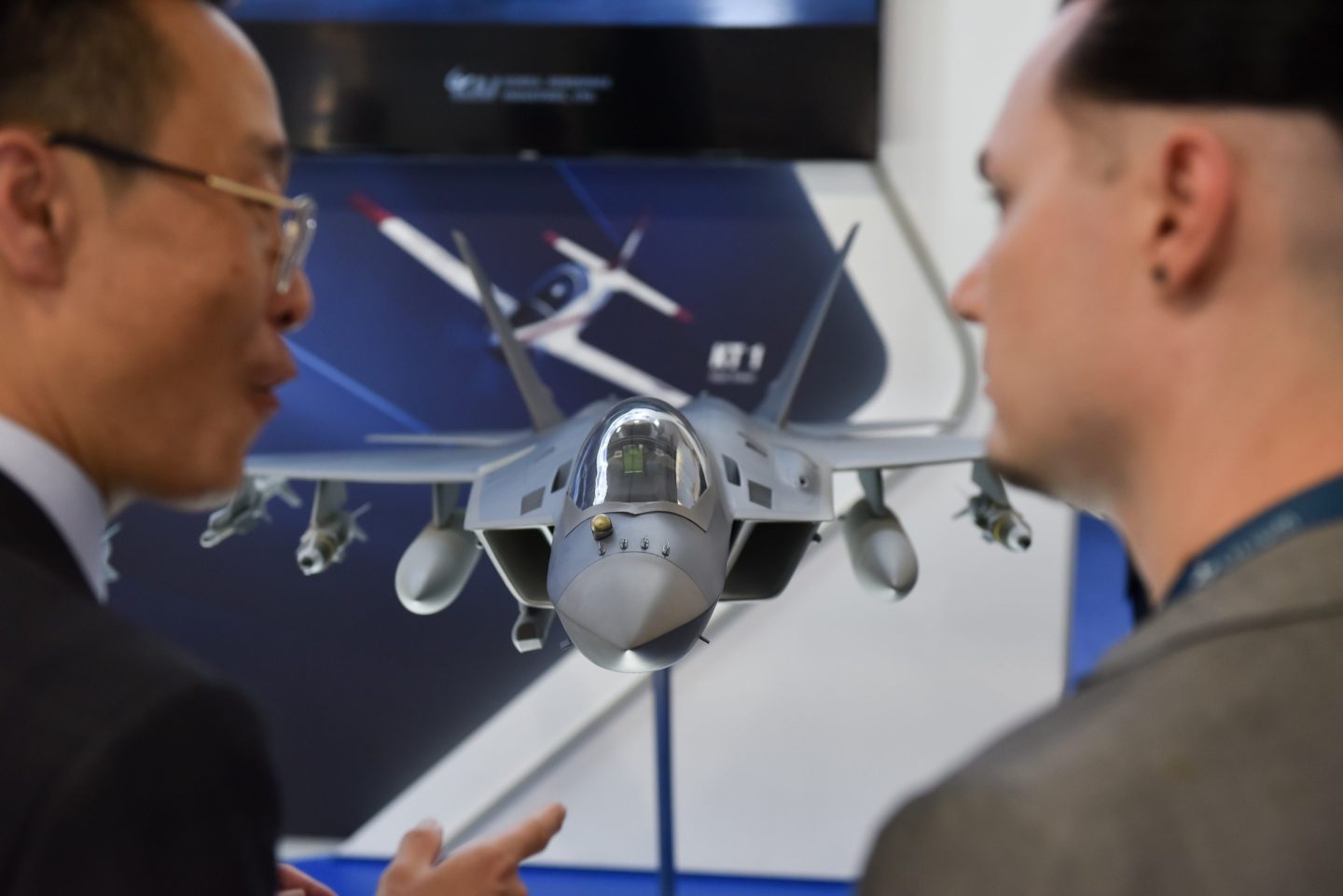
Two men look at a model of the Korean KF21 fighter jet
Ramon Pacheco Pardo, author of "Shrimp to Whale: South Korea from the Forgotten War to K-Pop" writes that Seoul has positioned itself to take over industries on the cutting-edge.John Keeble—Getty Images
Add Fortune on Google for similar content.

South Korea is making a splash when it comes to the arms trade.

On July 27th, South Korea signed one of its biggest export contracts ever. It wasn’t for semiconductors, or ships, or Korean dramas. Instead, it focused on a little-known, yet rapidly expanding, sector of the South Korean economy: arms.

At a military base in Morag, Poland inked an agreement to buy 1,000 tanks, 600 howitzers, and nearly 50 fighter jets from Seoul, made by companies like Hyundai Rotem and Hanwha Defense. Polish Defense Minister Mariusz Blaszczak was clear about why his country made the purchase: Poland needed state-of-the-art defense capabilities, to be delivered as soon as possible. South Korea was the only country that could fulfill both conditions.

Around the same time, South Korea attended its first NATO Summit in Madrid, along with other Asia-Pacific leaders. But while Russia and China were the main focus of attention, the conversation regarding Korea had another crucial component: advanced technology.

President Yoon Suk-yeol held over a dozen bilateral meetings during the Madrid NATO Summit. At these meetings, he touted South Korea’s advanced weapons systems, nuclear power plants, and burgeoning space industry as potential export growth areas for the South Korean economy.

High-tech ‘sales diplomacy’

While the rest of the world continues to obsess about the Korean Wave or the latest smartphone or flat screen TV from Samsung or LG, the South Korean government is quietly working in tandem with leading tech firms to find the country’s next growth engine.

This is South Korea’s tried-and-tested strategy to remain globally competitive. Government investment in blue-sky research, close cooperation with the private sector to analyze and settle on future growth engines, and the development of these technologies in a way that benefits both private revenues and the coffers of the South Korean government.

This relationship takes us back to the NATO Summit. South Korean manufacturers such as Hanwha have become one of the few international weapon systems firms to gain a foothold in the NATO market. In fact, South Korea is the only Asian country exporting to alliance members, including Norway, Poland and the U.K. That’s an impressive feat for a country that, until the 2010s, was barely a player in this market. Korea is already the world’s eighth-largest arms exporter, according to the Stockholm International Peace Research Institute.

South Korea has benefited from the need to develop technologies for domestic use. In April 2021, then-president Moon Jae-in beamed as he delivered a speech in front of South Korea’s first-ever home-grown fighter jet, the KF-21 Boramae. Countries such as Thailand, the Philippines, Iraq, or Qatar have already shown interest in the jet, manufactured by a consortium involving the South Korean government, Korea Aerospace Industries, and the Indonesian government. What started as a project to deter North Korea and China is poised to bring huge economic benefits to South Korea.

The same applies to the space sector. Last June, President Yoon attended the first successful launch of a South Korean rocket to put a satellite into orbit. Developed by the government’s Korea Aerospace Research Institute, the Nuri rocket was also designed for domestic purposes, perhaps putting a surveillance satellite into orbit to check on Pyongyang and Beijing. But foreign buyers would certainly be interested as well.

Nuclear power plants are also attracting overseas interest with majority state firm KEPCO joining consortiums in Egypt or the UAE to develop the sector in these countries—which South Korea itself needs to boost to reduce dependency on oil and gas from the Middle East and Russia, and pursue energy autonomy.

So is green shipping, with heavyweights Hyundai, Samsung, or Daewoo racing to lead the way at the global level but also as South Korea seeks to limit its own carbon emissions.

South Korea is banking on two advantages as part of its high-tech sales pitch. The first, unspoken advantage is that South Korea is not China. As relations between the U.S. and China sink to levels not seen for decades, Seoul could become a trusted partner for countries and companies seeking to build supply chains with limited or no Chinese involvement.

South Korea’s high-tech products are also cheaper than its competitors in the U.S. and elsewhere. Certainly, products from Lockheed Martin and Boeing are more advanced compared to their South Korea peers. But most countries don’t need the latest gadgets. They just need something advanced enough that allows them to protect themselves. That’s what South Korea offers.

South Korea Inc. now competes at the technological frontier, not just in consumer technology, but strategic technologies as well. The U.S., Japan, and Europe better get used to this new competition.

Ramon Pacheco Pardo is a Professor of International Relations at King’s College London and the KF-VUB Korea Chair at the Brussels School of Governance. He is the author of Shrimp to Whale: South Korea from the Forgotten War to K-Pop.

The opinions expressed in Fortune.com commentary pieces are solely the views of their authors and do not reflect the opinions and beliefs of Fortune.

Sign up for the Fortune Features email list so you don’t miss our biggest features, exclusive interviews, and investigations.


About the Author
By Ramon Pacheco Pardo
See full bioRight Arrow Button Icon
Add Fortune on Google for similar content.

Latest in Commentary

Finance
Lorem ipsum dolor sit amet, consectetur adipiscing elit, sed do eiusmod tempor incididunt ut labore et dolore magna aliqua. Ut enim ad minim veniam
By Fortune Editors
October 20, 2025
Finance
Lorem ipsum dolor sit amet, consectetur adipiscing elit, sed do eiusmod tempor incididunt ut labore et dolore magna aliqua. Ut enim ad minim veniam
By Fortune Editors
October 20, 2025
Finance
Lorem ipsum dolor sit amet, consectetur adipiscing elit, sed do eiusmod tempor incididunt ut labore et dolore magna aliqua. Ut enim ad minim veniam
By Fortune Editors
October 20, 2025
Finance
Lorem ipsum dolor sit amet, consectetur adipiscing elit, sed do eiusmod tempor incididunt ut labore et dolore magna aliqua. Ut enim ad minim veniam
By Fortune Editors
October 20, 2025
Finance
Lorem ipsum dolor sit amet, consectetur adipiscing elit, sed do eiusmod tempor incididunt ut labore et dolore magna aliqua. Ut enim ad minim veniam
By Fortune Editors
October 20, 2025
Finance
Lorem ipsum dolor sit amet, consectetur adipiscing elit, sed do eiusmod tempor incididunt ut labore et dolore magna aliqua. Ut enim ad minim veniam
By Fortune Editors
October 20, 2025

Most Popular

Finance
Lorem ipsum dolor sit amet, consectetur adipiscing elit, sed do eiusmod tempor incididunt ut labore et dolore magna aliqua. Ut enim ad minim veniam
By Fortune Editors
October 20, 2025
Finance
Lorem ipsum dolor sit amet, consectetur adipiscing elit, sed do eiusmod tempor incididunt ut labore et dolore magna aliqua. Ut enim ad minim veniam
By Fortune Editors
October 20, 2025
Finance
Lorem ipsum dolor sit amet, consectetur adipiscing elit, sed do eiusmod tempor incididunt ut labore et dolore magna aliqua. Ut enim ad minim veniam
By Fortune Editors
October 20, 2025
Finance
Lorem ipsum dolor sit amet, consectetur adipiscing elit, sed do eiusmod tempor incididunt ut labore et dolore magna aliqua. Ut enim ad minim veniam
By Fortune Editors
October 20, 2025
Finance
Lorem ipsum dolor sit amet, consectetur adipiscing elit, sed do eiusmod tempor incididunt ut labore et dolore magna aliqua. Ut enim ad minim veniam
By Fortune Editors
October 20, 2025
Finance
Lorem ipsum dolor sit amet, consectetur adipiscing elit, sed do eiusmod tempor incididunt ut labore et dolore magna aliqua. Ut enim ad minim veniam
By Fortune Editors
October 20, 2025
Fortune Secondary Logo
Rankings
  • 100 Best Companies
  • Fortune 500
  • Global 500
  • Fortune 500 Europe
  • Most Powerful Women
  • World's Most Admired Companies
  • See All Rankings
  • Lists Calendar
Sections
  • Finance
  • Fortune Crypto
  • Features
  • Leadership
  • Health
  • Commentary
  • Success
  • Retail
  • Mpw
  • Tech
  • Lifestyle
  • CEO Initiative
  • Asia
  • Politics
  • Conferences
  • Europe
  • Newsletters
  • Personal Finance
  • Environment
  • Magazine
  • Education
Customer Support
  • Frequently Asked Questions
  • Customer Service Portal
  • Privacy Policy
  • Terms Of Use
  • Single Issues For Purchase
  • International Print
Commercial Services
  • Advertising
  • Fortune Brand Studio
  • Fortune Analytics
  • Fortune Conferences
  • Business Development
  • Group Subscriptions
About Us
  • About Us
  • Press Center
  • Work At Fortune
  • Terms And Conditions
  • Site Map
  • About Us
  • Press Center
  • Work At Fortune
  • Terms And Conditions
  • Site Map
  • Facebook icon
  • Twitter icon
  • LinkedIn icon
  • Instagram icon
  • Pinterest icon

Latest in Commentary

b
CommentaryWorld Cup
Columbia Business School professors: What the Balogun red card can teach us about AI and judgment
By Oded Netzer, Christopher Frank and Paul MagnoneJuly 13, 2026
17 hours ago
usa
Commentary250 Years of Innovation
For 250 years, work defined American identity. That era Is ending
By Keith Ferrazzi and Wendy SmithJuly 11, 2026
3 days ago
m
Commentarymedicine
America’s bone health is quietly headed for a $19 billion crisis
By Matthew T. DrakeJuly 9, 2026
5 days ago
t
CommentaryEducation
AI is about to disrupt millions of jobs. A century ago, America’s answer was to build a new high school
By Tim KnowlesJuly 8, 2026
6 days ago
amit
CommentaryVenture Capital
Physical AI’s $50 trillion opportunity requires long-term conviction, but the payoff is huge 
By Amit ChaturvedyJuly 8, 2026
6 days ago
heat
Commentaryclimate change
McKinsey Global Institute: Climate planning has prioritized floods. Heat demands equal attention
By Sylvain Johansson, Mekala Krishnan, Kanmani Chockalingam and Annabel FarrJuly 7, 2026
7 days ago

Most Popular

The U.S. spent $30 billion to ditch textbooks for laptops and tablets: The result is the first generation less cognitively capable than their parents
Innovation
The U.S. spent $30 billion to ditch textbooks for laptops and tablets: The result is the first generation less cognitively capable than their parents
By Sasha RogelbergJuly 12, 2026
2 days ago
Current price of oil as of July 13, 2026
Personal Finance
Current price of oil as of July 13, 2026
By Joseph HostetlerJuly 13, 2026
23 hours ago
Current price of silver as of Monday, July 13, 2026
Personal Finance
Current price of silver as of Monday, July 13, 2026
By Joseph HostetlerJuly 13, 2026
23 hours ago
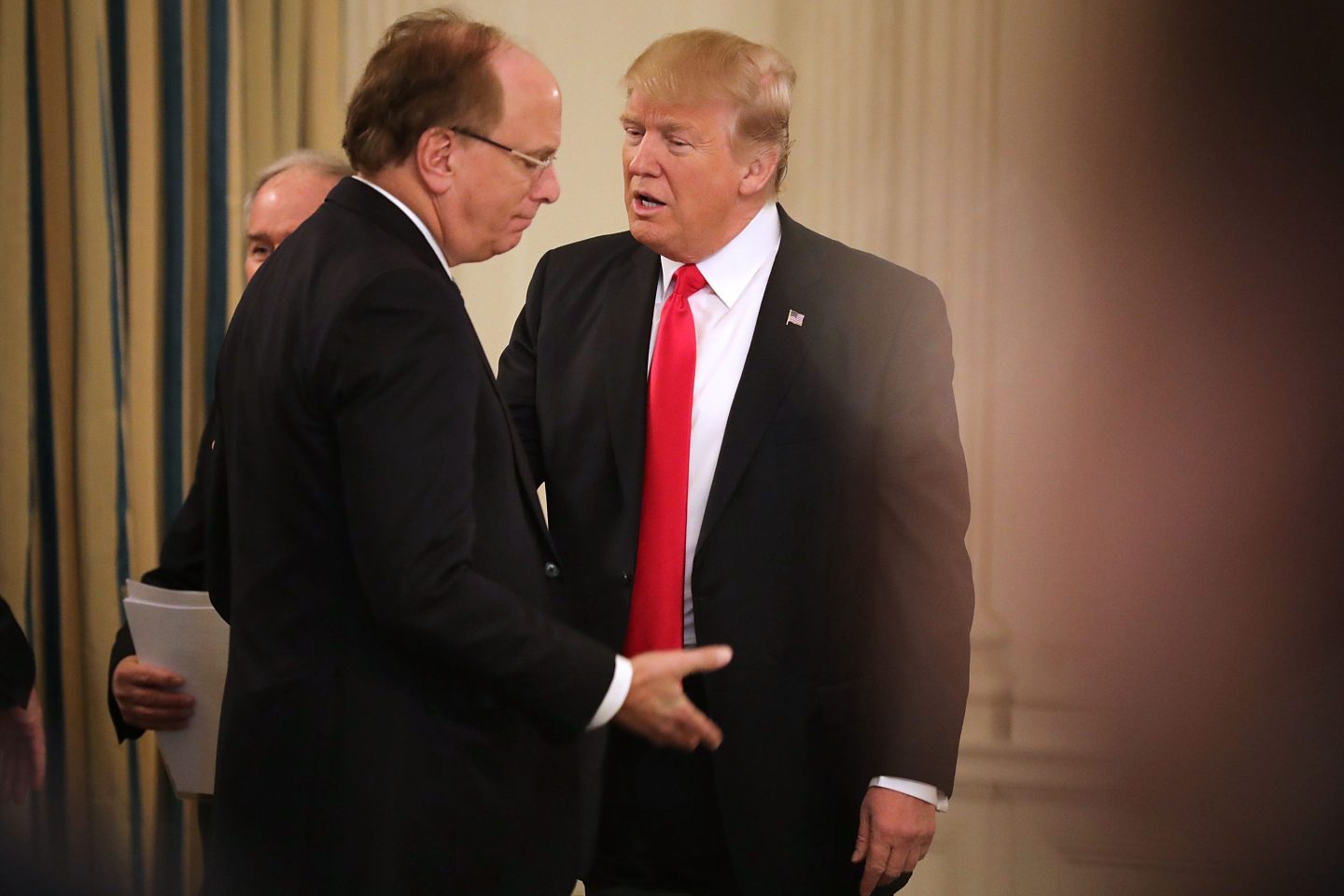
Trump embraces Australian retirement system backed by Larry Fink
Personal Finance
Trump embraces Australian retirement system backed by Larry Fink
By Brianna Sosa and BloombergJuly 12, 2026
2 days ago
How Pete Hegseth's DEI order just put Scouting America's future at stake
North America
How Pete Hegseth's DEI order just put Scouting America's future at stake
By Seth T. Kannarr, Derek H. Alderman and The ConversationJuly 13, 2026
14 hours ago
The U.S. and Iran can't agree on fully reopening the Strait of Hormuz. The solution could be straight out of the Old Testament
Middle East
The U.S. and Iran can't agree on fully reopening the Strait of Hormuz. The solution could be straight out of the Old Testament
By Jason MaJuly 11, 2026
2 days ago

© 2026 Fortune Media IP Limited. All Rights Reserved. Use of this site constitutes acceptance of our Terms of Use and Privacy Policy | CA Notice at Collection and Privacy Notice | Do Not Sell/Share My Personal Information
FORTUNE is a trademark of Fortune Media IP Limited, registered in the U.S. and other countries. FORTUNE may receive compensation for some links to products and services on this website. Offers may be subject to change without notice.