• Home
  • Latest
  • Fortune 500
  • Finance
  • Tech
  • Leadership
  • Lifestyle
  • Rankings
  • Multimedia
Environmentclimate change
Europe

Joe Biden has a big European climate change problem: His plan to cut carbon emissions is so different it might be incompatible

By
Noah Kaufman
Noah Kaufman
,
Chris Bataille
Chris Bataille
,
Gautam Jain
Gautam Jain
,
Sagatom Saha
Sagatom Saha
, and
The Conversation
The Conversation
Down Arrow Button Icon
By
Noah Kaufman
Noah Kaufman
,
Chris Bataille
Chris Bataille
,
Gautam Jain
Gautam Jain
,
Sagatom Saha
Sagatom Saha
, and
The Conversation
The Conversation
Down Arrow Button Icon
January 24, 2023, 5:00 AM ET
Biden and Macron
US President Joe Biden and French President Emmanuel Macron.BRENDAN SMIALOWSKI/AFP via Getty Images

Rising trade tensions between the U.S. and the European Union, two of the most important global leaders when it comes to climate policy, could undermine key climate initiatives of both governments and make it harder for the world to put the brakes on climate change.

The two have clashed over the 2022 Inflation Reduction Act’s requirements that products be made in America to receive certain U.S. subsidies. The EU recently announced plans for its own domestic-only clean technology subsidies in response.

The U.S. and EU also now have competing carbon tariff proposals, and these could end up undermining each other.

In December 2022, the EU reached a provisional agreement on a carbon border adjustment mechanism. It will put carbon-based tariffs on steel, aluminum and other industrial imports that aren’t regulated by comparable climate policies in their home countries. The Biden administration, meanwhile, proposed a “green steel club” of nations that would cooperate on reducing emissions by levying tariffs on relatively high-emission imports.

At first glance, the two approaches might seem similar. But the EU and U.S. proposals reflect starkly different and arguably incompatible visions for the intersection of climate and trade policies.

A failure to align approaches risks further stoking trade tensions and would likely have international repercussions. Without multinational coalitions, dirtier, lower-cost competition will undercut emerging low-carbon technologies.

A strong transatlantic partnership is a prerequisite to greening the global economy. Without creative compromises and skillful diplomacy, the EU may find that its tariffs lead to reprisals rather than reciprocal action, and the U.S. quest to create climate clubs will not get off the ground.

EU’s textbook approach to tariffs

The carbon border adjustment mechanism, or CBAM, is tied to the EU’s flagship climate policy, its emission trading system. The system requires large European factories and other greenhouse gas emitters to purchase allowances for each ton of carbon dioxide they release. It’s a form of a carbon price.

However, if only European industries have to pay this carbon price, the EU risks domestic production’s losing out to imports from countries with weaker regulations on emissions. This phenomenon, referred to as “carbon leakage,” can result in even dirtier industrial production.

To date, the EU has avoided carbon leakage by compensating domestic producers of certain industrial products with free emissions allowances. But that approach is becoming increasingly expensive as the carbon price rises, with a recent trading range of 70 to 100 euros per metric ton. The CBAM makes it possible to phase out these free allowances by phasing in tariffs on imports from countries without comparable carbon pricing policies. Once finalized, the tariffs could be applied starting in 2026. https://www.youtube.com/embed/e-gc682xVcg?wmode=transparent&start=0 How the EU’s carbon border adjustment would work.

The CBAM has been met with some international outrage, with the “BRICS” countries – Brazil, Russia, India, China and South Africa – calling it “discriminatory” and a U.S. senator accusing the EU of going “rogue.”

In reality, the CBAM treats domestic products and imports equally by applying the same carbon price, just as any economics textbook recommends. It also aims to further global climate action by giving other countries the incentive to implement their own carbon pricing policies.

Biden’s climate club approach

Unlike the EU, the U.S. has failed to adopt a national carbon price despite several attempts. The Inflation Reduction Act instead fills the federal climate policy void largely by offering subsidies for producing clean energy.

However, subsidies to American producers won’t reduce emissions from other countries’ production of internationally traded products.

For example, steel accounts for 11% of global carbon dioxide emissions, with the vast majority from East Asia, including 53% of global production from China. Transforming Chinese production is therefore critical to lowering emissions.

Encouraging a global shift to cleaner production methods will require international cooperation, including trade measures that enable expensive low-carbon investments and penalize high-emissions steel production.

President Joe Biden needed an approach to climate tariffs that would benefit U.S. producers without requiring a politically untenable carbon price. His proposed green steel club is an agreement among countries that would commit their steel and aluminum industries to meeting certain emissions standards. Tariffs would be imposed on imports that exceed the standard or come from countries that are not signatories to the agreement.

Most U.S. manufacturers would benefit. U.S. steel typically produces fewer emissions than its competitors. The desire to exploit this “carbon advantage” has taken hold with politicians on both sides of the aisle.

Biden’s plan could be the first “climate club” of nations, consistent with the recommendations of an increasing number of policy experts. In a recent book, Charles Sabel and David Victor suggest building on the international success in phasing out ozone-depleting chemicals: The Montreal Protocol used a combination of cooperative learning, penalties and pools of resources for countries in need of technical and financial support.

Creative ways to cooperate

The two visions for climate policy tariffs involve different paths toward somewhat different goals, so they cannot easily be reconciled. The premise of the EU strategy is that tariffs are necessary to ensure that climate policies impose the same costs on domestic and foreign emitters. In contrast, the U.S. is proposing tariffs that penalize producers with high emissions.

The U.S. cannot pursue the EU approach without some form of a national carbon price. At the same time, the EU is unlikely to abandon its long-planned and laboriously negotiated CBAM, particularly to partner with a White House that may have a different occupant in two years.

There are, however, pathways forward that blend elements of both visions.

For example, parts of the CBAM, including the linkage to the EU carbon price, could be included as elements of climate clubs, including Biden’s green steel club. That may enable the EU to retain hard-fought progress on its emissions trading system.

Alternatively, some U.S. senators are pushing legislation to create a U.S. carbon border adjustment, including a domestic carbon price and a tariff on imports of some energy-intensive products like steel and aluminum. Bipartisan support for such legislation would create a basis for a durable compromise with the EU. However, even a narrow carbon price on industrial products may not be politically viable in the Republican-controlled House of Representatives.

Looking ahead

Any unilateral use of tariffs will strain sensitive geopolitical relationships.

By pursuing compromise rather than conflict, the U.S. and EU can leverage their joint economic strength to create a powerful coalition that encourages low-carbon industrial production around the globe, including in China and India, without ceding domestic advantages.

In our view, both sides have ample reasons to find common ground.

Noah Kaufman is Research Scholar in Climate Economics, Columbia University; Chris Bataille is Research Fellow in Energy and Climate Policy, Columbia University; Gautam Jain is Senior Research Scholar in Financial Markets, Columbia University, and Sagatom Saha is Research Scholar in Energy Policy, Columbia University.

This article is republished from The Conversation under a Creative Commons license. Read the original article.

Learn how to navigate and strengthen trust in your business with The Trust Factor, a weekly newsletter examining what leaders need to succeed. Sign up here.
About the Authors
By Noah Kaufman
See full bioRight Arrow Button Icon
By Chris Bataille
See full bioRight Arrow Button Icon
By Gautam Jain
See full bioRight Arrow Button Icon
By Sagatom Saha
See full bioRight Arrow Button Icon
By The Conversation
See full bioRight Arrow Button Icon

Latest in Environment

Finance
Lorem ipsum dolor sit amet, consectetur adipiscing elit, sed do eiusmod tempor incididunt ut labore et dolore magna aliqua. Ut enim ad minim veniam
By Fortune Editors
October 20, 2025
Finance
Lorem ipsum dolor sit amet, consectetur adipiscing elit, sed do eiusmod tempor incididunt ut labore et dolore magna aliqua. Ut enim ad minim veniam
By Fortune Editors
October 20, 2025
Finance
Lorem ipsum dolor sit amet, consectetur adipiscing elit, sed do eiusmod tempor incididunt ut labore et dolore magna aliqua. Ut enim ad minim veniam
By Fortune Editors
October 20, 2025
Finance
Lorem ipsum dolor sit amet, consectetur adipiscing elit, sed do eiusmod tempor incididunt ut labore et dolore magna aliqua. Ut enim ad minim veniam
By Fortune Editors
October 20, 2025
Finance
Lorem ipsum dolor sit amet, consectetur adipiscing elit, sed do eiusmod tempor incididunt ut labore et dolore magna aliqua. Ut enim ad minim veniam
By Fortune Editors
October 20, 2025
Finance
Lorem ipsum dolor sit amet, consectetur adipiscing elit, sed do eiusmod tempor incididunt ut labore et dolore magna aliqua. Ut enim ad minim veniam
By Fortune Editors
October 20, 2025

Most Popular

Finance
Lorem ipsum dolor sit amet, consectetur adipiscing elit, sed do eiusmod tempor incididunt ut labore et dolore magna aliqua. Ut enim ad minim veniam
By Fortune Editors
October 20, 2025
Finance
Lorem ipsum dolor sit amet, consectetur adipiscing elit, sed do eiusmod tempor incididunt ut labore et dolore magna aliqua. Ut enim ad minim veniam
By Fortune Editors
October 20, 2025
Finance
Lorem ipsum dolor sit amet, consectetur adipiscing elit, sed do eiusmod tempor incididunt ut labore et dolore magna aliqua. Ut enim ad minim veniam
By Fortune Editors
October 20, 2025
Finance
Lorem ipsum dolor sit amet, consectetur adipiscing elit, sed do eiusmod tempor incididunt ut labore et dolore magna aliqua. Ut enim ad minim veniam
By Fortune Editors
October 20, 2025
Finance
Lorem ipsum dolor sit amet, consectetur adipiscing elit, sed do eiusmod tempor incididunt ut labore et dolore magna aliqua. Ut enim ad minim veniam
By Fortune Editors
October 20, 2025
Finance
Lorem ipsum dolor sit amet, consectetur adipiscing elit, sed do eiusmod tempor incididunt ut labore et dolore magna aliqua. Ut enim ad minim veniam
By Fortune Editors
October 20, 2025
Fortune Secondary Logo
Rankings
  • 100 Best Companies
  • Fortune 500
  • Global 500
  • Fortune 500 Europe
  • Most Powerful Women
  • Future 50
  • World’s Most Admired Companies
  • See All Rankings
Sections
  • Finance
  • Fortune Crypto
  • Features
  • Leadership
  • Health
  • Commentary
  • Success
  • Retail
  • Mpw
  • Tech
  • Lifestyle
  • CEO Initiative
  • Asia
  • Politics
  • Conferences
  • Europe
  • Newsletters
  • Personal Finance
  • Environment
  • Magazine
  • Education
Customer Support
  • Frequently Asked Questions
  • Customer Service Portal
  • Privacy Policy
  • Terms Of Use
  • Single Issues For Purchase
  • International Print
Commercial Services
  • Advertising
  • Fortune Brand Studio
  • Fortune Analytics
  • Fortune Conferences
  • Business Development
  • Group Subscriptions
About Us
  • About Us
  • Editorial Calendar
  • Press Center
  • Work At Fortune
  • Diversity And Inclusion
  • Terms And Conditions
  • Site Map
  • About Us
  • Editorial Calendar
  • Press Center
  • Work At Fortune
  • Diversity And Inclusion
  • Terms And Conditions
  • Site Map
  • Facebook icon
  • Twitter icon
  • LinkedIn icon
  • Instagram icon
  • Pinterest icon

Latest in Environment

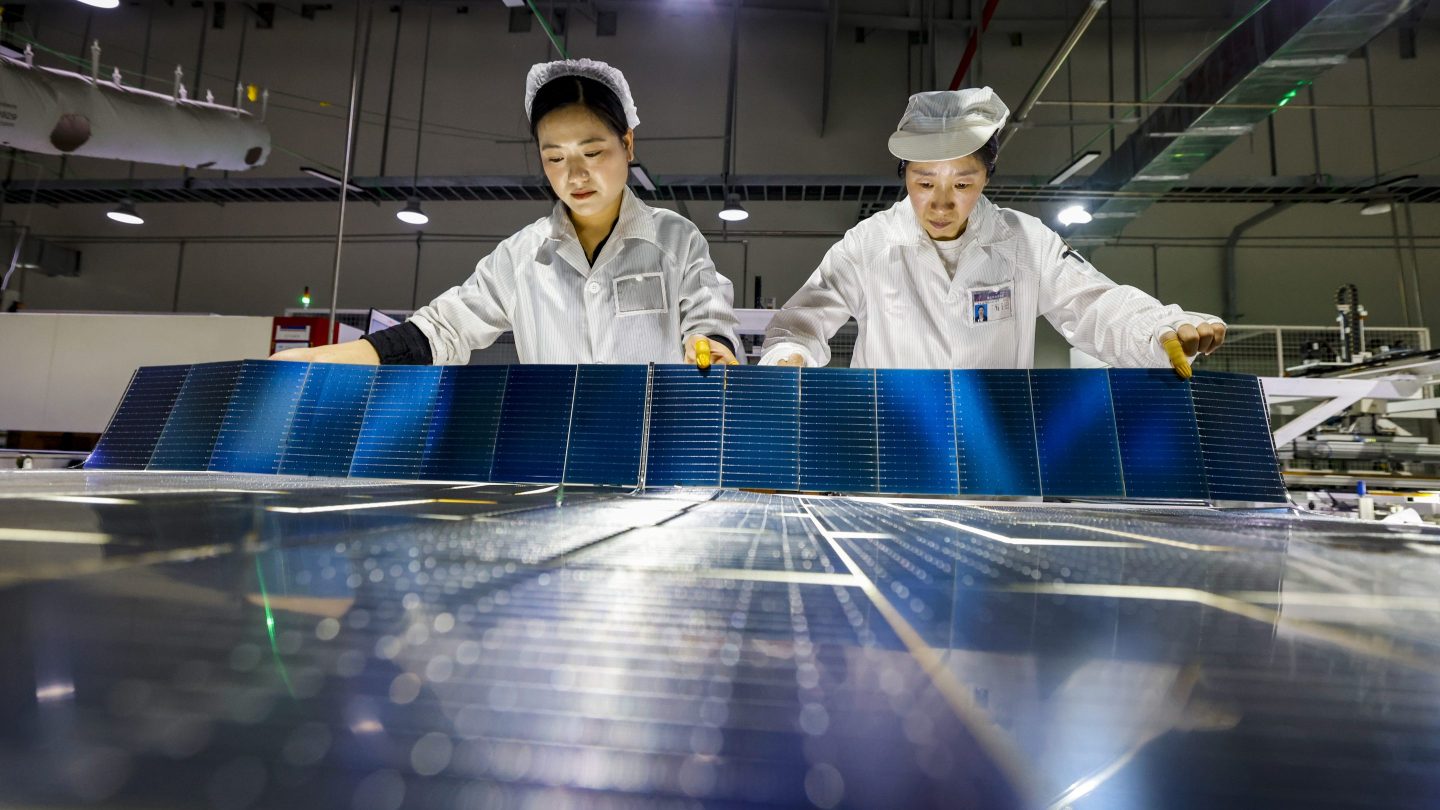
Workers on the production line of solar panels in China
EnergyRenewables
After renewable power’s record-smashing 2025, the Iran war could accelerate the shift as countries seek ‘structurally more resilient’ energy, UN says
By Tristan BoveApril 2, 2026
17 hours ago
china
AIChina
Meet China’s AI-powered recycling robot that sorts 220 pounds of clothes in 2 to 3 minutes
By Tian MacLeod Ji and The Associated PressApril 2, 2026
18 hours ago
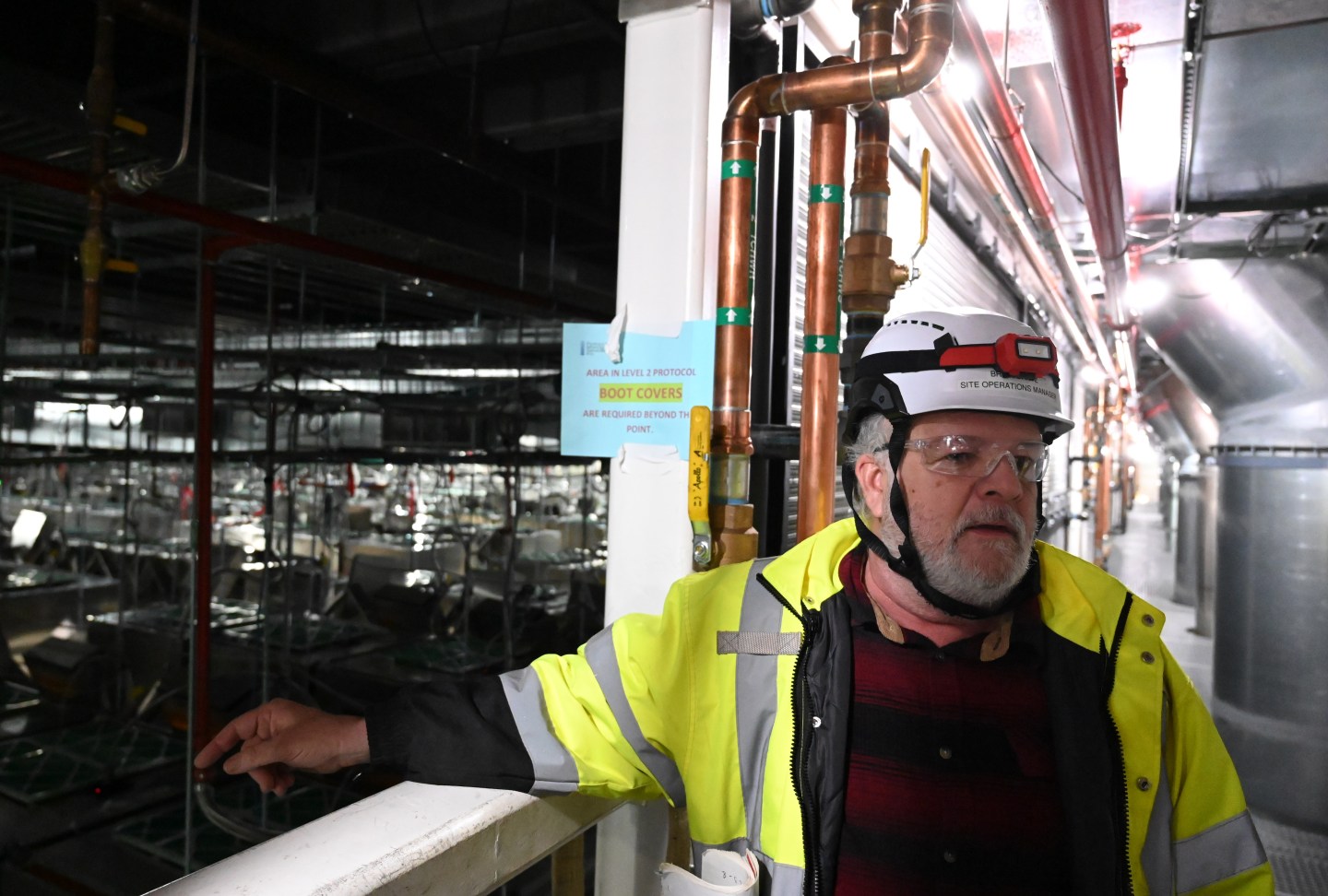
A chip research center site operations manager stands next to a window overlooking the facility.
EnvironmentData centers
Data centers are so hot their ‘heat island’ effect is raising temperatures up to 6 miles away and impacting 343 million people worldwide, study finds
By Sasha RogelbergApril 1, 2026
2 days ago
trump
CommentaryEPA
The EPA just valued a human life at $0. That’s not just a moral crisis — it’s a market crisis
By Andrew BeharApril 1, 2026
2 days ago
rice's whale
Environmentendangered species
Trump’s plan to drill for oil in the Gulf of Mexico could be foiled by just 50 survivors of a rare whale species
By Tammy Webber and The Associated PressMarch 31, 2026
3 days ago
burgum
Environmentendangered species
Washington’s ‘God Squad’ assembles to debate the fate of a rare endangered whale and drilling in the Gulf of Mexico
By Matthew Brown and The Associated PressMarch 31, 2026
3 days ago

Most Popular

Gen Z fled San Francisco for Texas and Florida. Now they’re turning ‘welcomer cities’ into the next big tech towns
Real Estate
Gen Z fled San Francisco for Texas and Florida. Now they’re turning ‘welcomer cities’ into the next big tech towns
By Fortune EditorsApril 2, 2026
1 day ago
Major 4-day workweek study suggests that when we work 5 days we spend one doing basically nothing
Success
Major 4-day workweek study suggests that when we work 5 days we spend one doing basically nothing
By Fortune EditorsApril 2, 2026
20 hours ago
Current price of oil as of April 2, 2026
Personal Finance
Current price of oil as of April 2, 2026
By Fortune EditorsApril 2, 2026
20 hours ago
Current price of gold as of April 1, 2026
Personal Finance
Current price of gold as of April 1, 2026
By Fortune EditorsApril 1, 2026
2 days ago
Paul Krugman smacks down Trump speech with argument that $4 gas is ‘less than half’ of the Hormuz hit. Here’s what he’s talking about
Economy
Paul Krugman smacks down Trump speech with argument that $4 gas is ‘less than half’ of the Hormuz hit. Here’s what he’s talking about
By Fortune EditorsApril 2, 2026
15 hours ago
The tax escape map: Billionaires are bolting for Florida from the West Coast and taking billions in tax revenue with them
Real Estate
The tax escape map: Billionaires are bolting for Florida from the West Coast and taking billions in tax revenue with them
By Fortune EditorsApril 2, 2026
1 day ago

© 2026 Fortune Media IP Limited. All Rights Reserved. Use of this site constitutes acceptance of our Terms of Use and Privacy Policy | CA Notice at Collection and Privacy Notice | Do Not Sell/Share My Personal Information
FORTUNE is a trademark of Fortune Media IP Limited, registered in the U.S. and other countries. FORTUNE may receive compensation for some links to products and services on this website. Offers may be subject to change without notice.