• Home
  • Latest
  • Fortune 500
  • Finance
  • Tech
  • Leadership
  • Lifestyle
  • Rankings
  • Multimedia

Exclusive

An hour in the Oval Office with President Trump.

An hour in the Oval Office with President Trump.

An hour in the Oval Office with President Trump.

An hour in the Oval Office with President Trump.

An hour in the Oval Office with President Trump.

An hour in the Oval Office with President Trump.

An hour in the Oval Office with President Trump.

An hour in the Oval Office with President Trump.

An hour in the Oval Office with President Trump.

An hour in the Oval Office with President Trump.

CommentaryAI

Why we can’t open-source a solution to A.I.’s ethical issues

By
Frederik Hvilshøj
Frederik Hvilshøj
Down Arrow Button Icon
By
Frederik Hvilshøj
Frederik Hvilshøj
Down Arrow Button Icon
June 16, 2023, 7:59 AM ET
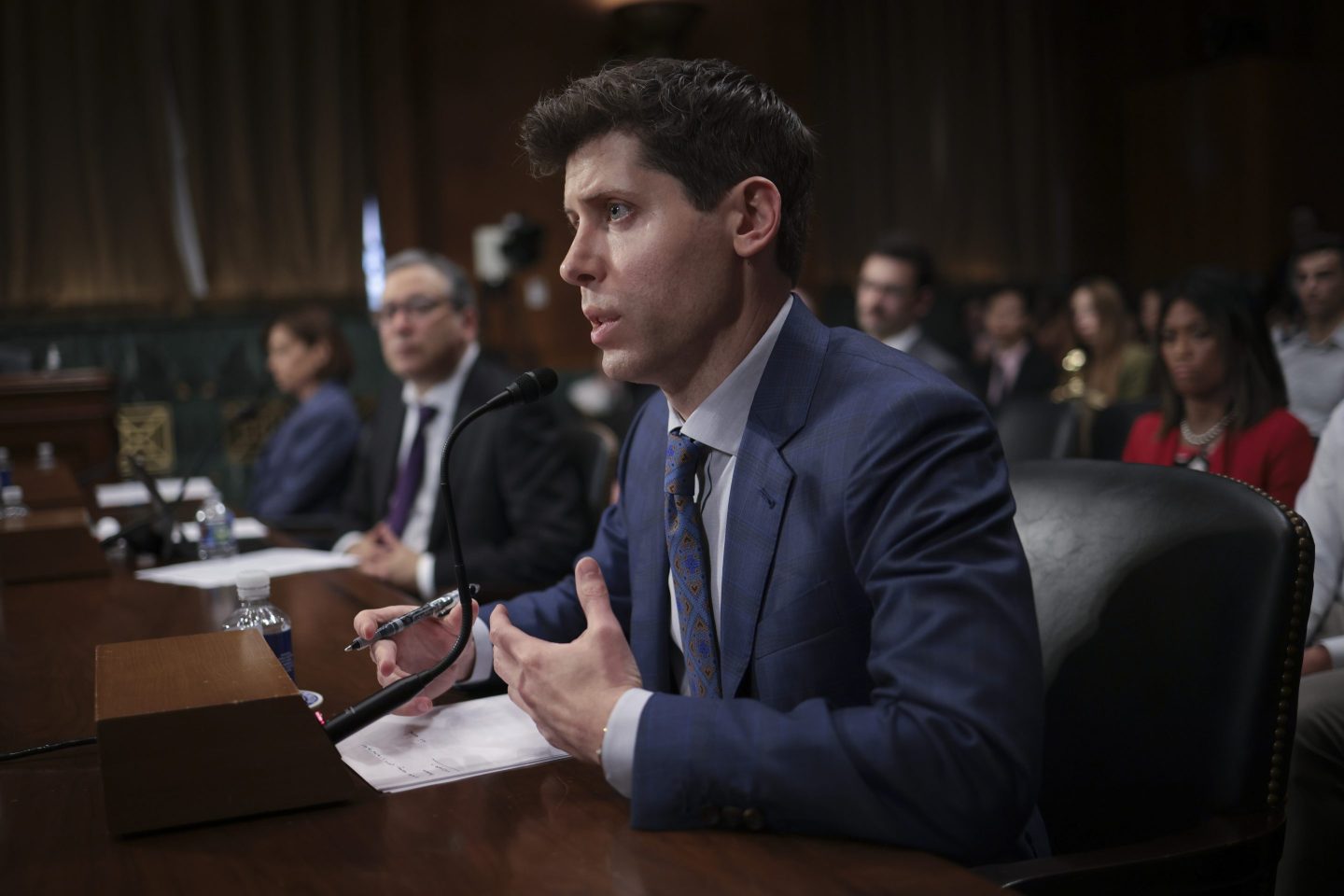
OpenAI CEO Sam Altman
OpenAI CEO Sam Altman testifies before the Senate Judiciary Subcommittee on Privacy, Technology, and the Law last month.Win McNamee—Getty Images

While open-source code has revolutionized the world of technology, recent developments like the rise of foundation models, accelerated investment into artificial intelligence, and escalating geopolitical A.I. arms races have forced the open-source community to confront the ethical issues surrounding open-source code. 

Potential intellectual property violations, the perpetuation of bias and discrimination, privacy and security risks, power dynamics, and governance issues within the community, as well as the environmental impact, are all ethical issues that need addressing.

These issues have kickstarted a debate on whether a move from an open-source movement to an ethical source one could be the solution. Many developers have advocated for licenses (much like the Hippocratic Licence) that put ethical restrictions on the use of open-source code. Others point to the potential role of government regulators as the solution.

When it comes to machine learning models, there are a lot of unknown unknowns. The developers of these models must now face the decision as to whether to open-source or not. But for developers to predict all the possible use cases for machine learning is as impossible as the mathematicians at Bletchley Park predicting all the potential use cases for computers. Most developers recognize that by making their code open, they lose control of how it’s used–and who uses it.

Licenses are increasingly heralded as a solution to this problem. However, not only does restricting the use of open-source code with additional licenses contradict the core principle of the open-source community that code should be accessible to everyone, but it could also damage the collaborative environment that’s been fundamental to the open-source community’s ability to speed up technological development.

There’s also a lot of doubt as to whether ethical licenses will actually reduce the risk of code being used for nefarious purposes. Many countries already have human rights laws, and individuals or organizations violating those laws should be prosecuted accordingly, regardless of the method or technology used to perpetrate the abuse. If such laws do not deter these violators, then it’s unlikely that a licensing agreement would have any impact on the course of their actions.

A.I. systems are complex, which makes enforcing their ethical use burdensome. The rapid advancement of A.I. technology also makes it challenging to keep up with developments and potential ethical implications. Additionally, a lack of transparency and accountability for A.I. systems can make it challenging to hold organizations responsible for ethical violations. Addressing these challenges requires ongoing collaboration, dialogue, and investment in ethical research and development to ensure that A.I. is used in a way that aligns with societal values and promotes the greater good.

The burden of ethical use should rest with those who use open-source code to build A.I. products as opposed to those who write the code. That’s why government regulation is key for ensuring the ethical use of A.I. Government regulation would enforce ethical use to be defined rigorously, and result in the creation of bureaucratic structures around evaluating A.I. systems.

Similar to how governments regulate and scrutinize medical products before approving them for public consumption, governments could also ensure that A.I. passes certain tests before it’s released to the public. The onus should be on governments, armed with ample resources to investigate these tools, to take responsibility for these tests, rather than on developers, who can instead focus on building more advanced A.I.

Any company, organization, or individual should have to provide clear details about the properties and broader impacts of the model, including the data used to train it and the code used to develop it. They should disclose any potentially harmful applications before making it available for use. This application approach is not so different from the application process used by many of the large academic conferences, which enforce a submission structure through which the applicant must transparently address the ethical issues and broader impact.

In general, evaluating models to the point where users can be certain that they operate ethically and correctly all the time remains a problem in the field of A.I. Even OpenAI has struggled to figure out how to do it with ChatGPT. The good news is that since there has been a lot of research into understanding the fairness, accountability, and transparency of A.I. models, governments already have a lot of tools from which to begin building regulatory frameworks for A.I. 

The European Union introduced a proposal for a new legal framework on A.I. in 2021, which aims to ensure that A.I. is developed and used in a way that aligns with EU values. The United States has established the National Artificial Intelligence Initiative Office (NAIIO) to coordinate federal investments in A.I. research and development. Canada has similarly established the Canadian Institute for Advanced Research (CIFAR) to fund interdisciplinary research on A.I. and to develop ethical and technical standards for A.I. Singapore has introduced the Model AI Governance Framework to provide guidance on the responsible development and use of A.I. 

By taking a multi-stakeholder approach and investing in ethical research and development, governments can ensure that A.I. is developed and used in a way that aligns with societal values and promotes the greater good.

We are moving into an era in which decisions are being made for and about individuals using algorithmic processes that do not have human involvement. Individuals have a right to an explanation about how these A.I. systems reached those decisions, and that explanation depends on having a transparent process. 

While the movement for ethical source licenses comes from a place of strong principles and positive intentions, their effects are limited due to factors such as lack of enforcement mechanisms, limited scope, lack of awareness, alternative licensing options, and lack of standardization, and their approach requires a reactive legal effort. Licensors would have to watch all the uses of their open-source code, which is impractical. Governments, on the other hand, have the opportunity to protect the public from the potential negative impact of A.I. systems–and they can do so through proactive regulation and enforcement. 

Frederik Hvilshøj is the machine learning lead at Encord.

The opinions expressed in Fortune.com commentary pieces are solely the views of their authors and do not necessarily reflect the opinions and beliefs of Fortune.

More must-read commentary published by Fortune:

  • The ‘Elon Paradox’: He sells Teslas–but you’d expect him to drive a Ram. Here’s what your car says about your politics
  • The alt-right economy is failing. Here’s the real performance of anti-woke entrepreneurs
  • E-bike injuries: ‘We’re only seeing the tip of the iceberg,’ trauma experts warn
  • Asana CEO: ‘The way we work right now will soon look vestigial. Here’s how A.I. will make work more human’
Join us at the Fortune Workplace Innovation Summit May 19–20, 2026, in Atlanta. The next era of workplace innovation is here—and the old playbook is being rewritten. At this exclusive, high-energy event, the world’s most innovative leaders will convene to explore how AI, humanity, and strategy converge to redefine, again, the future of work. Register now.
About the Author
By Frederik Hvilshøj
See full bioRight Arrow Button Icon

Latest in Commentary

Finance
Lorem ipsum dolor sit amet, consectetur adipiscing elit, sed do eiusmod tempor incididunt ut labore et dolore magna aliqua. Ut enim ad minim veniam
By Fortune Editors
October 20, 2025
Finance
Lorem ipsum dolor sit amet, consectetur adipiscing elit, sed do eiusmod tempor incididunt ut labore et dolore magna aliqua. Ut enim ad minim veniam
By Fortune Editors
October 20, 2025
Finance
Lorem ipsum dolor sit amet, consectetur adipiscing elit, sed do eiusmod tempor incididunt ut labore et dolore magna aliqua. Ut enim ad minim veniam
By Fortune Editors
October 20, 2025
Finance
Lorem ipsum dolor sit amet, consectetur adipiscing elit, sed do eiusmod tempor incididunt ut labore et dolore magna aliqua. Ut enim ad minim veniam
By Fortune Editors
October 20, 2025
Finance
Lorem ipsum dolor sit amet, consectetur adipiscing elit, sed do eiusmod tempor incididunt ut labore et dolore magna aliqua. Ut enim ad minim veniam
By Fortune Editors
October 20, 2025
Finance
Lorem ipsum dolor sit amet, consectetur adipiscing elit, sed do eiusmod tempor incididunt ut labore et dolore magna aliqua. Ut enim ad minim veniam
By Fortune Editors
October 20, 2025

Most Popular

Finance
Lorem ipsum dolor sit amet, consectetur adipiscing elit, sed do eiusmod tempor incididunt ut labore et dolore magna aliqua. Ut enim ad minim veniam
By Fortune Editors
October 20, 2025
Finance
Lorem ipsum dolor sit amet, consectetur adipiscing elit, sed do eiusmod tempor incididunt ut labore et dolore magna aliqua. Ut enim ad minim veniam
By Fortune Editors
October 20, 2025
Finance
Lorem ipsum dolor sit amet, consectetur adipiscing elit, sed do eiusmod tempor incididunt ut labore et dolore magna aliqua. Ut enim ad minim veniam
By Fortune Editors
October 20, 2025
Finance
Lorem ipsum dolor sit amet, consectetur adipiscing elit, sed do eiusmod tempor incididunt ut labore et dolore magna aliqua. Ut enim ad minim veniam
By Fortune Editors
October 20, 2025
Finance
Lorem ipsum dolor sit amet, consectetur adipiscing elit, sed do eiusmod tempor incididunt ut labore et dolore magna aliqua. Ut enim ad minim veniam
By Fortune Editors
October 20, 2025
Finance
Lorem ipsum dolor sit amet, consectetur adipiscing elit, sed do eiusmod tempor incididunt ut labore et dolore magna aliqua. Ut enim ad minim veniam
By Fortune Editors
October 20, 2025
Fortune Secondary Logo
Rankings
  • 100 Best Companies
  • Fortune 500
  • Global 500
  • Fortune 500 Europe
  • Most Powerful Women
  • World's Most Admired Companies
  • See All Rankings
  • Lists Calendar
Sections
  • Finance
  • Fortune Crypto
  • Features
  • Leadership
  • Health
  • Commentary
  • Success
  • Retail
  • Mpw
  • Tech
  • Lifestyle
  • CEO Initiative
  • Asia
  • Politics
  • Conferences
  • Europe
  • Newsletters
  • Personal Finance
  • Environment
  • Magazine
  • Education
Customer Support
  • Frequently Asked Questions
  • Customer Service Portal
  • Privacy Policy
  • Terms Of Use
  • Single Issues For Purchase
  • International Print
Commercial Services
  • Advertising
  • Fortune Brand Studio
  • Fortune Analytics
  • Fortune Conferences
  • Business Development
  • Group Subscriptions
About Us
  • About Us
  • Press Center
  • Work At Fortune
  • Terms And Conditions
  • Site Map
  • About Us
  • Press Center
  • Work At Fortune
  • Terms And Conditions
  • Site Map
  • Facebook icon
  • Twitter icon
  • LinkedIn icon
  • Instagram icon
  • Pinterest icon

Latest in Commentary

charlie
CommentarySoftware
Anaplan CEO: AI isn’t eating software. It’s sorting it
By Charlie GottdienerMay 18, 2026
2 hours ago
shyam
CommentaryHealth
World Economic Forum: women’s health gets only 20% of R&D funding. We must seize this $1 trillion opportunity
By Shyam BishenMay 18, 2026
10 hours ago
murdochs
CommentaryMedia
OpenAI paid $100 million for a talk show. James Murdoch is eyeing an even bigger deal. The hot new asset class is humanity
By Lin CherryMay 17, 2026
1 day ago
dennis
CommentaryAI agents
Freshworks CEO: why agile enterprises are winning the AI race — and what they did differently
By Dennis WoodsideMay 17, 2026
1 day ago
Mary Moreland-Abbott Executive Vice President of Human Resources.
CommentaryRetirement
Gen X is the most indebted generation in America. Their employers can fix that
By Mary MorelandMay 17, 2026
1 day ago
liberman
Commentarystart-ups
We watched social media concentrate. The same thing is happening in AI, only at a deeper layer
By David Liberman and Daniil LibermanMay 16, 2026
2 days ago

Most Popular

Microsoft AI chief gives it 18 months—for all white-collar work to be automated by AI
AI
Microsoft AI chief gives it 18 months—for all white-collar work to be automated by AI
By Jake AngeloMay 16, 2026
2 days ago
The top foreign holders of U.S. debt may soon dump Treasury bonds and bring their money back home, potentially spiking borrowing costs
Economy
The top foreign holders of U.S. debt may soon dump Treasury bonds and bring their money back home, potentially spiking borrowing costs
By Jason MaMay 17, 2026
21 hours ago
The Bezos family just donated $100 million to help achieve one of Mayor Zohran Mamdani’s top campaign promises
Politics
The Bezos family just donated $100 million to help achieve one of Mayor Zohran Mamdani’s top campaign promises
By Jake AngeloMay 12, 2026
6 days ago
'No one was coming to save me': How Reese Witherspoon built a $900 million company from a problem Hollywood wouldn't fix
Success
'No one was coming to save me': How Reese Witherspoon built a $900 million company from a problem Hollywood wouldn't fix
By Sydney LakeMay 17, 2026
1 day ago
SpaceX heads into a record-shattering IPO with the 'deepest moat that exists today' as investors vow to 'never bet against Elon'
Innovation
SpaceX heads into a record-shattering IPO with the 'deepest moat that exists today' as investors vow to 'never bet against Elon'
By Jason MaMay 16, 2026
2 days ago
Former top Russian official admits the country is over Putin and can 'imagine a future without him' — even elites bail as Kremlin seizes their assets 
Politics
Former top Russian official admits the country is over Putin and can 'imagine a future without him' — even elites bail as Kremlin seizes their assets 
By Jason MaMay 16, 2026
2 days ago

© 2026 Fortune Media IP Limited. All Rights Reserved. Use of this site constitutes acceptance of our Terms of Use and Privacy Policy | CA Notice at Collection and Privacy Notice | Do Not Sell/Share My Personal Information
FORTUNE is a trademark of Fortune Media IP Limited, registered in the U.S. and other countries. FORTUNE may receive compensation for some links to products and services on this website. Offers may be subject to change without notice.