• Home
  • Latest
  • Fortune 500
  • Finance
  • Tech
  • Leadership
  • Lifestyle
  • Rankings
  • Multimedia

Trendingnow

1

As Big Tech showers employees with perks to win the talent war, Nvidia built a nearly $5 trillion company by making people pay for their own lunch

2

MacKenzie Scott alone accounted for one-third of America's $19.2 billion in megagifts last year

3

Current price of oil as of July 1, 2026

1

As Big Tech showers employees with perks to win the talent war, Nvidia built a nearly $5 trillion company by making people pay for their own lunch

2

MacKenzie Scott alone accounted for one-third of America's $19.2 billion in megagifts last year

3

Current price of oil as of July 1, 2026
CommentaryEconomy

A much-feared emerging markets crisis didn’t happen. Is the global economy off the hook?

By
Philipp Carlsson-Szlezak
and
Paul Swartz
Paul Swartz
Down Arrow Button Icon
By
Philipp Carlsson-Szlezak
and
Paul Swartz
Paul Swartz
Down Arrow Button Icon
July 17, 2023, 5:04 AM ET
Participants attend the African Export-Import Bank (Afreximbank) Annual Meeting on Jun. 20 in Accra, Ghana.
Participants attend the African Export-Import Bank (Afreximbank) Annual Meeting on Jun. 20 in Accra, Ghana.Ernest Ankomah—Getty Images
Add Fortune on Google for similar content.

When the U.S. sneezes the world economy catches a cold. Last year, the old adage aptly captured widespread concern about an emerging markets (EM) crisis after the Fed started to raise rates at the fastest pace in 40 years. Large stimulus had delivered an enviable U.S. recovery but also contributed to surging inflation. Now, the world would have to bear the burden of higher U.S. interest rates, putting emerging markets at risk.

But little of that has transpired. Sure enough, much higher U.S. interest rates have exerted their pull on global capital flows, pushing up the U.S. dollar to near all-time highs. The bleak predictions of an emerging markets meltdown, however, have not played out. “Historic cascade of defaults is coming for emerging markets,” read a typical headline from July 2022. Was it a false alarm or a warning of a real crisis that is yet to come?

How to catch a cold

Concerns about the collateral damage of rising U.S. interest rates are not unfounded. In past decades, rising rates frequently laid the foundation for EM crises. The Latin American debt crisis of the 1980s (after Paul Volcker’s large interest rate increases), the Mexican Financial Crisis in the mid-1990s (after Alan Greenspan’s policy tightening), and the Asian financial crisis in 1997 (which spread to Latin America and Eastern Europe in 1998) each have idiosyncratic drivers, but higher U.S. rates played a role.

When U.S. rates rise, economic infection can spread through a variety of cascading effects. Local interest rates rise in response to higher U.S. rates, making their debt less sustainable. That, in turn, can make it harder for emerging markets to attract capital–or even drive capital flight. The effect is a strengthening of the U.S. dollar and weakening of EM currencies, a particular problem for fixed currency regimes, or those who borrowed in dollars rather than local currency. And top of that, higher U.S. rates are designed to slow the U.S. economy–lowering export volumes and remittances for other nations.

EM economies are more robust today

Though the channels of infection are little changed, emerging markets are more resilient today. A U.S. sneeze no longer automatically means emerging markets catch a cold.

To be sure, isolated challenges in the emerging world continued to percolate in places such as Sri Lanka, Pakistan, and Zambia, among others. Each originates before the U.S. rate hiking cycle, though it likely exacerbated their problems. But there is no evidence of a systemic and contagious economic crisis–the way the Asian Financial Crisis infected economies globally in the late 1990s.

Why are emerging markets economically more robust today than in the 1980s and 1990s? Put simply, though a diverse group, on average, they are stronger, less profligate, and better-run economies today.

Critical economies have grown their reserve balances, boosting their resilience. Many have successfully shifted out of dollar-denominated debt, reducing vulnerability to currency fluctuations as local currency liabilities gained share. And currency rigidity that can quickly drain reserves has given way to flexible exchange rates.

Better economic management also pays off. In recent years, prudent fiscal policy in these markets has delivered smaller pandemic-induced stimulus–and thus less new debt–than in the U.S. and other developed countries. And many were quicker to respond to post-pandemic inflationary pressures–pointing toward independent and credible central banks.

This underlying resilience is also visible in markets. Emerging market currencies, such as the Mexican peso and Brazilian real have strengthened versus the dollar, while their developed market peers (euro, yen) have weakened since the start of 2022. And the spread between long-term emerging and developed market interest rates has stayed compressed.

Full immunity is not realistic

Though resilience matters, there is no full immunity against the risk of infection. More isolated EM crises should be expected. In fact, in most years the bottom decile of EMs log negative growth, a share rarely seen for developed economies. But widespread contagion is a higher bar.

A crisis of global systemic relevance would require a confluence of factors. First, size. A market of significant economic heft would need to falter to drive global impact. It’s estimated that “spillover effects” from emerging to developed economies are just a fifth of those running from developed to emerging economies. Second, financial linkages. To drive rapid and damaging contagion a real economy downturn is not enough on its own–financial systems would need to amplify and accelerate the crisis. Third, surprise. If a crisis builds over time (as can often be the case, as governments try to keep the problem in check) markets and banks are often able to adjust and limit damage. Finally, geopolitics. A serious conflict could drive complexity and hasten unpredictable damage.

What is the tactical outlook? The worst of fast-rising U.S. rates is behind us, and the top in sight. Meanwhile, the dollar has already retreated from its multi-decade highs, easing pressures. That said, elevated rates are likely to remain unless a U.S. recession bites, and the full brunt of higher rates is only experienced gradually as debt matures and must be rolled over incrementally.

Spreading the disease but not catching it?

What does the risk of an EM crisis mean for the U.S.? Historically, the damage of EM crises has often been overestimated. The U.S. evaded the worst impact, perhaps unfairly, as rising U.S. rates were often the trigger. The U.S. may sneeze, but not catch the cold.

Consider the Asian Financial Crisis of the late 1990s. It spread from Asia to Latin America and Eastern Europe and via Russia all the way to the U.S. Its biggest U.S. casualty was LTCM (Long-Term Capital Management) a large hedge fund that needed to be rescued by its own bankers in September of 1998. Systemic risk could not be dismissed, and the mood was decidedly fearful. Alan Greenspan, then chair of the Federal Reserve Board, even said, “It is just not credible that the United States can remain an oasis of prosperity unaffected by a world that is experiencing greatly increased stress.”

Yet, despite the paths of contagion leading back to the U.S., the disease was contained. U.S. quarterly GDP growth did not drop below 3% after the second quarter of 1997 and was generally much stronger. It slumped only when the domestic dot.com bubble imploded after the EM crises had passed.

Global macro is always a journey from crisis to crisis–never settling into the equilibrium of textbook economics. In the past, EM crises dominated global concerns–and likely will again in the future. But there are good reasons why that is not the case today. Demand a high burden of proof from those who claim otherwise.

Philipp Carlsson-Szlezak is a managing director and partner in BCG’s New York office and the firm’s global chief economist. Paul Swartz is a director and senior economist at the BCG Henderson Institute in New York.

The opinions expressed in Fortune.com commentary pieces are solely the views of their authors and do not necessarily reflect the opinions and beliefs of Fortune.

About the Authors
By Philipp Carlsson-Szlezak
See full bioRight Arrow Button Icon
By Paul Swartz
See full bioRight Arrow Button Icon
Add Fortune on Google for similar content.

Latest in Commentary

Finance
Lorem ipsum dolor sit amet, consectetur adipiscing elit, sed do eiusmod tempor incididunt ut labore et dolore magna aliqua. Ut enim ad minim veniam
By Fortune Editors
October 20, 2025
Finance
Lorem ipsum dolor sit amet, consectetur adipiscing elit, sed do eiusmod tempor incididunt ut labore et dolore magna aliqua. Ut enim ad minim veniam
By Fortune Editors
October 20, 2025
Finance
Lorem ipsum dolor sit amet, consectetur adipiscing elit, sed do eiusmod tempor incididunt ut labore et dolore magna aliqua. Ut enim ad minim veniam
By Fortune Editors
October 20, 2025
Finance
Lorem ipsum dolor sit amet, consectetur adipiscing elit, sed do eiusmod tempor incididunt ut labore et dolore magna aliqua. Ut enim ad minim veniam
By Fortune Editors
October 20, 2025
Finance
Lorem ipsum dolor sit amet, consectetur adipiscing elit, sed do eiusmod tempor incididunt ut labore et dolore magna aliqua. Ut enim ad minim veniam
By Fortune Editors
October 20, 2025
Finance
Lorem ipsum dolor sit amet, consectetur adipiscing elit, sed do eiusmod tempor incididunt ut labore et dolore magna aliqua. Ut enim ad minim veniam
By Fortune Editors
October 20, 2025

Most Popular

Finance
Lorem ipsum dolor sit amet, consectetur adipiscing elit, sed do eiusmod tempor incididunt ut labore et dolore magna aliqua. Ut enim ad minim veniam
By Fortune Editors
October 20, 2025
Finance
Lorem ipsum dolor sit amet, consectetur adipiscing elit, sed do eiusmod tempor incididunt ut labore et dolore magna aliqua. Ut enim ad minim veniam
By Fortune Editors
October 20, 2025
Finance
Lorem ipsum dolor sit amet, consectetur adipiscing elit, sed do eiusmod tempor incididunt ut labore et dolore magna aliqua. Ut enim ad minim veniam
By Fortune Editors
October 20, 2025
Finance
Lorem ipsum dolor sit amet, consectetur adipiscing elit, sed do eiusmod tempor incididunt ut labore et dolore magna aliqua. Ut enim ad minim veniam
By Fortune Editors
October 20, 2025
Finance
Lorem ipsum dolor sit amet, consectetur adipiscing elit, sed do eiusmod tempor incididunt ut labore et dolore magna aliqua. Ut enim ad minim veniam
By Fortune Editors
October 20, 2025
Finance
Lorem ipsum dolor sit amet, consectetur adipiscing elit, sed do eiusmod tempor incididunt ut labore et dolore magna aliqua. Ut enim ad minim veniam
By Fortune Editors
October 20, 2025
Fortune Secondary Logo
Rankings
  • 100 Best Companies
  • Fortune 500
  • Global 500
  • Fortune 500 Europe
  • Most Powerful Women
  • World's Most Admired Companies
  • See All Rankings
  • Lists Calendar
Sections
  • Finance
  • Fortune Crypto
  • Features
  • Leadership
  • Health
  • Commentary
  • Success
  • Retail
  • Mpw
  • Tech
  • Lifestyle
  • CEO Initiative
  • Asia
  • Politics
  • Conferences
  • Europe
  • Newsletters
  • Personal Finance
  • Environment
  • Magazine
  • Education
Customer Support
  • Frequently Asked Questions
  • Customer Service Portal
  • Privacy Policy
  • Terms Of Use
  • Single Issues For Purchase
  • International Print
Commercial Services
  • Advertising
  • Fortune Brand Studio
  • Fortune Analytics
  • Fortune Conferences
  • Business Development
  • Group Subscriptions
About Us
  • About Us
  • Press Center
  • Work At Fortune
  • Terms And Conditions
  • Site Map
  • About Us
  • Press Center
  • Work At Fortune
  • Terms And Conditions
  • Site Map
  • Facebook icon
  • Twitter icon
  • LinkedIn icon
  • Instagram icon
  • Pinterest icon

Latest in Commentary

rn
CommentaryCryptocurrency
Former Iran director at NSC: Crypto legislation is a ticket to sanctions evasion
By Richard NephewJuly 2, 2026
2 hours ago
m
CommentaryManufacturing
McKinsey chairs: Building a more resilient industrial base may require $2 trillion in investment
By Eric Kutcher and Shubham SinghalJuly 2, 2026
2 hours ago
em
Commentary250 Years of Innovation
America’s 250th birthday has Elon Musk and a record IPO. Its 15th had Alexander Hamilton — and a stock market bubble
By Owen LamontJuly 2, 2026
6 hours ago
paramount
CommentaryAntitrust
How Paramount’s theater commitments could boost local economies across the nation
By Ike BrannonJuly 2, 2026
6 hours ago
elon
CommentaryChina
China has 400 private space companies. The West is barely paying attention
By Rainer ZitelmannJuly 2, 2026
7 hours ago
senate
CommentaryCongress
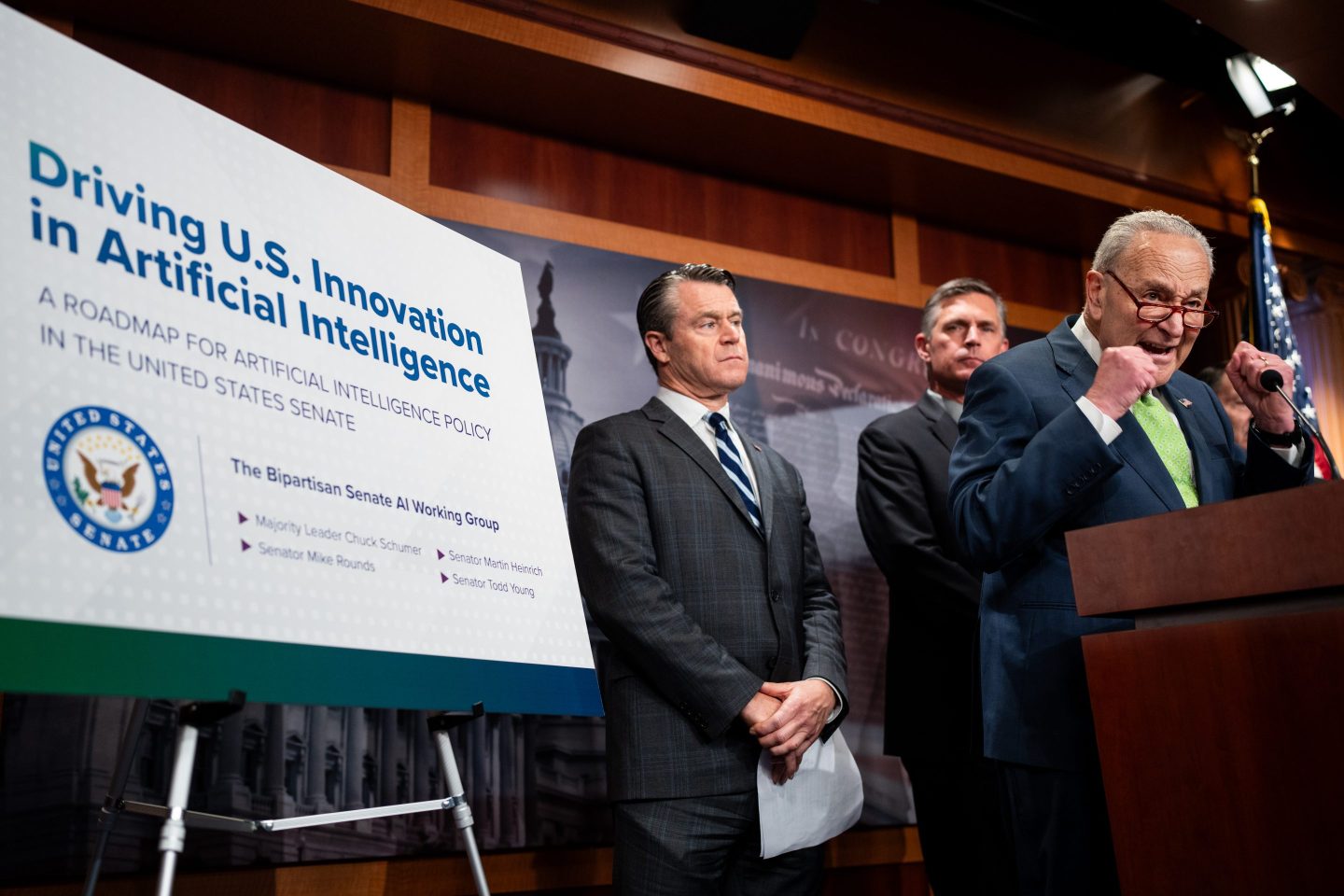
One rare bipartisan AI bill is moving through Congress. Here’s why it deserves to pass
By Neil Björkman and Betsy BrewerJuly 1, 2026
1 day ago

Most Popular

As Big Tech showers employees with perks to win the talent war, Nvidia built a nearly $5 trillion company by making people pay for their own lunch
Big Tech
As Big Tech showers employees with perks to win the talent war, Nvidia built a nearly $5 trillion company by making people pay for their own lunch
By Marco Quiroz-GutierrezJuly 1, 2026
1 day ago
MacKenzie Scott alone accounted for one-third of America's $19.2 billion in megagifts last year
Success
MacKenzie Scott alone accounted for one-third of America's $19.2 billion in megagifts last year
By Sydney LakeJune 25, 2026
7 days ago
Current price of oil as of July 1, 2026
Personal Finance
Current price of oil as of July 1, 2026
By Joseph HostetlerJuly 1, 2026
1 day ago
Trump got a $78K pension from the Screen Actors Guild in 2025 because he appeared in Home Alone 2 in 1992
Politics
Trump got a $78K pension from the Screen Actors Guild in 2025 because he appeared in Home Alone 2 in 1992
By Sasha RogelbergJuly 1, 2026
24 hours ago
Philanthropy leader at Warren Buffett and Bill Gates’ Giving Pledge says children of billionaires are pushing them to give their wealth away faster
Success
Philanthropy leader at Warren Buffett and Bill Gates’ Giving Pledge says children of billionaires are pushing them to give their wealth away faster
By Preston ForeJune 27, 2026
5 days ago
CEO of $248 billion cybersecurity company says workers are about to face a ‘Darwinian moment’ thanks to AI: Evolve or get cut
Success
CEO of $248 billion cybersecurity company says workers are about to face a ‘Darwinian moment’ thanks to AI: Evolve or get cut
By Emma BurleighJuly 1, 2026
1 day ago

© 2026 Fortune Media IP Limited. All Rights Reserved. Use of this site constitutes acceptance of our Terms of Use and Privacy Policy | CA Notice at Collection and Privacy Notice | Do Not Sell/Share My Personal Information
FORTUNE is a trademark of Fortune Media IP Limited, registered in the U.S. and other countries. FORTUNE may receive compensation for some links to products and services on this website. Offers may be subject to change without notice.