F. Scott Fitzgerald famously noted that the rich are “different from you and me.”
And indeed, some of the recent antics of the super-rich have been…sure, let’s call it “different.” There’s the extreme risk-taking: billionaires jettisoning themselves into space, careening around in race cars, or plunging themselves into the darkest depths of the sea on questionable sightseeing tours. Then there’s the seeming immaturity: Elon Musk, for example, the wealthiest man on earth, could be doing untold good in the world—or simply basking in the sun sipping piña coladas—but instead he spends his days arguing online about wild conspiracy theories, or challenging a fellow plutocrat to a cage fight.
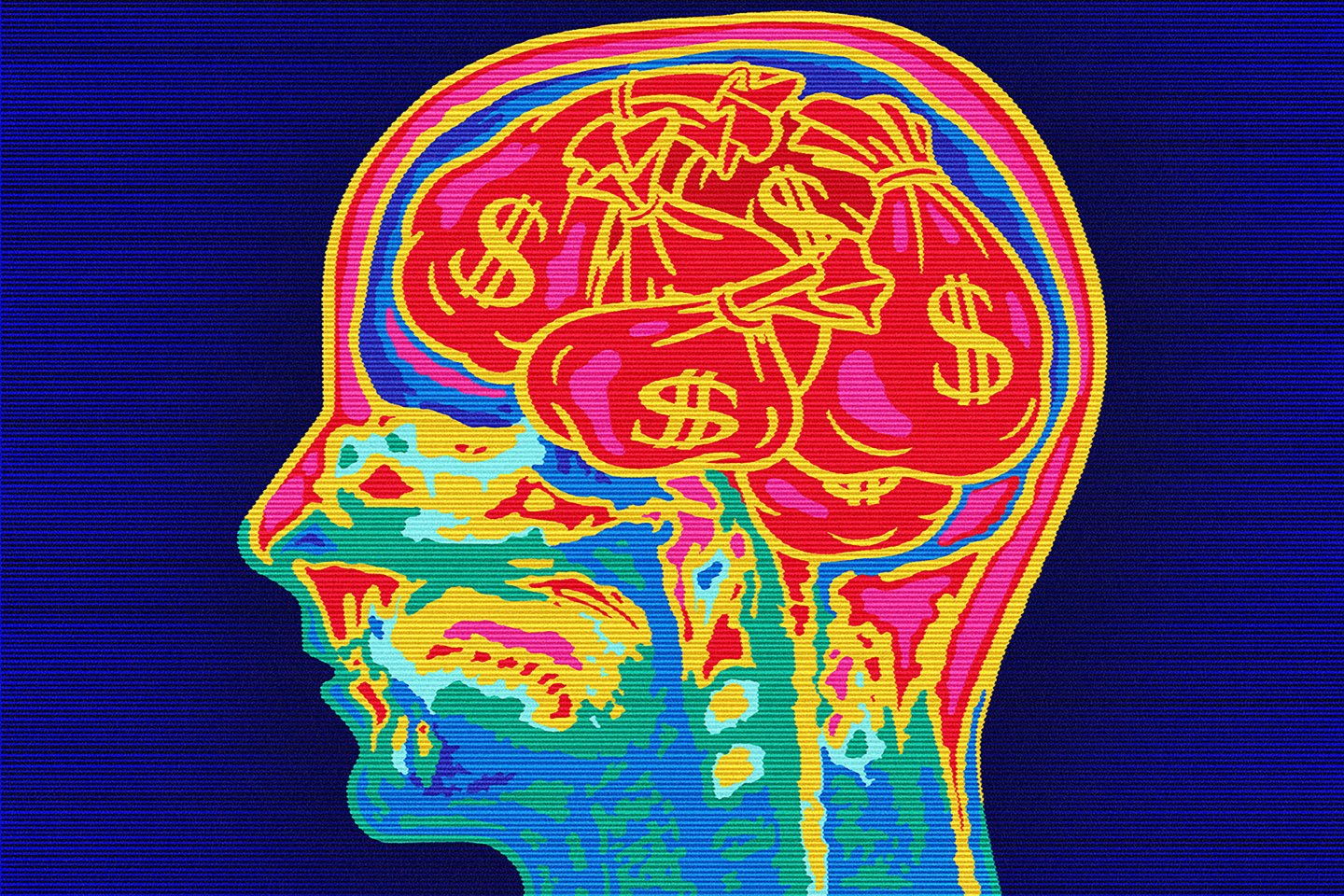
What makes a person with the savvy to amass such a spectacular fortune so erratic? Is there something about that pile of millions or billions that drives a person to distraction? Or is anyone with the guts and creativity to make billions just more likely to be a little strange in the first place?
These are questions that have stumped scientists from various disciplines for many years. After all, today’s crop of very rich guys (and they are mostly guys) are hardly the first to exhibit puzzling behavior, sometimes appearing to tip into mental illness. Howard Hughes hoarded his urine; Michael Jackson spent millions to bring giraffes, alligators, a bear, elephants, and apes to live at his ranch and private zoo; and Steve Jobs munched on nothing but carrots and apples for weeks, despite his skin turning orange. Filthy rich monarchs from England’s George III to the Roman emperor Caligula were widely considered “mad.”
Probing the origins of these impulses has been the purview of psychology and neurology. There are wealth psychologists to analyze the super-rich and help them deal with their guilt and angst. Neuroeconomics, meanwhile, attempts to take Freud and Jung a step further by combining neuroscience, cognitive science, behavioral science, and social psychology to lay bare the inner workings of the billionaire’s mind.
But when it comes to explaining the strange behavior of some of these ultra-high-net-worth individuals, the best that all this shrinkage has been able to come up with is a rather unstartling set of observations. Did we really need a professional to tell us that those worth more than $25 million are “focused more on themselves than on others”? Does it come as a surprise that the super-rich may struggle to feel empathy toward groups outside their inner circle—such as the legions of workers that create their wealth? It should not, perhaps, shock anyone that the self-made billionaire may possess an extra shot of narcissism, that they like to be in control, or that they are extremely competitive. The field’s conclusions could be summed up by the famous nonscientist Bernie Sanders, when he observed that billionaires have “psychiatric issues.”
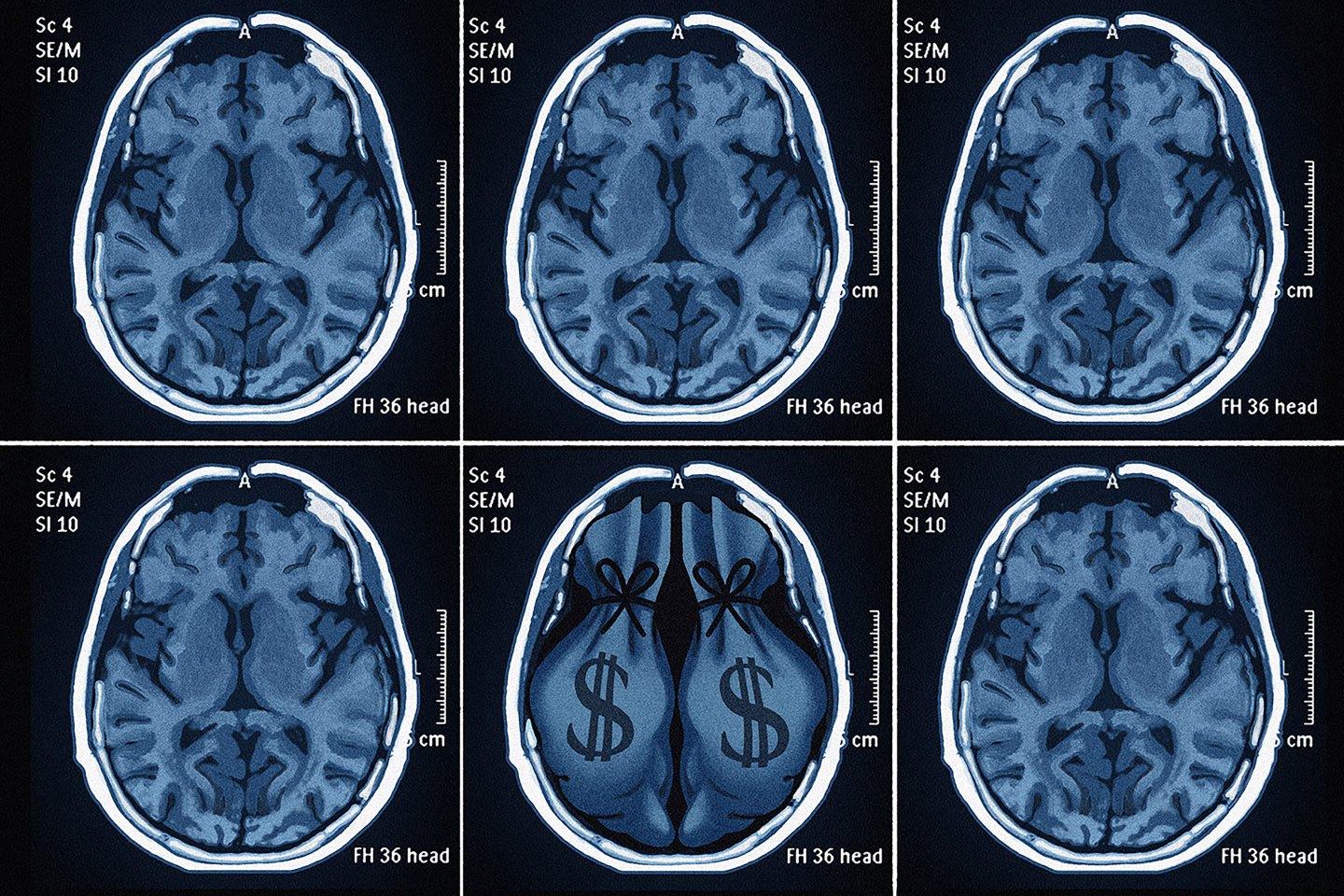
It’s easy to mock, to break out the world’s tiniest violin, for the problems of the top tenth of the one percent. But as the lives of the super-rich have increasingly veered into extremes, so have their problems. The adage that “money can’t buy happiness” has proved tragically true for the gilded victims of what has come to be known as “sudden wealth syndrome”—who suffer from irritability, insomnia, paranoia, depression, anxiety, and panic attacks. That may be a part of why so many soothe their reeling brains with ketamine, self-medicate with psilocybin, or submit to an unwavering diet of blueberries between dunks in an ice bath.
Part of the problem, unhappy multimillionaires told researchers from Boston College’s Center of Wealth and Philanthropy in a 2011 psychological study, is the feeling that no amount of wealth feels like enough. There’s never a point where one can stop craving more. The study’s 1,000 respondents, each worth at least $25 million, described feelings of anxiety, dissatisfaction, and—perplexingly—financial insecurity.
One respondent told researchers that he would not feel secure until he had amassed a billion dollars, The Atlantic noted, hypothesizing that “just as the human body didn’t evolve to deal well with today’s easy access to abundant fat and sugars, and will crave an extra cheeseburger when it shouldn’t, the human mind, apparently, didn’t evolve to deal with excess money, and will desire more long after wealth has become a burden rather than a comfort.”
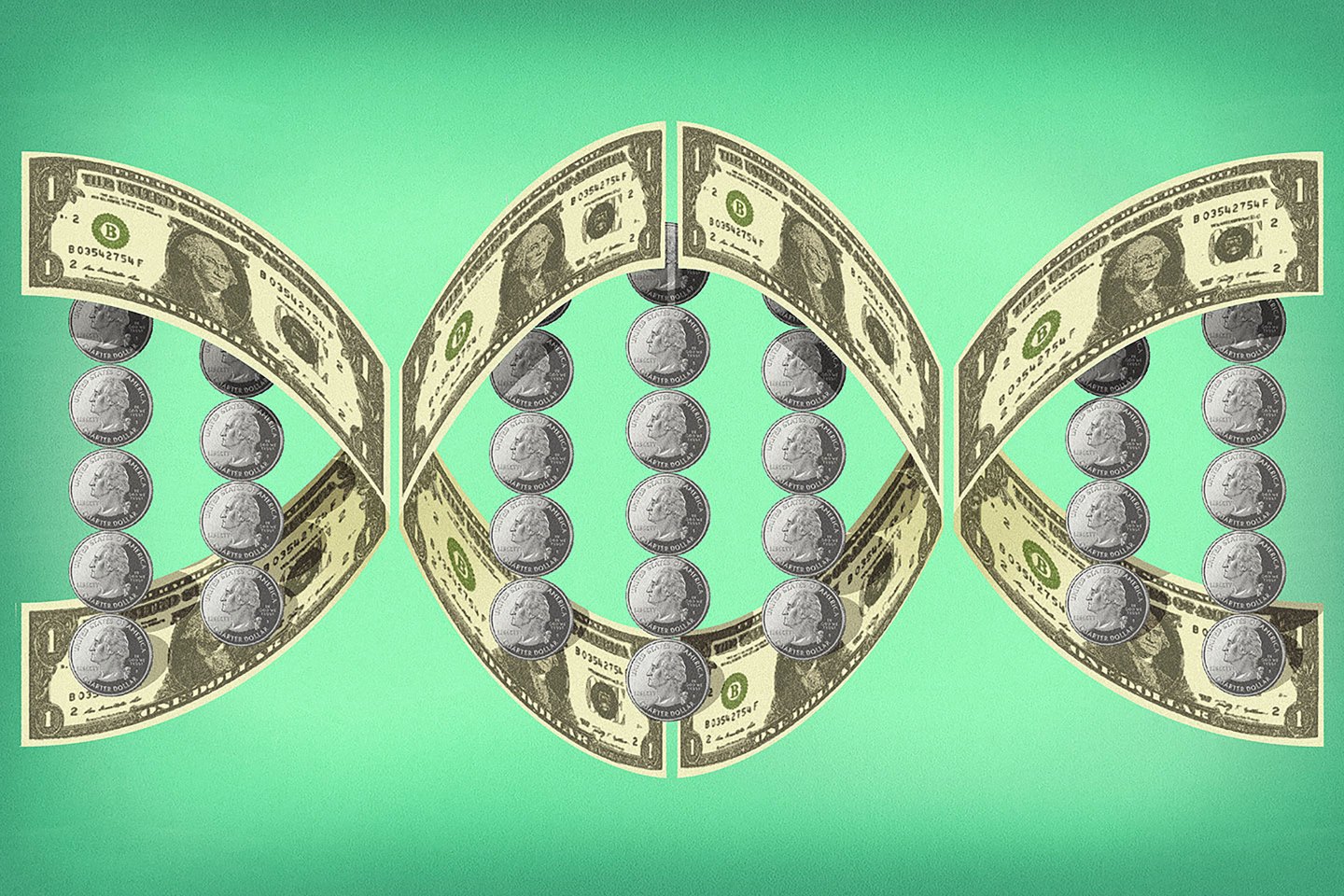
Those reams of personal testimony highlighted the problem, but left the central question unanswered: Why are so many extremely rich people miserable, and why do they act so strangely? Lately another scholarly genre, genoeconomics, has risen to attempt to answer the question using the trove of genetic information that has become available since the end of the last century, when the human genome was first mapped. Scientists in this new field—its name was coined in 2007—suggest that some people are born with a propensity for financial success, and they have been searching for a “wealth gene” that separates billionaires from the rest of us.
They have made some progress, but here’s the rub: Such a genetic propensity, it turns out, appears to often be coupled with the likelihood of disordered personality traits. That’s via a process known as pleiotropy—the phenomenon in which one genetic locus affects two or more traits. Research has shown some correlation between educational attainment (seen as a proxy for likelihood to get rich) and a predisposition to schizophrenia, autism, anxiety disorders, and other conditions.
It turns out that there’s no one “wealth gene,” says Daniel Benjamin, a professor at UCLA’s Anderson School of Management and the David Geffen School of Medicine, who has worked in the field for two decades. In Benjamin’s studies of educational attainment, instead of a single genetic needle in the genomic haystack, he and his colleagues have identified 3,952 distinct “single-nucleotide polymorphisms”—and he’s sure they haven’t yet found them all. The assumption is these SNPs (pronounced “snips”) associated with educational attainment, out of the millions in the human genome, tell us something about the genetic basis of an entrepreneurial spirit. SNPs work in bewildering conjunctions and combinations to create all sorts of human diversity—which may include, for example, the pairing of a propensity toward C-suites and superyachts with an openness to wild conspiracy theories.
Thinking “outside the box” has certainly led to plenty of innovation, from the Chia Pet to the personal computer. It has also led to some alarming misunderstandings of reality—Henry Ford’s infamous obsession with the Protocols of the Elders of Zion; pillow multimillionaire Mike Lindell’s fixation with a false narrative about voting machines; Elon Musk’s flirtations with QAnon.
A willingness to embrace bizarre new ideas—perhaps a portable phone that can also play music, shoot a movie, and translate Swahili?—could be the key to making a fortune. And there’s reason to think that the SNPs Benjamin and his team are studying are associated with a kind of extreme open-mindedness, he says. “I wouldn’t be surprised if a side effect were being especially intellectually flexible, seeking out lots of different kinds of opinions,” he tells Fortune. “These are probably characteristics that are helpful for being successful in the business world. When you apply it in the context of vaccines or whatever it starts to look like conspiracy theories.”
I asked Professor Benjamin if at some point in the future, someone will come up with the polygenic index that defines the genome of a billionaire. “I think it’s going to happen,” he said. Benjamin estimates that within 10 years, this science will reach maturity, in the sense that genetic data will be incorporated into mainstream research in social science. So it may not be long before the phenomenon will usher in a new era of helicopter parenting that begins before birth.
But given the possible association of wealth acquisition with psychological distress, is such meddling advisable? Benjamin points out that this kind of embryo selection, if it were to happen on a large scale, could increase inequality, and it could have other negative consequences: “There might be more people with certain psychiatric conditions.” What if this progeny preprogrammed for money-making zeal is also more likely to end up wandering around a mansion, micro-dosing LSD and sending peevish tweets?
This still-hypothetical parental dilemma raises an intriguing question: If the peculiarities of the super-rich are locked within their genetic code alongside tendencies to outlandish compulsion, might these combined oddities be the cause of their wealth, not its effect? In that case, the billionaire’s strangeness might not be something to be shunned, but sought.
Of course in a world where some people are born with enormous privilege and opportunity, and many others face massive barriers and disadvantages, genetics can only play a bit part in a success story. Any notion of achievement that rests too heavily on biological determinism also runs the risk of veering into the unsavory field of eugenics, with all its distortions and racism.
Besides, Benjamin points out despite his interest in genetics, when it comes to human behavior, there are plenty of forces just as powerful as heredity that might be driving the super-wealthy toward chaotic behavior. Even titans of industry aren’t immune to peer pressure—the desire to keep up with the billionaire next door.
“If your friends are going to outer space, then that’s what you want to do,” Benjamin says. “Perhaps,” he muses, “it’s boredom.”