• Home
  • Latest
  • Fortune 500
  • Finance
  • Tech
  • Leadership
  • Lifestyle
  • Rankings
  • Multimedia

Trendingnow

1

As Big Tech showers employees with perks to win the talent war, Nvidia built a nearly $5 trillion company by making people pay for their own lunch

2

MacKenzie Scott alone accounted for one-third of America's $19.2 billion in megagifts last year

3

Current price of oil as of July 1, 2026

1

As Big Tech showers employees with perks to win the talent war, Nvidia built a nearly $5 trillion company by making people pay for their own lunch

2

MacKenzie Scott alone accounted for one-third of America's $19.2 billion in megagifts last year

3

Current price of oil as of July 1, 2026
CommentaryFortune Global Forum

Will generative A.I. be good for U.S. workers?

By
Michael Chui
Michael Chui
,
Kweilin Ellingrud
Kweilin Ellingrud
, and
Asutosh Padhi
Asutosh Padhi
Down Arrow Button Icon
By
Michael Chui
Michael Chui
,
Kweilin Ellingrud
Kweilin Ellingrud
, and
Asutosh Padhi
Asutosh Padhi
Down Arrow Button Icon
August 9, 2023, 2:00 PM ET
Generative A.I. can be a boon for U.S. workers—if managed properly.
Generative A.I. can be a boon for U.S. workers—if managed properly.Getty Images
Add Fortune on Google for similar content.

The U.S. economy has absorbed the massive changes the pandemic brought to the labor market, with 8.6 million occupational shifts over the three years of COVID—50% more than in the previous three years. Now another disruption has arrived: generative artificial intelligence.

While still very new, generative A.I. is developing fast; we believe it will eventually make a difference in every corner of the economy. It is going to be a big deal. But will it be a good deal for American workers? On the whole, we think it could be—if workers, employers, and government take the actions needed to adapt.

To start, generative A.I. will accelerate the path to automation. By 2030, we estimate activities that account for 30% of U.S. working hours could be automated—up from 21% before generative A.I. burst upon the scene. It could also affect a broader range of activities, including data analytics, product design, legal analysis, and research and development.  

The implications of generative A.I. are complex. What is clear is that generative A.I. will fundamentally change the way many jobs are done. And we are optimistic that many of the jobs created will be highly skilled and well paid. To get there, though, the United States must invest in re-training and education to ensure that the workforce is prepared to succeed.  

On the lower end of the job market—those making less than $38,200 a year—automation and other structural changes have already had big effects. Generative A.I. could accelerate these trends, resulting in lower wage workers being 14 times more likely to need to shift occupations than high-wage workers. People without college degrees are almost twice as likely to face displacement.

But U.S. workers are resilient, as the 8.6 million pandemic-era occupational shifts proved. While it is impossible to track individual moves, many landed better-paying jobs in other fields. But we cannot simply assume resilience will continue. To adapt, more and better workforce development will be needed.

As for higher-wage jobs, generative A.I. is likely to change work activities substantially, particularly in healthcare, STEM, and professional services. In effect, it will change how these workers allocate their time, and could make these jobs more interesting. Drug researchers won’t have to do endless pre-screening of chemicals; lawyers will spend less time looking up cases; managers can pass off paperwork and instead concentrate on coaching and making improvements. These occupations will be changed by generative A.I., and all are likely to see job growth between now and 2030.

The biggest potential economic benefit of generative A.I. is that it could increase productivity significantly. Since 2005, U.S. labor productivity has grown an average of 1.4% a year. Raising that to the postwar average of 2.2% could add up to $10 trillion to U.S. GDP by 2030. Generative A.I., if coupled with the effective redeployment of the hours it saves, could increase U.S. labor productivity by 0.5 to 0.9 percentage points a year. Combined with all other automation technologies, the increase could be up to as much as 3% to 4% annual GDP growth.   

For example, in manufacturing, roughly 36% of working hours could be affected by automation. The sector, however, is now short almost 700,000 workers. New investments, such as the $280 billion CHIPS and Science Act, could create demand for 250,000 more jobs, and these jobs are increasingly high-tech. There will likely be fewer assemblers and machine operators, and more industrial engineers and software developers. In short, generative A.I. brings enormous potential for U.S. manufacturing in terms of higher productivity and better-paid jobs. However, to see the benefits, the sector must develop and attract a workforce with a broader set of skills.

That is the exact challenge facing the U.S. economy broadly: Workers must adapt and rise to the challenge of acquiring new skills, as so many did during the pandemic. Employers must step up too. As jobs change and labor shortages linger, companies can invest in training current and potential employees, for example through learn-as-you-earn programs. Companies can also recruit from overlooked populations, like retirees, rural workers, and people with disabilities, and hire for skills and potential rather than degrees or experience. We’re applying some of these principles at McKinsey; we’ve doubled the number of schools where we recruit and are hiring more via programs like apprenticeships and coding boot camps.

If worker transitions and risks are well managed, generative A.I., combined with other automation technologies, could boost productivity and foster better jobs, contributing to genuinely sustainable and inclusive growth. This optimistic scenario is plausible—but far from guaranteed.

Almost 12 million occupational changes will need to take place between now and 2030, with over 80% of those jobs falling into four occupations: customer service, food service, production or manufacturing, and office support. Most of these workers are lower paid, and disproportionately composed of less educated workers, women, and Black and Latino Americans. The positive potential is that they move into better paid, more interesting work. But that will only happen if they have the chance to re-skill and adapt.

We do not pretend to be able to predict the future, but we don’t have to: We are in it. Generative A.I. is here to stay. The challenge is to make the best of it.

Michael Chui is a partner at the McKinsey Global Institute and is based in San Francisco. Kweilin Ellingrud is a senior partner and director of the McKinsey Global Institute and is based in Minneapolis. Asutosh Padhi is McKinsey & Company’s North America managing partner and is based in Chicago. McKinsey is a partner of Fortune‘s Global Forum.


About the Authors
By Michael Chui
See full bioRight Arrow Button Icon
By Kweilin Ellingrud
See full bioRight Arrow Button Icon
By Asutosh Padhi
See full bioRight Arrow Button Icon
Add Fortune on Google for similar content.

Latest in Commentary

Finance
Lorem ipsum dolor sit amet, consectetur adipiscing elit, sed do eiusmod tempor incididunt ut labore et dolore magna aliqua. Ut enim ad minim veniam
By Fortune Editors
October 20, 2025
Finance
Lorem ipsum dolor sit amet, consectetur adipiscing elit, sed do eiusmod tempor incididunt ut labore et dolore magna aliqua. Ut enim ad minim veniam
By Fortune Editors
October 20, 2025
Finance
Lorem ipsum dolor sit amet, consectetur adipiscing elit, sed do eiusmod tempor incididunt ut labore et dolore magna aliqua. Ut enim ad minim veniam
By Fortune Editors
October 20, 2025
Finance
Lorem ipsum dolor sit amet, consectetur adipiscing elit, sed do eiusmod tempor incididunt ut labore et dolore magna aliqua. Ut enim ad minim veniam
By Fortune Editors
October 20, 2025
Finance
Lorem ipsum dolor sit amet, consectetur adipiscing elit, sed do eiusmod tempor incididunt ut labore et dolore magna aliqua. Ut enim ad minim veniam
By Fortune Editors
October 20, 2025
Finance
Lorem ipsum dolor sit amet, consectetur adipiscing elit, sed do eiusmod tempor incididunt ut labore et dolore magna aliqua. Ut enim ad minim veniam
By Fortune Editors
October 20, 2025

Most Popular

Finance
Lorem ipsum dolor sit amet, consectetur adipiscing elit, sed do eiusmod tempor incididunt ut labore et dolore magna aliqua. Ut enim ad minim veniam
By Fortune Editors
October 20, 2025
Finance
Lorem ipsum dolor sit amet, consectetur adipiscing elit, sed do eiusmod tempor incididunt ut labore et dolore magna aliqua. Ut enim ad minim veniam
By Fortune Editors
October 20, 2025
Finance
Lorem ipsum dolor sit amet, consectetur adipiscing elit, sed do eiusmod tempor incididunt ut labore et dolore magna aliqua. Ut enim ad minim veniam
By Fortune Editors
October 20, 2025
Finance
Lorem ipsum dolor sit amet, consectetur adipiscing elit, sed do eiusmod tempor incididunt ut labore et dolore magna aliqua. Ut enim ad minim veniam
By Fortune Editors
October 20, 2025
Finance
Lorem ipsum dolor sit amet, consectetur adipiscing elit, sed do eiusmod tempor incididunt ut labore et dolore magna aliqua. Ut enim ad minim veniam
By Fortune Editors
October 20, 2025
Finance
Lorem ipsum dolor sit amet, consectetur adipiscing elit, sed do eiusmod tempor incididunt ut labore et dolore magna aliqua. Ut enim ad minim veniam
By Fortune Editors
October 20, 2025
Fortune Secondary Logo
Rankings
  • 100 Best Companies
  • Fortune 500
  • Global 500
  • Fortune 500 Europe
  • Most Powerful Women
  • World's Most Admired Companies
  • See All Rankings
  • Lists Calendar
Sections
  • Finance
  • Fortune Crypto
  • Features
  • Leadership
  • Health
  • Commentary
  • Success
  • Retail
  • Mpw
  • Tech
  • Lifestyle
  • CEO Initiative
  • Asia
  • Politics
  • Conferences
  • Europe
  • Newsletters
  • Personal Finance
  • Environment
  • Magazine
  • Education
Customer Support
  • Frequently Asked Questions
  • Customer Service Portal
  • Privacy Policy
  • Terms Of Use
  • Single Issues For Purchase
  • International Print
Commercial Services
  • Advertising
  • Fortune Brand Studio
  • Fortune Analytics
  • Fortune Conferences
  • Business Development
  • Group Subscriptions
About Us
  • About Us
  • Press Center
  • Work At Fortune
  • Terms And Conditions
  • Site Map
  • About Us
  • Press Center
  • Work At Fortune
  • Terms And Conditions
  • Site Map
  • Facebook icon
  • Twitter icon
  • LinkedIn icon
  • Instagram icon
  • Pinterest icon

Latest in Commentary

rn
CommentaryCryptocurrency
Former Iran director at NSC: Crypto legislation is a ticket to sanctions evasion
By Richard NephewJuly 2, 2026
7 hours ago
m
Commentary250 Years of Innovation
McKinsey chairs: Building a more resilient industrial base may require $2 trillion in investment
By Eric Kutcher and Shubham SinghalJuly 2, 2026
7 hours ago
em
Commentary250 Years of Innovation
America’s 250th birthday has Elon Musk and a record IPO. Its 15th had Alexander Hamilton — and a stock market bubble
By Owen LamontJuly 2, 2026
11 hours ago
paramount
CommentaryAntitrust
How Paramount’s theater commitments could boost local economies across the nation
By Ike BrannonJuly 2, 2026
11 hours ago
elon
CommentaryChina
China has 400 private space companies. The West is barely paying attention
By Rainer ZitelmannJuly 2, 2026
13 hours ago
senate
CommentaryCongress
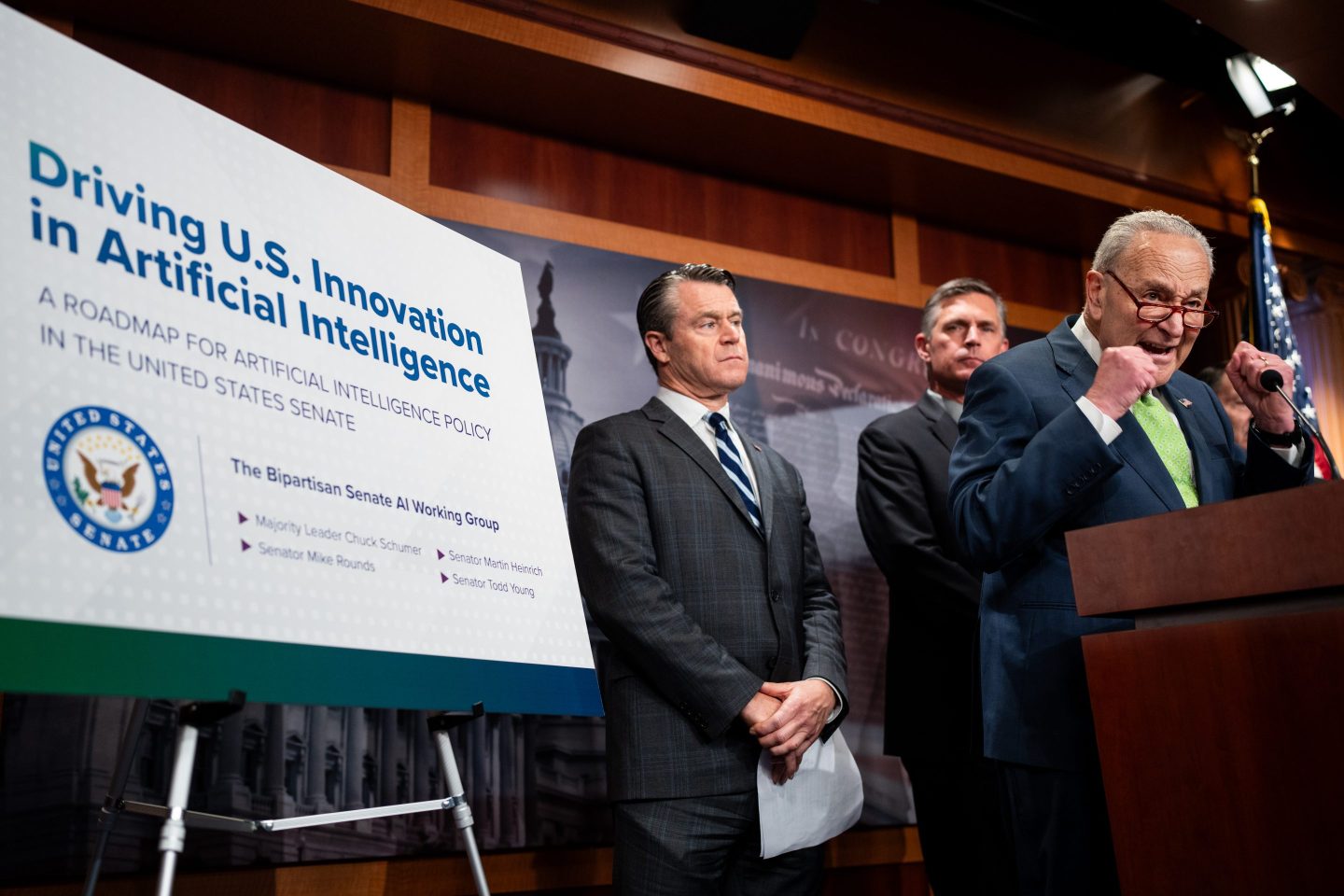
One rare bipartisan AI bill is moving through Congress. Here’s why it deserves to pass
By Neil Björkman and Betsy BrewerJuly 1, 2026
1 day ago

Most Popular

As Big Tech showers employees with perks to win the talent war, Nvidia built a nearly $5 trillion company by making people pay for their own lunch
Big Tech
As Big Tech showers employees with perks to win the talent war, Nvidia built a nearly $5 trillion company by making people pay for their own lunch
By Marco Quiroz-GutierrezJuly 1, 2026
2 days ago
MacKenzie Scott alone accounted for one-third of America's $19.2 billion in megagifts last year
Success
MacKenzie Scott alone accounted for one-third of America's $19.2 billion in megagifts last year
By Sydney LakeJune 25, 2026
8 days ago
Current price of oil as of July 1, 2026
Personal Finance
Current price of oil as of July 1, 2026
By Joseph HostetlerJuly 1, 2026
1 day ago
Trump got a $78K pension from the Screen Actors Guild in 2025 because he appeared in Home Alone 2 in 1992
Politics
Trump got a $78K pension from the Screen Actors Guild in 2025 because he appeared in Home Alone 2 in 1992
By Sasha RogelbergJuly 1, 2026
1 day ago
Today, Emily Blunt is worth $80 million thanks to her Hollywood career—but she actually wanted to be a UN Spanish translator on $80K
Success
Today, Emily Blunt is worth $80 million thanks to her Hollywood career—but she actually wanted to be a UN Spanish translator on $80K
By Orianna Rosa RoyleJuly 2, 2026
15 hours ago
CEO of $248 billion cybersecurity company says workers are about to face a ‘Darwinian moment’ thanks to AI: Evolve or get cut
Success
CEO of $248 billion cybersecurity company says workers are about to face a ‘Darwinian moment’ thanks to AI: Evolve or get cut
By Emma BurleighJuly 1, 2026
1 day ago

© 2026 Fortune Media IP Limited. All Rights Reserved. Use of this site constitutes acceptance of our Terms of Use and Privacy Policy | CA Notice at Collection and Privacy Notice | Do Not Sell/Share My Personal Information
FORTUNE is a trademark of Fortune Media IP Limited, registered in the U.S. and other countries. FORTUNE may receive compensation for some links to products and services on this website. Offers may be subject to change without notice.