• Home
  • Latest
  • Fortune 500
  • Finance
  • Tech
  • Leadership
  • Lifestyle
  • Rankings
  • Multimedia

Trendingnow

1

As Big Tech showers employees with perks to win the talent war, Nvidia built a nearly $5 trillion company by making people pay for their own lunch

2

Mark Zuckerberg feeds his cows macadamia nuts and beer to create the 'highest-quality beef in the world' on his $300 million estate in Hawaii

3

Today, Emily Blunt is worth $80 million thanks to her Hollywood career—but she actually wanted to be a UN Spanish translator on $80K

1

As Big Tech showers employees with perks to win the talent war, Nvidia built a nearly $5 trillion company by making people pay for their own lunch

2

Mark Zuckerberg feeds his cows macadamia nuts and beer to create the 'highest-quality beef in the world' on his $300 million estate in Hawaii

3

Today, Emily Blunt is worth $80 million thanks to her Hollywood career—but she actually wanted to be a UN Spanish translator on $80K
CommentaryFinance

Long-term interest rates are spiking. Could they deliver a recession–or are they a sign of strength for the U.S. economy?

By
Philipp Carlsson-Szlezak
and
Paul Swartz
Paul Swartz
Down Arrow Button Icon
By
Philipp Carlsson-Szlezak
and
Paul Swartz
Paul Swartz
Down Arrow Button Icon
October 12, 2023, 12:27 PM ET
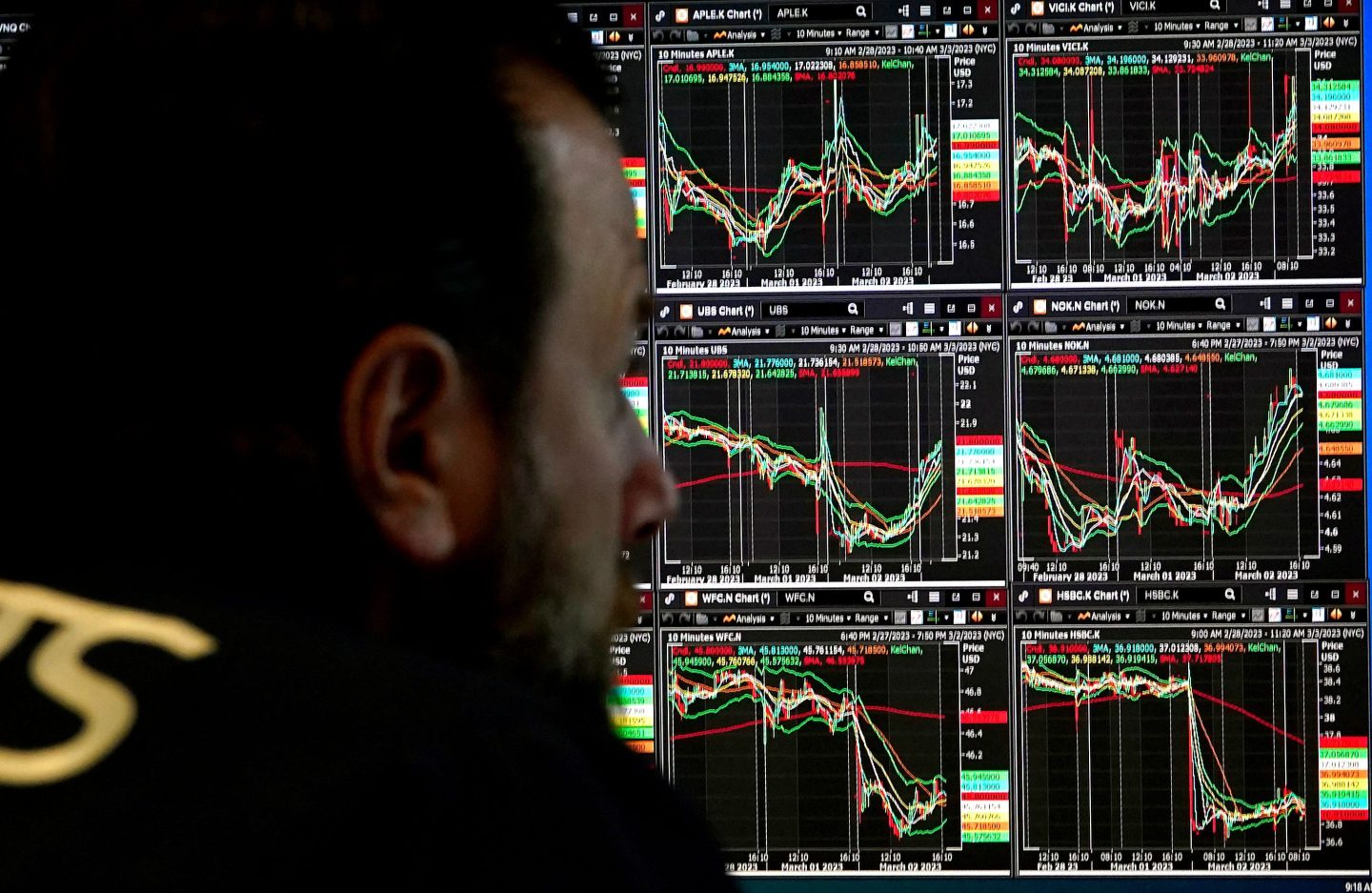
Rising long-term interest rates are not necessarily bad news for the economy.
Rising long-term interest rates are not necessarily bad news for the economy.TIMOTHY A. CLARY - AFP - Getty Images
Add Fortune on Google for similar content.

Amid all the fear about higher interest rates, we should not forget that they can be–and we think they mostly are–a sign of economic strength. That may sound controversial, but we’ve been here before. In 2022, sharply higher short rates motivated calls of an “inevitable” recession, yet no recession has landed. The U.S. economy has been so strong that it has withstood the blistering path of rate hikes.

Now in 2023, with short rates near their peak, long-term interest rates have continued to move sharply higher, reaching 4.89% in recent days. Is this a sign of stress that finally delivers the long-feared recession? Or is it again a sign of strength that will force a new balancing act for monetary policy but allow U.S. economic expansion to live on? The answer can be found by checking the gloomy narratives and exploring the mechanics of how strength delivers higher rates.

Popular narratives that failed to pan out

As rates have risen, headlines of an impending U.S. debt crisis–and even eventual default–have steadily percolated. Yet, the idea that soaring debt and burgeoning deficits have finally caught up with the U.S. is ill-founded. It is true that debt is soaring and that running large deficits is unwise. However, the narrative of a sovereign debt crisis is incompatible with sustained and significant currency strength. The dollar not only remains exceptionally strong–it has rallied sharply with rising rates. One day, this may be the threat. Today is not that day.

A softer, less gloomy, version of this narrative is that the “bond vigilantes” have returned–bond traders that respond to irresponsible fiscal policy by selling off debt and sending yields higher. Though the vigilantes may be stirring today, they no longer have the kind of power that forced President Jimmy Carter’s budget to be withdrawn in 1980.

It was a broken inflation regime that conferred power on bond vigilantes, specifically unanchored inflation expectations that underpinned the ugly 1970s. Today, inflation expectations are anchored, making the vigilantes’ descendants weaker. Rather than being vetoed by bond markets, policymakers are seeking higher rates–and getting what they want.

Of course, the 1970s have been another popular narrative over the last two years that hasn’t panned out. Rather than breaking the inflation regime, the Fed has broken the inflation fever. Peaking at a fearsome 9.1% in June of 2022, it has fallen to 3.7% in August. And no measures of inflation expectations indicate an unhealthy break higher that would explain surging bond yields.

Although we don’t think it’s primarily about debt and deficits (or the supply of bonds), higher rates may well reflect a different kind of risk premium. They may signal that the insurance value of long-dated bonds has fallen. For a long time, long-dated debt was a reliable hedge against risk: when equities fell, bonds rose (i.e., yields fell). Now that the Fed raised rates to slow the economy, that hedge, known as negative bond-equity correlation in the jargon, has not worked. Portfolio managers who previously paid high prices for bonds because of that insurance value are now less likely to do so, driving up yields.  

Higher rates bring risks–but remain a sign of strength

Just as portfolio managers must adjust to the consequences of higher rates, so must firms. Higher rates are often seen only through a lens of risk, such as a cascade of business defaults or more failures in the banking system. These fears should not be dismissed lightly. The rise in business bankruptcies, from Bed Bath and Beyond to Party City, is real (if from very low levels). Likewise, the collapse of SVB early in 2023 showed that the financial system is vulnerable to shifts in the rate environment.

However, we need to remember that financial stress and business failure are the very channels through which monetary policy works. Curtailed credit slows down growth. And bankruptcies lead to a reallocation of resources–particularly labor–to more productive uses. While financial fragility is not the goal, rolling bankruptcies can be seen as part of the objective of tightening monetary policy. Paul Volcker was once asked how monetary policy worked to bring down inflation, “by causing bankruptcies,” he answered.

Real and present microeconomic stress and pain should not obscure the fact that high long rates are a result–and a sign–of macroeconomic strength.

The first driver of high long rates comes from cyclical strength. Markets had mistakenly placed a high probability on a 2023 recession and with it the chance that rates would move quickly lower. As the previously unpopular soft-landing narrative gained traction, the prospect of much lower short rates dimmed. And because long rates reflect expectations of short rates over their horizon (combined with a term premium), this also meant higher long rates.

The second driver reflects structural strength. Despite inflation’s substantial retreat, it will likely remain above the 2% target in the years ahead. This points toward a cautious Fed that will only gradually adjust policy back toward a neutral rate. As a result, short rates will remain higher for longer. Policymakers have been saying this for some time, but markets are starting to believe them.

Third, perceptions of the “neutral” rate are also drifting–upward. Even when inflation gets back to target and policymakers are comfortable lowering the policy rate to neutral, that rate may be higher than recently supposed. While this neutral rate (also called r-star in the jargon) is unknown and is moving around, it is influential on long-term interest rates.

What comes next–and why

Though the shifts in short and long rates reflect different dynamics, they both speak to macroeconomic strength that policymakers are looking to restrain. Pushing the policy rate higher has proven effective (inflation is down), but less than most thought (the recession didn’t arrive). Now, the rise in long rates, which the Fed has less influence over, is the next balancing act.

The economy stands a good chance of muddling along. Growth will prove modest but can remain resilient. Inflation will moderate further but not completely. Monetary policy will eventually look to normalize, but very cautiously. This points toward long rates remaining elevated, and only moderating modestly over the coming years.

Alternatively, if the economy proves too strong, inflation moderation is too modest or even reaccelerates, and today’s high rates prove too little headwind for the strong economy, then rates must move even higher. Yet even that would not necessarily be a sign of economic crisis but rather a reflection of the continued challenges of restraining a strong economy to prevent it from overheating.

Meanwhile, a true recession could always hit, undermining growth and inflation, motivating policy to cut more quickly and more significantly than expected. This would likely move rates down decisively. The degree to which they would fall depends on the mix of how convincingly inflation continues to ease, as well as the severity of the downturn.

But none of these pathways are about debt-driven crisis, structural inflation, or a credit crisis. And while each of those is possible, the shift higher in long rates has not moved them to the center of the risk distribution.

Philipp Carlsson-Szlezak is a managing director and partner in BCG’s New York office and the firm’s global chief economist. Paul Swartz is a director and senior economist at the BCG Henderson Institute in New York.

More must-read commentary published by Fortune:

  • Return-to-office mandates: Why tax breaks are not a reason for companies in states such as Texas, Utah, and New Jersey to force employees back
  • We analyzed 2 years of performance reviews for 13,000 workers. Here’s the proof that low-quality feedback is driving employee retention down
  • Burnout is attacking our brains and making it harder to excel at work. ‘Deliberate calm’ can help us adapt
  • The growing case for doing less: How harmless cancers are being overdiagnosed in America

The opinions expressed in Fortune.com commentary pieces are solely the views of their authors and do not necessarily reflect the opinions and beliefs of Fortune.

About the Authors
By Philipp Carlsson-Szlezak
See full bioRight Arrow Button Icon
By Paul Swartz
See full bioRight Arrow Button Icon
Add Fortune on Google for similar content.

Latest in Commentary

Finance
Lorem ipsum dolor sit amet, consectetur adipiscing elit, sed do eiusmod tempor incididunt ut labore et dolore magna aliqua. Ut enim ad minim veniam
By Fortune Editors
October 20, 2025
Finance
Lorem ipsum dolor sit amet, consectetur adipiscing elit, sed do eiusmod tempor incididunt ut labore et dolore magna aliqua. Ut enim ad minim veniam
By Fortune Editors
October 20, 2025
Finance
Lorem ipsum dolor sit amet, consectetur adipiscing elit, sed do eiusmod tempor incididunt ut labore et dolore magna aliqua. Ut enim ad minim veniam
By Fortune Editors
October 20, 2025
Finance
Lorem ipsum dolor sit amet, consectetur adipiscing elit, sed do eiusmod tempor incididunt ut labore et dolore magna aliqua. Ut enim ad minim veniam
By Fortune Editors
October 20, 2025
Finance
Lorem ipsum dolor sit amet, consectetur adipiscing elit, sed do eiusmod tempor incididunt ut labore et dolore magna aliqua. Ut enim ad minim veniam
By Fortune Editors
October 20, 2025
Finance
Lorem ipsum dolor sit amet, consectetur adipiscing elit, sed do eiusmod tempor incididunt ut labore et dolore magna aliqua. Ut enim ad minim veniam
By Fortune Editors
October 20, 2025

Most Popular

Finance
Lorem ipsum dolor sit amet, consectetur adipiscing elit, sed do eiusmod tempor incididunt ut labore et dolore magna aliqua. Ut enim ad minim veniam
By Fortune Editors
October 20, 2025
Finance
Lorem ipsum dolor sit amet, consectetur adipiscing elit, sed do eiusmod tempor incididunt ut labore et dolore magna aliqua. Ut enim ad minim veniam
By Fortune Editors
October 20, 2025
Finance
Lorem ipsum dolor sit amet, consectetur adipiscing elit, sed do eiusmod tempor incididunt ut labore et dolore magna aliqua. Ut enim ad minim veniam
By Fortune Editors
October 20, 2025
Finance
Lorem ipsum dolor sit amet, consectetur adipiscing elit, sed do eiusmod tempor incididunt ut labore et dolore magna aliqua. Ut enim ad minim veniam
By Fortune Editors
October 20, 2025
Finance
Lorem ipsum dolor sit amet, consectetur adipiscing elit, sed do eiusmod tempor incididunt ut labore et dolore magna aliqua. Ut enim ad minim veniam
By Fortune Editors
October 20, 2025
Finance
Lorem ipsum dolor sit amet, consectetur adipiscing elit, sed do eiusmod tempor incididunt ut labore et dolore magna aliqua. Ut enim ad minim veniam
By Fortune Editors
October 20, 2025
Fortune Secondary Logo
Rankings
  • 100 Best Companies
  • Fortune 500
  • Global 500
  • Fortune 500 Europe
  • Most Powerful Women
  • World's Most Admired Companies
  • See All Rankings
  • Lists Calendar
Sections
  • Finance
  • Fortune Crypto
  • Features
  • Leadership
  • Health
  • Commentary
  • Success
  • Retail
  • Mpw
  • Tech
  • Lifestyle
  • CEO Initiative
  • Asia
  • Politics
  • Conferences
  • Europe
  • Newsletters
  • Personal Finance
  • Environment
  • Magazine
  • Education
Customer Support
  • Frequently Asked Questions
  • Customer Service Portal
  • Privacy Policy
  • Terms Of Use
  • Single Issues For Purchase
  • International Print
Commercial Services
  • Advertising
  • Fortune Brand Studio
  • Fortune Analytics
  • Fortune Conferences
  • Business Development
  • Group Subscriptions
About Us
  • About Us
  • Press Center
  • Work At Fortune
  • Terms And Conditions
  • Site Map
  • About Us
  • Press Center
  • Work At Fortune
  • Terms And Conditions
  • Site Map
  • Facebook icon
  • Twitter icon
  • LinkedIn icon
  • Instagram icon
  • Pinterest icon

Latest in Commentary

rn
CommentaryCryptocurrency
Former Iran director at NSC: Crypto legislation is a ticket to sanctions evasion
By Richard NephewJuly 2, 2026
18 hours ago
m
Commentary250 Years of Innovation
McKinsey chairs: Building a more resilient industrial base may require $2 trillion in investment
By Eric Kutcher and Shubham SinghalJuly 2, 2026
18 hours ago
em
Commentary250 Years of Innovation
America’s 250th birthday has Elon Musk and a record IPO. Its 15th had Alexander Hamilton — and a stock market bubble
By Owen LamontJuly 2, 2026
22 hours ago
paramount
CommentaryAntitrust
How Paramount’s theater commitments could boost local economies across the nation
By Ike BrannonJuly 2, 2026
22 hours ago
elon
CommentaryChina
China has 400 private space companies. The West is barely paying attention
By Rainer ZitelmannJuly 2, 2026
24 hours ago
senate
CommentaryCongress
One rare bipartisan AI bill is moving through Congress. Here’s why it deserves to pass
By Neil Björkman and Betsy BrewerJuly 1, 2026
2 days ago

Most Popular

As Big Tech showers employees with perks to win the talent war, Nvidia built a nearly $5 trillion company by making people pay for their own lunch
Big Tech
As Big Tech showers employees with perks to win the talent war, Nvidia built a nearly $5 trillion company by making people pay for their own lunch
By Marco Quiroz-GutierrezJuly 1, 2026
2 days ago
Mark Zuckerberg feeds his cows macadamia nuts and beer to create the 'highest-quality beef in the world' on his $300 million estate in Hawaii
Success
Mark Zuckerberg feeds his cows macadamia nuts and beer to create the 'highest-quality beef in the world' on his $300 million estate in Hawaii
By Sasha RogelbergJuly 2, 2026
16 hours ago
Today, Emily Blunt is worth $80 million thanks to her Hollywood career—but she actually wanted to be a UN Spanish translator on $80K
Success
Today, Emily Blunt is worth $80 million thanks to her Hollywood career—but she actually wanted to be a UN Spanish translator on $80K
By Orianna Rosa RoyleJuly 2, 2026
1 day ago
Americans are escaping the U.S. for New Zealand where house prices have hit a new low—but only wealthy Americans with $3 million spare can invest
Success
Americans are escaping the U.S. for New Zealand where house prices have hit a new low—but only wealthy Americans with $3 million spare can invest
By Emma BurleighJuly 2, 2026
18 hours ago
Current price of oil as of July 2, 2026
Personal Finance
Current price of oil as of July 2, 2026
By Joseph HostetlerJuly 2, 2026
19 hours ago
MacKenzie Scott alone accounted for one-third of America's $19.2 billion in megagifts last year
Success
MacKenzie Scott alone accounted for one-third of America's $19.2 billion in megagifts last year
By Sydney LakeJune 25, 2026
8 days ago

© 2026 Fortune Media IP Limited. All Rights Reserved. Use of this site constitutes acceptance of our Terms of Use and Privacy Policy | CA Notice at Collection and Privacy Notice | Do Not Sell/Share My Personal Information
FORTUNE is a trademark of Fortune Media IP Limited, registered in the U.S. and other countries. FORTUNE may receive compensation for some links to products and services on this website. Offers may be subject to change without notice.