• Home
  • Latest
  • Fortune 500
  • Finance
  • Tech
  • Leadership
  • Lifestyle
  • Rankings
  • Multimedia

Trendingnow

1

As Big Tech showers employees with perks to win the talent war, Nvidia built a nearly $5 trillion company by making people pay for their own lunch

2

MacKenzie Scott alone accounted for one-third of America's $19.2 billion in megagifts last year

3

Current price of oil as of July 1, 2026

1

As Big Tech showers employees with perks to win the talent war, Nvidia built a nearly $5 trillion company by making people pay for their own lunch

2

MacKenzie Scott alone accounted for one-third of America's $19.2 billion in megagifts last year

3

Current price of oil as of July 1, 2026
CommentarySemiconductors

The green revolution runs on chips–but there is no good way to make the fragile semiconductors ecosystem sustainable in the short term

By
Rakesh Kumar
Rakesh Kumar
Down Arrow Button Icon
By
Rakesh Kumar
Rakesh Kumar
Down Arrow Button Icon
December 26, 2023, 11:55 AM ET
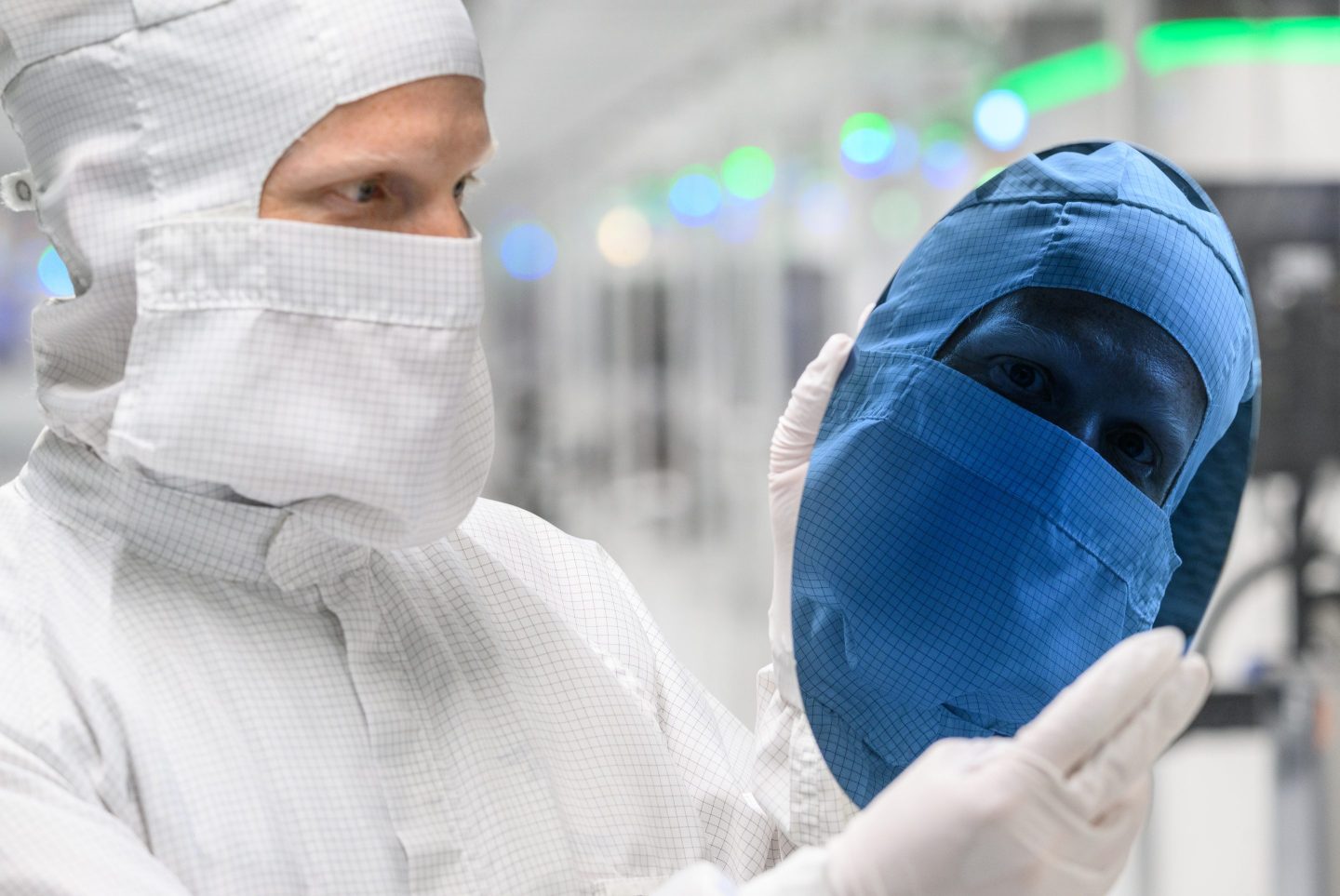
The semiconductors supply chain is in flux–but its processes have taken years to establish.
The semiconductors supply chain is in flux–but its processes have taken years to establish.Robert Michael - picture alliance - Getty Images
Add Fortune on Google for similar content.

There is renewed attention on the sustainability of semiconductors. Chorus has been building in recent years to improve the sustainability of chip manufacturing and usage. In 2022, COP27 saw the creation of a Semiconductor Climate Consortium with 60 founding members pledging to reduce emissions to 0% by 2050.

It is understandable why chips would be a target. They are ubiquitous and their number and usage will just keep increasing. Most stages of their complex supply chain–from the extraction of raw materials to transportation of finished goods to the processing, heating, and cooling required in production, to recycling–produce significant emissions.

Silicon, the basic material used to build chips, is famously created in furnaces from sand or quartz by burning a mixture of coal and wood chips. Energy and water needs for the industry to function are high–and keep increasing. The manufacturing of advanced 3nm chips may consume almost 8 billion kilowatt-hours annually. In some cases, the impact on communities has been visible. TSMC, the world’s largest chip manufacturer, consumes 6% of Taiwan’s electricity and 10% of its water, leading to water shortages.   And the industry’s contaminants in the Bay Area have rendered a number of sites toxic.

Despite this, governments and semiconductor companies must be careful about how they approach chip sustainability at this time. We just went through a chip shortage that brought the economies to their knees. The shortage also brought to the fore the potential economic and national security benefits of increasing and localizing chip production. The CHIPS and Science Act passed earlier this year in the U.S. has generated momentum behind chip manufacturing–and sustainability issues must be addressed in a way that does not slow this momentum.

This won’t have as much cost as one may imagine. Most of the current focus is on emissions–and the chip industry produces only 0.1 to 0.2% of global carbon dioxide equivalent emissions. This is small when considering the outsized economic impact they produce.

Chips serve as key enablers for smart grids, the transition to renewables, intelligent and electric transportation, low carbon footprint logistics and supply chains, video conferencing, smart agriculture, drug discovery, and energy-efficient manufacturing, each helping make progress toward global sustainability goals. The economic impact of chips also helps greater adoption of sustainable technologies. One could argue that the end-to-end sustainability impact of chips is likely positive–despite their emissions and large energy and water needs.

What does a careful approach to chip sustainability mean today?

A conventional regulatory approach may lead to a National Environmental Policy Act (NEPA)-triggered environmental review for each new chip production project before CHIPS Act funds can be disbursed. It may also allow litigation by private citizens at each step of the process. However, this may introduce multi-year delays in a cost-conscious and fast-moving industry. These delays (environmental reviews take more than four years, on average) and the corresponding increase in project costs may defeat the key purpose of the act–outpacing economic and geopolitical competitors and securing chip supplies.   Instead, one-time exceptions should be made that will allow fab constructions and upgrades to start with little delay.

One could argue that this “free pass” may both be dangerous and set a bad precedent. However, the chip industry has done well with goal setting and self-regulation. TSMC now invests 2% of its annual revenue in green initiatives and recycles over 85% of the water it uses. Intel uses renewable energy for over 80% of its operations and produces more fresh water than it consumes in the US, India, and Costa Rica. Samsung reuses over half of its water. Both the energy and water intensity of chip production have been decreasing fast. The use of renewable energy has been on the upswing. New equipment and processes are considerably more energy efficient.

One key reason why the chip industry has done so much is that improved sustainability aligns with their economic objectives. Reducing energy, gas, and water requirements reduces their costs and provides them flexibility in terms of location. Chipmakers have enough margins to absorb short-term costs. And their customers often require meeting sustainability targets.

In addition to one-time NEPA exceptions, regulators should be flexible when considering metrics on which the industry has not done well. Chip production processes have been developed and perfected over decades. Replacing parts of the process with their more sustainable counterparts would require large investments into research and development with no guarantees of success.

Similarly, today’s semiconductor supply chains are extremely optimized for efficiency and cost.  A careless relocation of supply chain components simply to meet sustainability metrics can impact cost and competitiveness. Special flexibility should be shown with brownfield chip production. The cost of retrofitting older fabs (or replacing their tools, facilities, and processes) that mostly produce low-margin chips may render these fabs uncompetitive. Chip security concerns are causing a restructuring of existing supply chains. Care must be taken that the compliance burden does not produce unreliable or uncompetitive supply chains.

The chip industry must grow–economic and national security demands it. It is also necessary for this growth to be sustainable. Since the industry is at an inflection point, it will be important to be flexible and pragmatic.

Rakesh Kumar is a professor in the Electrical and Computer Engineering department at the University of Illinois and the author of Reluctant Technophiles: India’s Complicated Relationship with Technology.

More must-read commentary published by Fortune:

  • Economic pessimists’ bet on a 2023 recession failed. Why are they doubling down in 2024?
  • COVID-19 v. Flu: A ‘much more serious threat,’ new study into long-term risks concludes
  • ‘Parroting Putin’s propaganda’: The business exodus over Ukraine was no Russian bonanza
  • The U.S.-led digital trade world order is under attack–by the U.S.

The opinions expressed in Fortune.com commentary pieces are solely the views of their authors and do not necessarily reflect the opinions and beliefs of Fortune.

About the Author
By Rakesh Kumar
See full bioRight Arrow Button Icon
Add Fortune on Google for similar content.

Latest in Commentary

Finance
Lorem ipsum dolor sit amet, consectetur adipiscing elit, sed do eiusmod tempor incididunt ut labore et dolore magna aliqua. Ut enim ad minim veniam
By Fortune Editors
October 20, 2025
Finance
Lorem ipsum dolor sit amet, consectetur adipiscing elit, sed do eiusmod tempor incididunt ut labore et dolore magna aliqua. Ut enim ad minim veniam
By Fortune Editors
October 20, 2025
Finance
Lorem ipsum dolor sit amet, consectetur adipiscing elit, sed do eiusmod tempor incididunt ut labore et dolore magna aliqua. Ut enim ad minim veniam
By Fortune Editors
October 20, 2025
Finance
Lorem ipsum dolor sit amet, consectetur adipiscing elit, sed do eiusmod tempor incididunt ut labore et dolore magna aliqua. Ut enim ad minim veniam
By Fortune Editors
October 20, 2025
Finance
Lorem ipsum dolor sit amet, consectetur adipiscing elit, sed do eiusmod tempor incididunt ut labore et dolore magna aliqua. Ut enim ad minim veniam
By Fortune Editors
October 20, 2025
Finance
Lorem ipsum dolor sit amet, consectetur adipiscing elit, sed do eiusmod tempor incididunt ut labore et dolore magna aliqua. Ut enim ad minim veniam
By Fortune Editors
October 20, 2025

Most Popular

Finance
Lorem ipsum dolor sit amet, consectetur adipiscing elit, sed do eiusmod tempor incididunt ut labore et dolore magna aliqua. Ut enim ad minim veniam
By Fortune Editors
October 20, 2025
Finance
Lorem ipsum dolor sit amet, consectetur adipiscing elit, sed do eiusmod tempor incididunt ut labore et dolore magna aliqua. Ut enim ad minim veniam
By Fortune Editors
October 20, 2025
Finance
Lorem ipsum dolor sit amet, consectetur adipiscing elit, sed do eiusmod tempor incididunt ut labore et dolore magna aliqua. Ut enim ad minim veniam
By Fortune Editors
October 20, 2025
Finance
Lorem ipsum dolor sit amet, consectetur adipiscing elit, sed do eiusmod tempor incididunt ut labore et dolore magna aliqua. Ut enim ad minim veniam
By Fortune Editors
October 20, 2025
Finance
Lorem ipsum dolor sit amet, consectetur adipiscing elit, sed do eiusmod tempor incididunt ut labore et dolore magna aliqua. Ut enim ad minim veniam
By Fortune Editors
October 20, 2025
Finance
Lorem ipsum dolor sit amet, consectetur adipiscing elit, sed do eiusmod tempor incididunt ut labore et dolore magna aliqua. Ut enim ad minim veniam
By Fortune Editors
October 20, 2025
Fortune Secondary Logo
Rankings
  • 100 Best Companies
  • Fortune 500
  • Global 500
  • Fortune 500 Europe
  • Most Powerful Women
  • World's Most Admired Companies
  • See All Rankings
  • Lists Calendar
Sections
  • Finance
  • Fortune Crypto
  • Features
  • Leadership
  • Health
  • Commentary
  • Success
  • Retail
  • Mpw
  • Tech
  • Lifestyle
  • CEO Initiative
  • Asia
  • Politics
  • Conferences
  • Europe
  • Newsletters
  • Personal Finance
  • Environment
  • Magazine
  • Education
Customer Support
  • Frequently Asked Questions
  • Customer Service Portal
  • Privacy Policy
  • Terms Of Use
  • Single Issues For Purchase
  • International Print
Commercial Services
  • Advertising
  • Fortune Brand Studio
  • Fortune Analytics
  • Fortune Conferences
  • Business Development
  • Group Subscriptions
About Us
  • About Us
  • Press Center
  • Work At Fortune
  • Terms And Conditions
  • Site Map
  • About Us
  • Press Center
  • Work At Fortune
  • Terms And Conditions
  • Site Map
  • Facebook icon
  • Twitter icon
  • LinkedIn icon
  • Instagram icon
  • Pinterest icon

Latest in Commentary

rn
CommentaryCryptocurrency
Former Iran director at NSC: Crypto legislation is a ticket to sanctions evasion
By Richard NephewJuly 2, 2026
9 hours ago
m
Commentary250 Years of Innovation
McKinsey chairs: Building a more resilient industrial base may require $2 trillion in investment
By Eric Kutcher and Shubham SinghalJuly 2, 2026
9 hours ago
em
Commentary250 Years of Innovation
America’s 250th birthday has Elon Musk and a record IPO. Its 15th had Alexander Hamilton — and a stock market bubble
By Owen LamontJuly 2, 2026
13 hours ago
paramount
CommentaryAntitrust
How Paramount’s theater commitments could boost local economies across the nation
By Ike BrannonJuly 2, 2026
13 hours ago
elon
CommentaryChina
China has 400 private space companies. The West is barely paying attention
By Rainer ZitelmannJuly 2, 2026
14 hours ago
senate
CommentaryCongress
One rare bipartisan AI bill is moving through Congress. Here’s why it deserves to pass
By Neil Björkman and Betsy BrewerJuly 1, 2026
2 days ago

Most Popular

As Big Tech showers employees with perks to win the talent war, Nvidia built a nearly $5 trillion company by making people pay for their own lunch
Big Tech
As Big Tech showers employees with perks to win the talent war, Nvidia built a nearly $5 trillion company by making people pay for their own lunch
By Marco Quiroz-GutierrezJuly 1, 2026
2 days ago
MacKenzie Scott alone accounted for one-third of America's $19.2 billion in megagifts last year
Success
MacKenzie Scott alone accounted for one-third of America's $19.2 billion in megagifts last year
By Sydney LakeJune 25, 2026
8 days ago
Current price of oil as of July 1, 2026
Personal Finance
Current price of oil as of July 1, 2026
By Joseph HostetlerJuly 1, 2026
1 day ago
Trump got a $78K pension from the Screen Actors Guild in 2025 because he appeared in Home Alone 2 in 1992
Politics
Trump got a $78K pension from the Screen Actors Guild in 2025 because he appeared in Home Alone 2 in 1992
By Sasha RogelbergJuly 1, 2026
1 day ago
Today, Emily Blunt is worth $80 million thanks to her Hollywood career—but she actually wanted to be a UN Spanish translator on $80K
Success
Today, Emily Blunt is worth $80 million thanks to her Hollywood career—but she actually wanted to be a UN Spanish translator on $80K
By Orianna Rosa RoyleJuly 2, 2026
16 hours ago
CEO of $248 billion cybersecurity company says workers are about to face a ‘Darwinian moment’ thanks to AI: Evolve or get cut
Success
CEO of $248 billion cybersecurity company says workers are about to face a ‘Darwinian moment’ thanks to AI: Evolve or get cut
By Emma BurleighJuly 1, 2026
1 day ago

© 2026 Fortune Media IP Limited. All Rights Reserved. Use of this site constitutes acceptance of our Terms of Use and Privacy Policy | CA Notice at Collection and Privacy Notice | Do Not Sell/Share My Personal Information
FORTUNE is a trademark of Fortune Media IP Limited, registered in the U.S. and other countries. FORTUNE may receive compensation for some links to products and services on this website. Offers may be subject to change without notice.