When I travel to Chicago for work, I stay in a beautiful, two-bedroom apartment for free. There’s a full kitchen, a baby grand piano, and a gorgeous window wall. There’s only one catch: My room is right above where they prepare the bodies.
I left a traditional tech job to join the funeral industry during the pandemic. Our first client, a third-generation funeral director, treats us like family by offering his childhood apartment above the funeral home. This is not unusual–89% of funeral businesses are still family-owned and operated. It’s this type of behavior that exemplifies the often-overlooked heart of the industry.
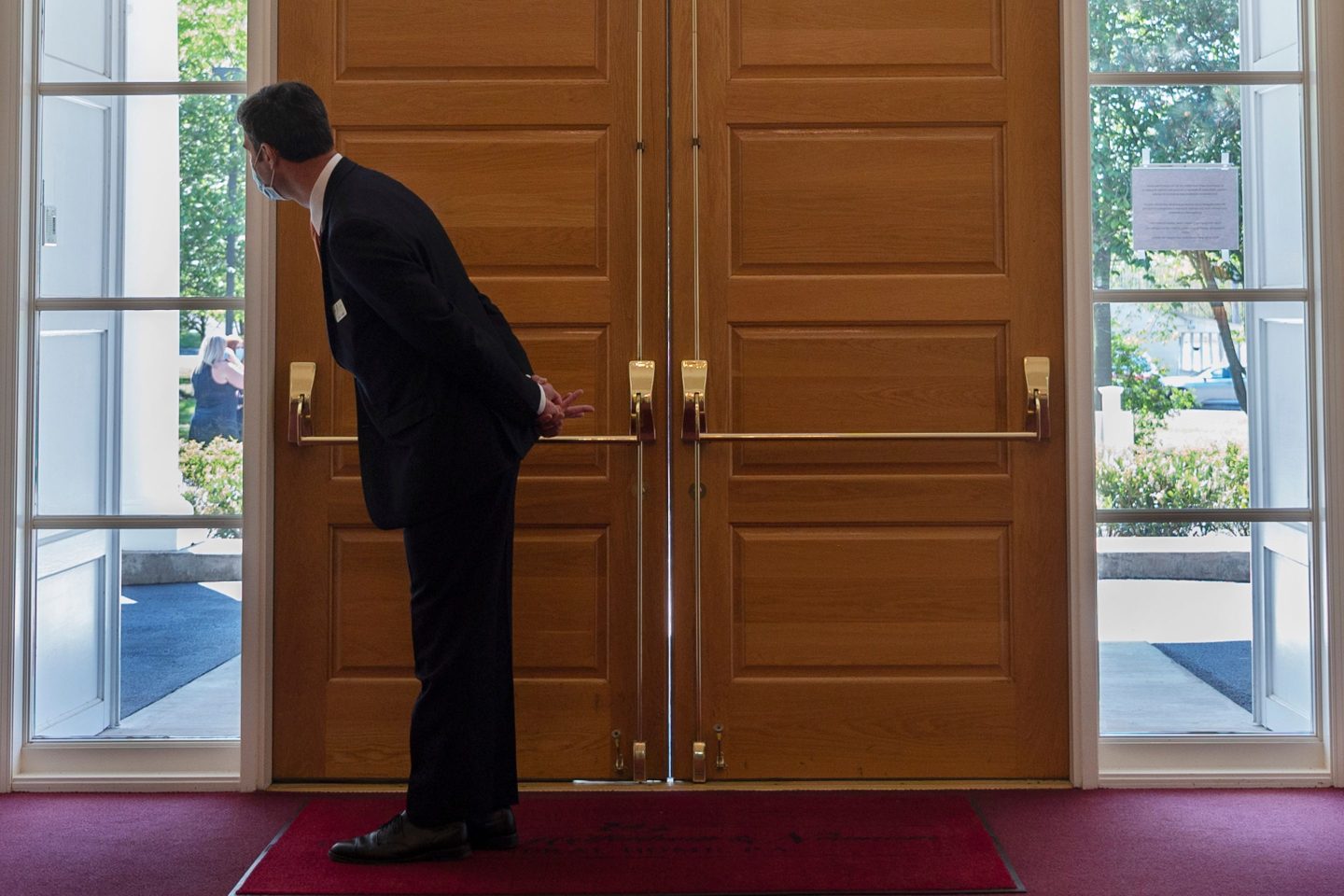
My squeamish friends ask me not to share the “morbid” details of my work trips. Yet downstairs, it’s surprisingly comforting. The scene is mostly meetings with families, filling out paperwork, preparing the chapel, and creating a space to reminisce. Over the last four years in rooms just like these, I’ve witnessed the commitment of hundreds of funeral directors. We’ve accompanied them to the morgue, observed embalmings (with permission), and watched arrangements with families at their most vulnerable. Time after time I’ve seen funeral directors go above and beyond to serve their communities.
So why, despite this dedication, does the industry still have a reputation for exploiting families during their time of grief? You’ve already heard the horror stories, so I won’t retell them. Beneath these anecdotes is a foundation not of malice but of mistrust—a disparity between the good intentions of most funeral directors and the way consumers experience the industry.
The FTC’s Funeral Rule: Old enough to know better
The Funeral Rule, enacted by the FTC in 1982 to protect consumers, unintentionally creates an environment where mistrust thrives. The cornerstone of the rule is that funeral homes must share their pricing when requested in person or over the phone, but do not have to share pricing on their website. As a result, only 18% of funeral homes post pricing online. Funeral directors feel pressured not to share it online because it’s not the norm, it doesn’t explain their value clearly, and they fear they might be at a disadvantage competitively. This forces families to visit the funeral home or call for pricing, where they’re more likely to feel pressured into decisions they don’t fully understand (with incomparable and possibly unexpected price tags).
In 2024, when one can purchase a car, health insurance, or even a home entirely online, it seems unnecessary to have to write this: Online price transparency builds trust with people.
Consumer expectations have shifted since the Rule was last revised in 1994. More than half of consumers visit a funeral home website when planning a service. 41% start the process online and 20% would prefer to complete it online versus speaking to a director. When a business doesn’t disclose its pricing, consumers wonder if they have something to hide. (Consumers aren’t wrong: A 2020 study in California unfortunately proves this true, revealing that homes that hide their prices tend to charge much higher than those who share them online.)
A vicious cycle
The Funeral Rule’s specific requirements are also misaligned with what consumers want to see. It mandates that funeral pricing, or General Price Lists (GPLs), include 16 specific items and six disclosures, which can vary based on local laws. The resulting language is overly complex and poorly understood by families.
With jargon like “Basic Services Fee for the Funeral Director,” “Casket Handling”, and “Transfer of Remains to Funeral Home,” would you understand what services you’re getting? Reading a GPL for the first time can feel like deciphering a foreign language–I’ve read hundreds, and they’re still hard to understand.
So, even if a funeral home does post its prices online, when a family questions something on the price list, a natural and legitimate response is, “It’s hard to explain–come by the funeral home, and we’ll walk you through everything.” Again, this pushes families to plan in person. The vicious cycle continues.
This is all when the rule is being followed. Secret shopper data collected by the FTC from 2018-2023, albeit of small sample sizes, showed that anywhere from 15-19% of funeral homes were violating the rule by not sharing the full price list. This is outrageously high for a program meant to protect grieving families. Normally, violations could result in fines over $50,000 per instance. But thanks to an agreement between the FTC and the National Funeral Directors Association (NFDA), funeral homes can avoid hefty fines and litigation by instead joining a training program and paying two small fees. This program is detrimental to trust; it allows funeral homes to conceal their violations from the public, potentially enabling them to continue violating the rule.
We have an outdated law that doesn’t work in the digital age, references industry-specific terms that people don’t understand, is ignored a fifth of the time, and even if enforced, its violations can be shielded from the public. The system is not built for trust, but it could be.
Price transparency: Great–but not good enough
It’s widely expected that the FTC will mandate online pricing for funeral homes with websites. They have no public timeline despite having collected feedback for years.
Funeral director associations fight against this type of transparency, even though it may actually be good for business. During the Funeral Rule Workshop in DC last September, a National Funeral Directors & Morticians Board member admitted, “I was one of those people very hesitant [to post prices online].” His younger staff members pushed him anyway. After he did, his business increased 12%. Innovative funeral homes are seeing similar results and making changes before the FTC makes it official.
We’ve worked with hundreds of families directly and funeral directors across the country, and we wholeheartedly believe funeral pricing should be online. But let me be clear: This alone will not be enough. Here are three additional actions the FTC must also pursue to truly protect consumers:
- Develop monitoring at scale: In California, the only state where online pricing is already required, our data show only 77% of funeral home websites post their pricing. (The 23% who don’t–mostly homes part of a large, publicly traded corporation–may be purposely avoiding the law using a loophole.) The FTC cannot simply revise the rule—it must develop a scalable monitoring & enforcement system. The “secret shopper” methodology has been invaluable, but the FTC should invest in technology-driven solutions to ensure every single funeral home is compliant.
- Simplify pricing: More consumers are comparing their options when they shop for funerals, increasing from 8.3% in 2018 to 33.5% in 2022, according to NFDA consumer surveys. But the FTC’s confusing jargon makes comparing pricing between homes extra difficult. The rule should incorporate natural language, working with actual families to understand which terms make sense and which don’t. Funeral homes have the unique opportunity to explain their services in their own words, as they would when a family walks into their home. These explanations–a potential new format of the general price list—should be front and center on their websites, in their online prices, and in digital formats so families can access them easily.
- Disband the Offender Program: Only a tiny percentage of homes have participated in the program. But these bad actors tarnish the good work that thousands of funeral directors do every day. Without enforcing the Rule, it is meaningless. The FTC must remove this program if it hopes to regain the public’s trust. With mandated online pricing and a scalable monitoring system, it may simply become obsolete.
Innovation is survival
On the last day of this work trip, I fall asleep two floors above the matriarch of a huge family, awaiting her final farewell. She makes me think about my own parents–two of the 73 million baby boomers in the U.S., who by 2030 will all be 65 or older. Over the next two decades, nearly every American will experience the loss of a parent, grandparent, aunt, uncle, or spouse. Though we wish it didn’t, this rule impacts all of us.
I have more trust and faith in funeral directors than I did four years ago. They are unsung heroes of our society who perform deeply difficult and important work. But without innovation and reform, the industry risks continued distrust and failing the aging generations that used to run it.
Individual funeral directors can champion this cause now by advocating for families. But the FTC must first create the conditions for rebuilding trust, and ultimately, for revitalizing the industry. We urge the FTC to think beyond online price transparency and enable funeral homes to meet the needs of all generations. The unprecedented volume of deaths in the coming decades demands nothing less.
Zack Moy is the co-founder and CTO of Afterword.
More must-read commentary published by Fortune:
- Here’s how the U.S., Europe, and China are faring in the post-pandemic race for economic growth
- Global trade is at a critical juncture–and we can’t take it for granted, WTO meeting chair warns
- The U.S. housing market is headed into a pivotal spring season as home sellers wait for their sweet spot, according to Opendoor
- The anti-DEI movement has gone from fringe to mainstream. Here’s what that means for corporate America
The opinions expressed in Fortune.com commentary pieces are solely the views of their authors and do not necessarily reflect the opinions and beliefs of Fortune.