• Home
  • Latest
  • Fortune 500
  • Finance
  • Tech
  • Leadership
  • Lifestyle
  • Rankings
  • Multimedia

Trendingnow

1

As Big Tech showers employees with perks to win the talent war, Nvidia built a nearly $5 trillion company by making people pay for their own lunch

2

MacKenzie Scott alone accounted for one-third of America's $19.2 billion in megagifts last year

3

The Supreme Court's birthright citizenship ruling hands the U.S. economy a $7.7 trillion win

1

As Big Tech showers employees with perks to win the talent war, Nvidia built a nearly $5 trillion company by making people pay for their own lunch

2

MacKenzie Scott alone accounted for one-third of America's $19.2 billion in megagifts last year

3

The Supreme Court's birthright citizenship ruling hands the U.S. economy a $7.7 trillion win
CommentaryFinance

The agency created after the Great Financial Crisis to protect consumers from lending risks can’t define risk, industry says

By
Bill Himpler
Bill Himpler
Down Arrow Button Icon
By
Bill Himpler
Bill Himpler
Down Arrow Button Icon
March 21, 2024, 8:13 AM ET
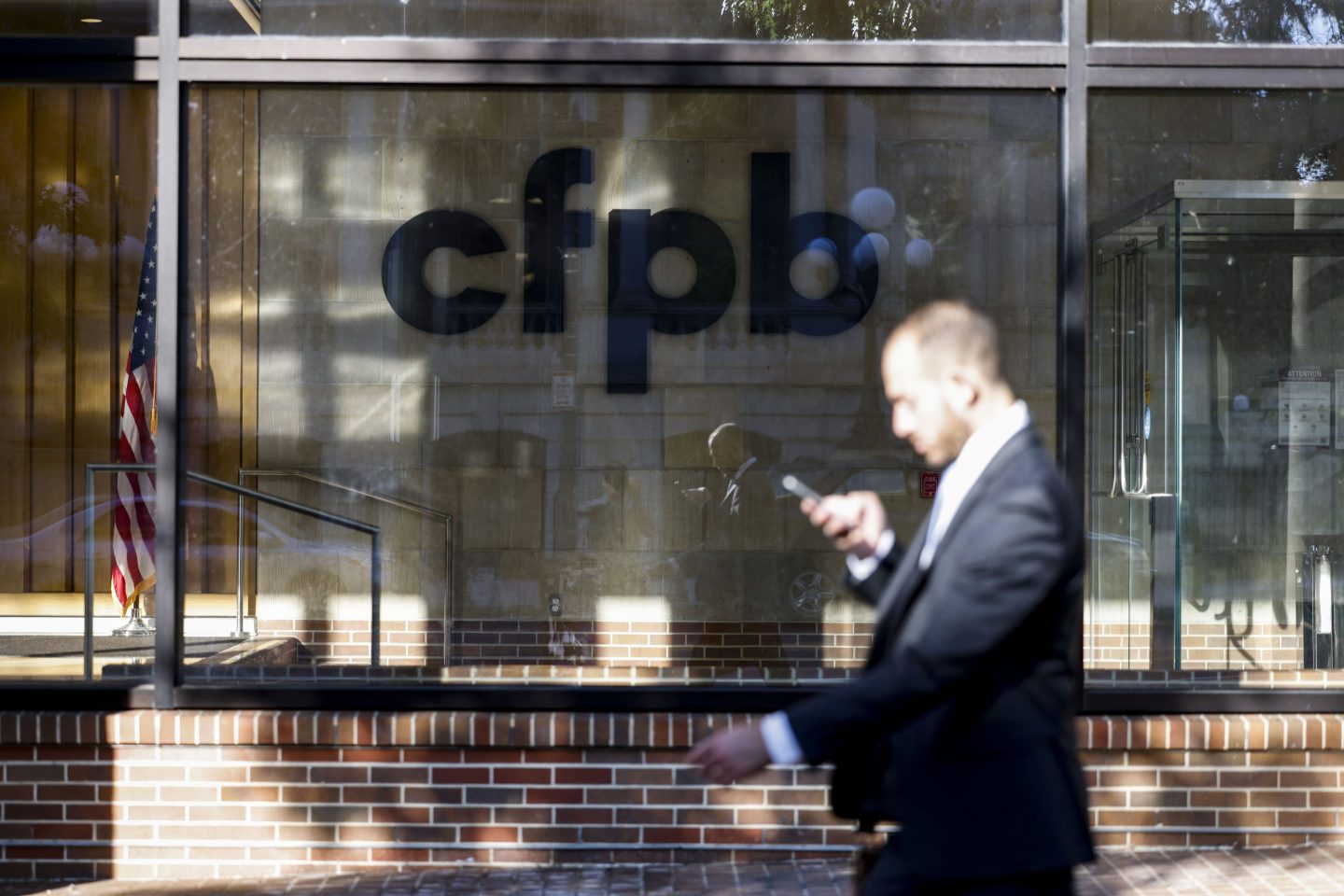
The U.S. Consumer Financial Protection Bureau (CFPB) was created by Congress in the aftermath of the Great Financial Crisis to regulate mortgages and other consumer finance products.
The U.S. Consumer Financial Protection Bureau (CFPB) was created by Congress in the aftermath of the Great Financial Crisis to regulate mortgages and other consumer finance products.Ting Shen—Bloomberg/Getty Images
Add Fortune on Google for similar content.

“We have the best economy in the world,” President Joe Biden proclaimed during his State of the Union address. But despite some encouraging economic trends over recent months, the economic challenges facing millions of American families are real, as they’re still paying more for everyday needs, facing economic uncertainty, and borrowing to make ends meet. A recent Federal Reserve Survey of Consumer Expectations found that the ability of an average household to come up with $2,000 to cover an unanticipated expense fell to a 10-year low. What’s more, the Federal Reserve just revealed that consumer credit rose more than predicted to $19.5 billion in January–a 4.7% annual rate on a seasonally adjusted basis, faster than the 0.4% rate in the previous month.

Consumers depend on credit for many things: to finance a home or a car, for large expenses like refrigerators, for unexpected repairs, and just for a little financial flexibility. Even the millions of U.S. households that don’t have established credit, have less-than-perfect credit, or don’t have savings or even a bank account still need access to some form of responsible, affordable credit. It’s an important financial tool, and policymakers should be looking for ways to ensure folks can access whatever forms of credit they choose or for which they can qualify. Yet the Consumer Financial Protection Bureau (CFPB) is doing the opposite. 

For more than a century, my trade association’s members have provided many forms of credit to consumers, from installment loans and home mortgages to credit cards and auto financing.

Today, the policies and oversight at the CFPB of the financial services industry have become confusing, conflicting, and convoluted. The agency was created by the Dodd-Frank Act in 2010 and is charged with ensuring a well-functioning marketplace that works for borrowers and lenders alike, in addition to protecting consumers from bad actors. That’s not happening–and it threatens access to credit for tens of millions of Americans and small businesses, at a time when they need that credit more urgently than ever.

Frivolous rulemaking

The problem is that the CFPB has not set clear rules for the industry. Instead of using the well-established, formal rulemaking process, the agency has used blog posts, press releases, vague guidance, opinion letters, and enforcement actions to establish policies that deem common practices as grounds for legal action, often claiming that they present a risk to consumers. The CFPB has also gone beyond Congress’ directive and mandated that financial services companies ask for such personal information as customers’ sexual orientation and that they share that data with the government, even though it has no bearing on the business credit they are seeking.

Rulemaking isn’t a courtesy or a suggestion–it’s required under the federal Administrative Procedure Act. The agency creates a debilitating challenge when it doesn’t bother to write regulations using the process that includes an opportunity for notice and comment, questions, a review of underlying data and potential inconsistencies with other laws, and potential impacts on consumers and businesses.

Even when the CFPB does attempt rulemaking, the outcomes are conflicting and confusing. On one hand, the bureau proposed prohibiting medical debt from being considered when a lender is undertaking its standard ability-to-repay analysis. On the other, the agency penalized an auto lender for not considering costs like healthcare among a borrower’s debt obligations. 

Why it matters

Every lending institution–from banks to auto finance companies to installment lenders–depends on clarity and certainty to serve consumers. They must factor into their risk analysis any unclear regulations or policies that might expose a company that provides credit to regulatory examination or investigation.

Today, access to credit is tightening because of the uncertainty of both the economy and the regulatory environment. The Federal Reserve reports that banks and other lenders have been less willing to make consumer installment loans (auto, student, personal) for six quarters since January 2024, and that nearly half of households reported that it was harder to obtain credit than a year ago.

The lack of clarity from a regulator that regularly demands clarity from the industry it oversees was enough to do something very rare in today’s Washington: inspire bipartisanship. In January, eight members of the House Financial Services Committee sent a letter to the CFPB expressing concerns that the agency had yet to define what “risk” means in the context of lending. The CFPB declaring a company’s business activity as “risky” without defining risk in advance is like a highway patrol pulling over cars for speeding without posting a speed limit.

Our industry shares the CFPB’s goal of making consumer credit markets work for consumers, responsible providers, and the overall economy. However, this goal is only achievable when the rules are easily understood and circumstances warrant them.

For decades, our association’s members have operated under a set of straightforward commitments: Consumers deserve choices in loan products that will provide benefits and meet their needs. Loans should be affordable and not trap borrowers in cycles of debt. Loan documents should be understandable and include all costs, and clear terms and conditions. And consumers should be confident that their personal information and sensitive data are protected and respected by both financial institutions and regulators.

We believe these principles are a good foundation for the CFPB to set clear rules of the road when needed. After all, consumers want to do business with financial services companies that treat them fairly, are transparent, and provide unambiguous terms. Shouldn’t businesses expect the same from the policymakers and regulators that oversee them?

Bill Himpler is the president and CEO of the American Financial Services Association, a national trade group representing the consumer credit industry.

More must-read commentary published by Fortune:

  • Here’s how the U.S., Europe, and China are faring in the post-pandemic race for economic growth
  • We analyzed 46 years of consumer sentiment data–and found that today’s ‘vibecession’ is just men starting to feel as bad about the economy as women historically have
  • The U.S. housing market is headed into a pivotal spring season as home sellers wait for their sweet spot, according to Opendoor
  • Russia and China are leading in hypersonic innovation. Here’s what’s holding the U.S. back

The opinions expressed in Fortune.com commentary pieces are solely the views of their authors and do not necessarily reflect the opinions and beliefs of Fortune.
About the Author
By Bill Himpler
See full bioRight Arrow Button Icon
Add Fortune on Google for similar content.

Latest in Commentary

Finance
Lorem ipsum dolor sit amet, consectetur adipiscing elit, sed do eiusmod tempor incididunt ut labore et dolore magna aliqua. Ut enim ad minim veniam
By Fortune Editors
October 20, 2025
Finance
Lorem ipsum dolor sit amet, consectetur adipiscing elit, sed do eiusmod tempor incididunt ut labore et dolore magna aliqua. Ut enim ad minim veniam
By Fortune Editors
October 20, 2025
Finance
Lorem ipsum dolor sit amet, consectetur adipiscing elit, sed do eiusmod tempor incididunt ut labore et dolore magna aliqua. Ut enim ad minim veniam
By Fortune Editors
October 20, 2025
Finance
Lorem ipsum dolor sit amet, consectetur adipiscing elit, sed do eiusmod tempor incididunt ut labore et dolore magna aliqua. Ut enim ad minim veniam
By Fortune Editors
October 20, 2025
Finance
Lorem ipsum dolor sit amet, consectetur adipiscing elit, sed do eiusmod tempor incididunt ut labore et dolore magna aliqua. Ut enim ad minim veniam
By Fortune Editors
October 20, 2025
Finance
Lorem ipsum dolor sit amet, consectetur adipiscing elit, sed do eiusmod tempor incididunt ut labore et dolore magna aliqua. Ut enim ad minim veniam
By Fortune Editors
October 20, 2025

Most Popular

Finance
Lorem ipsum dolor sit amet, consectetur adipiscing elit, sed do eiusmod tempor incididunt ut labore et dolore magna aliqua. Ut enim ad minim veniam
By Fortune Editors
October 20, 2025
Finance
Lorem ipsum dolor sit amet, consectetur adipiscing elit, sed do eiusmod tempor incididunt ut labore et dolore magna aliqua. Ut enim ad minim veniam
By Fortune Editors
October 20, 2025
Finance
Lorem ipsum dolor sit amet, consectetur adipiscing elit, sed do eiusmod tempor incididunt ut labore et dolore magna aliqua. Ut enim ad minim veniam
By Fortune Editors
October 20, 2025
Finance
Lorem ipsum dolor sit amet, consectetur adipiscing elit, sed do eiusmod tempor incididunt ut labore et dolore magna aliqua. Ut enim ad minim veniam
By Fortune Editors
October 20, 2025
Finance
Lorem ipsum dolor sit amet, consectetur adipiscing elit, sed do eiusmod tempor incididunt ut labore et dolore magna aliqua. Ut enim ad minim veniam
By Fortune Editors
October 20, 2025
Finance
Lorem ipsum dolor sit amet, consectetur adipiscing elit, sed do eiusmod tempor incididunt ut labore et dolore magna aliqua. Ut enim ad minim veniam
By Fortune Editors
October 20, 2025
Fortune Secondary Logo
Rankings
  • 100 Best Companies
  • Fortune 500
  • Global 500
  • Fortune 500 Europe
  • Most Powerful Women
  • World's Most Admired Companies
  • See All Rankings
  • Lists Calendar
Sections
  • Finance
  • Fortune Crypto
  • Features
  • Leadership
  • Health
  • Commentary
  • Success
  • Retail
  • Mpw
  • Tech
  • Lifestyle
  • CEO Initiative
  • Asia
  • Politics
  • Conferences
  • Europe
  • Newsletters
  • Personal Finance
  • Environment
  • Magazine
  • Education
Customer Support
  • Frequently Asked Questions
  • Customer Service Portal
  • Privacy Policy
  • Terms Of Use
  • Single Issues For Purchase
  • International Print
Commercial Services
  • Advertising
  • Fortune Brand Studio
  • Fortune Analytics
  • Fortune Conferences
  • Business Development
  • Group Subscriptions
About Us
  • About Us
  • Press Center
  • Work At Fortune
  • Terms And Conditions
  • Site Map
  • About Us
  • Press Center
  • Work At Fortune
  • Terms And Conditions
  • Site Map
  • Facebook icon
  • Twitter icon
  • LinkedIn icon
  • Instagram icon
  • Pinterest icon

Latest in Commentary

elon
CommentaryChina
China has 400 private space companies. The West is barely paying attention
By Rainer ZitelmannJuly 2, 2026
2 hours ago
senate
CommentaryCongress
One rare bipartisan AI bill is moving through Congress. Here’s why it deserves to pass
By Neil Björkman and Betsy BrewerJuly 1, 2026
24 hours ago
I know how Gen Z can survive the ‘jobpocalypse’ because I built an AI company — in 2015
CommentaryCareers
I know how Gen Z can survive the ‘jobpocalypse’ because I built an AI company — in 2015
By Jeremy FainJuly 1, 2026
1 day ago
mr
Commentary250 Years of Innovation
America needs 3.8 million manufacturing workers. This CEO has a blueprint to find them
By Mark RayfieldJuly 1, 2026
1 day ago
usa
Commentary250 Years of Innovation
America at 250: why the Constitution was built to restrain government, not celebrate majority rule
By Steve H. HankeJuly 1, 2026
1 day ago
t
CommentaryMedia
Netflix could turn NBC into its biggest bet yet — and this time, the math actually works
By Jeffrey Sonnenfeld and Steven TianJune 30, 2026
2 days ago

Most Popular

As Big Tech showers employees with perks to win the talent war, Nvidia built a nearly $5 trillion company by making people pay for their own lunch
Big Tech
As Big Tech showers employees with perks to win the talent war, Nvidia built a nearly $5 trillion company by making people pay for their own lunch
By Marco Quiroz-GutierrezJuly 1, 2026
1 day ago
MacKenzie Scott alone accounted for one-third of America's $19.2 billion in megagifts last year
Success
MacKenzie Scott alone accounted for one-third of America's $19.2 billion in megagifts last year
By Sydney LakeJune 25, 2026
7 days ago
The Supreme Court's birthright citizenship ruling hands the U.S. economy a $7.7 trillion win
Newsletters
The Supreme Court's birthright citizenship ruling hands the U.S. economy a $7.7 trillion win
By Diane BradyJuly 1, 2026
1 day ago
Current price of oil as of July 1, 2026
Personal Finance
Current price of oil as of July 1, 2026
By Joseph HostetlerJuly 1, 2026
22 hours ago
Philanthropy leader at Warren Buffett and Bill Gates’ Giving Pledge says children of billionaires are pushing them to give their wealth away faster
Success
Philanthropy leader at Warren Buffett and Bill Gates’ Giving Pledge says children of billionaires are pushing them to give their wealth away faster
By Preston ForeJune 27, 2026
5 days ago
Elon Musk on MacKenzie Scott giving away $26 billion of her fortune: 'Sadly,' it makes the world a worse place
Success
Elon Musk on MacKenzie Scott giving away $26 billion of her fortune: 'Sadly,' it makes the world a worse place
By Sydney LakeJune 29, 2026
3 days ago

© 2026 Fortune Media IP Limited. All Rights Reserved. Use of this site constitutes acceptance of our Terms of Use and Privacy Policy | CA Notice at Collection and Privacy Notice | Do Not Sell/Share My Personal Information
FORTUNE is a trademark of Fortune Media IP Limited, registered in the U.S. and other countries. FORTUNE may receive compensation for some links to products and services on this website. Offers may be subject to change without notice.