
• Home
  • Latest
  • Fortune 500
  • Finance
  • Tech
  • Leadership
  • Lifestyle
  • Rankings
  • Multimedia

Trendingnow

1

As Big Tech showers employees with perks to win the talent war, Nvidia built a nearly $5 trillion company by making people pay for their own lunch

2

MacKenzie Scott alone accounted for one-third of America's $19.2 billion in megagifts last year

3

The Supreme Court's birthright citizenship ruling hands the U.S. economy a $7.7 trillion win

1

As Big Tech showers employees with perks to win the talent war, Nvidia built a nearly $5 trillion company by making people pay for their own lunch

2

MacKenzie Scott alone accounted for one-third of America's $19.2 billion in megagifts last year

3

The Supreme Court's birthright citizenship ruling hands the U.S. economy a $7.7 trillion win
CommentaryAI

Health care workers are burned out and overwhelmed. AI can streamline operations and help them do their real job: treating patients

By
BJ Schaknowski
BJ Schaknowski
Down Arrow Button Icon
By
BJ Schaknowski
BJ Schaknowski
Down Arrow Button Icon
May 6, 2024, 4:43 PM ET
Health care leaders must ask the right questions and follow a thoughtful process as they integrate AI into their operations.
Health care leaders must ask the right questions and follow a thoughtful process as they integrate AI into their operations.getty
Add Fortune on Google for similar content.

At its best, the health care system is a finely-tuned machine. Seasoned doctors, thoughtful nurses, and diligent administrative staff work together smoothly, prioritizing patient outcomes and operational efficiency, keeping safety and wellness as their highest goal.

Yet despite the hard work each of these professionals puts into their jobs, the demands of modern health care too often outpace the tools that medical workers have been given. When combined with persistent workforce shortages that are particularly pronounced in remote and underserved areas, it becomes increasingly clear that the best efforts of medical workers nationwide cannot balance out the rising administrative and operational complexities health care workers confront every day.

The latest symplr State of Healthcare Supply Chain Survey, conducted in February, confirms this. Respondents sounded the alarm on two critical fronts: margin pressures and the perennial struggle with staffing and resource allocation. Among the nearly 100 supply chain leaders surveyed, 63% earmarked cost savings as their organization’s top priority for this year, highlighting the urgent need for streamlined operations amidst tightening budgets. Meanwhile, 32% said that their supply chain teams have yet to rebound to pre-pandemic staffing levels, underscoring the persistent battle to adequately equip health care systems for the challenges ahead.

Other studies back up the concerns voiced in the survey, making it clear that it’s not just one part of the health care system that faces such challenges. For example, the 2023 NSI National Health Care Retention & RN Staffing Report paints a stark picture of the workforce crisis gripping the industry, with over three-quarters of hospitals facing nurse vacancy rates exceeding 10%. These shortages not only strain existing staff but also imperil patient care, compounding organizational hurdles.

These challenges do not have to be permanently debilitating to the health care industry. The expanded use of artificial intelligence in the workplace is one way that we can work to improve patient outcomes and avoid health care worker burnout. Companies that integrate AI into their software will be able to ensure that health care systems can deploy talent wisely, allowing them to focus on patient care first and foremost.

How can AI be helpful to health care workers?

If you ask the average person about what artificial intelligence means to them, they will immediately jump to generative AI programs like ChatGPT. In reality, AI is a far broader category of software that simulates intuition to handle complex tasks. Through machine learning and AI that is deployed smartly, intentionally, and safely, we can streamline processes and create efficiencies that empower health care workers to focus their time where it is most needed—caring for patients. 

This potential is reflected in the areas of optimism that health care supply chain leaders have for the future of their industry. In February, they indicated that “leveraging technology to transform manual processes and accelerate supply chain workflows” is among the biggest opportunities to improve supply chain ops. In addition, 84% of health care leaders said in 2023 that consolidating software at their organization would help clinicians redirect a substantial amount of time to patient care, and 80% said working with disparate systems complicates their job. Properly developed AI software solutions will help health care organizations consolidate and simplify paperwork and help workers reach more patients in less time.

The opportunity for AI to improve health care workers’ lives is not without risk. Entrusting such important work to automated systems will, of course, need to be done in a thoughtful manner. It’s important that health care leaders ask the right questions and follow a thoughtful process as they integrate AI into their operations.

There’s no one-size-fits-all AI solution to health care

As a longtime software executive, I’ve learned that customers know their organizations better than you do. It’s important to start by understanding the gaps that a customer needs to fill and the inefficiencies they hope to address before prescribing an AI-powered solution. Above all else, changing a software system for an organization as large as even one hospital must be a methodical process.

Deploying powerful technology without a strategy for how it will function in a broader health care system can make it ineffective or even detrimental. For health care systems integrating AI into their operations, it’s important to find a partner that is experienced with this work. The good news is that while many people think of AI as a completely new technology, many great companies have been working with earlier iterations of AI for decades. In my 20 years in the tech sector, I’ve seen it integrated into operations at many different companies to great success.

Industry leaders have been developing machine learning for years and are familiar with its capabilities and nuances. Many of our customers aren’t even aware that it’s part of the software powering their operations. The next generation of health care solutions that incorporate machine learning will be more client-facing—but that doesn’t mean it will disrupt health care workers’ understanding of their jobs. Instead, work will simply become easier and more streamlined, saving man-hours while making staff more efficient and sustainable.

This is the kind of subtle yet transformative change that can happen when AI is deployed correctly in our health care systems. It’s important to be incredibly thoughtful with such changes in the health care space. That’s because the health care system depends on patient trust. Patients and their loved ones must trust doctors to deliver high-quality care and protect their well-being. The bond between patient and caregiver needs to be treasured.

I’m confident that AI technology can improve care and strengthen this sacred bond. Deploying it is a meaningful responsibility and a delicate task. Health care leaders must work with technologists to ensure that AI is used to address real problems with as little disruption as possible. Together, we can ensure that our hospitals continue to work for patients, today and tomorrow.

BJ Schaknowski is the CEO of symplr, a health care technology company that provides software solutions for 9 of 10 hospitals in the U.S.

More must-read commentary:

  • My 2-year-old daughter needed a pacemaker. That spurred me to engineer a virtual heart, and now customized 3D simulations are saving lives
  • $122 Thai delivery and $26 to-go coffees: New wage laws meant to help gig workers are backfiring big-time
  • Never complain, but do explain: How to handle job tasks in the hiring process, whether Gen Z is involved or not
  • Outdated laws prevent gig economy workers from getting benefits. This pilot program shows the path forward

The opinions expressed in Fortune.com commentary pieces are solely the views of their authors and do not necessarily reflect the opinions and beliefs of Fortune.
About the Author
By BJ Schaknowski
See full bioRight Arrow Button Icon
Add Fortune on Google for similar content.

Latest in Commentary

Finance
Lorem ipsum dolor sit amet, consectetur adipiscing elit, sed do eiusmod tempor incididunt ut labore et dolore magna aliqua. Ut enim ad minim veniam
By Fortune Editors
October 20, 2025
Finance
Lorem ipsum dolor sit amet, consectetur adipiscing elit, sed do eiusmod tempor incididunt ut labore et dolore magna aliqua. Ut enim ad minim veniam
By Fortune Editors
October 20, 2025
Finance
Lorem ipsum dolor sit amet, consectetur adipiscing elit, sed do eiusmod tempor incididunt ut labore et dolore magna aliqua. Ut enim ad minim veniam
By Fortune Editors
October 20, 2025
Finance
Lorem ipsum dolor sit amet, consectetur adipiscing elit, sed do eiusmod tempor incididunt ut labore et dolore magna aliqua. Ut enim ad minim veniam
By Fortune Editors
October 20, 2025
Finance
Lorem ipsum dolor sit amet, consectetur adipiscing elit, sed do eiusmod tempor incididunt ut labore et dolore magna aliqua. Ut enim ad minim veniam
By Fortune Editors
October 20, 2025
Finance
Lorem ipsum dolor sit amet, consectetur adipiscing elit, sed do eiusmod tempor incididunt ut labore et dolore magna aliqua. Ut enim ad minim veniam
By Fortune Editors
October 20, 2025

Most Popular

Finance
Lorem ipsum dolor sit amet, consectetur adipiscing elit, sed do eiusmod tempor incididunt ut labore et dolore magna aliqua. Ut enim ad minim veniam
By Fortune Editors
October 20, 2025
Finance
Lorem ipsum dolor sit amet, consectetur adipiscing elit, sed do eiusmod tempor incididunt ut labore et dolore magna aliqua. Ut enim ad minim veniam
By Fortune Editors
October 20, 2025
Finance
Lorem ipsum dolor sit amet, consectetur adipiscing elit, sed do eiusmod tempor incididunt ut labore et dolore magna aliqua. Ut enim ad minim veniam
By Fortune Editors
October 20, 2025
Finance
Lorem ipsum dolor sit amet, consectetur adipiscing elit, sed do eiusmod tempor incididunt ut labore et dolore magna aliqua. Ut enim ad minim veniam
By Fortune Editors
October 20, 2025
Finance
Lorem ipsum dolor sit amet, consectetur adipiscing elit, sed do eiusmod tempor incididunt ut labore et dolore magna aliqua. Ut enim ad minim veniam
By Fortune Editors
October 20, 2025
Finance
Lorem ipsum dolor sit amet, consectetur adipiscing elit, sed do eiusmod tempor incididunt ut labore et dolore magna aliqua. Ut enim ad minim veniam
By Fortune Editors
October 20, 2025
Fortune Secondary Logo
Rankings
  • 100 Best Companies
  • Fortune 500
  • Global 500
  • Fortune 500 Europe
  • Most Powerful Women
  • World's Most Admired Companies
  • See All Rankings
  • Lists Calendar
Sections
  • Finance
  • Fortune Crypto
  • Features
  • Leadership
  • Health
  • Commentary
  • Success
  • Retail
  • Mpw
  • Tech
  • Lifestyle
  • CEO Initiative
  • Asia
  • Politics
  • Conferences
  • Europe
  • Newsletters
  • Personal Finance
  • Environment
  • Magazine
  • Education
Customer Support
  • Frequently Asked Questions
  • Customer Service Portal
  • Privacy Policy
  • Terms Of Use
  • Single Issues For Purchase
  • International Print
Commercial Services
  • Advertising
  • Fortune Brand Studio
  • Fortune Analytics
  • Fortune Conferences
  • Business Development
  • Group Subscriptions
About Us
  • About Us
  • Press Center
  • Work At Fortune
  • Terms And Conditions
  • Site Map
  • About Us
  • Press Center
  • Work At Fortune
  • Terms And Conditions
  • Site Map
  • Facebook icon
  • Twitter icon
  • LinkedIn icon
  • Instagram icon
  • Pinterest icon

Latest in Commentary

senate
CommentaryCongress
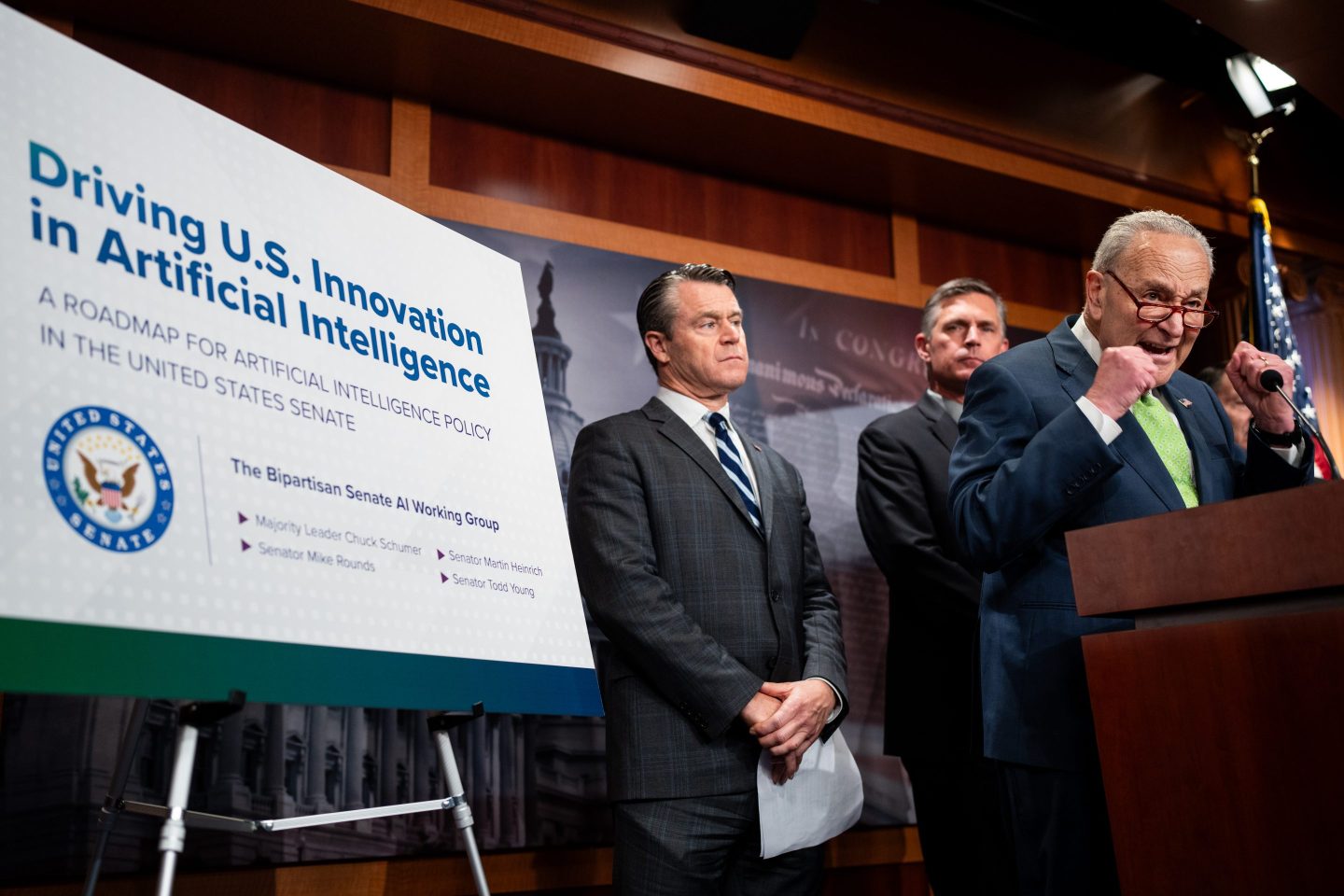
One rare bipartisan AI bill is moving through Congress. Here’s why it deserves to pass
By Neil Björkman and Betsy BrewerJuly 1, 2026
20 hours ago
I know how Gen Z can survive the ‘jobpocalypse’ because I built an AI company — in 2015
CommentaryCareers
I know how Gen Z can survive the ‘jobpocalypse’ because I built an AI company — in 2015
By Jeremy FainJuly 1, 2026
21 hours ago
mr
Commentary250 Years of Innovation
America needs 3.8 million manufacturing workers. This CEO has a blueprint to find them
By Mark RayfieldJuly 1, 2026
21 hours ago
usa
Commentary250 Years of Innovation
America at 250: why the Constitution was built to restrain government, not celebrate majority rule
By Steve H. HankeJuly 1, 2026
21 hours ago
t
CommentaryMedia
Netflix could turn NBC into its biggest bet yet — and this time, the math actually works
By Jeffrey Sonnenfeld and Steven TianJune 30, 2026
2 days ago
wb
CommentaryLeadership
I grew BDO from $600 million to $3.4 billion. Here’s the 3-part formula that made it possible
By Wayne BersonJune 30, 2026
2 days ago

Most Popular

As Big Tech showers employees with perks to win the talent war, Nvidia built a nearly $5 trillion company by making people pay for their own lunch
Big Tech
As Big Tech showers employees with perks to win the talent war, Nvidia built a nearly $5 trillion company by making people pay for their own lunch
By Marco Quiroz-GutierrezJuly 1, 2026
1 day ago
MacKenzie Scott alone accounted for one-third of America's $19.2 billion in megagifts last year
Success
MacKenzie Scott alone accounted for one-third of America's $19.2 billion in megagifts last year
By Sydney LakeJune 25, 2026
7 days ago
The Supreme Court's birthright citizenship ruling hands the U.S. economy a $7.7 trillion win
Newsletters
The Supreme Court's birthright citizenship ruling hands the U.S. economy a $7.7 trillion win
By Diane BradyJuly 1, 2026
22 hours ago
Current price of oil as of July 1, 2026
Personal Finance
Current price of oil as of July 1, 2026
By Joseph HostetlerJuly 1, 2026
19 hours ago
Philanthropy leader at Warren Buffett and Bill Gates’ Giving Pledge says children of billionaires are pushing them to give their wealth away faster
Success
Philanthropy leader at Warren Buffett and Bill Gates’ Giving Pledge says children of billionaires are pushing them to give their wealth away faster
By Preston ForeJune 27, 2026
5 days ago
Elon Musk on MacKenzie Scott giving away $26 billion of her fortune: 'Sadly,' it makes the world a worse place
Success
Elon Musk on MacKenzie Scott giving away $26 billion of her fortune: 'Sadly,' it makes the world a worse place
By Sydney LakeJune 29, 2026
3 days ago

© 2026 Fortune Media IP Limited. All Rights Reserved. Use of this site constitutes acceptance of our Terms of Use and Privacy Policy | CA Notice at Collection and Privacy Notice | Do Not Sell/Share My Personal Information
FORTUNE is a trademark of Fortune Media IP Limited, registered in the U.S. and other countries. FORTUNE may receive compensation for some links to products and services on this website. Offers may be subject to change without notice.