• Home
  • Latest
  • Fortune 500
  • Finance
  • Tech
  • Leadership
  • Lifestyle
  • Rankings
  • Multimedia
Financebailouts

The government using taxpayer money to bail out banks will unavoidably continue. Here’s why

By
Paolo Zannoni
Paolo Zannoni
Down Arrow Button Icon
By
Paolo Zannoni
Paolo Zannoni
Down Arrow Button Icon
June 11, 2024, 10:12 AM ET
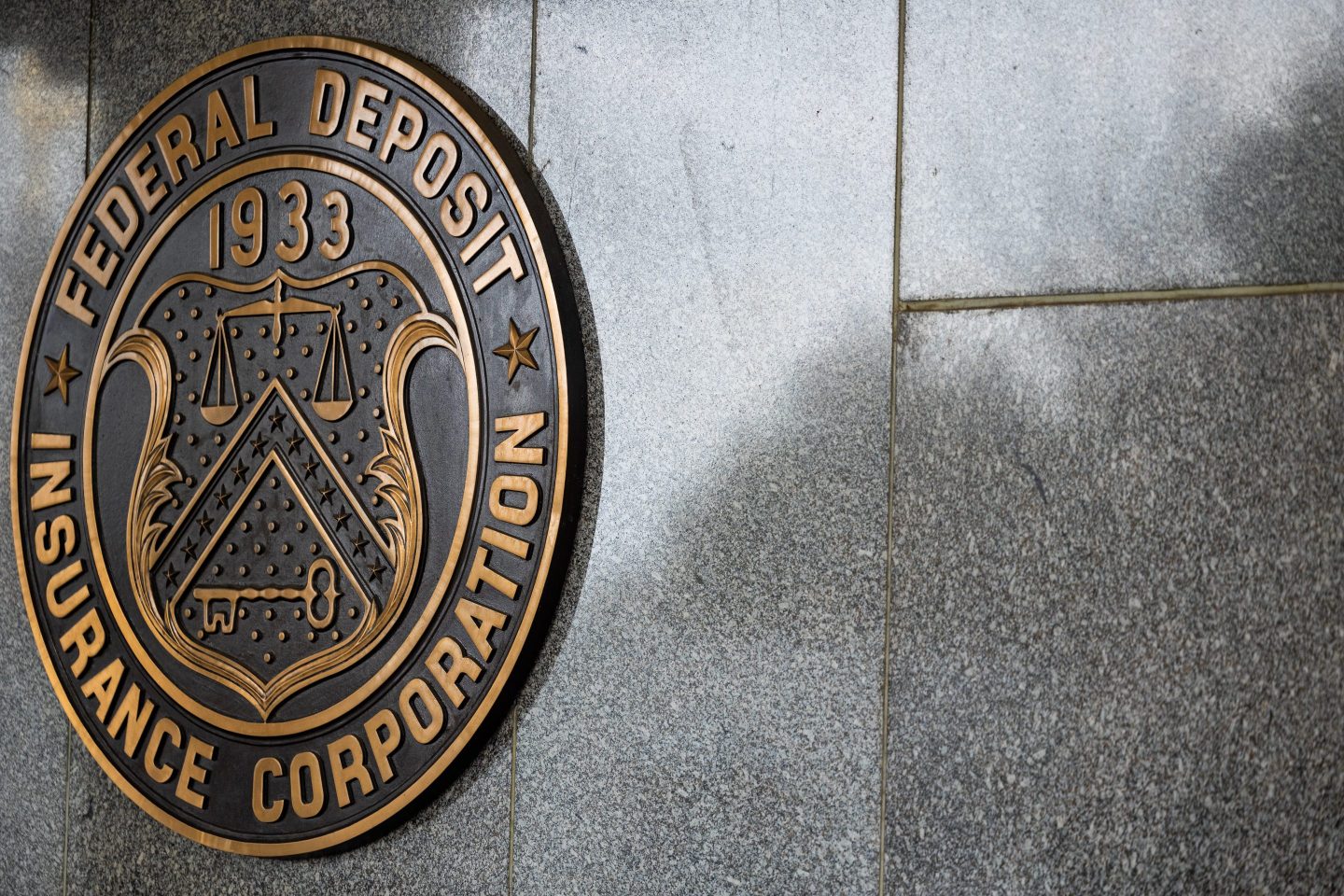
Outside the Federal Deposit Insurance Corp. (FDIC) building in Washington, DC.
Outside the Federal Deposit Insurance Corp. (FDIC) building in Washington, DC.Nathan Posner/Anadolu Agency via Getty Images

Why do banks fail? They fail because bankers are and forever will be debtors. Banks are in the business of debt; they owe to their clients, their fellow bankers, their partners, their competitors. And their clients and competitors owe to them. One might argue that a business that is based entirely on the exchange of debts—that earns its income by exchanging debts, and therefore has it as both assets and liabilities—is actually destined to fail. And when banks do fail, governments will always seek to bail them out.

Let’s take two brief examples to illustrate this important point. On October 16, 2008, my old boss at Goldman Sachs, Hank Paulson, then U.S. Treasury Secretary, asked the leaders of America’s nine biggest financial institutions to accept an injection of equity by the federal government. At over six-and-a-half feet tall, and a former defensive lineman for Dartmouth’s football team, and still known today as “Hank the Hammer,” when Hank Paulson asks you to do something, he can be pretty persuasive, as I know only too well.

The banks did what Hank asked.

In response, the frantic selling of shares in the nine institutions that had been taking place over the previous weeks ceased abruptly. Though the stock market still suffered, and the financial crisis was far from over, the run on the equity of the banks came to an end. The hedge funds that had led the charge were forced to retreat, recognizing that even they could not attack the banks with the government supporting them, acting as a shareholder.

In the process, the banks were saved, the American banking system became more stable, and the economy recovered, at least until the next cycle of expansion, bailout, and retrenchment.

It was ever thus. Nearly 500 years earlier, on November 18, 1513, in Venice, the Priuli Bank opened for business on the Rialto. Gerolamo Priuli, the Managing Partner, placed the bank’s ledger on a bench in the square, next to which he piled up stacks of gold and silver coins. Unfortunately for Priuli, the day did not start well. As soon as the bank opened, clients lined up in front of the bench to swap their bank credits with coins from the stacks. Priuli knew he would soon run out—his debts outnumbering the gold and silver at his side—so he sent a messenger to the Council of Ten, the highest governing body of the Republic, which met nearby.

When the Ten learned of Priuli’s predicament, they dispatched the official standard bearer with the Council’s flag to the Rialto. The bearer placed himself and the flag behind the bench, next to Priuli. The message was loud and clear: the Republic would make sure the bank had enough coins to meet the demands of its customers. Reassured, Priuli’s clients dispersed and went about their business. The bank was saved. For the time being.

The similarities between October 16, 2008, and November 18, 1513, are striking. Facing a banking crisis, the Treasury Secretary of the United States, a modern democratic nation, behaved much like the Council of Ten, the executive body of an ancient aristocratic republic. Over the course of 500 years, nations have become richer, financial technology has evolved, and governments have discovered new and different ways to manage their economies. Yet banks still run into trouble, the same now as then, and governments continue to stand by them; eventually, they bail out the banks. Indeed, research has shown that in the roughly 200 years between 1800 and 2008 alone, banking crises and state bailouts took place precisely a dozen times in the UK, thirteen times in the US, and fifteen times in France. No other industry in the world can claim a similar record of recurring crises and government backing.

Why is it that when banks face crises, states always seem to be willing to bail them out? Is it some kind of grand conspiracy, as some claim? Is it something rotten at the heart of capitalism? Some structural defect in the system?

The answer lies in the nature and function of the debts of banks; because the debts of banks are the currency of nations. We should not, therefore, be surprised or shocked that states bail out the banks when they periodically face crises and occasionally fail.

Adapted from Money and Promises: Seven Deals That Changed the World, published by Columbia Business School Publishing. Copyright © 2024 Paolo Zannoni. Used by arrangement with the publisher. All rights reserved.
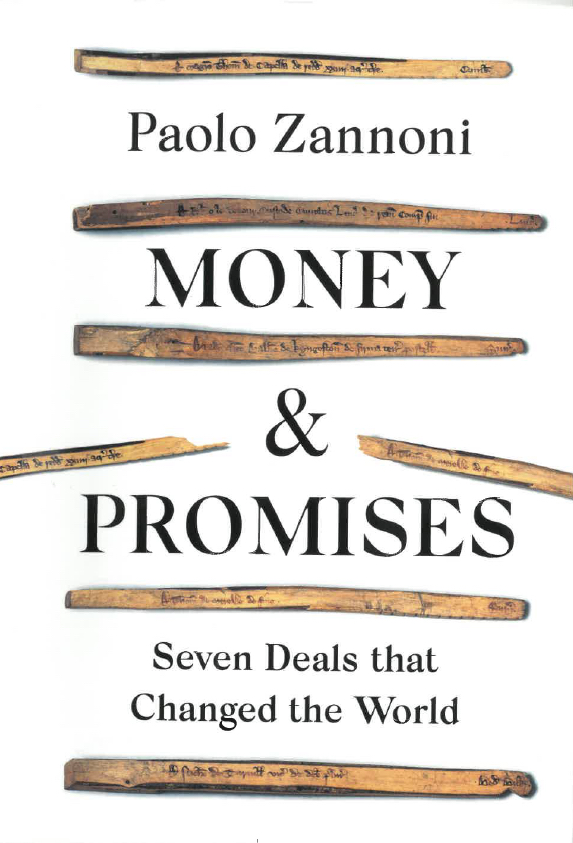
"Money and Promises: Seven Deals that Changed the World," by Paolo Zannoni.
“Money and Promises: Seven Deals That Changed the World,” by Paolo Zannoni.
courtesy Columbia Business School Publishing
Join us at the Fortune Workplace Innovation Summit May 19–20, 2026, in Atlanta. The next era of workplace innovation is here—and the old playbook is being rewritten. At this exclusive, high-energy event, the world’s most innovative leaders will convene to explore how AI, humanity, and strategy converge to redefine, again, the future of work. Register now.
About the Author
By Paolo Zannoni
See full bioRight Arrow Button Icon

Latest in Finance

Finance
Lorem ipsum dolor sit amet, consectetur adipiscing elit, sed do eiusmod tempor incididunt ut labore et dolore magna aliqua. Ut enim ad minim veniam
By Fortune Editors
October 20, 2025
Finance
Lorem ipsum dolor sit amet, consectetur adipiscing elit, sed do eiusmod tempor incididunt ut labore et dolore magna aliqua. Ut enim ad minim veniam
By Fortune Editors
October 20, 2025
Finance
Lorem ipsum dolor sit amet, consectetur adipiscing elit, sed do eiusmod tempor incididunt ut labore et dolore magna aliqua. Ut enim ad minim veniam
By Fortune Editors
October 20, 2025
Finance
Lorem ipsum dolor sit amet, consectetur adipiscing elit, sed do eiusmod tempor incididunt ut labore et dolore magna aliqua. Ut enim ad minim veniam
By Fortune Editors
October 20, 2025
Finance
Lorem ipsum dolor sit amet, consectetur adipiscing elit, sed do eiusmod tempor incididunt ut labore et dolore magna aliqua. Ut enim ad minim veniam
By Fortune Editors
October 20, 2025
Finance
Lorem ipsum dolor sit amet, consectetur adipiscing elit, sed do eiusmod tempor incididunt ut labore et dolore magna aliqua. Ut enim ad minim veniam
By Fortune Editors
October 20, 2025

Most Popular

Finance
Lorem ipsum dolor sit amet, consectetur adipiscing elit, sed do eiusmod tempor incididunt ut labore et dolore magna aliqua. Ut enim ad minim veniam
By Fortune Editors
October 20, 2025
Finance
Lorem ipsum dolor sit amet, consectetur adipiscing elit, sed do eiusmod tempor incididunt ut labore et dolore magna aliqua. Ut enim ad minim veniam
By Fortune Editors
October 20, 2025
Finance
Lorem ipsum dolor sit amet, consectetur adipiscing elit, sed do eiusmod tempor incididunt ut labore et dolore magna aliqua. Ut enim ad minim veniam
By Fortune Editors
October 20, 2025
Finance
Lorem ipsum dolor sit amet, consectetur adipiscing elit, sed do eiusmod tempor incididunt ut labore et dolore magna aliqua. Ut enim ad minim veniam
By Fortune Editors
October 20, 2025
Finance
Lorem ipsum dolor sit amet, consectetur adipiscing elit, sed do eiusmod tempor incididunt ut labore et dolore magna aliqua. Ut enim ad minim veniam
By Fortune Editors
October 20, 2025
Finance
Lorem ipsum dolor sit amet, consectetur adipiscing elit, sed do eiusmod tempor incididunt ut labore et dolore magna aliqua. Ut enim ad minim veniam
By Fortune Editors
October 20, 2025
Fortune Secondary Logo
Rankings
  • 100 Best Companies
  • Fortune 500
  • Global 500
  • Fortune 500 Europe
  • Most Powerful Women
  • Future 50
  • World’s Most Admired Companies
  • See All Rankings
Sections
  • Finance
  • Fortune Crypto
  • Features
  • Leadership
  • Health
  • Commentary
  • Success
  • Retail
  • Mpw
  • Tech
  • Lifestyle
  • CEO Initiative
  • Asia
  • Politics
  • Conferences
  • Europe
  • Newsletters
  • Personal Finance
  • Environment
  • Magazine
  • Education
Customer Support
  • Frequently Asked Questions
  • Customer Service Portal
  • Privacy Policy
  • Terms Of Use
  • Single Issues For Purchase
  • International Print
Commercial Services
  • Advertising
  • Fortune Brand Studio
  • Fortune Analytics
  • Fortune Conferences
  • Business Development
  • Group Subscriptions
About Us
  • About Us
  • Editorial Calendar
  • Press Center
  • Work At Fortune
  • Diversity And Inclusion
  • Terms And Conditions
  • Site Map
  • About Us
  • Editorial Calendar
  • Press Center
  • Work At Fortune
  • Diversity And Inclusion
  • Terms And Conditions
  • Site Map
  • Facebook icon
  • Twitter icon
  • LinkedIn icon
  • Instagram icon
  • Pinterest icon

Latest in Finance

Trump at a podium
PoliticsIran
Trump will address the nation on Wednesday on the Iran war Wednesday—here’s what to expect
By Eva RoytburgApril 1, 2026
32 minutes ago
Deutsche Bank asked AI if it’s true that AI will solve the economy’s inflation problems. The robots answered
Economydisruption
Deutsche Bank asked AI if it’s true that AI will solve the economy’s inflation problems. The robots answered
By Nick LichtenbergApril 1, 2026
1 hour ago
jetblue
Travel & LeisureAirline industry
JetBlue hikes checked bag fees as much as $9 on war in Iran
By Rio Yamat and The Associated PressApril 1, 2026
1 hour ago
lin bin
North AmericaNFL
Chinese billionaire buys 1% stake in the Miami Dolphins at record $12.5 billion valuation
By The Associated PressApril 1, 2026
1 hour ago
retail sales
EconomyConsumer Spending
Retail sales tick up 0.6% in February before Iran war, gas price spike
By Anne D'Innocenzio and The Associated PressApril 1, 2026
2 hours ago
Mike Wirth, chief executive officer of Chevron.
EnergyData centers
Microsoft and Chevron enter exclusivity deal on powering West Texas AI data center complex
By Jordan BlumApril 1, 2026
2 hours ago

Most Popular

Jerome Powell says the $39 trillion national debt is ‘not unsustainable,’ but warns the trajectory ‘will not end well’
Economy
Jerome Powell says the $39 trillion national debt is ‘not unsustainable,’ but warns the trajectory ‘will not end well’
By Fortune EditorsMarch 30, 2026
2 days ago
Two-thirds of parents say their adult Gen Z kids still rely on them financially  for support—even though it's putting them under strain
Success
Two-thirds of parents say their adult Gen Z kids still rely on them financially  for support—even though it's putting them under strain
By Fortune EditorsMarch 31, 2026
1 day ago
Kevin O'Leary says if you earn $68,000 a year and follow this rule, you'll retire a millionaire
Personal Finance
Kevin O'Leary says if you earn $68,000 a year and follow this rule, you'll retire a millionaire
By Fortune EditorsMarch 31, 2026
1 day ago
A man used AI to call 3,000 Irish bartenders to track the cost of Guinness. Now pubs are lowering their prices to compete
AI
A man used AI to call 3,000 Irish bartenders to track the cost of Guinness. Now pubs are lowering their prices to compete
By Fortune EditorsMarch 30, 2026
2 days ago
Markets cheer as Trump threatens to abandon Iran war, but Jamie Dimon sides with allies: ‘Win this thing and clean up the straits’
Energy
Markets cheer as Trump threatens to abandon Iran war, but Jamie Dimon sides with allies: ‘Win this thing and clean up the straits’
By Fortune EditorsMarch 31, 2026
1 day ago
Hiring just hit a level not seen since the economy was ‘closed down literally’ during COVID, top economist says
Economy
Hiring just hit a level not seen since the economy was ‘closed down literally’ during COVID, top economist says
By Fortune EditorsMarch 31, 2026
1 day ago

© 2026 Fortune Media IP Limited. All Rights Reserved. Use of this site constitutes acceptance of our Terms of Use and Privacy Policy | CA Notice at Collection and Privacy Notice | Do Not Sell/Share My Personal Information
FORTUNE is a trademark of Fortune Media IP Limited, registered in the U.S. and other countries. FORTUNE may receive compensation for some links to products and services on this website. Offers may be subject to change without notice.