
• Home
  • Latest
  • Fortune 500
  • Finance
  • Tech
  • Leadership
  • Lifestyle
  • Rankings
  • Multimedia

Trendingnow

1

Despite having a $165 million net worth, Scarlett Johansson says work-life balance doesn’t exist—and the first step to success is admitting that

2

Microsoft AI chief gives it 18 months—for all white-collar work to be automated by AI

3

The Bezos family just donated $100 million to help achieve one of Mayor Zohran Mamdani’s top campaign promises

1

Despite having a $165 million net worth, Scarlett Johansson says work-life balance doesn’t exist—and the first step to success is admitting that

2

Microsoft AI chief gives it 18 months—for all white-collar work to be automated by AI

3

The Bezos family just donated $100 million to help achieve one of Mayor Zohran Mamdani’s top campaign promises
LeadershipFortune 500

Those calling Intel a company in decline are missing the point entirely—it’s now a corporate actor on the geopolitical stage

Geoff Colvin
By
Geoff Colvin
Geoff Colvin
Senior Editor-at-Large
Down Arrow Button Icon
Geoff Colvin
By
Geoff Colvin
Geoff Colvin
Senior Editor-at-Large
Down Arrow Button Icon
September 28, 2024, 4:00 AM ET
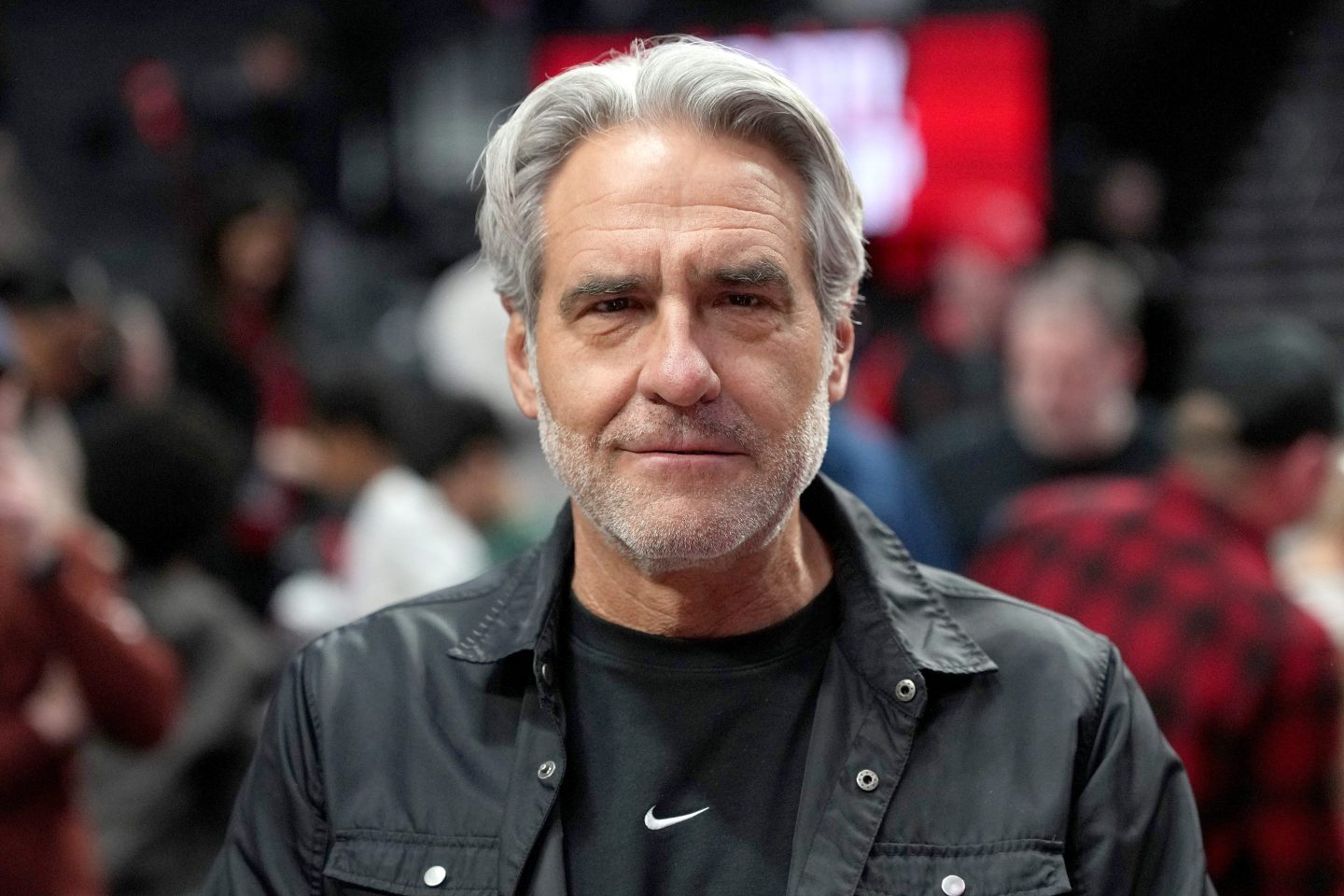
Intel CEO Pat Gelsinger at the Nasdaq for the IPO of Intel-owned Mobileye.

Don’t be fooled—the Intel saga isn’t what it seems. Recent coverage narrates the sad decline of a once-great American company, with the outcome looking dim. But the story is really a high-stakes thriller leading to an uncertain resolution that could carry global implications. It may take years to play out, but seeing the big picture makes each day’s news far more interesting.

Recommended Video

Understand first what Hollywood scriptwriters call the backstory: Intel for decades dominated the global semiconductor industry, designing and manufacturing leading-edge chips. But starting around 2000 it began to fall behind, missing the bonanzas in cellphone chips and then the chips that fuel the AI revolution (note that Nvidia designs chips but doesn’t manufacture them).  By 2021, Intel’s chips had fallen two generations behind the leading edge, an unprecedented and humiliating position. In crisis mode, the board brought back an Intel veteran who had left in 2008, Pat Gelsinger, to lead a rescue mission as CEO. (You can read my full case study for Fortune about how Intel lost its edge here.)

Gelsinger launched an ambitious, expensive, high-risk strategy to bring Intel back to the global forefront. He knew reaching that goal would take several years if it could be done at all. He negotiated with ASML, the only company in the world that makes machines necessary for manufacturing leading-edge chips, to sell Intel the first machine that would produce a new generation of chips. He poured many billions of dollars into capital investments that wouldn’t pay significant returns for years.

That’s the foundation of what we mostly read and hear about Intel today. All that capital is costing Intel nearly $16 billion a year, as calculated by ISS EVA, without much to show for it so far. The company announced in August it will lay off 15,000 employees and “stop all non-essential work.” Add recent rumors that Qualcomm might want to buy Intel, and we have the sad-decline narrative.

But that version of the story overlooks the most interesting part—the grand-strategy-great-powers-geopolitics element. Semiconductors are crucial strategic products for both America’s and China’s national security, and only three companies can make leading-edge chips: Taiwan Semiconductor Manufacturing Company (TSMC), South Korea’s Samsung, and Intel, which ranks a distant third in output. That’s why bipartisan congressional majorities in 2022 passed the CHIPS and Science Act, which subsidizes new chip factories in America. Commerce Secretary Gina Raimondo in February explained why: “We cannot allow ourselves to be overly reliant on one part of the world for the most important piece of hardware in the 21st century.”

Most of the CHIPS Act subsidies have been disbursed, with the biggest package—some $20 billion in direct funding and loans—going to Intel, which is building two huge fabs in Arizona and two more in Ohio, among other projects. Big subsidies are also going to TSMC (building three fabs in Arizona) and Samsung (three fabs in Texas).

When the U.S. is the only country where all three of the world’s leading chipmakers run major production operations, international relations become more complex. That’s just the beginning of the complexity.  For more intrigue, add the element of time. Intel hopes to start production of leading-edge chips in at least one fab by the first half of 2025, though the volume is not clear. Gelsinger has said Intel’s financial rehabilitation won’t be complete until 2030 or beyond, and he told Fortune in March, “I fully expect that we’ll need a CHIPS Two. Thirty years of poor economic policy cannot be fixed in a three- to five-year CHIPS One program.” TSMC also plans to begin production at one of its new U.S. fabs next year, but it won’t be producing leading-edge chips there until 2027 or 2028. It will, however, be producing those chips in Taiwan earlier. Meanwhile, Xi Jinping has declared a goal of making China self-sufficient in chips, including leading-edge chips, by 2027. Separately, he has instructed his military to develop a plan for invading Taiwan by 2027.

The scenarios are easy to imagine. If China were to take over Taiwan, it would presumably take control of TSMC.  Would the U.S. government shut down the company’s U.S. operations? Take them over? Leave them alone? Would Intel benefit? Or imagine an entirely different scenario in which China doesn’t invade Taiwan, but TSMC’s and Samsung’s U.S. operations outperform Intel, hobbling its commercial competitiveness? Would Washington inject more billions into America’s only plausible competitor at the forefront of “the most important piece of hardware in the 21st century”?

Investors, Wall Street analysts, competitors, suppliers, and customers must face a new reality: Intel is no longer a conventional company and can no longer be evaluated as one. It is rather the preeminent example of a trend identified by Lazard CEO Peter Orszag and colleagues, who wrote in a Foreign Affairs article that “a tectonic shift is taking place, one that is forcing corporations to become actors on the geopolitical stage.” In that unfamiliar and unsought role, Intel is the most visible example of those that “have become both the objects and instruments of foreign policy.”

Join us at the Fortune Workplace Innovation Summit May 19–20, 2026, in Atlanta. The next era of workplace innovation is here—and the old playbook is being rewritten. At this exclusive, high-energy event, the world’s most innovative leaders will convene to explore how AI, humanity, and strategy converge to redefine, again, the future of work. Register now.
About the Author
Geoff Colvin
By Geoff ColvinSenior Editor-at-Large
LinkedIn iconTwitter icon

Geoff Colvin is a senior editor-at-large at Fortune, covering leadership, globalization, wealth creation, the infotech revolution, and related issues.

See full bioRight Arrow Button Icon

Latest in Leadership

Finance
Lorem ipsum dolor sit amet, consectetur adipiscing elit, sed do eiusmod tempor incididunt ut labore et dolore magna aliqua. Ut enim ad minim veniam
By Fortune Editors
October 20, 2025
Finance
Lorem ipsum dolor sit amet, consectetur adipiscing elit, sed do eiusmod tempor incididunt ut labore et dolore magna aliqua. Ut enim ad minim veniam
By Fortune Editors
October 20, 2025
Finance
Lorem ipsum dolor sit amet, consectetur adipiscing elit, sed do eiusmod tempor incididunt ut labore et dolore magna aliqua. Ut enim ad minim veniam
By Fortune Editors
October 20, 2025
Finance
Lorem ipsum dolor sit amet, consectetur adipiscing elit, sed do eiusmod tempor incididunt ut labore et dolore magna aliqua. Ut enim ad minim veniam
By Fortune Editors
October 20, 2025
Finance
Lorem ipsum dolor sit amet, consectetur adipiscing elit, sed do eiusmod tempor incididunt ut labore et dolore magna aliqua. Ut enim ad minim veniam
By Fortune Editors
October 20, 2025
Finance
Lorem ipsum dolor sit amet, consectetur adipiscing elit, sed do eiusmod tempor incididunt ut labore et dolore magna aliqua. Ut enim ad minim veniam
By Fortune Editors
October 20, 2025

Most Popular

Finance
Lorem ipsum dolor sit amet, consectetur adipiscing elit, sed do eiusmod tempor incididunt ut labore et dolore magna aliqua. Ut enim ad minim veniam
By Fortune Editors
October 20, 2025
Finance
Lorem ipsum dolor sit amet, consectetur adipiscing elit, sed do eiusmod tempor incididunt ut labore et dolore magna aliqua. Ut enim ad minim veniam
By Fortune Editors
October 20, 2025
Finance
Lorem ipsum dolor sit amet, consectetur adipiscing elit, sed do eiusmod tempor incididunt ut labore et dolore magna aliqua. Ut enim ad minim veniam
By Fortune Editors
October 20, 2025
Finance
Lorem ipsum dolor sit amet, consectetur adipiscing elit, sed do eiusmod tempor incididunt ut labore et dolore magna aliqua. Ut enim ad minim veniam
By Fortune Editors
October 20, 2025
Finance
Lorem ipsum dolor sit amet, consectetur adipiscing elit, sed do eiusmod tempor incididunt ut labore et dolore magna aliqua. Ut enim ad minim veniam
By Fortune Editors
October 20, 2025
Finance
Lorem ipsum dolor sit amet, consectetur adipiscing elit, sed do eiusmod tempor incididunt ut labore et dolore magna aliqua. Ut enim ad minim veniam
By Fortune Editors
October 20, 2025
Fortune Secondary Logo
Rankings
  • 100 Best Companies
  • Fortune 500
  • Global 500
  • Fortune 500 Europe
  • Most Powerful Women
  • World's Most Admired Companies
  • See All Rankings
  • Lists Calendar
Sections
  • Finance
  • Fortune Crypto
  • Features
  • Leadership
  • Health
  • Commentary
  • Success
  • Retail
  • Mpw
  • Tech
  • Lifestyle
  • CEO Initiative
  • Asia
  • Politics
  • Conferences
  • Europe
  • Newsletters
  • Personal Finance
  • Environment
  • Magazine
  • Education
Customer Support
  • Frequently Asked Questions
  • Customer Service Portal
  • Privacy Policy
  • Terms Of Use
  • Single Issues For Purchase
  • International Print
Commercial Services
  • Advertising
  • Fortune Brand Studio
  • Fortune Analytics
  • Fortune Conferences
  • Business Development
  • Group Subscriptions
About Us
  • About Us
  • Press Center
  • Work At Fortune
  • Terms And Conditions
  • Site Map
  • About Us
  • Press Center
  • Work At Fortune
  • Terms And Conditions
  • Site Map
  • Facebook icon
  • Twitter icon
  • LinkedIn icon
  • Instagram icon
  • Pinterest icon

Latest in Leadership

tarot
AICulture
We talked to 12 tarot card readers who are using AI. They split in 2 camps, with big implications for the technology
By Ziv Epstein, Farnaz Jahanbakhsh, Vana Goblot and The ConversationMay 16, 2026
5 hours ago
mustafa suleyman
AIMicrosoft
Microsoft AI chief gives it 18 months—for all white-collar work to be automated by AI
By Jake AngeloMay 16, 2026
8 hours ago
Kevin O'Leary wears a suit and gestures
Future of Workwork-life balance
‘You’re not a hero, you’re a liability’: Shark Tank’s Kevin O’Leary warns Gen Z founders to stop glorifying hustle culture
By Jacqueline MunisMay 16, 2026
8 hours ago
tom
SuccessEntrepreneurs
Top Chef’s Tom Colicchio got a 15x return on a tech company most Americans have never heard of. He thinks his own industry is broken
By Nick LichtenbergMay 16, 2026
9 hours ago
bhaskar
Economydisruption
The prophet of the ‘Wired Belt’ says capitalism is finally eating itself
By Bhaskar ChakravortiMay 16, 2026
10 hours ago
Kurt Alexander, president of Omni Hotels & Resorts
SuccessCareers
Gen Z wants AI-proof jobs. The president of a 50-property hotel chain says hospitality is hiding in plain sight
By Preston ForeMay 16, 2026
10 hours ago

Most Popular

Despite having a $165 million net worth, Scarlett Johansson says work-life balance doesn’t exist—and the first step to success is admitting that
Success
Despite having a $165 million net worth, Scarlett Johansson says work-life balance doesn’t exist—and the first step to success is admitting that
By Preston ForeMay 13, 2026
3 days ago
Microsoft AI chief gives it 18 months—for all white-collar work to be automated by AI
AI
Microsoft AI chief gives it 18 months—for all white-collar work to be automated by AI
By Jake AngeloMay 16, 2026
8 hours ago
The Bezos family just donated $100 million to help achieve one of Mayor Zohran Mamdani’s top campaign promises
Politics
The Bezos family just donated $100 million to help achieve one of Mayor Zohran Mamdani’s top campaign promises
By Jake AngeloMay 12, 2026
4 days ago
Current price of oil as of May 15, 2026
Personal Finance
Current price of oil as of May 15, 2026
By Joseph HostetlerMay 15, 2026
1 day ago
Meet the 20-year-old CEO who launched a company in high school to solve Gen Z's entry-level job crisis
Future of Work
Meet the 20-year-old CEO who launched a company in high school to solve Gen Z's entry-level job crisis
By Jake AngeloMay 16, 2026
12 hours ago
‘You’re not a hero, you’re a liability’: Shark Tank’s Kevin O’Leary warns Gen Z founders to stop glorifying hustle culture
Future of Work
‘You’re not a hero, you’re a liability’: Shark Tank’s Kevin O’Leary warns Gen Z founders to stop glorifying hustle culture
By Jacqueline MunisMay 16, 2026
8 hours ago

© 2026 Fortune Media IP Limited. All Rights Reserved. Use of this site constitutes acceptance of our Terms of Use and Privacy Policy | CA Notice at Collection and Privacy Notice | Do Not Sell/Share My Personal Information
FORTUNE is a trademark of Fortune Media IP Limited, registered in the U.S. and other countries. FORTUNE may receive compensation for some links to products and services on this website. Offers may be subject to change without notice.