• Home
  • Latest
  • Fortune 500
  • Finance
  • Tech
  • Leadership
  • Lifestyle
  • Rankings
  • Multimedia

Trendingnow

1

As Big Tech showers employees with perks to win the talent war, Nvidia built a nearly $5 trillion company by making people pay for their own lunch

2

MacKenzie Scott alone accounted for one-third of America's $19.2 billion in megagifts last year

3

The Supreme Court's birthright citizenship ruling hands the U.S. economy a $7.7 trillion win

1

As Big Tech showers employees with perks to win the talent war, Nvidia built a nearly $5 trillion company by making people pay for their own lunch

2

MacKenzie Scott alone accounted for one-third of America's $19.2 billion in megagifts last year

3

The Supreme Court's birthright citizenship ruling hands the U.S. economy a $7.7 trillion win
CommentaryFinance

MSCI CEO: Long vilified as a ‘license to pollute,’ carbon credit markets are becoming far more effective than once thought

By
Henry Fernandez
Henry Fernandez
Down Arrow Button Icon
By
Henry Fernandez
Henry Fernandez
Down Arrow Button Icon
November 12, 2024, 5:30 AM ET
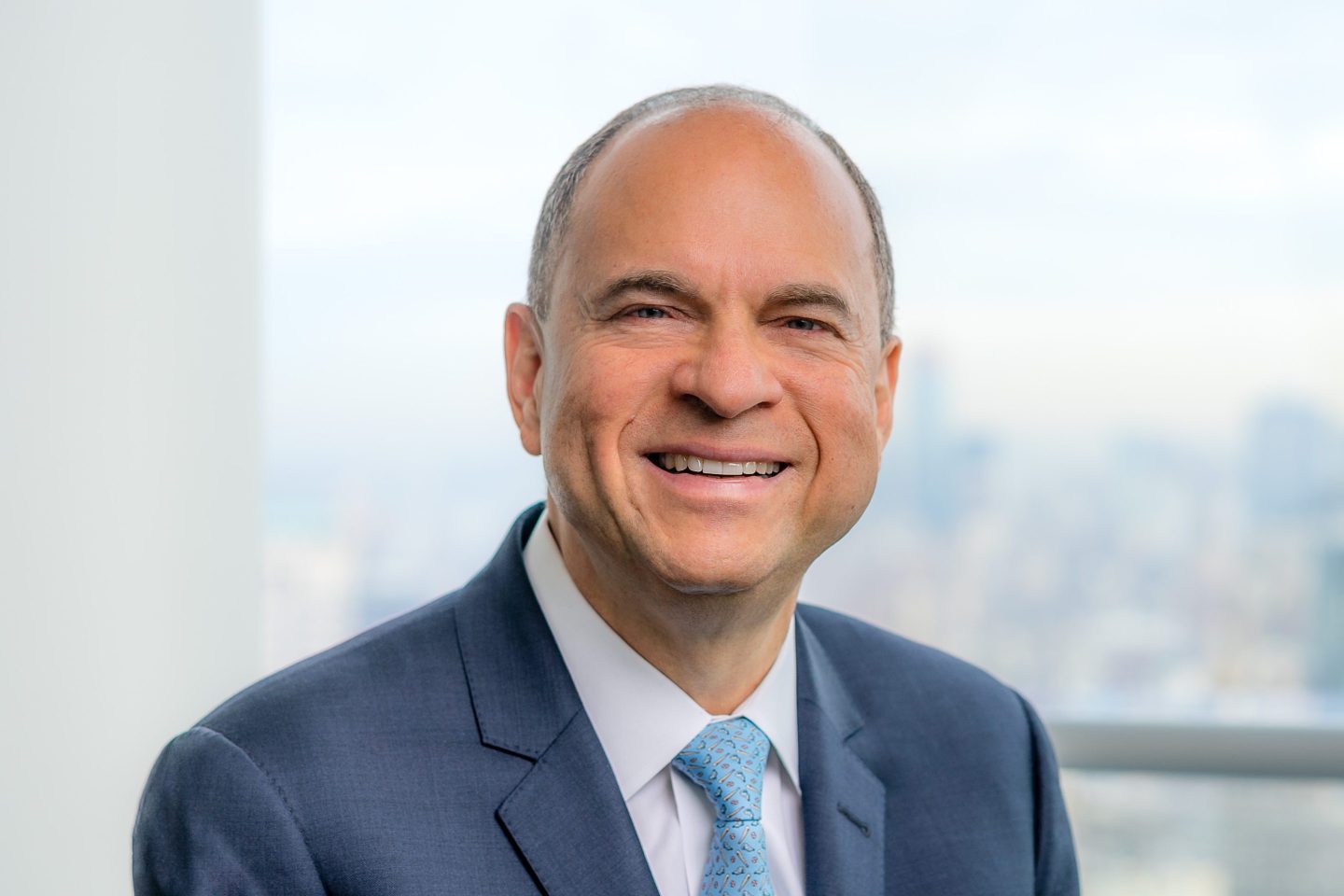
Henry Fernandez is the chairman and CEO of MSCI.
Henry Fernandez is the chairman and CEO of MSCI.Courtesy of MSCI
Add Fortune on Google for similar content.

The logic of voluntary carbon credits has always been simple: Companies finance projects to avoid the release of carbon dioxide or remove it from the atmosphere, thereby offsetting the climate impact of their own emissions. Over time, this can help decarbonize hard-to-abate industries.

In practice, however, the voluntary carbon market has long suffered from a lack of transparency and verification. On close inspection, many projects turned out to be worthless, or even counterproductive, which raised concerns about “greenwashing.”

Recently, global leaders have started looking at carbon credits more favorably, for three big reasons. There is a growing realization that the world cannot achieve its climate goals without them. Carbon credits can help unlock climate finance and investment for developing countries, and thus deliver economic and social benefits that go well beyond reducing emissions. And now, we have the data, models, and technology to strengthen carbon-market integrity and provide the clarity that companies and investors demand.

As political and business leaders prepare for the United Nations COP29 climate summit in Azerbaijan, it is worth examining the potential of carbon credits in greater detail.

Limiting global temperature rises

Scientists believe the world must limit global temperature rise to 1.5 degrees Celsius above pre-industrial levels to prevent its most damaging effects. At the very least, they say, we must keep warming to 2 degrees Celsius.

Meeting those ambitions would require total greenhouse-gas emissions to fall below 2019 levels by 2030 either by 28% (to limit temperature rises to two degrees) or 42% (to limit the increase to 1.5 degrees), according to a new report from the UN Environment Program.

Today, even if all countries fully implemented their conditional national climate pledges under the Paris Agreement—which they are not on track to do—emissions would decline by only 10%.

Meanwhile, as of May 31, just 11% of listed companies were aligned with a 1.5-degree pathway—and more than 60% of listed companies were not even aligned with a two-degree pathway, based on their emissions trajectory, according to the MSCI Sustainability Institute’s Net-Zero Tracker.

These numbers underscore the urgency of expanding the voluntary carbon market, which is currently valued at only $2 billion globally.

Skeptics have denounced carbon credits as a “license to pollute,” arguing that they allow companies to sidestep meaningful emissions reductions. That’s not true. In fact, companies that use material quantities of carbon credits are, on average, decarbonizing at twice the rate of companies that do not use carbon credits, according to our 2023 study of more than 4,000 global firms.

In other words, carbon credits are not discouraging serious climate action—they are incentivizing serious climate action.

Enlarging the voluntary carbon market could therefore help accelerate global progress, especially for high-emissions sectors that are otherwise difficult to decarbonize, such as heavy industry and transportation.

For perspective, MSCI Carbon Markets researchers have estimated that the world needs an additional $90 billion of investment in carbon-credit projects by 2030 to hit the 1.5-degree target.

Supporting an equitable transition

The quantity of investment is only part of the challenge. Rich countries must also support an equitable transition for the global South.

More than 2 billion people around the world still do not have access to clean cooking fuels, which is a major cause of deforestation, and more than 3 million people die every year from indoor air pollution caused by cooking smoke, according to the UN. In addition, 685 million people still do not have access to electricity.

Without much fanfare, carbon credit projects have helped mitigate these problems. Last year in Nairobi, for example, the Regional Voluntary Carbon Market Company hosted the biggest-ever carbon-credit auction, where more than 2 million metric tons of credits were sold to finance programs such as clean cooking in Kenya and Rwanda, along with clean energy in Egypt and South Africa.

This past May, more than 1,000 government and private-sector delegates met in Paris and committed a further $2.2 billion for clean-cooking projects in Africa and signed the Clean Cooking Declaration. However, they also stressed the importance of using only “high integrity” credits while addressing stubborn “quality concerns.”

Promoting carbon-market integrity

Verifying carbon credit integrity remains a difficult task, but we now have the tools to make it easier, including new methodologies, standards, and technologies for evaluating individual projects and confirming emissions reductions. By harnessing these tools, researchers can scrutinize carbon credit projects more rigorously, measuring their total climate, environmental, and socioeconomic impact and highlighting possible risks. They can also rely on a series of multilateral rules and guidelines, such as the G7 Principles of High Integrity Carbon Markets adopted in Japan last year. All of this can make carbon credits a more effective vehicle for reducing emissions and improving human welfare.

Despite persistent challenges, there is an emerging consensus that carbon credits are essential to reaching net-zero emissions. Strengthening the voluntary carbon market must be a top priority for global leaders at COP29 and beyond.

More must-read commentary published by Fortune:

  • Former Intel CEO Craig Barrett: Splitting up America’s leading chipmaker is a bad idea
  • Americans paid $100B since 2008 to access their own money. I am petitioning the Fed to end this racket
  • British fintech founder who moved to U.S.: U.K. tech’s problem isn’t taxes—it’s ambition
  • As activist Starboard engages constructively, here’s a potent prescription for Pfizer’s future success under Dr. Bourla’s watch

The opinions expressed in Fortune.com commentary pieces are solely the views of their authors and do not necessarily reflect the opinions and beliefs of Fortune.

About the Author
By Henry Fernandez
See full bioRight Arrow Button Icon
Add Fortune on Google for similar content.

Latest in Commentary

Finance
Lorem ipsum dolor sit amet, consectetur adipiscing elit, sed do eiusmod tempor incididunt ut labore et dolore magna aliqua. Ut enim ad minim veniam
By Fortune Editors
October 20, 2025
Finance
Lorem ipsum dolor sit amet, consectetur adipiscing elit, sed do eiusmod tempor incididunt ut labore et dolore magna aliqua. Ut enim ad minim veniam
By Fortune Editors
October 20, 2025
Finance
Lorem ipsum dolor sit amet, consectetur adipiscing elit, sed do eiusmod tempor incididunt ut labore et dolore magna aliqua. Ut enim ad minim veniam
By Fortune Editors
October 20, 2025
Finance
Lorem ipsum dolor sit amet, consectetur adipiscing elit, sed do eiusmod tempor incididunt ut labore et dolore magna aliqua. Ut enim ad minim veniam
By Fortune Editors
October 20, 2025
Finance
Lorem ipsum dolor sit amet, consectetur adipiscing elit, sed do eiusmod tempor incididunt ut labore et dolore magna aliqua. Ut enim ad minim veniam
By Fortune Editors
October 20, 2025
Finance
Lorem ipsum dolor sit amet, consectetur adipiscing elit, sed do eiusmod tempor incididunt ut labore et dolore magna aliqua. Ut enim ad minim veniam
By Fortune Editors
October 20, 2025

Most Popular

Finance
Lorem ipsum dolor sit amet, consectetur adipiscing elit, sed do eiusmod tempor incididunt ut labore et dolore magna aliqua. Ut enim ad minim veniam
By Fortune Editors
October 20, 2025
Finance
Lorem ipsum dolor sit amet, consectetur adipiscing elit, sed do eiusmod tempor incididunt ut labore et dolore magna aliqua. Ut enim ad minim veniam
By Fortune Editors
October 20, 2025
Finance
Lorem ipsum dolor sit amet, consectetur adipiscing elit, sed do eiusmod tempor incididunt ut labore et dolore magna aliqua. Ut enim ad minim veniam
By Fortune Editors
October 20, 2025
Finance
Lorem ipsum dolor sit amet, consectetur adipiscing elit, sed do eiusmod tempor incididunt ut labore et dolore magna aliqua. Ut enim ad minim veniam
By Fortune Editors
October 20, 2025
Finance
Lorem ipsum dolor sit amet, consectetur adipiscing elit, sed do eiusmod tempor incididunt ut labore et dolore magna aliqua. Ut enim ad minim veniam
By Fortune Editors
October 20, 2025
Finance
Lorem ipsum dolor sit amet, consectetur adipiscing elit, sed do eiusmod tempor incididunt ut labore et dolore magna aliqua. Ut enim ad minim veniam
By Fortune Editors
October 20, 2025
Fortune Secondary Logo
Rankings
  • 100 Best Companies
  • Fortune 500
  • Global 500
  • Fortune 500 Europe
  • Most Powerful Women
  • World's Most Admired Companies
  • See All Rankings
  • Lists Calendar
Sections
  • Finance
  • Fortune Crypto
  • Features
  • Leadership
  • Health
  • Commentary
  • Success
  • Retail
  • Mpw
  • Tech
  • Lifestyle
  • CEO Initiative
  • Asia
  • Politics
  • Conferences
  • Europe
  • Newsletters
  • Personal Finance
  • Environment
  • Magazine
  • Education
Customer Support
  • Frequently Asked Questions
  • Customer Service Portal
  • Privacy Policy
  • Terms Of Use
  • Single Issues For Purchase
  • International Print
Commercial Services
  • Advertising
  • Fortune Brand Studio
  • Fortune Analytics
  • Fortune Conferences
  • Business Development
  • Group Subscriptions
About Us
  • About Us
  • Press Center
  • Work At Fortune
  • Terms And Conditions
  • Site Map
  • About Us
  • Press Center
  • Work At Fortune
  • Terms And Conditions
  • Site Map
  • Facebook icon
  • Twitter icon
  • LinkedIn icon
  • Instagram icon
  • Pinterest icon

Latest in Commentary

em
Commentary250 Years of Innovation
America’s 250th birthday has Elon Musk and a record IPO. Its 15th had Alexander Hamilton — and a stock market bubble
By Owen LamontJuly 2, 2026
50 minutes ago
paramount
CommentaryAntitrust
How Paramount’s theater commitments could boost local economies across the nation
By Ike BrannonJuly 2, 2026
50 minutes ago
elon
CommentaryChina
China has 400 private space companies. The West is barely paying attention
By Rainer ZitelmannJuly 2, 2026
2 hours ago
senate
CommentaryCongress
One rare bipartisan AI bill is moving through Congress. Here’s why it deserves to pass
By Neil Björkman and Betsy BrewerJuly 1, 2026
1 day ago
I know how Gen Z can survive the ‘jobpocalypse’ because I built an AI company — in 2015
CommentaryCareers
I know how Gen Z can survive the ‘jobpocalypse’ because I built an AI company — in 2015
By Jeremy FainJuly 1, 2026
1 day ago
mr
Commentary250 Years of Innovation
America needs 3.8 million manufacturing workers. This CEO has a blueprint to find them
By Mark RayfieldJuly 1, 2026
1 day ago

Most Popular

As Big Tech showers employees with perks to win the talent war, Nvidia built a nearly $5 trillion company by making people pay for their own lunch
Big Tech
As Big Tech showers employees with perks to win the talent war, Nvidia built a nearly $5 trillion company by making people pay for their own lunch
By Marco Quiroz-GutierrezJuly 1, 2026
1 day ago
MacKenzie Scott alone accounted for one-third of America's $19.2 billion in megagifts last year
Success
MacKenzie Scott alone accounted for one-third of America's $19.2 billion in megagifts last year
By Sydney LakeJune 25, 2026
7 days ago
The Supreme Court's birthright citizenship ruling hands the U.S. economy a $7.7 trillion win
Newsletters
The Supreme Court's birthright citizenship ruling hands the U.S. economy a $7.7 trillion win
By Diane BradyJuly 1, 2026
1 day ago
Current price of oil as of July 1, 2026
Personal Finance
Current price of oil as of July 1, 2026
By Joseph HostetlerJuly 1, 2026
23 hours ago
Philanthropy leader at Warren Buffett and Bill Gates’ Giving Pledge says children of billionaires are pushing them to give their wealth away faster
Success
Philanthropy leader at Warren Buffett and Bill Gates’ Giving Pledge says children of billionaires are pushing them to give their wealth away faster
By Preston ForeJune 27, 2026
5 days ago
Elon Musk on MacKenzie Scott giving away $26 billion of her fortune: 'Sadly,' it makes the world a worse place
Success
Elon Musk on MacKenzie Scott giving away $26 billion of her fortune: 'Sadly,' it makes the world a worse place
By Sydney LakeJune 29, 2026
3 days ago

© 2026 Fortune Media IP Limited. All Rights Reserved. Use of this site constitutes acceptance of our Terms of Use and Privacy Policy | CA Notice at Collection and Privacy Notice | Do Not Sell/Share My Personal Information
FORTUNE is a trademark of Fortune Media IP Limited, registered in the U.S. and other countries. FORTUNE may receive compensation for some links to products and services on this website. Offers may be subject to change without notice.