• Home
  • Latest
  • Fortune 500
  • Finance
  • Tech
  • Leadership
  • Lifestyle
  • Rankings
  • Multimedia

Trendingnow

1

As Big Tech showers employees with perks to win the talent war, Nvidia built a nearly $5 trillion company by making people pay for their own lunch

2

MacKenzie Scott alone accounted for one-third of America's $19.2 billion in megagifts last year

3

Current price of oil as of July 1, 2026

1

As Big Tech showers employees with perks to win the talent war, Nvidia built a nearly $5 trillion company by making people pay for their own lunch

2

MacKenzie Scott alone accounted for one-third of America's $19.2 billion in megagifts last year

3

Current price of oil as of July 1, 2026
LeadershipBook Excerpt

Trump 2.0 will see corporations tempted by shareholder primacy even more. Sustainable success still comes from broader goals

By
John Kay
John Kay
Down Arrow Button Icon
By
John Kay
John Kay
Down Arrow Button Icon
January 15, 2025, 8:30 AM ET
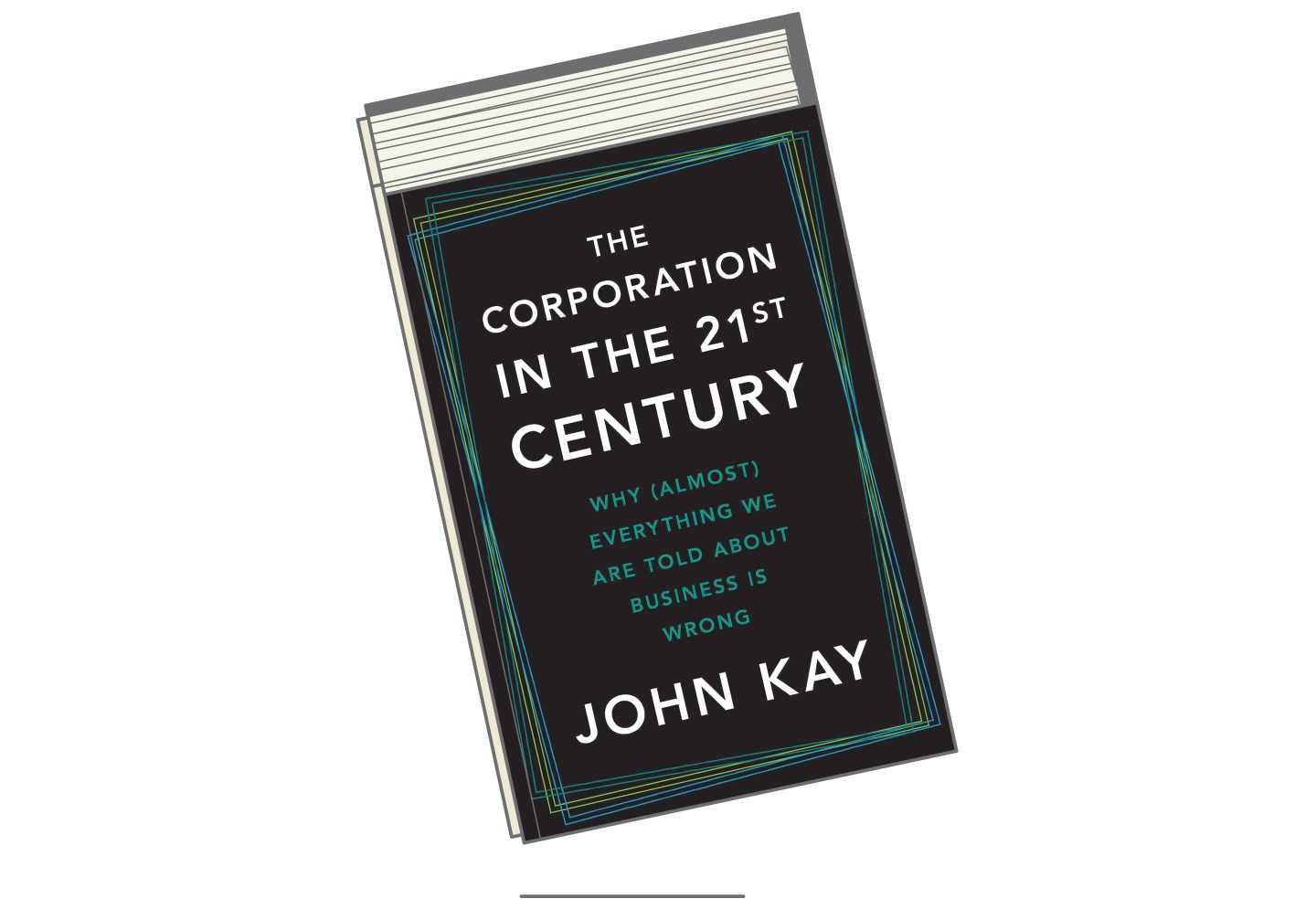
"The Corporation in the Twenty-First Century: Why (Almost) Everything We Are Told About Business Is Wrong," by John Kay.
"The Corporation in the Twenty-First Century: Why (Almost) Everything We Are Told About Business Is Wrong," by John Kay.Courtesy of Yale University Press
Add Fortune on Google for similar content.

As Donald Trump nears his second presidency, the rhetoric of economic nationalism and deregulation returns to the forefront.

His policies, coupled with cabinet picks drawn heavily from corporate leadership, renew the debate on the role and purpose of corporations in society. Central to this discussion is the doctrine of shareholder primacy—the belief that the primary obligation of corporations is to maximize shareholder returns. While this approach dominates boardrooms and economic policy, its shortcomings are more evident than ever. Two critical flaws undermine shareholder primacy: its lack of legitimacy and its practical inefficacy.

The problem of legitimacy

The lack of legitimacy fuels public mistrust and invites extensive regulation of corporate activity. As Sir James Black, Nobel Prize-winning pharmacologist and pioneer of the blockbuster drug concept, once remarked, “Goals are often best achieved indirectly.” This insight, which I term the principle of obliquity, underscores how the single-minded pursuit of profits often leads to suboptimal outcomes. By ignoring the broader social context in which corporations operate, shareholder primacy risks eroding the very foundations of business success.

If the primary purpose of corporations is to generate profits for shareholders, why should society accept this purpose? Why do we grant corporations privileges such as limited liability, perpetual existence, and access to public markets? The answer lies in the value they provide through products and employment. However, the assertion of financial returns as the ultimate goal fuels public mistrust.

This mistrust gives rise to what I call the “love the product, hate the producer” phenomenon, starkly illustrated by the public reaction to the murder of the CEO of UnitedHealthcare. While people rely on corporate innovations—be it a Boeing aircraft or an Amazon delivery—they increasingly view the companies behind these products with suspicion and disdain. The inevitable result is extensive, intrusive regulation. This is the modern history of industries such as pharmaceuticals, financial services, and Big Tech.

The notion that such regulation can be swept away is naive. A better approach is for businesses to internalize the objectives of regulation, as they once did. Retail financial service companies were once renowned for their rectitude, as exemplified by characters in Mary Poppins or It’s a Wonderful Life. For a decade, Merck was the most admired company in the United States, investing heavily in life-saving treatments and maintaining an ethos of public service. Today, however, pharmaceuticals rank as the lowest-reputation industry in a recent Gallup survey.

The principle of obliquity

As George Merck famously observed: “Medicine is for the people. It is not for the profits. The profits follow, and if we have remembered that, they have never failed to appear. The better we have remembered it, the larger they have been.”

The term “obliquity,” attributed to Sir James Black, describes how corporations achieve sustainable success by pursuing broader objectives than profit. Black, who created more shareholder value than anyone else in British history, did so by developing transformative drugs that catapulted companies like AstraZeneca and GSK to international leadership.

From George Merck to Sergey Brin, from Andrew Carnegie and J.P. Morgan to Steve Jobs and Elon Musk, the business leaders we admire—and who became very wealthy—are those who set out to create great businesses. As a former international cricketer reviewing my book aptly noted, quoting legendary football coach Bill Walsh: “The score takes care of itself.”

In contrast to shareholder primacy, the principle of obliquity emphasizes that sustainable success comes from broader goals. Yet the rise of financialization has steered many firms away from this approach, favoring short-term gains over long-term resilience.

Under Trump’s administration, shareholder primacy risks overshadowing obliquity. A cabinet filled with corporate executives embodies a worldview where profit trumps principle. Policies that dismantle environmental protections, weaken labor rights, and favor monopolistic practices may deliver immediate stock market gains but undermine the social fabric upon which sustainable capitalism depends.

A pluralistic vision for corporate governance

To move beyond shareholder primacy, we must redefine the purpose of corporations. This begins with recognizing them as public institutions with responsibilities to a broad array of stakeholders—employees, customers, suppliers, and communities. Legal reforms, such as increasing transparency in political contributions, can help align corporate practices with societal needs.

Equally important is fostering a cultural shift. Business schools must move away from teaching shareholder value maximization as a universal goal and instead emphasize the role of corporations in creating shared value. Executives should be rewarded not only for financial performance but also for advancing social and environmental objectives.

The next four years will test whether these ideas can gain traction in a political climate that prioritizes profit over principle. The stakes are high. Trump’s economic policies may provide short-term benefits for a select few but risk deepening inequality, accelerating environmental degradation, and undermining trust in capitalism itself. The urgency to redefine corporate governance has never been greater.

A new narrative for the 21st century

Corporations have the potential to be transformative forces for good. They can drive innovation, create wealth, and address pressing societal challenges. But this potential will remain unrealized as long as outdated narratives like shareholder primacy dominate the discourse.

By embracing a pluralistic vision of corporate governance, we can align business practices with the complexities of an interconnected world. This is not about abandoning capitalism but about ensuring its legitimacy and sustainability. As Trump’s presidency ushers in a new chapter of economic policy, it is imperative to confront these issues head-on. The time for action is now.

Adapted from The Corporation in the 21st Century: Why (Almost) Everything We Are Told About Business Is Wrong by John Kay. Copyright © 2024. Published by Yale University Press. 
About the Author
By John Kay
See full bioRight Arrow Button Icon
Add Fortune on Google for similar content.

Latest in Leadership

Finance
Lorem ipsum dolor sit amet, consectetur adipiscing elit, sed do eiusmod tempor incididunt ut labore et dolore magna aliqua. Ut enim ad minim veniam
By Fortune Editors
October 20, 2025
Finance
Lorem ipsum dolor sit amet, consectetur adipiscing elit, sed do eiusmod tempor incididunt ut labore et dolore magna aliqua. Ut enim ad minim veniam
By Fortune Editors
October 20, 2025
Finance
Lorem ipsum dolor sit amet, consectetur adipiscing elit, sed do eiusmod tempor incididunt ut labore et dolore magna aliqua. Ut enim ad minim veniam
By Fortune Editors
October 20, 2025
Finance
Lorem ipsum dolor sit amet, consectetur adipiscing elit, sed do eiusmod tempor incididunt ut labore et dolore magna aliqua. Ut enim ad minim veniam
By Fortune Editors
October 20, 2025
Finance
Lorem ipsum dolor sit amet, consectetur adipiscing elit, sed do eiusmod tempor incididunt ut labore et dolore magna aliqua. Ut enim ad minim veniam
By Fortune Editors
October 20, 2025
Finance
Lorem ipsum dolor sit amet, consectetur adipiscing elit, sed do eiusmod tempor incididunt ut labore et dolore magna aliqua. Ut enim ad minim veniam
By Fortune Editors
October 20, 2025

Most Popular

Finance
Lorem ipsum dolor sit amet, consectetur adipiscing elit, sed do eiusmod tempor incididunt ut labore et dolore magna aliqua. Ut enim ad minim veniam
By Fortune Editors
October 20, 2025
Finance
Lorem ipsum dolor sit amet, consectetur adipiscing elit, sed do eiusmod tempor incididunt ut labore et dolore magna aliqua. Ut enim ad minim veniam
By Fortune Editors
October 20, 2025
Finance
Lorem ipsum dolor sit amet, consectetur adipiscing elit, sed do eiusmod tempor incididunt ut labore et dolore magna aliqua. Ut enim ad minim veniam
By Fortune Editors
October 20, 2025
Finance
Lorem ipsum dolor sit amet, consectetur adipiscing elit, sed do eiusmod tempor incididunt ut labore et dolore magna aliqua. Ut enim ad minim veniam
By Fortune Editors
October 20, 2025
Finance
Lorem ipsum dolor sit amet, consectetur adipiscing elit, sed do eiusmod tempor incididunt ut labore et dolore magna aliqua. Ut enim ad minim veniam
By Fortune Editors
October 20, 2025
Finance
Lorem ipsum dolor sit amet, consectetur adipiscing elit, sed do eiusmod tempor incididunt ut labore et dolore magna aliqua. Ut enim ad minim veniam
By Fortune Editors
October 20, 2025
Fortune Secondary Logo
Rankings
  • 100 Best Companies
  • Fortune 500
  • Global 500
  • Fortune 500 Europe
  • Most Powerful Women
  • World's Most Admired Companies
  • See All Rankings
  • Lists Calendar
Sections
  • Finance
  • Fortune Crypto
  • Features
  • Leadership
  • Health
  • Commentary
  • Success
  • Retail
  • Mpw
  • Tech
  • Lifestyle
  • CEO Initiative
  • Asia
  • Politics
  • Conferences
  • Europe
  • Newsletters
  • Personal Finance
  • Environment
  • Magazine
  • Education
Customer Support
  • Frequently Asked Questions
  • Customer Service Portal
  • Privacy Policy
  • Terms Of Use
  • Single Issues For Purchase
  • International Print
Commercial Services
  • Advertising
  • Fortune Brand Studio
  • Fortune Analytics
  • Fortune Conferences
  • Business Development
  • Group Subscriptions
About Us
  • About Us
  • Press Center
  • Work At Fortune
  • Terms And Conditions
  • Site Map
  • About Us
  • Press Center
  • Work At Fortune
  • Terms And Conditions
  • Site Map
  • Facebook icon
  • Twitter icon
  • LinkedIn icon
  • Instagram icon
  • Pinterest icon

Latest in Leadership

Mark Zuckerberg, wearing a white shirt, smiles. He is standing in front of a crowd.
SuccessMark Zuckerberg
Mark Zuckerberg feeds his cows macadamia nuts and beer to create the ‘highest-quality beef in the world’ on his $300 million estate in Hawaii
By Sasha RogelbergJuly 2, 2026
47 minutes ago
Chris Hulatt co-founder of Octopus Group
SuccessHow I made my first million
A 2-year taste of the office was enough to make 3 grads quit. Now they run a $13.2 billion investment firm: ‘We didn’t want a traditional job again’
By Orianna Rosa RoyleJuly 2, 2026
1 hour ago
Woman taking photo in scenic landscape
Successlifestyle
Americans are escaping the U.S. for New Zealand where house prices have hit a new low—but only wealthy Americans with $3 million spare can invest
By Emma BurleighJuly 2, 2026
3 hours ago
Jason Lemkin
Successwork-life balance
This investor won’t back startups unless staff are in the office 6 days a week: ‘Not because I don’t have empathy, because they’re going to fail’
By Preston ForeJuly 2, 2026
3 hours ago
The true cost of Donald Trump’s $2.2 billion year
NewslettersCEO Daily
The true cost of Donald Trump’s $2.2 billion year
By Diane BradyJuly 2, 2026
8 hours ago
Today, Emily Blunt is worth $80 million thanks to her Hollywood career—but she actually wanted to be a UN Spanish translator on $80K
SuccessCareers
Today, Emily Blunt is worth $80 million thanks to her Hollywood career—but she actually wanted to be a UN Spanish translator on $80K
By Orianna Rosa RoyleJuly 2, 2026
11 hours ago

Most Popular

As Big Tech showers employees with perks to win the talent war, Nvidia built a nearly $5 trillion company by making people pay for their own lunch
Big Tech
As Big Tech showers employees with perks to win the talent war, Nvidia built a nearly $5 trillion company by making people pay for their own lunch
By Marco Quiroz-GutierrezJuly 1, 2026
1 day ago
MacKenzie Scott alone accounted for one-third of America's $19.2 billion in megagifts last year
Success
MacKenzie Scott alone accounted for one-third of America's $19.2 billion in megagifts last year
By Sydney LakeJune 25, 2026
7 days ago
Current price of oil as of July 1, 2026
Personal Finance
Current price of oil as of July 1, 2026
By Joseph HostetlerJuly 1, 2026
1 day ago
Trump got a $78K pension from the Screen Actors Guild in 2025 because he appeared in Home Alone 2 in 1992
Politics
Trump got a $78K pension from the Screen Actors Guild in 2025 because he appeared in Home Alone 2 in 1992
By Sasha RogelbergJuly 1, 2026
1 day ago
CEO of $248 billion cybersecurity company says workers are about to face a ‘Darwinian moment’ thanks to AI: Evolve or get cut
Success
CEO of $248 billion cybersecurity company says workers are about to face a ‘Darwinian moment’ thanks to AI: Evolve or get cut
By Emma BurleighJuly 1, 2026
1 day ago
Philanthropy leader at Warren Buffett and Bill Gates’ Giving Pledge says children of billionaires are pushing them to give their wealth away faster
Success
Philanthropy leader at Warren Buffett and Bill Gates’ Giving Pledge says children of billionaires are pushing them to give their wealth away faster
By Preston ForeJune 27, 2026
5 days ago

© 2026 Fortune Media IP Limited. All Rights Reserved. Use of this site constitutes acceptance of our Terms of Use and Privacy Policy | CA Notice at Collection and Privacy Notice | Do Not Sell/Share My Personal Information
FORTUNE is a trademark of Fortune Media IP Limited, registered in the U.S. and other countries. FORTUNE may receive compensation for some links to products and services on this website. Offers may be subject to change without notice.