• Home
  • Latest
  • Fortune 500
  • Finance
  • Tech
  • Leadership
  • Lifestyle
  • Rankings
  • Multimedia

Trendingnow

1

MacKenzie Scott alone accounted for one-third of America's $19.2 billion in megagifts last year

2

As Big Tech showers employees with perks to win the talent war, Nvidia built a nearly $5 trillion company by making people pay for their own lunch

3

Philanthropy leader at Warren Buffett and Bill Gates’ Giving Pledge says children of billionaires are pushing them to give their wealth away faster

1

MacKenzie Scott alone accounted for one-third of America's $19.2 billion in megagifts last year

2

As Big Tech showers employees with perks to win the talent war, Nvidia built a nearly $5 trillion company by making people pay for their own lunch

3

Philanthropy leader at Warren Buffett and Bill Gates’ Giving Pledge says children of billionaires are pushing them to give their wealth away faster
CommentaryHealth

Misaligned incentives plague our health-care system. Here’s how to make America healthy again

By
Hemant Taneja
Hemant Taneja
and
Teresa Carlson
Teresa Carlson
Down Arrow Button Icon
By
Hemant Taneja
Hemant Taneja
and
Teresa Carlson
Teresa Carlson
Down Arrow Button Icon
March 20, 2025, 3:08 PM ET
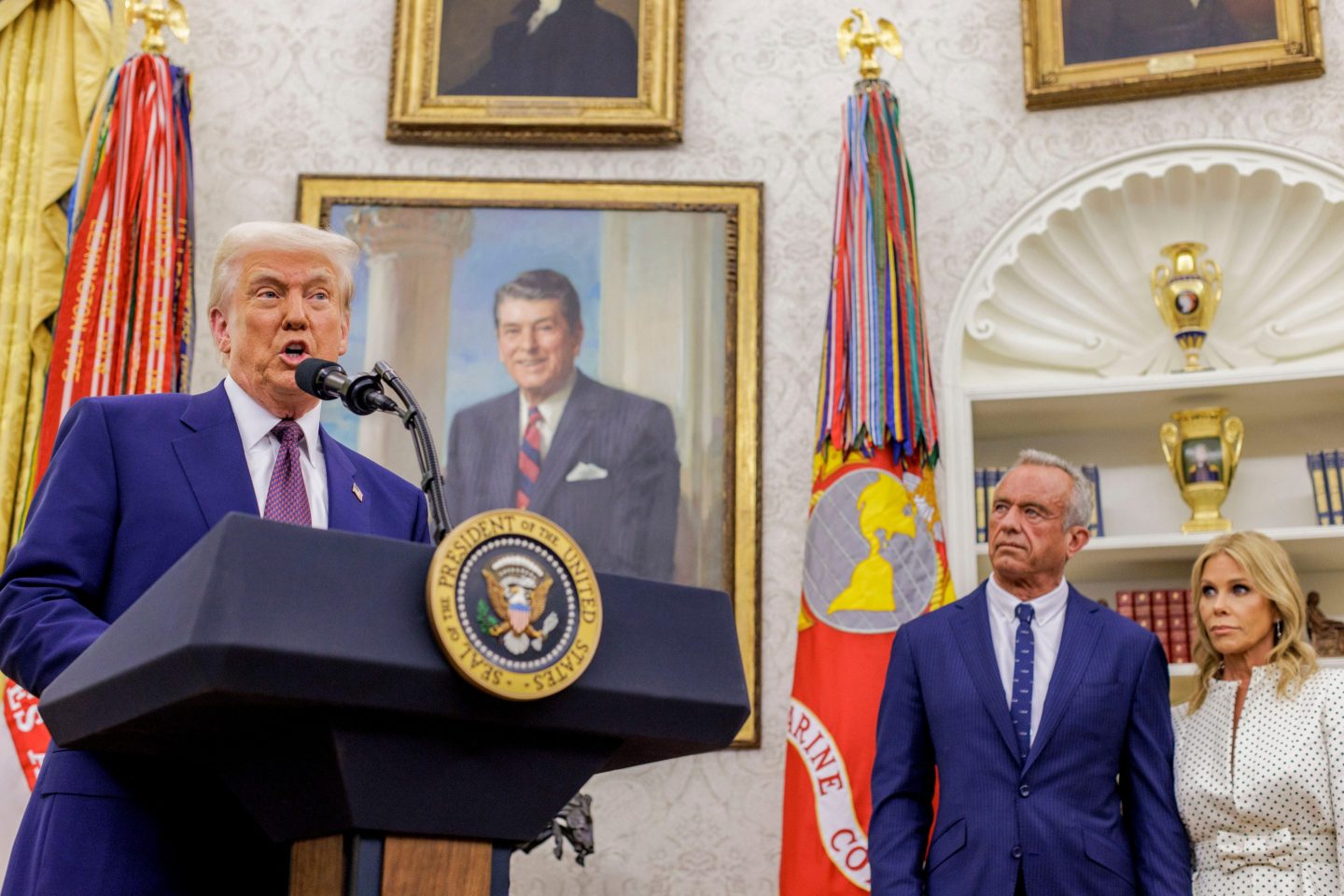
President Donald Trump and Health Secretary Robert F. Kennedy Jr. aim to  "make America healthy again."
President Donald Trump and Health Secretary Robert F. Kennedy Jr. aim to "make America healthy again."Jason C. Andrew/Bloomberg via Getty Images
Add Fortune on Google for similar content.

The Trump administration has a laudable goal: to make America healthy again. This would entail improving nutrition and care to address chronic diseases so Americans can live longer and healthier lives.  

Unfortunately, despite spending more than other nations, having more advanced technologies, and having some of the world’s best caregivers, we are not able to take full advantage of these benefits because of the misaligned incentives that pervade our health-care ecosystem. In our system, providers and insurers often profit when patients require more treatment, not when they are and remain healthy.  

Misalignment leads to several negative results. One example is the disparity in life expectancy that can be as high as 20 years between counties in the U.S. In California, wealthy counties like Marin have a life expectancy of 85 while a host of poorer rural counties generate far worse outcomes. Another effect of misalignment is inefficiency, leading to hundreds of billions in wasteful government spending and $150 billion in health-care administrative costs alone. Lack of alignment also precludes the technological integration that AI and massive amounts of data have brought to other industries.  Finally, we saw the tragic effects of misalignment during the COVID-19 crisis, which exposed how unprepared our system was for a large-scale health emergency. 

To fix these problems, we need health care that gives providers incentives to improve access and outcomes, making care more preventative and proactive. Getting this alignment will require improvements in both the public and private sectors. On the regulatory front, the General Catalyst Institute has just issued a white paper with specific policy recommendations that the Department of Health and Human Services can start implementing in the next nine months to get the government moving towards health-care transformation.

The recommendations call for more innovation that would lead to faster learning, which speeds up transformation. To do that, the government could develop regional health-care innovation “sandboxes” that will allow health-care experimentation at the local level. These sandboxes can be advanced through existing waiver authorities and help generate what is known as the flywheel effect: insights from system-wide efforts can help players evolve faster, while new applications drive additional system improvements. This continuous exchange builds momentum, making change easier and more sustainable. 

Regulations also have to be changed so that patients can own their health data and share it across providers, rather than dealing with multiple medical portals that don’t communicate. Doctors and insurers need incentives to focus on prevention and proactive health management. The government needs to lower regulatory barriers that make it unreasonably hard for innovative companies to disrupt incumbent players that have zero incentive to cooperate with new entrants, and as a result, are not working in the best interests of the patient and consumer. 

With such regulatory changes in place, the private sector could do even more to promote and accelerate change. No one company can bring about true transformation. Instead, we need an ecosystem of companies that can work together to help keep people healthy in an affordable way that is accessible to all. An innovative regional health ecosystem could incorporate new technologies like AI and use it to make the system more efficient, affordable, and effective. 

Such an ecosystem could replicate and scale best practices, while reducing the burden on individual health systems to develop their own bespoke transformation assets. Different companies engaging in radical collaboration across an ecosystem can tackle different parts of the health-care challenge. For instance, if thousands of hospital systems used AI sepsis detection tools, they could identify warning signs hours earlier than usual, saving tens of thousands of lives and reducing costs by keeping patients out of intensive care. 

One promising technology is an operating system designed specifically for health care. Just like DOS revolutionized personal computing by creating an accessible platform for users, a health-care operating system could break down data silos, allow for faster insights to identify more effective and efficient practices, and promote the adoption of those improved practices quickly and seamlessly.  

Another promising application is a new health insurance interface to make health care benefit management simpler. This interface could make it easier for people to take their insurance with them when they change jobs so they feel less trapped in unsatisfying situations just for health care. Portability also means people could see the same doctors for years, rather than finding that their new insurance doesn’t cover their regular providers. Creating an ongoing relationship between patients and providers gives providers an incentive to care about long-term patient health.  

When the new technologies prove their value, they can be adopted across the system. In this way, by 2030, we could have a blueprint for what works and then spend the next decade scaling the proven technologies across our entire health system.

The goal is a collaboration between the most advanced and promising technologies with caregivers who are directly treating patients. Each iteration can bring about better results, reducing unnecessary costs and improving access to all. Replicating this model across 10 to 15 regional platforms can allow the flywheel of intentionality and exploration to take our health system to the next level, to make health care accessible, proactive, and affordable, and truly fulfill the promise of making America healthy again.

The opinions expressed in Fortune.com commentary pieces are solely the views of their authors and do not necessarily reflect the opinions and beliefs of Fortune.

Read more:

  • Americans finally got a rule protecting their credit scores from unexpected medical debt. Now Trump is attacking the agency behind it
  • My son’s rare disease diagnosis spurred me to ditch Big Pharma for a biotech startup
  • I cared for my dad under ‘hospital at home’ in his final weeks. The program is missing one big piece
  • Cancer made me a patient. Health care’s blind spots made me a CEO
About the Authors
By Hemant Taneja
See full bioRight Arrow Button Icon
By Teresa Carlson
See full bioRight Arrow Button Icon
Add Fortune on Google for similar content.

Latest in Commentary

Finance
Lorem ipsum dolor sit amet, consectetur adipiscing elit, sed do eiusmod tempor incididunt ut labore et dolore magna aliqua. Ut enim ad minim veniam
By Fortune Editors
October 20, 2025
Finance
Lorem ipsum dolor sit amet, consectetur adipiscing elit, sed do eiusmod tempor incididunt ut labore et dolore magna aliqua. Ut enim ad minim veniam
By Fortune Editors
October 20, 2025
Finance
Lorem ipsum dolor sit amet, consectetur adipiscing elit, sed do eiusmod tempor incididunt ut labore et dolore magna aliqua. Ut enim ad minim veniam
By Fortune Editors
October 20, 2025
Finance
Lorem ipsum dolor sit amet, consectetur adipiscing elit, sed do eiusmod tempor incididunt ut labore et dolore magna aliqua. Ut enim ad minim veniam
By Fortune Editors
October 20, 2025
Finance
Lorem ipsum dolor sit amet, consectetur adipiscing elit, sed do eiusmod tempor incididunt ut labore et dolore magna aliqua. Ut enim ad minim veniam
By Fortune Editors
October 20, 2025
Finance
Lorem ipsum dolor sit amet, consectetur adipiscing elit, sed do eiusmod tempor incididunt ut labore et dolore magna aliqua. Ut enim ad minim veniam
By Fortune Editors
October 20, 2025

Most Popular

Finance
Lorem ipsum dolor sit amet, consectetur adipiscing elit, sed do eiusmod tempor incididunt ut labore et dolore magna aliqua. Ut enim ad minim veniam
By Fortune Editors
October 20, 2025
Finance
Lorem ipsum dolor sit amet, consectetur adipiscing elit, sed do eiusmod tempor incididunt ut labore et dolore magna aliqua. Ut enim ad minim veniam
By Fortune Editors
October 20, 2025
Finance
Lorem ipsum dolor sit amet, consectetur adipiscing elit, sed do eiusmod tempor incididunt ut labore et dolore magna aliqua. Ut enim ad minim veniam
By Fortune Editors
October 20, 2025
Finance
Lorem ipsum dolor sit amet, consectetur adipiscing elit, sed do eiusmod tempor incididunt ut labore et dolore magna aliqua. Ut enim ad minim veniam
By Fortune Editors
October 20, 2025
Finance
Lorem ipsum dolor sit amet, consectetur adipiscing elit, sed do eiusmod tempor incididunt ut labore et dolore magna aliqua. Ut enim ad minim veniam
By Fortune Editors
October 20, 2025
Finance
Lorem ipsum dolor sit amet, consectetur adipiscing elit, sed do eiusmod tempor incididunt ut labore et dolore magna aliqua. Ut enim ad minim veniam
By Fortune Editors
October 20, 2025
Fortune Secondary Logo
Rankings
  • 100 Best Companies
  • Fortune 500
  • Global 500
  • Fortune 500 Europe
  • Most Powerful Women
  • World's Most Admired Companies
  • See All Rankings
  • Lists Calendar
Sections
  • Finance
  • Fortune Crypto
  • Features
  • Leadership
  • Health
  • Commentary
  • Success
  • Retail
  • Mpw
  • Tech
  • Lifestyle
  • CEO Initiative
  • Asia
  • Politics
  • Conferences
  • Europe
  • Newsletters
  • Personal Finance
  • Environment
  • Magazine
  • Education
Customer Support
  • Frequently Asked Questions
  • Customer Service Portal
  • Privacy Policy
  • Terms Of Use
  • Single Issues For Purchase
  • International Print
Commercial Services
  • Advertising
  • Fortune Brand Studio
  • Fortune Analytics
  • Fortune Conferences
  • Business Development
  • Group Subscriptions
About Us
  • About Us
  • Press Center
  • Work At Fortune
  • Terms And Conditions
  • Site Map
  • About Us
  • Press Center
  • Work At Fortune
  • Terms And Conditions
  • Site Map
  • Facebook icon
  • Twitter icon
  • LinkedIn icon
  • Instagram icon
  • Pinterest icon

Hemant Taneja is CEO and managing director for the global investment company General Catalyst and author of UnHealthcare: A Manifesto for Health Assurance. Teresa Carlson is the president of the General Catalyst Institute.


Latest in Commentary

senate
CommentaryCongress
One rare bipartisan AI bill is moving through Congress. Here’s why it deserves to pass
By Neil Björkman and Betsy BrewerJuly 1, 2026
11 hours ago
I know how Gen Z can survive the ‘jobpocalypse’ because I built an AI company — in 2015
CommentaryCareers
I know how Gen Z can survive the ‘jobpocalypse’ because I built an AI company — in 2015
By Jeremy FainJuly 1, 2026
12 hours ago
mr
Commentary250 Years of Innovation
America needs 3.8 million manufacturing workers. This CEO has a blueprint to find them
By Mark RayfieldJuly 1, 2026
12 hours ago
usa
Commentary250 Years of Innovation
America at 250: why the Constitution was built to restrain government, not celebrate majority rule
By Steve H. HankeJuly 1, 2026
12 hours ago
t
CommentaryMedia
Netflix could turn NBC into its biggest bet yet — and this time, the math actually works
By Jeffrey Sonnenfeld and Steven TianJune 30, 2026
1 day ago
wb
CommentaryLeadership
I grew BDO from $600 million to $3.4 billion. Here’s the 3-part formula that made it possible
By Wayne BersonJune 30, 2026
1 day ago

Most Popular

MacKenzie Scott alone accounted for one-third of America's $19.2 billion in megagifts last year
Success
MacKenzie Scott alone accounted for one-third of America's $19.2 billion in megagifts last year
By Sydney LakeJune 25, 2026
7 days ago
As Big Tech showers employees with perks to win the talent war, Nvidia built a nearly $5 trillion company by making people pay for their own lunch
Big Tech
As Big Tech showers employees with perks to win the talent war, Nvidia built a nearly $5 trillion company by making people pay for their own lunch
By Marco Quiroz-GutierrezJuly 1, 2026
15 hours ago
Philanthropy leader at Warren Buffett and Bill Gates’ Giving Pledge says children of billionaires are pushing them to give their wealth away faster
Success
Philanthropy leader at Warren Buffett and Bill Gates’ Giving Pledge says children of billionaires are pushing them to give their wealth away faster
By Preston ForeJune 27, 2026
4 days ago
The Supreme Court's birthright citizenship ruling hands the U.S. economy a $7.7 trillion win
Newsletters
The Supreme Court's birthright citizenship ruling hands the U.S. economy a $7.7 trillion win
By Diane BradyJuly 1, 2026
13 hours ago
Elon Musk on MacKenzie Scott giving away $26 billion of her fortune: 'Sadly,' it makes the world a worse place
Success
Elon Musk on MacKenzie Scott giving away $26 billion of her fortune: 'Sadly,' it makes the world a worse place
By Sydney LakeJune 29, 2026
2 days ago
The U.S. Army is opening military bases to private billions — here's why that changes everything for the next 250 years
Commentary
The U.S. Army is opening military bases to private billions — here's why that changes everything for the next 250 years
By Marc AndersenJune 30, 2026
1 day ago

© 2026 Fortune Media IP Limited. All Rights Reserved. Use of this site constitutes acceptance of our Terms of Use and Privacy Policy | CA Notice at Collection and Privacy Notice | Do Not Sell/Share My Personal Information
FORTUNE is a trademark of Fortune Media IP Limited, registered in the U.S. and other countries. FORTUNE may receive compensation for some links to products and services on this website. Offers may be subject to change without notice.