• Home
  • Latest
  • Fortune 500
  • Finance
  • Tech
  • Leadership
  • Lifestyle
  • Rankings
  • Multimedia
FinancePolitics

Trump’s reciprocal tariffs are ‘ripping up trade’ after decades of precedent. Here’s how tariffs got so lopsided in the first place

By
Paul Wiseman
Paul Wiseman
,
Christopher Rugaber
Christopher Rugaber
, and
The Associated Press
Down Arrow Button Icon
By
Paul Wiseman
Paul Wiseman
,
Christopher Rugaber
Christopher Rugaber
, and
The Associated Press
Down Arrow Button Icon
March 31, 2025, 9:38 PM ET
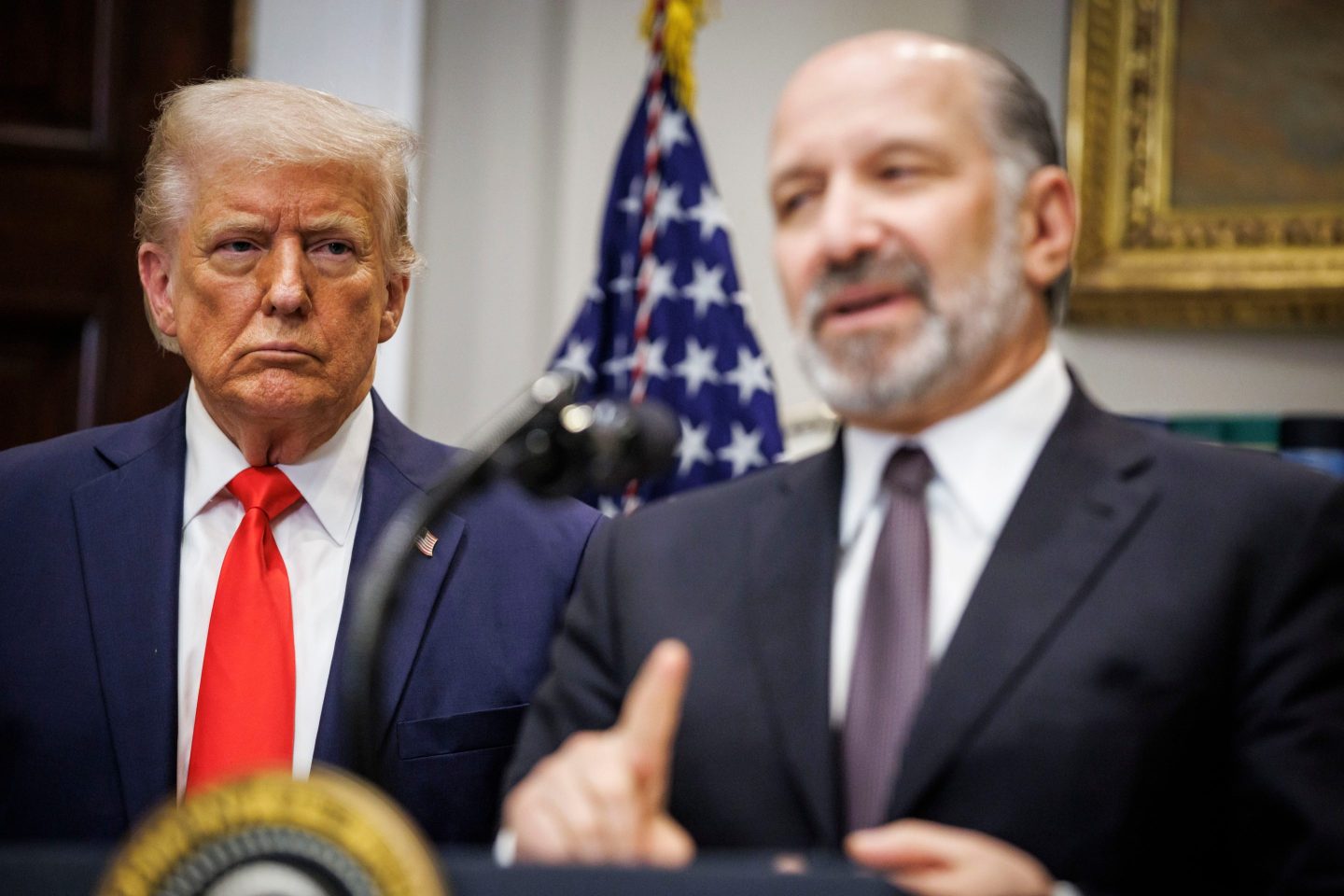
US President Donald Trump, left, and Howard Lutnick, US commerce secretary, during an investment announcement in the Roosevelt Room of the White House in Washington, DC, US, on Monday, March 3, 2025.
US President Donald Trump, left, and Howard Lutnick, US commerce secretary, during an investment announcement in the Roosevelt Room of the White House in Washington, DC, US, on Monday, March 3, 2025. Photographer: Samuel Corum/Sipa/Bloomberg via Getty Images

President Donald Trump is taking a blowtorch to the rules that have governed world trade for decades. The “reciprocal’’ tariffs that he is expected to announce Wednesday are likely to create chaos for global businesses and conflict with America’s allies and adversaries alike.

Recommended Video

Since the 1960s, tariffs — or import taxes — have emerged from negotiations between dozens of countries. Trump wants to seize the process.

“Obviously, it disrupts the way that things have been done for a very long time,’’ said Richard Mojica, a trade attorney at Miller & Chevalier. “Trump is throwing that out the window … Clearly this is ripping up trade. There are going to have to be adjustments all over the place.’’

Pointing to America’s massive and persistent trade deficits – not since 1975 has the U.S. sold the rest of the world more than it’s bought — Trump charges that the playing field is tilted against U.S. companies. A big reason for that, he and his advisers say, is because other countries usually tax American exports at a higher rate than America taxes theirs.

Trump has a fix: He’s raising U.S. tariffs to match what other countries charge.

The president is an unabashed tariff supporter. He used them liberally in his first term and is deploying them even more aggressively in his second. Since returning to the White House, he has slapped 20% tariffs on China, unveiled a 25% tax on imported cars and trucks set to take effect Thursday, effectively raised U.S. taxes on foreign steel and aluminum and imposed levies on some goods from Canada and Mexico, which he may expand this week.

Economists don’t share Trump’s enthusiasm for tariffs. They’re a tax on importers that usually get passed on to consumers. But it’s possible that Trump’s reciprocal tariff threat could bring other countries to the table and get them to lower their own import taxes.

“It could be win-win,” said Christine McDaniel, a former U.S. trade official now at George Mason University’s Mercatus Center. “It’s in other countries’ interests to reduce those tariffs.”

She noted that India has already cut tariffs on items from motorcycles to luxury cars and agreed to ramp up purchases of U.S. energy.

What are reciprocal tariffs and how do they work?

They sound simple: The United States would raise its tariff on foreign goods to match what other countries impose on U.S. products.

“If they charge us, we charge them,’’ the president said in February. “If they’re at 25, we’re at 25. If they’re at 10, we’re at 10. And if they’re much higher than 25, that’s what we are too.’’

But the White House didn’t reveal many details. It has directed Commerce Secretary Howard Lutnick to deliver a report this week about how the new tariffs would actually work.

Among the outstanding questions, noted Antonio Rivera, a partner at ArentFox Schiff and a former attorney with U.S. Customs and Border Protection, is whether the U.S. is going to look at the thousands of items in the tariff code – from motorcycles to mangos — and try to level the tariff rates out one by one, country by country. Or whether it will look more broadly at each country’s average tariff and how it compares to America. Or something else entirely.

“It’s just a very, very chaotic environment,” said Stephen Lamar, president and CEO of the American Apparel & Footwear Association. “It’s hard to plan in any sort of long-term, sustainable way.’’

How did tariffs get so lopsided?

America’s tariffs are generally lower than those of its trading partners. After World War II, the United States pushed for other countries to lower trade barriers and tariffs, seeing free trade as a way to promote peace, prosperity and American exports around the world. And it mostly practiced what it preached, generally keeping its own tariffs low and giving American consumers access to inexpensive foreign goods.

Trump has broken with the old free trade consensus, saying unfair foreign competition has hurt American manufacturers and devastated factory towns in the American heartland. During his first term, he slapped tariffs on foreign steel, aluminum, washing machines, solar panels and almost everything from China. Democratic President Joe Biden largely continued Trump’s protectionist policies.

The White House has cited several examples of especially lopsided tariffs: Brazil taxes ethanol imports, including America’s, at 18%, but the U.S. tariff on ethanol is just 2.5%. Likewise, India taxes foreign motorcycles at 100%, America just 2.4%.

Does this mean the U.S. been taken advantage of?

The higher foreign tariffs that Trump complains about weren’t sneakily adopted by foreign countries. The United States agreed to them after years of complex negotiations known as the Uruguay Round, which ended in a trade pact involving 123 countries.

As part of the deal, the countries could set their own tariffs on different products – but under the “most favored nation’’ approach, they couldn’t charge one country more than they charged another. So the high tariffs Trump complains about aren’t aimed at the United States alone. They hit everybody.

Trump’s grievances against U.S. trading partners also come at an odd time. The United States, running on strong consumer spending and healthy improvements in productivity, is outperforming the world’s other advanced economies. The U.S. economy grew nearly 9% from just before COVID-19 hit through the middle of last year — compared with just 5.5% for Canada and just 1.9% for the European Union. Germany’s economy shrank 2% during that time.

Trump’s plan goes beyond foreign countries’ tariffs

Not satisfied with scrambling the tariff code, Trump is also going after other foreign practices he sees as unfair barriers to American exports. These include subsidies that give homegrown producers an advantage over U.S. exports; ostensible health rules that are used to keep out foreign products; and loose regulations that encourage the theft of trade secrets and other intellectual property.

Figuring out an import tax that offsets the damage from those practices will add another level of complexity to Trump’s reciprocal tariff scheme.

The Trump team is also picking a fight with the European Union and other trading partners over so-called value-added taxes. Known as VATs, these levies are essentially a sales tax on products that are consumed within a country’s borders. Trump and his advisers consider VATs a tariff because they apply to U.S. exports.

Yet most economists disagree, for a simple reason: VATs are applied to domestic and imported products alike, so they don’t specifically target foreign goods and haven’t traditionally been seen as a trade barrier.

And there’s a bigger problem: VATs are huge revenue raisers for European governments. “There is no way most countries can negotiate over their VAT … as it is a critical part of their revenue base,’’ Brad Setser, senior fellow at the Council on Foreign Relations, posted on X.

Paul Ashworth, chief North America economist for Capital Economics, says that the top 15 countries that export to the U.S. have average VATs topping 14%, as well as duties of 6%. That would mean U.S. retaliatory tariffs could reach 20% — much higher than Trump’s campaign proposal of universal 10% duties.

Tariffs and the trade deficit

Trump and some of his advisers argue that steeper tariffs would help reverse the United States’ long-standing trade deficits.

But tariffs haven’t proven successful at narrowing the trade gap: Despite the Trump-Biden import taxes, the deficit rose last year to $918 billion, second-highest on record.

The deficit, economists say, is a result of the unique features of the U.S. economy. Because the federal government runs a huge deficit, and American consumers like to spend so much, U.S. consumption and investment far outpaces savings. As a result, a chunk of that demand goes to overseas goods and services.

The U.S. covers the cost of the trade gap by essentially borrowing from overseas, in part by selling treasury securities and other assets.

“The trade deficit is really a macroeconomic imbalance,” said Kimberly Clausing, a UCLA economist and former Treasury official. “It comes from this lack of desire to save and this lack of desire to tax. Until you fix those things, we’ll run a trade imbalance.”

Join us at the Fortune Workplace Innovation Summit May 19–20, 2026, in Atlanta. The next era of workplace innovation is here—and the old playbook is being rewritten. At this exclusive, high-energy event, the world’s most innovative leaders will convene to explore how AI, humanity, and strategy converge to redefine, again, the future of work. Register now.
About the Authors
By Paul Wiseman
See full bioRight Arrow Button Icon
By Christopher Rugaber
See full bioRight Arrow Button Icon
By The Associated Press
See full bioRight Arrow Button Icon

Latest in Finance

Finance
Lorem ipsum dolor sit amet, consectetur adipiscing elit, sed do eiusmod tempor incididunt ut labore et dolore magna aliqua. Ut enim ad minim veniam
By Fortune Editors
October 20, 2025
Finance
Lorem ipsum dolor sit amet, consectetur adipiscing elit, sed do eiusmod tempor incididunt ut labore et dolore magna aliqua. Ut enim ad minim veniam
By Fortune Editors
October 20, 2025
Finance
Lorem ipsum dolor sit amet, consectetur adipiscing elit, sed do eiusmod tempor incididunt ut labore et dolore magna aliqua. Ut enim ad minim veniam
By Fortune Editors
October 20, 2025
Finance
Lorem ipsum dolor sit amet, consectetur adipiscing elit, sed do eiusmod tempor incididunt ut labore et dolore magna aliqua. Ut enim ad minim veniam
By Fortune Editors
October 20, 2025
Finance
Lorem ipsum dolor sit amet, consectetur adipiscing elit, sed do eiusmod tempor incididunt ut labore et dolore magna aliqua. Ut enim ad minim veniam
By Fortune Editors
October 20, 2025
Finance
Lorem ipsum dolor sit amet, consectetur adipiscing elit, sed do eiusmod tempor incididunt ut labore et dolore magna aliqua. Ut enim ad minim veniam
By Fortune Editors
October 20, 2025

Most Popular

Finance
Lorem ipsum dolor sit amet, consectetur adipiscing elit, sed do eiusmod tempor incididunt ut labore et dolore magna aliqua. Ut enim ad minim veniam
By Fortune Editors
October 20, 2025
Finance
Lorem ipsum dolor sit amet, consectetur adipiscing elit, sed do eiusmod tempor incididunt ut labore et dolore magna aliqua. Ut enim ad minim veniam
By Fortune Editors
October 20, 2025
Finance
Lorem ipsum dolor sit amet, consectetur adipiscing elit, sed do eiusmod tempor incididunt ut labore et dolore magna aliqua. Ut enim ad minim veniam
By Fortune Editors
October 20, 2025
Finance
Lorem ipsum dolor sit amet, consectetur adipiscing elit, sed do eiusmod tempor incididunt ut labore et dolore magna aliqua. Ut enim ad minim veniam
By Fortune Editors
October 20, 2025
Finance
Lorem ipsum dolor sit amet, consectetur adipiscing elit, sed do eiusmod tempor incididunt ut labore et dolore magna aliqua. Ut enim ad minim veniam
By Fortune Editors
October 20, 2025
Finance
Lorem ipsum dolor sit amet, consectetur adipiscing elit, sed do eiusmod tempor incididunt ut labore et dolore magna aliqua. Ut enim ad minim veniam
By Fortune Editors
October 20, 2025
Fortune Secondary Logo
Rankings
  • 100 Best Companies
  • Fortune 500
  • Global 500
  • Fortune 500 Europe
  • Most Powerful Women
  • Future 50
  • World’s Most Admired Companies
  • See All Rankings
Sections
  • Finance
  • Fortune Crypto
  • Features
  • Leadership
  • Health
  • Commentary
  • Success
  • Retail
  • Mpw
  • Tech
  • Lifestyle
  • CEO Initiative
  • Asia
  • Politics
  • Conferences
  • Europe
  • Newsletters
  • Personal Finance
  • Environment
  • Magazine
  • Education
Customer Support
  • Frequently Asked Questions
  • Customer Service Portal
  • Privacy Policy
  • Terms Of Use
  • Single Issues For Purchase
  • International Print
Commercial Services
  • Advertising
  • Fortune Brand Studio
  • Fortune Analytics
  • Fortune Conferences
  • Business Development
  • Group Subscriptions
About Us
  • About Us
  • Editorial Calendar
  • Press Center
  • Work At Fortune
  • Diversity And Inclusion
  • Terms And Conditions
  • Site Map
  • About Us
  • Editorial Calendar
  • Press Center
  • Work At Fortune
  • Diversity And Inclusion
  • Terms And Conditions
  • Site Map
  • Facebook icon
  • Twitter icon
  • LinkedIn icon
  • Instagram icon
  • Pinterest icon

Latest in Finance

Macquarie bets impact investing can fill an Asian financial access gap for the ‘missing middle’
AsiaAustralia
Macquarie bets impact investing can fill an Asian financial access gap for the ‘missing middle’
By Nicholas GordonApril 1, 2026
59 minutes ago
Trump at a podium
PoliticsIran
Trump will address the nation on Wednesday on the Iran war Wednesday—here’s what to expect
By Eva RoytburgApril 1, 2026
2 hours ago
Deutsche Bank asked AI if it’s true that AI will solve the economy’s inflation problems. The robots answered
Economydisruption
Deutsche Bank asked AI if it’s true that AI will solve the economy’s inflation problems. The robots answered
By Nick LichtenbergApril 1, 2026
2 hours ago
jetblue
Travel & LeisureAirline industry
JetBlue hikes checked bag fees as much as $9 on war in Iran
By Rio Yamat and The Associated PressApril 1, 2026
2 hours ago
lin bin
North AmericaNFL
Chinese billionaire buys 1% stake in the Miami Dolphins at record $12.5 billion valuation
By The Associated PressApril 1, 2026
3 hours ago
retail sales
EconomyConsumer Spending
Retail sales tick up 0.6% in February before Iran war, gas price spike
By Anne D'Innocenzio and The Associated PressApril 1, 2026
3 hours ago

Most Popular

Jerome Powell says the $39 trillion national debt is ‘not unsustainable,’ but warns the trajectory ‘will not end well’
Economy
Jerome Powell says the $39 trillion national debt is ‘not unsustainable,’ but warns the trajectory ‘will not end well’
By Fortune EditorsMarch 30, 2026
2 days ago
Two-thirds of parents say their adult Gen Z kids still rely on them financially  for support—even though it's putting them under strain
Success
Two-thirds of parents say their adult Gen Z kids still rely on them financially  for support—even though it's putting them under strain
By Fortune EditorsMarch 31, 2026
1 day ago
Kevin O'Leary says if you earn $68,000 a year and follow this rule, you'll retire a millionaire
Personal Finance
Kevin O'Leary says if you earn $68,000 a year and follow this rule, you'll retire a millionaire
By Fortune EditorsMarch 31, 2026
1 day ago
A man used AI to call 3,000 Irish bartenders to track the cost of Guinness. Now pubs are lowering their prices to compete
AI
A man used AI to call 3,000 Irish bartenders to track the cost of Guinness. Now pubs are lowering their prices to compete
By Fortune EditorsMarch 30, 2026
2 days ago
Hiring just hit a level not seen since the economy was ‘closed down literally’ during COVID, top economist says
Economy
Hiring just hit a level not seen since the economy was ‘closed down literally’ during COVID, top economist says
By Fortune EditorsMarch 31, 2026
1 day ago
Markets cheer as Trump threatens to abandon Iran war, but Jamie Dimon sides with allies: ‘Win this thing and clean up the straits’
Energy
Markets cheer as Trump threatens to abandon Iran war, but Jamie Dimon sides with allies: ‘Win this thing and clean up the straits’
By Fortune EditorsMarch 31, 2026
1 day ago

© 2026 Fortune Media IP Limited. All Rights Reserved. Use of this site constitutes acceptance of our Terms of Use and Privacy Policy | CA Notice at Collection and Privacy Notice | Do Not Sell/Share My Personal Information
FORTUNE is a trademark of Fortune Media IP Limited, registered in the U.S. and other countries. FORTUNE may receive compensation for some links to products and services on this website. Offers may be subject to change without notice.