• Home
  • Latest
  • Fortune 500
  • Finance
  • Tech
  • Leadership
  • Lifestyle
  • Rankings
  • Multimedia

Trendingnow

1

MacKenzie Scott alone accounted for one-third of America's $19.2 billion in megagifts last year

2

Philanthropy leader at Warren Buffett and Bill Gates’ Giving Pledge says children of billionaires are pushing them to give their wealth away faster

3

Elon Musk on MacKenzie Scott giving away $26 billion of her fortune: 'Sadly,' it makes the world a worse place

1

MacKenzie Scott alone accounted for one-third of America's $19.2 billion in megagifts last year

2

Philanthropy leader at Warren Buffett and Bill Gates’ Giving Pledge says children of billionaires are pushing them to give their wealth away faster

3

Elon Musk on MacKenzie Scott giving away $26 billion of her fortune: 'Sadly,' it makes the world a worse place
CommentaryFuture of Work

Tariffs, AI, and a broken pipeline: The workforce crisis no one’s ready for

By
Caroline Casagrande
Caroline Casagrande
Down Arrow Button Icon
By
Caroline Casagrande
Caroline Casagrande
Down Arrow Button Icon
April 9, 2025, 4:17 PM ET
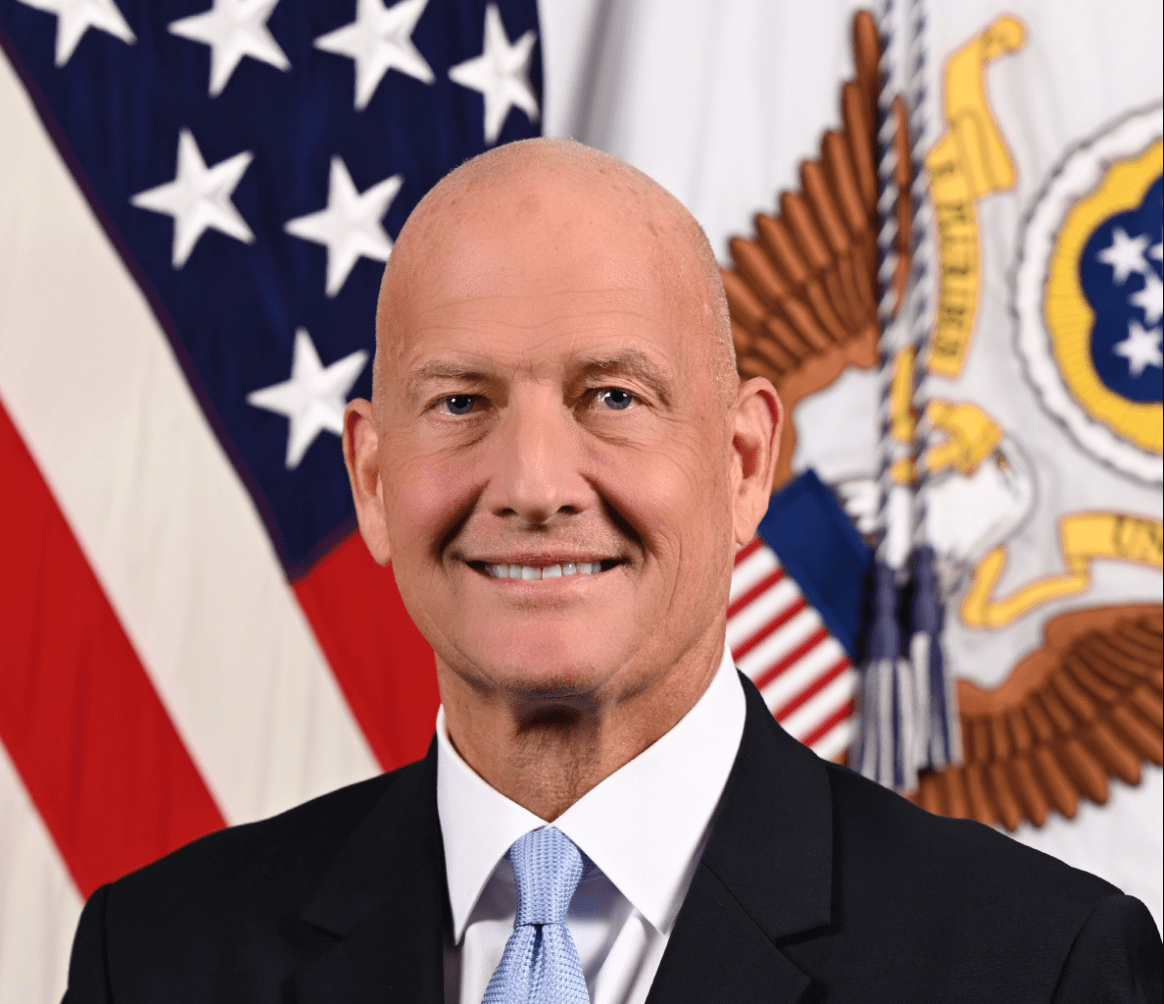
Caroline Casagrande is executive director of state and federal relations for Stride Inc. and was U.S. Deputy Assistant Secretary of State of Education and Cultural Affairs in Trump’s first term.
The TSMC plant in Arizona, where colleges are scrambling to spin up advanced manufacturing programs fast enough to meet demand.
The TSMC plant in Arizona, where colleges are scrambling to spin up advanced manufacturing programs fast enough to meet demand.Rebecca Noble/Bloomberg via Getty Images
Add Fortune on Google for similar content.

The U.S. is heading into a workforce crisis—accelerated by AI, compounded by tariffs, and amplified by economic volatility. 

The disruption is no longer theoretical: Tariffs are rattling markets, choking supply chains, and injecting uncertainty into investment decisions. 

But beneath the headlines is a more foundational issue: America still hasn’t built the workforce it needs to withstand these shocks.

Artificial intelligence is reshaping white-collar work faster than expected. Junior analysts, paralegals, and customer service reps are being quietly replaced by algorithms that don’t sleep or take sick days. We once worried about robots on factory floors. Now it’s bots in offices—and there’s still no clear plan to upskill the next generation.

At the same time, a wave of federally backed investments is transforming the job landscape. The CHIPS and Science Act and Build Back Better infrastructure programs are generating thousands of new roles in clean energy, broadband, and semiconductor manufacturing. These aren’t theoretical jobs—they’re shovel-ready and funded through 2025 and beyond. But the talent pipeline hasn’t caught up. What was once a looming skills gap is now a daily operational challenge.

In Arizona, the $40 billion investment by Taiwan Semiconductor Manufacturing Company (TSMC) is expected to create thousands of high-paying jobs—but local community colleges are scrambling to spin up advanced manufacturing programs fast enough to meet demand. In Michigan, automakers transitioning to EV production are bumping up against shortages of battery tech specialists and software-savvy technicians—positions that didn’t exist in volume even five years ago. And, in North Carolina, where Apple and Toyota are building massive new campuses, employers are already expressing concern about the shortage of engineers, electricians, and fiber-optic specialists needed to sustain long-term growth.

Tariffs uncertainty

Ironically, tariffs designed to protect American manufacturing may be exposing its weakest link. Major employers rely on an ecosystem of small and midsize suppliers—machine shops, logistics firms, parts manufacturers—that are often less equipped to compete for talent. 

Without the name recognition, salaries, or benefits of headline companies, these firms struggle to staff up. When they can’t, the whole supply chain stalls. 

Add tariff-driven cost hikes and procurement uncertainty, and expansion plans start to falter just when they should be accelerating.

Take Ohio, where Intel is investing more than $20 billion in what it calls the “Silicon Heartland.” The company has made clear that without a robust pipeline of skilled tradespeople—welders, precision machinists, tool-and-die makers—none of the advanced fabs will function at capacity. Local training centers are working overtime, but demand is outpacing capacity. In Louisiana and Texas, where the energy sector is building out next-gen hydrogen and carbon capture facilities, employers can’t find enough instrumentation and control technicians—a job critical to safe plant operation, but one that few young workers even know exists.

Rethinking education

Meanwhile, the U.S. may be on the verge of transforming education policy as we know it. As calls to dismantle or decentralize the U.S. Department of Education grow louder, states are stepping into the spotlight. With 39 states now under single-party control—a modern record—governors have an opening for rethinking education from the ground up without many political speedbumps to slow their educational policy reforms.

This is more than political convenience. It’s strategic alignment. Education secretaries may focus on test scores, and their commerce counterparts on job creation. But they both report to the same boss: governors. The latter want wins they can tout, like landing major employers. That only happens when states can deliver a skilled labor force on demand. Education and economic development aren’t separate lanes—they’re the same highway. Governors are in a unique position to unify those efforts and innovate where Washington can’t.

Careers development that works

There are models worth studying. Switzerland, for instance, sends about two-thirds of high school students into vocational programs that combine classroom learning with apprenticeships. The result: low youth unemployment and a highly adaptable labor force.

In the U.S., scalable examples are emerging. In Pennsylvania, MedCerts has partnered with the University of Pittsburgh Medical Center to launch health-care career programs that blend online, skills-based training with on-site clinical experience. It’s fast, practical, and leads directly to jobs. In high schools across multiple states, MedCerts is also stepping in where traditional Career and Technical Education (CTE) programs fall short—especially in rural areas. Their model uses online curriculum and employer-led instruction to fill staffing gaps and create low-cost, scalable training pipelines.

Other localized programs are stepping up. In Georgia, the Technical College System has launched rapid credentialing programs aligned with regional employers in logistics and manufacturing. In California, high schools in the Central Valley are working directly with agri-tech companies to train students in drone operation and precision agriculture—responding to an aging farm workforce and rising tech needs.

This is what modern workforce development should look like: nimble, employer-connected, and outcomes-focused.

To compete globally, the U.S. needs to reimagine high school. Career and technical education (CTE) must be treated not as a fallback, but as a parallel path equal to college prep. 

We also need better data. Today, most schools lose touch with students the moment their district email is deactivated. Without longitudinal tracking, we can’t measure impact—or improve what’s broken. 

We’re at a critical junction. AI is disrupting jobs faster than policymakers can respond. Tariffs are destabilizing supply chains just as industries try to rebuild. And our education system is still preparing students for a labor market that no longer exists.

The solution isn’t top-down—it’s ground-up. State leaders, employers, and educators must collaborate to modernize workforce readiness—before the next disruption hits.

Programs like MedCerts and UPMC offer a blueprint. So do the workforce experiments happening in Arizona, Ohio, Georgia, and beyond. 

Now it’s time to scale them—and treat workforce development not as a policy afterthought, but as a national priority.

The opinions expressed in Fortune.com commentary pieces are solely the views of their authors and do not necessarily reflect the opinions and beliefs of Fortune.

Read more:

  • AI’s job boom? Not before the bust
  • I’ve spent decades building tech that changes how we work. Here’s why AI agents won’t take your job
  • Ex-Trump official: H-1B visa system is proof that America’s schools need radical transformation
  • I’ve spent years helping female founders access capital. Now that they have AI, they might not need to
About the Author
By Caroline Casagrande
See full bioRight Arrow Button Icon
Add Fortune on Google for similar content.

Latest in Commentary

Finance
Lorem ipsum dolor sit amet, consectetur adipiscing elit, sed do eiusmod tempor incididunt ut labore et dolore magna aliqua. Ut enim ad minim veniam
By Fortune Editors
October 20, 2025
Finance
Lorem ipsum dolor sit amet, consectetur adipiscing elit, sed do eiusmod tempor incididunt ut labore et dolore magna aliqua. Ut enim ad minim veniam
By Fortune Editors
October 20, 2025
Finance
Lorem ipsum dolor sit amet, consectetur adipiscing elit, sed do eiusmod tempor incididunt ut labore et dolore magna aliqua. Ut enim ad minim veniam
By Fortune Editors
October 20, 2025
Finance
Lorem ipsum dolor sit amet, consectetur adipiscing elit, sed do eiusmod tempor incididunt ut labore et dolore magna aliqua. Ut enim ad minim veniam
By Fortune Editors
October 20, 2025
Finance
Lorem ipsum dolor sit amet, consectetur adipiscing elit, sed do eiusmod tempor incididunt ut labore et dolore magna aliqua. Ut enim ad minim veniam
By Fortune Editors
October 20, 2025
Finance
Lorem ipsum dolor sit amet, consectetur adipiscing elit, sed do eiusmod tempor incididunt ut labore et dolore magna aliqua. Ut enim ad minim veniam
By Fortune Editors
October 20, 2025

Most Popular

Finance
Lorem ipsum dolor sit amet, consectetur adipiscing elit, sed do eiusmod tempor incididunt ut labore et dolore magna aliqua. Ut enim ad minim veniam
By Fortune Editors
October 20, 2025
Finance
Lorem ipsum dolor sit amet, consectetur adipiscing elit, sed do eiusmod tempor incididunt ut labore et dolore magna aliqua. Ut enim ad minim veniam
By Fortune Editors
October 20, 2025
Finance
Lorem ipsum dolor sit amet, consectetur adipiscing elit, sed do eiusmod tempor incididunt ut labore et dolore magna aliqua. Ut enim ad minim veniam
By Fortune Editors
October 20, 2025
Finance
Lorem ipsum dolor sit amet, consectetur adipiscing elit, sed do eiusmod tempor incididunt ut labore et dolore magna aliqua. Ut enim ad minim veniam
By Fortune Editors
October 20, 2025
Finance
Lorem ipsum dolor sit amet, consectetur adipiscing elit, sed do eiusmod tempor incididunt ut labore et dolore magna aliqua. Ut enim ad minim veniam
By Fortune Editors
October 20, 2025
Finance
Lorem ipsum dolor sit amet, consectetur adipiscing elit, sed do eiusmod tempor incididunt ut labore et dolore magna aliqua. Ut enim ad minim veniam
By Fortune Editors
October 20, 2025
Fortune Secondary Logo
Rankings
  • 100 Best Companies
  • Fortune 500
  • Global 500
  • Fortune 500 Europe
  • Most Powerful Women
  • World's Most Admired Companies
  • See All Rankings
  • Lists Calendar
Sections
  • Finance
  • Fortune Crypto
  • Features
  • Leadership
  • Health
  • Commentary
  • Success
  • Retail
  • Mpw
  • Tech
  • Lifestyle
  • CEO Initiative
  • Asia
  • Politics
  • Conferences
  • Europe
  • Newsletters
  • Personal Finance
  • Environment
  • Magazine
  • Education
Customer Support
  • Frequently Asked Questions
  • Customer Service Portal
  • Privacy Policy
  • Terms Of Use
  • Single Issues For Purchase
  • International Print
Commercial Services
  • Advertising
  • Fortune Brand Studio
  • Fortune Analytics
  • Fortune Conferences
  • Business Development
  • Group Subscriptions
About Us
  • About Us
  • Press Center
  • Work At Fortune
  • Terms And Conditions
  • Site Map
  • About Us
  • Press Center
  • Work At Fortune
  • Terms And Conditions
  • Site Map
  • Facebook icon
  • Twitter icon
  • LinkedIn icon
  • Instagram icon
  • Pinterest icon

Latest in Commentary

senate
CommentaryCongress
One rare bipartisan AI bill is moving through Congress. Here’s why it deserves to pass
By Neil Björkman and Betsy BrewerJuly 1, 2026
5 hours ago
I know how Gen Z can survive the ‘jobpocalypse’ because I built an AI company — in 2015
CommentaryCareers
I know how Gen Z can survive the ‘jobpocalypse’ because I built an AI company — in 2015
By Jeremy FainJuly 1, 2026
5 hours ago
mr
Commentary250 Years of Innovation
America needs 3.8 million manufacturing workers. This CEO has a blueprint to find them
By Mark RayfieldJuly 1, 2026
5 hours ago
usa
Commentary250 Years of Innovation
America at 250: why the Constitution was built to restrain government, not celebrate majority rule
By Steve H. HankeJuly 1, 2026
5 hours ago
t
CommentaryMedia
Netflix could turn NBC into its biggest bet yet — and this time, the math actually works
By Jeffrey Sonnenfeld and Steven TianJune 30, 2026
23 hours ago
wb
CommentaryLeadership
I grew BDO from $600 million to $3.4 billion. Here’s the 3-part formula that made it possible
By Wayne BersonJune 30, 2026
1 day ago

Most Popular

MacKenzie Scott alone accounted for one-third of America's $19.2 billion in megagifts last year
Success
MacKenzie Scott alone accounted for one-third of America's $19.2 billion in megagifts last year
By Sydney LakeJune 25, 2026
6 days ago
Philanthropy leader at Warren Buffett and Bill Gates’ Giving Pledge says children of billionaires are pushing them to give their wealth away faster
Success
Philanthropy leader at Warren Buffett and Bill Gates’ Giving Pledge says children of billionaires are pushing them to give their wealth away faster
By Preston ForeJune 27, 2026
4 days ago
Elon Musk on MacKenzie Scott giving away $26 billion of her fortune: 'Sadly,' it makes the world a worse place
Success
Elon Musk on MacKenzie Scott giving away $26 billion of her fortune: 'Sadly,' it makes the world a worse place
By Sydney LakeJune 29, 2026
2 days ago
The U.S. Army is opening military bases to private billions — here's why that changes everything for the next 250 years
Commentary
The U.S. Army is opening military bases to private billions — here's why that changes everything for the next 250 years
By Marc AndersenJune 30, 2026
1 day ago
Current price of oil as of June 30 2026
Personal Finance
Current price of oil as of June 30 2026
By Joseph HostetlerJune 30, 2026
1 day ago
As Big Tech showers employees with perks to win the talent war, Nvidia built a nearly $5 trillion company by making people pay for their own lunch
Big Tech
As Big Tech showers employees with perks to win the talent war, Nvidia built a nearly $5 trillion company by making people pay for their own lunch
By Marco Quiroz-GutierrezJuly 1, 2026
9 hours ago

© 2026 Fortune Media IP Limited. All Rights Reserved. Use of this site constitutes acceptance of our Terms of Use and Privacy Policy | CA Notice at Collection and Privacy Notice | Do Not Sell/Share My Personal Information
FORTUNE is a trademark of Fortune Media IP Limited, registered in the U.S. and other countries. FORTUNE may receive compensation for some links to products and services on this website. Offers may be subject to change without notice.