• Home
  • Latest
  • Fortune 500
  • Finance
  • Tech
  • Leadership
  • Lifestyle
  • Rankings
  • Multimedia

Trendingnow

1

MacKenzie Scott alone accounted for one-third of America's $19.2 billion in megagifts last year

2

Philanthropy leader at Warren Buffett and Bill Gates’ Giving Pledge says children of billionaires are pushing them to give their wealth away faster

3

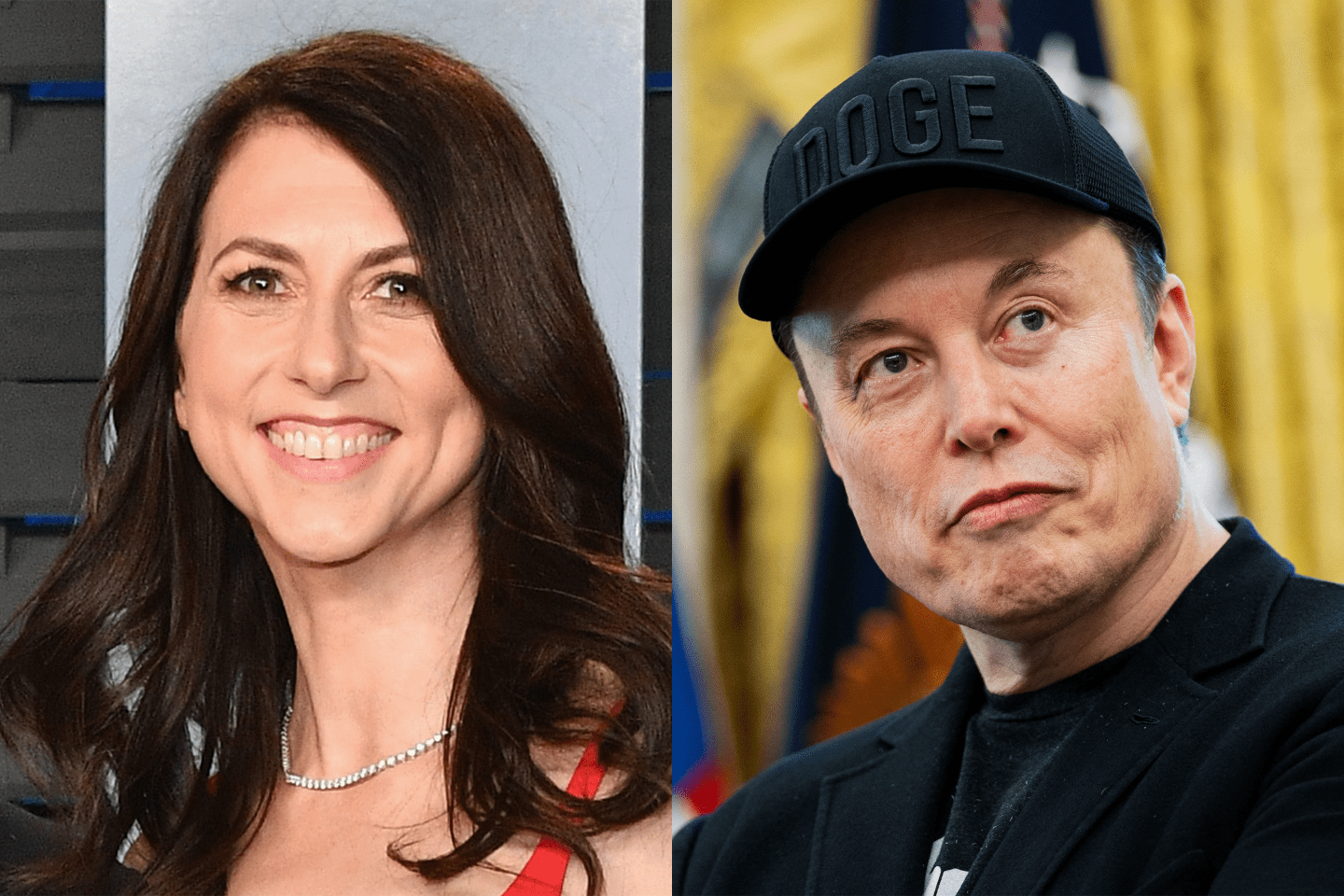
Elon Musk on MacKenzie Scott giving away $26 billion of her fortune: 'Sadly,' it makes the world a worse place

1

MacKenzie Scott alone accounted for one-third of America's $19.2 billion in megagifts last year

2

Philanthropy leader at Warren Buffett and Bill Gates’ Giving Pledge says children of billionaires are pushing them to give their wealth away faster

3

Elon Musk on MacKenzie Scott giving away $26 billion of her fortune: 'Sadly,' it makes the world a worse place
FinanceGlobal Economy

Trump thinks ‘cheaters’ are hurting us on trade, but here’s how the U.S. employs a number of sneaky ‘non-tariff barriers’ to repel foreign goods

Shawn Tully
By
Shawn Tully
Shawn Tully
Senior Editor-at-Large
Down Arrow Button Icon
Shawn Tully
By
Shawn Tully
Shawn Tully
Senior Editor-at-Large
Down Arrow Button Icon
April 16, 2025, 4:40 PM ET
Shipping containers stacked on a cargo ship as they are off-loaded at PortMiami on April 15, 2025.
Shipping containers stacked on a cargo ship as they are off-loaded at PortMiami on April 15, 2025.Joe Raedle—Getty Images
Add Fortune on Google for similar content.

A major mystery of the Trump tariff crusade: The “Liberation Day” “reciprocal” duties he’s threatening are completely disconnected from what other nations are charging the U.S. on our exports. In virtually all cases, Trump’s tariffs are multiple times larger. How does he justify this giant gulf? The president claims we’re getting “ripped off” not by excessive tariffs but blatant “non-tariff barriers” (NTBs), such as quotas and technical standards that systematically block our goods from foreign markets, while we naively open America to the “cheaters” who lock us out.

Recommended Video

In reality, Trump’s got it backwards: The U.S. is a far more avid user of the NTBs he finds so offensive than all but a handful of the world’s major economies.

How protectionist is the U.S.?

A highly respected guide to where different countries’ trade policies stand on the spectrum from open to restrictive is the International Trade Barrier Index compiled by the Tholos Foundation, a Washington, D.C., think tank focusing on tax reform and policy research. For 2024, the Tholos data placed the U.S. as the 24th most protectionist economy in the world from a list of 88 countries, based on the number of restraints on trade each nation imposes. Overall, we’re about 10% above average in overall restrictions—on a roster featuring lots of bad actors. The Tholos numbers rate the U.S. 60% worse than Japan and Canada, respectively ranked No. 3 and No. 4 as most open to imports; 43% below the U.K.; around a third short of the average of the EU majors; and 15% shy of Taiwan. Amazingly, the survey found that this country’s got 90% as many protectionist measures as China, which sits 11 spots from the bottom, and 70% of the thicket spread by last place India.

Clearly, America’s position as relatively tough on trade overall isn’t a matter of tariffs. On the contrary. Before the Trump trade war started, the U.S. trade-weighted average duties on imports sat at an apparently welcoming 2.2%, according to the World Trade Organization. The WTO’s numbers put the average duty worldwide charged by the top six purchasers of U.S. exports—Canada, the EU, Mexico, China, Japan, and the U.K.—at 3.2%, only a point higher than the U.S. norm. The big exception: As a result of the offensive during the first Trump administration, China and the U.S. established special punitive rates that average 14% on their exports stateside, and 12% on our shipments to the world’s second-largest economy. So outside of trade conflicts, the U.S. is a super-low-tariff nation, and the countries where we send most of our goods don’t charge much more than we do.

Hence, what swings the U.S. from a modest deployer of tariffs to a country that’s much more protective are the indirect, non-tariff barriers or NTBs. In the same study, the Tholos Foundation tagged the U.S. as the world’s 15th-biggest user of NTBs and the fifth-ranking of any major industrial power, exceeded only by France, the Netherlands, the Czech Republic, and Switzerland. “For NTBs, the most active users are the US and the EU,” says Philip Thompson, policy analyst for Tholos.

Non-tariff barriers are extremely widespread

NTBs come in a wide variety of forms. They encompass such practices as quotas, technical standards, and packaging, labeling, licensing, and safety requirements. In a 2024 study, the St. Louis Federal Reserve reported that across 15 manufacturing sectors, NTBs covered well over two-thirds the imports of components, commodities, and finished products. The report points out the huge discrepancies between tariffs and NTBs in different industries. For the chemical and machinery/electrical sectors, U.S. tariff rates are under 2%. But NTBs covered over 70% of sales. Similar story for meat and vegetables: Tariffs look like a bargain at 3%, but over 90% of what companies in those businesses sell fall under the umbrella of NTBs. Even for what looks like free-market wood, the duty is 1%, while a third of what the U.S. imports gets shielded, pretty much on the sly. The paper concludes: “In contrast to tariffs, the [NTBs] are ubiquitous across U.S. imports in all industries.”

The St. Louis Fed found that about 20% of the NTBs involved such issues as sanitary inspections needed to protect U.S. consumers and workers. (The survey didn’t cover businesses such as semiconductors where national security may be involved.) Instead, the preponderance of NTBs appear “to reflect the goal of protecting domestic industry from foreign competition,” and result in distorting and “limiting the extent of international trade.”

How the ‘tariff-rate quota’ works

The U.S. is an avid user of a protectionist tool called the tariff-rate quota. Despite its name, the TRQ is really a non-tariff barrier because it doesn’t actually impose duties. TRQs typically allow products or commodities to enter the country duty-free to a certain level, and once the imports hit that bogey, trigger prohibitively high tariffs, effectively halting the flows of rival products and commodities from abroad, and enforcing a fixed quota to shield domestic producers. A top example: the sugar market, where, by law, the USDA rules restrict production to keep minimum prices generally higher than on the international markets. “The U.S. government is the leader of a nationwide sugar cartel,” a Cato Institute study declared. The sugar TRQ is a crucial component of that system since it prevents cheap imported sugar from undermining the guaranteed pricing.

TRQs, in fact, are a staple cash crop for U.S. agriculture. The Office of the U.S. Trade Representative publishes a list of the TRQs, and it’s exhaustive. A particular target is Australia. It faces quotas on creams and ice creams, condensed milk, butter, and a number of other farmland commodities. Canada gets hit on cheese, skim milk, butter, and many other dairy products. TRQs cap beef from Japan and cheese from Peru. Additional rules limit or block everything from beef from Brazil and Argentina, to tomatoes, blueberries and other produce from Mexico to foreign sunscreen.

In his “reciprocal” tariff campaign, Trump proposed cudgeling Taiwan at 34%, Japan at 24%, the EU at 10%, and a blanket 25% steel, aluminum and cars (excluding exports from Canada and Mexico covered by the USMCA free trade agreement), and he’s set a commerce-killing 245% duty on China. Yet in normal times, these nations charge the U.S. only slightly higher tariffs than the U.S. levies on their exports, and heap on far fewer non-tariff barriers than we do. Trump’s best solution would be offering to lower those NTBs that raise prices for American consumers and hobble our productivity in exchange for our trading partners’ agreement to lower their restrictions. That outcome would truly exemplify the art of the deal.


About the Author
Shawn Tully
By Shawn TullySenior Editor-at-Large

Shawn Tully is a senior editor-at-large at Fortune, covering the biggest trends in business, aviation, politics, and leadership.

See full bioRight Arrow Button Icon
Add Fortune on Google for similar content.

Latest in Finance

Finance
Lorem ipsum dolor sit amet, consectetur adipiscing elit, sed do eiusmod tempor incididunt ut labore et dolore magna aliqua. Ut enim ad minim veniam
By Fortune Editors
October 20, 2025
Finance
Lorem ipsum dolor sit amet, consectetur adipiscing elit, sed do eiusmod tempor incididunt ut labore et dolore magna aliqua. Ut enim ad minim veniam
By Fortune Editors
October 20, 2025
Finance
Lorem ipsum dolor sit amet, consectetur adipiscing elit, sed do eiusmod tempor incididunt ut labore et dolore magna aliqua. Ut enim ad minim veniam
By Fortune Editors
October 20, 2025
Finance
Lorem ipsum dolor sit amet, consectetur adipiscing elit, sed do eiusmod tempor incididunt ut labore et dolore magna aliqua. Ut enim ad minim veniam
By Fortune Editors
October 20, 2025
Finance
Lorem ipsum dolor sit amet, consectetur adipiscing elit, sed do eiusmod tempor incididunt ut labore et dolore magna aliqua. Ut enim ad minim veniam
By Fortune Editors
October 20, 2025
Finance
Lorem ipsum dolor sit amet, consectetur adipiscing elit, sed do eiusmod tempor incididunt ut labore et dolore magna aliqua. Ut enim ad minim veniam
By Fortune Editors
October 20, 2025

Most Popular

Finance
Lorem ipsum dolor sit amet, consectetur adipiscing elit, sed do eiusmod tempor incididunt ut labore et dolore magna aliqua. Ut enim ad minim veniam
By Fortune Editors
October 20, 2025
Finance
Lorem ipsum dolor sit amet, consectetur adipiscing elit, sed do eiusmod tempor incididunt ut labore et dolore magna aliqua. Ut enim ad minim veniam
By Fortune Editors
October 20, 2025
Finance
Lorem ipsum dolor sit amet, consectetur adipiscing elit, sed do eiusmod tempor incididunt ut labore et dolore magna aliqua. Ut enim ad minim veniam
By Fortune Editors
October 20, 2025
Finance
Lorem ipsum dolor sit amet, consectetur adipiscing elit, sed do eiusmod tempor incididunt ut labore et dolore magna aliqua. Ut enim ad minim veniam
By Fortune Editors
October 20, 2025
Finance
Lorem ipsum dolor sit amet, consectetur adipiscing elit, sed do eiusmod tempor incididunt ut labore et dolore magna aliqua. Ut enim ad minim veniam
By Fortune Editors
October 20, 2025
Finance
Lorem ipsum dolor sit amet, consectetur adipiscing elit, sed do eiusmod tempor incididunt ut labore et dolore magna aliqua. Ut enim ad minim veniam
By Fortune Editors
October 20, 2025
Fortune Secondary Logo
Rankings
  • 100 Best Companies
  • Fortune 500
  • Global 500
  • Fortune 500 Europe
  • Most Powerful Women
  • World's Most Admired Companies
  • See All Rankings
  • Lists Calendar
Sections
  • Finance
  • Fortune Crypto
  • Features
  • Leadership
  • Health
  • Commentary
  • Success
  • Retail
  • Mpw
  • Tech
  • Lifestyle
  • CEO Initiative
  • Asia
  • Politics
  • Conferences
  • Europe
  • Newsletters
  • Personal Finance
  • Environment
  • Magazine
  • Education
Customer Support
  • Frequently Asked Questions
  • Customer Service Portal
  • Privacy Policy
  • Terms Of Use
  • Single Issues For Purchase
  • International Print
Commercial Services
  • Advertising
  • Fortune Brand Studio
  • Fortune Analytics
  • Fortune Conferences
  • Business Development
  • Group Subscriptions
About Us
  • About Us
  • Press Center
  • Work At Fortune
  • Terms And Conditions
  • Site Map
  • About Us
  • Press Center
  • Work At Fortune
  • Terms And Conditions
  • Site Map
  • Facebook icon
  • Twitter icon
  • LinkedIn icon
  • Instagram icon
  • Pinterest icon

Latest in Finance

Nike’s earning numbers exceeded Wall Street’s expectations. But CEO Elliott Hill’s next test is the World Cup
RetailNike
Nike’s earning numbers exceeded Wall Street’s expectations. But CEO Elliott Hill’s next test is the World Cup
By Mia OsmonbekovJune 30, 2026
11 hours ago
Young couple looking sad in front of a home with a for sale sign
Real EstateHousing
Gen Z and millennials aren’t convinced the American Dream exists anymore: Only 40% of them can afford to buy a home
By Tristan BoveJune 30, 2026
13 hours ago
Russian President Vladimir Putin
EconomyRussia
It started with one viral influencer complaining about Russia’s economy. Now a record 60% of Russians are pessimistic about their country’s outlook
By Tristan BoveJune 30, 2026
15 hours ago
Stripe CEO Patrick Collison gestures with his hands as he speaks into a microphone before a congressional committee hearing.
Cryptostablecoins
Stripe, Visa and over 140 other businesses to launch stablecoin to rival Tether and Circle
By Camila Grigera NaónJune 30, 2026
15 hours ago
A woman types into a kiosk at an airport.
Travel & LeisureAviation
‘You can expect prices to be high and stay high’: Domestic airfare is skyrocketing faster than international flight costs, despite using less jet fuel
By Sasha RogelbergJune 30, 2026
16 hours ago
Young worker at desk
SuccessGen Z
Remote-first fintech giant Revolut is making the office compulsory for new Gen Z grads—and they’ll earn flexibility like their peers after one year
By Emma BurleighJune 30, 2026
16 hours ago

Most Popular

MacKenzie Scott alone accounted for one-third of America's $19.2 billion in megagifts last year
Success
MacKenzie Scott alone accounted for one-third of America's $19.2 billion in megagifts last year
By Sydney LakeJune 25, 2026
6 days ago
Philanthropy leader at Warren Buffett and Bill Gates’ Giving Pledge says children of billionaires are pushing them to give their wealth away faster
Success
Philanthropy leader at Warren Buffett and Bill Gates’ Giving Pledge says children of billionaires are pushing them to give their wealth away faster
By Preston ForeJune 27, 2026
4 days ago
Elon Musk on MacKenzie Scott giving away $26 billion of her fortune: 'Sadly,' it makes the world a worse place
Success
Elon Musk on MacKenzie Scott giving away $26 billion of her fortune: 'Sadly,' it makes the world a worse place
By Sydney LakeJune 29, 2026
2 days ago
'Humanity has chosen to become idiots': This Brown professor switched to take-home exams after a mass shooting and discovered mass cheating
AI
'Humanity has chosen to become idiots': This Brown professor switched to take-home exams after a mass shooting and discovered mass cheating
By Catherina GioinoJune 29, 2026
1 day ago
The U.S. Army is opening military bases to private billions — here's why that changes everything for the next 250 years
Commentary
The U.S. Army is opening military bases to private billions — here's why that changes everything for the next 250 years
By Marc AndersenJune 30, 2026
21 hours ago
The retired college professor fighting a $313 trespassing ticket in Wisconsin thinks he's part of a national struggle
Environment
The retired college professor fighting a $313 trespassing ticket in Wisconsin thinks he's part of a national struggle
By Catherina GioinoJune 28, 2026
3 days ago

© 2026 Fortune Media IP Limited. All Rights Reserved. Use of this site constitutes acceptance of our Terms of Use and Privacy Policy | CA Notice at Collection and Privacy Notice | Do Not Sell/Share My Personal Information
FORTUNE is a trademark of Fortune Media IP Limited, registered in the U.S. and other countries. FORTUNE may receive compensation for some links to products and services on this website. Offers may be subject to change without notice.