• Home
  • Latest
  • Fortune 500
  • Finance
  • Tech
  • Leadership
  • Lifestyle
  • Rankings
  • Multimedia

Trendingnow

1

MacKenzie Scott alone accounted for one-third of America's $19.2 billion in megagifts last year

2

As Big Tech showers employees with perks to win the talent war, Nvidia built a nearly $5 trillion company by making people pay for their own lunch

3

Philanthropy leader at Warren Buffett and Bill Gates’ Giving Pledge says children of billionaires are pushing them to give their wealth away faster

1

MacKenzie Scott alone accounted for one-third of America's $19.2 billion in megagifts last year

2

As Big Tech showers employees with perks to win the talent war, Nvidia built a nearly $5 trillion company by making people pay for their own lunch

3

Philanthropy leader at Warren Buffett and Bill Gates’ Giving Pledge says children of billionaires are pushing them to give their wealth away faster
TechSocial Media

The Like button almost didn’t make it onto Facebook because Zuckerberg hated it so much

By
Michael Liedtke
Michael Liedtke
and
The Associated Press
Down Arrow Button Icon
By
Michael Liedtke
Michael Liedtke
and
The Associated Press
Down Arrow Button Icon
May 16, 2025, 7:55 AM ET
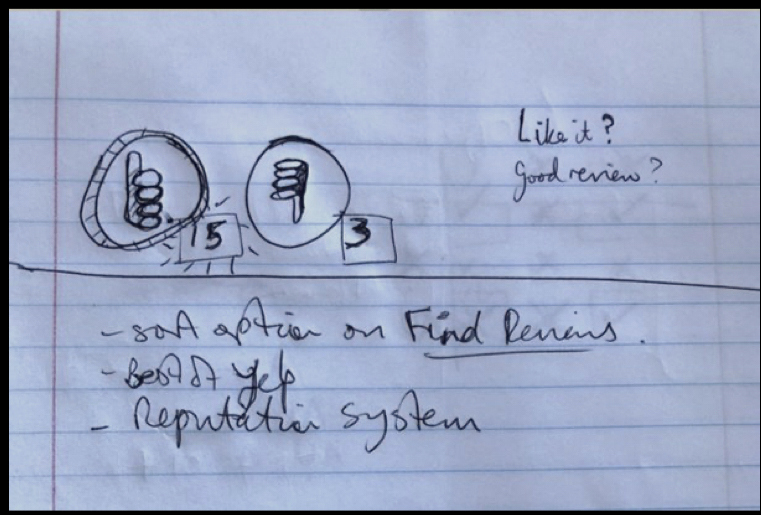
A sketch by Bob Goodson that included a crude concept of what would become the Like button on May 18, 2005.
A sketch by Bob Goodson that included a crude concept of what would become the Like button on May 18, 2005.BCG via AP
Add Fortune on Google for similar content.

The internet wouldn’t be the same without the Like button, the thumbs-up icon that Facebook and other online services turned into digital catnip.

Recommended Video

Like it or not, the button has served as a creative catalyst, a dopamine delivery system and an emotional battering ram. It also became an international tourist attraction after Facebook plastered the symbol on a giant sign on that stood outside its Silicon Valley headquarters until the company rebranded itself as Meta Platforms in 2021.

A new book, “Like: The Button That Changed The World,” delves into the convoluted story behind a symbol that’s become both the manna and bane of a digitally driven society.

It’s a tale that traces back to gladiator battles for survival during the Roman empire before fast-forwarding to the early 21st century when technology trailblazers such as Yelp co-founder Russ Simmons, Twitter co-founder Biz Stone, PayPal co-founder Max Levchin, YouTube co-founder Steve Chen, and Gmail inventor Paul Buchheit were experimenting with different ways using the currency of recognition to prod people to post compelling content online for free.

As part of that noodling, a Yelp employee named Bob Goodson sat down on May 18, 2005, and drew a crude sketch of thumbs up and thumbs down gesture as a way for people to express their opinions about restaurant reviews posted on the site. Yelp passed on adopting Goodson’s suggested symbol and, instead, adopted the “useful,” “funny” and “cool” buttons conceived by Simmons. But the discovery of that old sketch inspired Goodson to team up with Martin Reeves to explore how the Like button came to be in their new book.

“It’s something simple and also elegant because the Like button says, ‘I like you, I like your content. And I am like you. I like you because I am like you, I am part of your tribe,’ ” Reeves said during an interview with The Associated Press. “But it’s very hard to answer the simple question, ‘Well, who invented the Like button?’ ”

The social wellspring behind a social symbol

Although Facebook is the main reason the Like button became so ubiquitous, the company didn’t invent it and almost discarded it as drivel. It took Facebook nearly two years to overcome the staunch resistance by CEO Mark Zuckerberg before finally introducing the symbol on its service on February 9, 2009 — five years after the social network’s creation in a Harvard University dorm room.

As happens with many innovations, the Like button was born out of necessity but it wasn’t the brainchild of a single person. The concept percolated for more than a decade in a Silicon Valley before Facebook finally embraced it.

“Innovation is often social and Silicon Valley was the right place for all this happen because it has a culture of meet-ups, although it’s less so now,” Reeves said. “Everyone was getting together to talk about what they were working on at that time and it turned out a lot of them were working on the same stuff.”

The effort to create a simple mechanism to digitally express approval or dismay sprouted from a wellspring of online services such as Yelp and YouTube whose success would hinge on their ability to post commentary or video that would help make their sites even more popular without forcing them to spend a lot of money for content. That effort required a feedback loop that wouldn’t require a lot of hoops to navigate.

Hollywood’s role in the Like button’s saga

And when Goodson was noodling around with his thumbs-up and thumbs-down gesture, it didn’t come out of a vacuum. Those techniques of signaling approval and disapproval had been ushered into the 21st century zeitgeist by the Academy Award-winning movie, “Gladiator,” where Emperor Commodus — portrayed by actor Joaquin Phoenix — used the gestures to either spare or slay combatants in the arena.

But the positive feelings conjured by a thumbs up date even further back in popular culture, thanks to the 1950s-era character Fonzie played by Henry Winkler in the top-rated 1970s TV series, “Happy Days.” The gesture later became a way of expressing delight with a program via a remote control button for the digital video recorders made by TiVO during the early 2000s. Around the same time, Hot or Not — a site that solicited feedback on the looks of people who shared photos of themselves — began playing around with ideas that helped inspire the Like button, based on the book’s research.

Others that contributed to the pool of helpful ideas included the pioneering news service Digg, the blogging platform Xanga, YouTube and another early video site, Vimeo.

The button’s big breakthrough

But Facebook unquestionably turned the Like button into a universally understood symbol, while also profiting the most from its entrance into the mainstream. And it almost didn’t happen.

By 2007, Facebook engineers had been tinkering with a Like button, but Zuckerberg opposed it because he feared the social network was already getting too cluttered and, Reeves said, “is he didn’t actually want to do something that would be seen as trivial, that would cheapen the service.”

But FriendFeed, a rival social network created by Buchheit and now OpenAI Chairman Bret Taylor, had no such qualms, and unveiled its own Like button in October 2007.

But the button wasn’t successful enough to keep the lights on at FriendFeed, and the service ended up being acquired by Facebook. By the time that deal was completed, Facebook had already introduced a Like button — only after Zuckerberg rebuffed the original idea of calling it an Awesome button “because nothing is more awesome than awesome,” according to the book’s research.

Once Zuckerberg relented, Facebook quickly saw that the Like button not only helped keep its audience engaged on its social network but also made it easier to divine people’s individual interests and gather the insights required to sell the targeted advertising that accounted for most of Meta Platform’s $165 billion in revenue last year. The button’s success encouraged Facebook to take things even further by allowing other digital services to ingrain it into their feedback loops and then, in 2016, added six more types of emotions — “love,” “care,” “haha,” “wow,” “sad,” and “angry.”

Facebook hasn’t publicly disclosed how many responses it has accumulated from the Like button and its other related options, but Levchin told the book’s authors that he believes the company has probably logged trillions of them. “What content is liked by humans…is probably one of the singularly most valuable things on the internet,” Levchin said in the book.

The Like button also has created an epidemic of emotional problems, especially among adolescents, who feel forlorn if their posts are ignored and narcissists whose egos feast on the positive feedback. Reeves views those issues as part of the unintentional consequences that inevitably happen because “if you can’t even predict the beneficial effects of a technological innovation how could you possibly forecast the side effects and the interventions?”

Even so, Reeves believes the Like button and the forces that coalesced to create it tapped into something uniquely human.

“We thought serendipity of the innovation was part of the point,” Reeves said. “And I don’t think we can get bored with liking or having our capacity to compliment taken away so easily because it’s the product of 100,000 years of evolution.”


About the Authors
By Michael Liedtke
See full bioRight Arrow Button Icon
By The Associated Press
See full bioRight Arrow Button Icon
Add Fortune on Google for similar content.

Latest in Tech

Finance
Lorem ipsum dolor sit amet, consectetur adipiscing elit, sed do eiusmod tempor incididunt ut labore et dolore magna aliqua. Ut enim ad minim veniam
By Fortune Editors
October 20, 2025
Finance
Lorem ipsum dolor sit amet, consectetur adipiscing elit, sed do eiusmod tempor incididunt ut labore et dolore magna aliqua. Ut enim ad minim veniam
By Fortune Editors
October 20, 2025
Finance
Lorem ipsum dolor sit amet, consectetur adipiscing elit, sed do eiusmod tempor incididunt ut labore et dolore magna aliqua. Ut enim ad minim veniam
By Fortune Editors
October 20, 2025
Finance
Lorem ipsum dolor sit amet, consectetur adipiscing elit, sed do eiusmod tempor incididunt ut labore et dolore magna aliqua. Ut enim ad minim veniam
By Fortune Editors
October 20, 2025
Finance
Lorem ipsum dolor sit amet, consectetur adipiscing elit, sed do eiusmod tempor incididunt ut labore et dolore magna aliqua. Ut enim ad minim veniam
By Fortune Editors
October 20, 2025
Finance
Lorem ipsum dolor sit amet, consectetur adipiscing elit, sed do eiusmod tempor incididunt ut labore et dolore magna aliqua. Ut enim ad minim veniam
By Fortune Editors
October 20, 2025

Most Popular

Finance
Lorem ipsum dolor sit amet, consectetur adipiscing elit, sed do eiusmod tempor incididunt ut labore et dolore magna aliqua. Ut enim ad minim veniam
By Fortune Editors
October 20, 2025
Finance
Lorem ipsum dolor sit amet, consectetur adipiscing elit, sed do eiusmod tempor incididunt ut labore et dolore magna aliqua. Ut enim ad minim veniam
By Fortune Editors
October 20, 2025
Finance
Lorem ipsum dolor sit amet, consectetur adipiscing elit, sed do eiusmod tempor incididunt ut labore et dolore magna aliqua. Ut enim ad minim veniam
By Fortune Editors
October 20, 2025
Finance
Lorem ipsum dolor sit amet, consectetur adipiscing elit, sed do eiusmod tempor incididunt ut labore et dolore magna aliqua. Ut enim ad minim veniam
By Fortune Editors
October 20, 2025
Finance
Lorem ipsum dolor sit amet, consectetur adipiscing elit, sed do eiusmod tempor incididunt ut labore et dolore magna aliqua. Ut enim ad minim veniam
By Fortune Editors
October 20, 2025
Finance
Lorem ipsum dolor sit amet, consectetur adipiscing elit, sed do eiusmod tempor incididunt ut labore et dolore magna aliqua. Ut enim ad minim veniam
By Fortune Editors
October 20, 2025
Fortune Secondary Logo
Rankings
  • 100 Best Companies
  • Fortune 500
  • Global 500
  • Fortune 500 Europe
  • Most Powerful Women
  • World's Most Admired Companies
  • See All Rankings
  • Lists Calendar
Sections
  • Finance
  • Fortune Crypto
  • Features
  • Leadership
  • Health
  • Commentary
  • Success
  • Retail
  • Mpw
  • Tech
  • Lifestyle
  • CEO Initiative
  • Asia
  • Politics
  • Conferences
  • Europe
  • Newsletters
  • Personal Finance
  • Environment
  • Magazine
  • Education
Customer Support
  • Frequently Asked Questions
  • Customer Service Portal
  • Privacy Policy
  • Terms Of Use
  • Single Issues For Purchase
  • International Print
Commercial Services
  • Advertising
  • Fortune Brand Studio
  • Fortune Analytics
  • Fortune Conferences
  • Business Development
  • Group Subscriptions
About Us
  • About Us
  • Press Center
  • Work At Fortune
  • Terms And Conditions
  • Site Map
  • About Us
  • Press Center
  • Work At Fortune
  • Terms And Conditions
  • Site Map
  • Facebook icon
  • Twitter icon
  • LinkedIn icon
  • Instagram icon
  • Pinterest icon

Latest in Tech

How foodservice giant Sodexo is embracing AI and robotics to reshape the kitchen
NewslettersCIO Intelligence
How foodservice giant Sodexo is embracing AI and robotics to reshape the kitchen
By John KellJuly 1, 2026
3 hours ago
Anthropic CEO Dario Amodei
AIAnthropic
Anthropic’s AI models are back online after a two-week government standoff—settling the company and administration into a fragile truce
By Tristan BoveJuly 1, 2026
4 hours ago
Nikesh Arora, chief executive officer at Palo Alto Networks
SuccessJobs
CEO of $248 billion cybersecurity company says workers are about to face a ‘Darwinian moment’ thanks to AI: Evolve or get cut
By Emma BurleighJuly 1, 2026
5 hours ago
Current price of Ethereum for July 1, 2026
Personal FinanceEthereum
Current price of Ethereum for July 1, 2026
By Joseph HostetlerJuly 1, 2026
7 hours ago
In this photo illustration, a Cisco logo is displayed on a smartphone with Artificial Intellingence (AI) symbols in the background.
AICFO Daily
Cisco is rolling out AI agents to every single one of its 90,000 employees
By Sheryl EstradaJuly 1, 2026
7 hours ago
senate
CommentaryCongress
One rare bipartisan AI bill is moving through Congress. Here’s why it deserves to pass
By Neil Björkman and Betsy BrewerJuly 1, 2026
9 hours ago

Most Popular

MacKenzie Scott alone accounted for one-third of America's $19.2 billion in megagifts last year
Success
MacKenzie Scott alone accounted for one-third of America's $19.2 billion in megagifts last year
By Sydney LakeJune 25, 2026
7 days ago
As Big Tech showers employees with perks to win the talent war, Nvidia built a nearly $5 trillion company by making people pay for their own lunch
Big Tech
As Big Tech showers employees with perks to win the talent war, Nvidia built a nearly $5 trillion company by making people pay for their own lunch
By Marco Quiroz-GutierrezJuly 1, 2026
13 hours ago
Philanthropy leader at Warren Buffett and Bill Gates’ Giving Pledge says children of billionaires are pushing them to give their wealth away faster
Success
Philanthropy leader at Warren Buffett and Bill Gates’ Giving Pledge says children of billionaires are pushing them to give their wealth away faster
By Preston ForeJune 27, 2026
4 days ago
Elon Musk on MacKenzie Scott giving away $26 billion of her fortune: 'Sadly,' it makes the world a worse place
Success
Elon Musk on MacKenzie Scott giving away $26 billion of her fortune: 'Sadly,' it makes the world a worse place
By Sydney LakeJune 29, 2026
2 days ago
The Supreme Court's birthright citizenship ruling hands the U.S. economy a $7.7 trillion win
Newsletters
The Supreme Court's birthright citizenship ruling hands the U.S. economy a $7.7 trillion win
By Diane BradyJuly 1, 2026
11 hours ago
The U.S. Army is opening military bases to private billions — here's why that changes everything for the next 250 years
Commentary
The U.S. Army is opening military bases to private billions — here's why that changes everything for the next 250 years
By Marc AndersenJune 30, 2026
1 day ago

© 2026 Fortune Media IP Limited. All Rights Reserved. Use of this site constitutes acceptance of our Terms of Use and Privacy Policy | CA Notice at Collection and Privacy Notice | Do Not Sell/Share My Personal Information
FORTUNE is a trademark of Fortune Media IP Limited, registered in the U.S. and other countries. FORTUNE may receive compensation for some links to products and services on this website. Offers may be subject to change without notice.