• Home
  • Latest
  • Fortune 500
  • Finance
  • Tech
  • Leadership
  • Lifestyle
  • Rankings
  • Multimedia

Trendingnow

1

MacKenzie Scott alone accounted for one-third of America's $19.2 billion in megagifts last year

2

Philanthropy leader at Warren Buffett and Bill Gates’ Giving Pledge says children of billionaires are pushing them to give their wealth away faster

3

Elon Musk on MacKenzie Scott giving away $26 billion of her fortune: 'Sadly,' it makes the world a worse place

1

MacKenzie Scott alone accounted for one-third of America's $19.2 billion in megagifts last year

2

Philanthropy leader at Warren Buffett and Bill Gates’ Giving Pledge says children of billionaires are pushing them to give their wealth away faster

3

Elon Musk on MacKenzie Scott giving away $26 billion of her fortune: 'Sadly,' it makes the world a worse place
AIcyber

Exclusive: New Microsoft Copilot flaw signals broader risk of AI agents being hacked—‘I would be terrified’

Sharon Goldman
By
Sharon Goldman
Sharon Goldman
AI Reporter
Down Arrow Button Icon
Sharon Goldman
By
Sharon Goldman
Sharon Goldman
AI Reporter
Down Arrow Button Icon
June 11, 2025, 8:00 AM ET
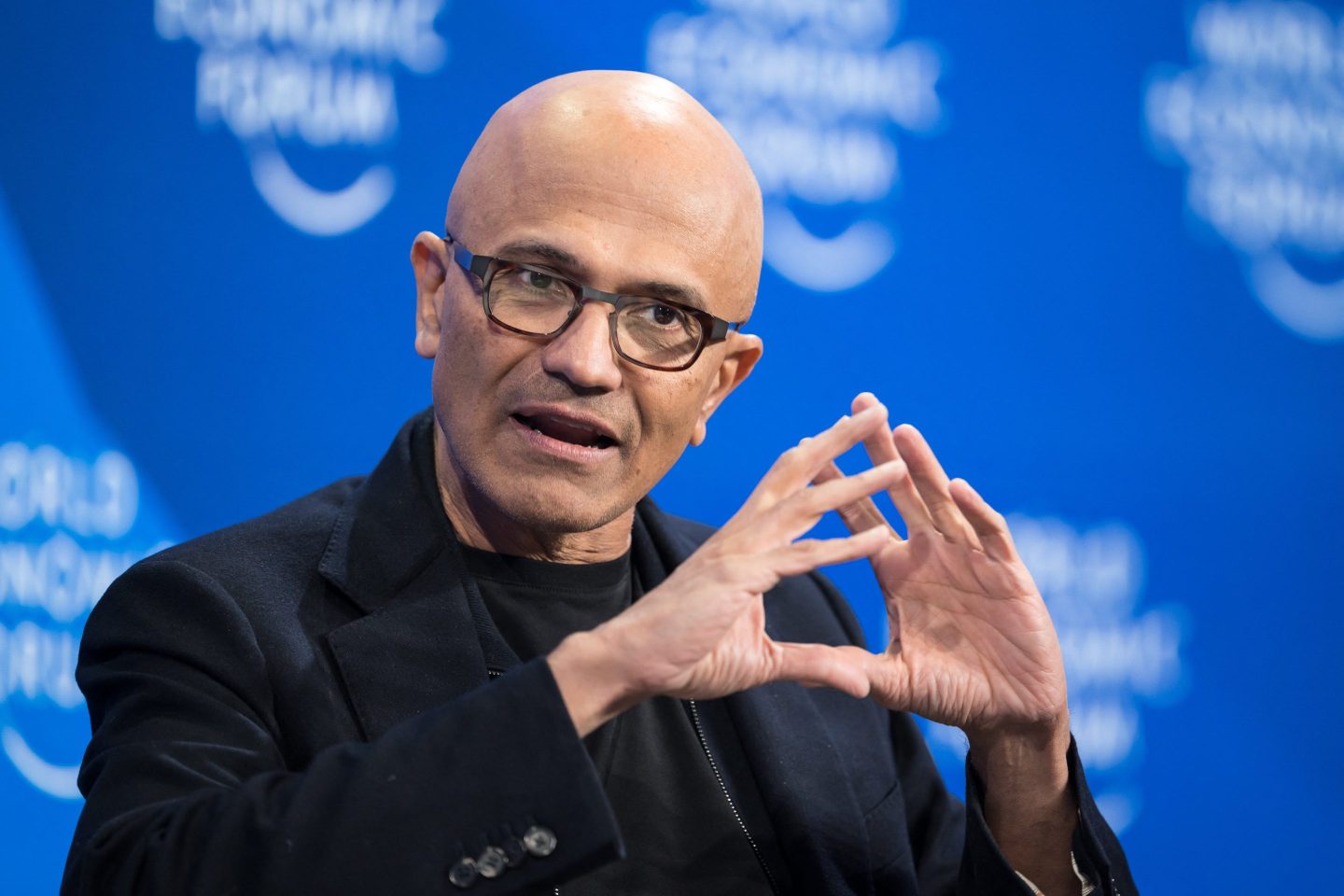
Microsoft CEO Satya Nadella
Microsoft CEO Satya NadellaFABRICE COFFRINI—AFP/Getty Images
Add Fortune on Google for similar content.

Microsoft 365 Copilot, the AI tool built into Microsoft Office workplace applications including Word, Excel, Outlook, PowerPoint, and Teams, harbored a critical security flaw that, according to researchers, signals a broader risk of AI agents being hacked.

Recommended Video

The flaw, revealed today by AI security startup Aim Security and shared exclusively in advance with Fortune, is the first known “zero-click” attack on an AI agent, an AI that acts autonomously to achieve specific goals. The nature of the vulnerability means that the user doesn’t need to click anything or interact with a message for an attacker to access sensitive information from apps and data sources connected to the AI agent. 

In the case of Microsoft 365 Copilot, the vulnerability lets a hacker trigger an attack simply by sending an email to a user, with no phishing or malware needed. Instead, the exploit uses a series of clever techniques to turn the AI assistant against itself. 

Microsoft 365 Copilot acts based on user instructions inside Office apps to do things like access documents and produce suggestions. If infiltrated by hackers, it could be used to target sensitive internal information such as emails, spreadsheets, and chats. The attack bypasses Copilot’s built-in protections, which are designed to ensure that only users can access their own files—potentially exposing proprietary, confidential, or compliance-related data.

The researchers at Aim Security dubbed the flaw “EchoLeak.” Microsoft told Fortune that it has already fixed the issue in Microsoft 365 Copilot and that its customers were unaffected. 

“We appreciate Aim for identifying and responsibly reporting this issue so it could be addressed before our customers were impacted,” a Microsoft spokesperson said in a statement. “We have already updated our products to mitigate this issue, and no customer action is required. We are also implementing additional defense-in-depth measures to further strengthen our security posture.”

The Aim researchers said that EchoLeak is not just a run-of-the-mill security bug. It has broader implications beyond Copilot because it stems from a fundamental design flaw in LLM-based AI agents that is similar to software vulnerabilities in the 1990s, when attackers began to be able to take control of devices like laptops and mobile phones. 

Adir Gruss, cofounder and CTO of Aim Security, told Fortune that he and his fellow researchers took about three months to reverse engineer Microsoft 365 Copilot, one of the most widely used generative AI assistants. They wanted to determine whether something like those earlier software vulnerabilities lurked under the hood and then develop guardrails to mitigate against them. 

“We found this chain of vulnerabilities that allowed us to do the equivalent of the ‘zero click’ for mobile phones, but for AI agents,” he said. First, the attacker sends an innocent-seeming email that contains hidden instructions meant for Copilot. Then, since Copilot scans the user’s emails in the background, Copilot reads the message and follows the prompt—digging into internal files and pulling out sensitive data. Finally, Copilot hides the source of the instructions, so the user can’t trace what happened. 

After discovering the flaw in January, Gruss explained that Aim contacted the Microsoft Security Response Center, which investigates all reports of security vulnerabilities affecting Microsoft products and services. “They want their customers to be secure,” he said. “They told us this was super groundbreaking for them.”

However, it took five months for Microsoft to address the issue, which, Gruss said, “is on the (very) high side of something like this.” One reason, he explained, is that the vulnerability is so new, and it took time to get the right Microsoft teams involved in the process and educate them about the vulnerability and mitigations.

Microsoft initially attempted a fix in April, Gruss said, but in May the company discovered additional security issues around the vulnerability. Aim decided to wait until Microsoft had fully fixed the flaw before publishing its research, in the hope that other vendors that might have similar vulnerabilities “will wake up.”

Gruss said the biggest concern is that EchoLeak could apply to other kinds of agents—from Anthropic’s MCP (Model Context Protocol), which connects AI assistants to other applications, to platforms like Salesforce’s Agentforce. 

If he led a company implementing AI agents right now, “I would be terrified,” Gruss said. “It’s a basic kind of problem that caused us 20, 30 years of suffering and vulnerability because of some design flaws that went into these systems, and it’s happening all over again now with AI.”

Organizations understand that, he explained, which may be why most have not yet widely adopted AI agents. “They’re just experimenting, and they’re super afraid,” he said. “They should be afraid, but on the other hand, as an industry we should have the proper systems and guardrails.”

Microsoft tried to prevent such a problem, known as an LLM scope violation vulnerability. It’s a class of security flaws in which the model is tricked into accessing or exposing data beyond what it’s authorized or intended to handle—essentially violating its “scope” of permissions. “They tried to block it in multiple paths across the chain, but they just failed to do so because AI is so unpredictable and the attack surface is so big,” Gruss said. 

While Aim is offering interim mitigations to clients adopting other AI agents that could be affected by the EchoLeak vulnerability, Gruss said the long-term fix will require a fundamental redesign of how AI agents are built. “The fact that agents use trusted and untrusted data in the same ‘thought process’ is the basic design flaw that makes them vulnerable,” he explained. “Imagine a person that does everything he reads—he would be very easy to manipulate. Fixing this problem would require either ad hoc controls, or a new design allowing for clearer separation between trusted instructions and untrusted data.” 

Such a redesign could be in the models themselves, Gruss said, citing active research into enabling the models to better distinguish between instructions and data. Or the applications the agents are built on top of could add mandatory guardrails for any agent. 

For now, “every Fortune 500 I know is terrified of getting agents to production,” he said, pointing out that Aim has previously done research on coding agents where the team was able to run malicious code on developers’ machines. “There are users experimenting, but these kind of vulnerabilities keep them up at night and prevent innovation.” 

Subscribe to Fortune Gulf Brief. Every Tuesday, this new newsletter delivers clear-eyed, authoritative intelligence on the deals, decisions, policies, and power shifts shaping one of the world’s most consequential regions, written for the people who need to act on it. Sign up here.
About the Author
Sharon Goldman
By Sharon GoldmanAI Reporter
LinkedIn icon

Sharon Goldman is an AI reporter at Fortune and co-authors Eye on AI, Fortune’s flagship AI newsletter. She has written about digital and enterprise tech for over a decade.

See full bioRight Arrow Button Icon
Add Fortune on Google for similar content.

Latest in AI

Finance
Lorem ipsum dolor sit amet, consectetur adipiscing elit, sed do eiusmod tempor incididunt ut labore et dolore magna aliqua. Ut enim ad minim veniam
By Fortune Editors
October 20, 2025
Finance
Lorem ipsum dolor sit amet, consectetur adipiscing elit, sed do eiusmod tempor incididunt ut labore et dolore magna aliqua. Ut enim ad minim veniam
By Fortune Editors
October 20, 2025
Finance
Lorem ipsum dolor sit amet, consectetur adipiscing elit, sed do eiusmod tempor incididunt ut labore et dolore magna aliqua. Ut enim ad minim veniam
By Fortune Editors
October 20, 2025
Finance
Lorem ipsum dolor sit amet, consectetur adipiscing elit, sed do eiusmod tempor incididunt ut labore et dolore magna aliqua. Ut enim ad minim veniam
By Fortune Editors
October 20, 2025
Finance
Lorem ipsum dolor sit amet, consectetur adipiscing elit, sed do eiusmod tempor incididunt ut labore et dolore magna aliqua. Ut enim ad minim veniam
By Fortune Editors
October 20, 2025
Finance
Lorem ipsum dolor sit amet, consectetur adipiscing elit, sed do eiusmod tempor incididunt ut labore et dolore magna aliqua. Ut enim ad minim veniam
By Fortune Editors
October 20, 2025

Most Popular

Finance
Lorem ipsum dolor sit amet, consectetur adipiscing elit, sed do eiusmod tempor incididunt ut labore et dolore magna aliqua. Ut enim ad minim veniam
By Fortune Editors
October 20, 2025
Finance
Lorem ipsum dolor sit amet, consectetur adipiscing elit, sed do eiusmod tempor incididunt ut labore et dolore magna aliqua. Ut enim ad minim veniam
By Fortune Editors
October 20, 2025
Finance
Lorem ipsum dolor sit amet, consectetur adipiscing elit, sed do eiusmod tempor incididunt ut labore et dolore magna aliqua. Ut enim ad minim veniam
By Fortune Editors
October 20, 2025
Finance
Lorem ipsum dolor sit amet, consectetur adipiscing elit, sed do eiusmod tempor incididunt ut labore et dolore magna aliqua. Ut enim ad minim veniam
By Fortune Editors
October 20, 2025
Finance
Lorem ipsum dolor sit amet, consectetur adipiscing elit, sed do eiusmod tempor incididunt ut labore et dolore magna aliqua. Ut enim ad minim veniam
By Fortune Editors
October 20, 2025
Finance
Lorem ipsum dolor sit amet, consectetur adipiscing elit, sed do eiusmod tempor incididunt ut labore et dolore magna aliqua. Ut enim ad minim veniam
By Fortune Editors
October 20, 2025
Fortune Secondary Logo
Rankings
  • 100 Best Companies
  • Fortune 500
  • Global 500
  • Fortune 500 Europe
  • Most Powerful Women
  • World's Most Admired Companies
  • See All Rankings
  • Lists Calendar
Sections
  • Finance
  • Fortune Crypto
  • Features
  • Leadership
  • Health
  • Commentary
  • Success
  • Retail
  • Mpw
  • Tech
  • Lifestyle
  • CEO Initiative
  • Asia
  • Politics
  • Conferences
  • Europe
  • Newsletters
  • Personal Finance
  • Environment
  • Magazine
  • Education
Customer Support
  • Frequently Asked Questions
  • Customer Service Portal
  • Privacy Policy
  • Terms Of Use
  • Single Issues For Purchase
  • International Print
Commercial Services
  • Advertising
  • Fortune Brand Studio
  • Fortune Analytics
  • Fortune Conferences
  • Business Development
  • Group Subscriptions
About Us
  • About Us
  • Press Center
  • Work At Fortune
  • Terms And Conditions
  • Site Map
  • About Us
  • Press Center
  • Work At Fortune
  • Terms And Conditions
  • Site Map
  • Facebook icon
  • Twitter icon
  • LinkedIn icon
  • Instagram icon
  • Pinterest icon

Latest in AI

Nikesh Arora, chief executive officer at Palo Alto Networks
SuccessJobs
CEO of $248 billion cybersecurity company says workers are about to face a ‘Darwinian moment’ thanks to AI: Evolve or get cut
By Emma BurleighJuly 1, 2026
54 minutes ago
In this photo illustration, a Cisco logo is displayed on a smartphone with Artificial Intellingence (AI) symbols in the background.
AICFO Daily
Cisco is rolling out AI agents to every single one of its 90,000 employees
By Sheryl EstradaJuly 1, 2026
3 hours ago
senate
CommentaryCongress
One rare bipartisan AI bill is moving through Congress. Here’s why it deserves to pass
By Neil Björkman and Betsy BrewerJuly 1, 2026
5 hours ago
I know how Gen Z can survive the ‘jobpocalypse’ because I built an AI company — in 2015
CommentaryCareers
I know how Gen Z can survive the ‘jobpocalypse’ because I built an AI company — in 2015
By Jeremy FainJuly 1, 2026
5 hours ago
OCBC rolls out its ‘avatar banking’ platform with ‘Wendy’ and ‘Wayne,’ two virtual financial advisors, as banks integrate AI into wealth management
AsiaSingapore
OCBC rolls out its ‘avatar banking’ platform with ‘Wendy’ and ‘Wayne,’ two virtual financial advisors, as banks integrate AI into wealth management
By Angelica AngJuly 1, 2026
5 hours ago
Photo: Rocks balancing on driftwood, sea in background.
AIMarkets
Leveraged stock bets are ‘very concentrated in the AI ecosystem,’ Goldman Sachs warns
By Jim EdwardsJuly 1, 2026
6 hours ago

Most Popular

MacKenzie Scott alone accounted for one-third of America's $19.2 billion in megagifts last year
Success
MacKenzie Scott alone accounted for one-third of America's $19.2 billion in megagifts last year
By Sydney LakeJune 25, 2026
6 days ago
Philanthropy leader at Warren Buffett and Bill Gates’ Giving Pledge says children of billionaires are pushing them to give their wealth away faster
Success
Philanthropy leader at Warren Buffett and Bill Gates’ Giving Pledge says children of billionaires are pushing them to give their wealth away faster
By Preston ForeJune 27, 2026
4 days ago
Elon Musk on MacKenzie Scott giving away $26 billion of her fortune: 'Sadly,' it makes the world a worse place
Success
Elon Musk on MacKenzie Scott giving away $26 billion of her fortune: 'Sadly,' it makes the world a worse place
By Sydney LakeJune 29, 2026
2 days ago
The U.S. Army is opening military bases to private billions — here's why that changes everything for the next 250 years
Commentary
The U.S. Army is opening military bases to private billions — here's why that changes everything for the next 250 years
By Marc AndersenJune 30, 2026
1 day ago
Current price of oil as of June 30 2026
Personal Finance
Current price of oil as of June 30 2026
By Joseph HostetlerJune 30, 2026
1 day ago
As Big Tech showers employees with perks to win the talent war, Nvidia built a nearly $5 trillion company by making people pay for their own lunch
Big Tech
As Big Tech showers employees with perks to win the talent war, Nvidia built a nearly $5 trillion company by making people pay for their own lunch
By Marco Quiroz-GutierrezJuly 1, 2026
9 hours ago

© 2026 Fortune Media IP Limited. All Rights Reserved. Use of this site constitutes acceptance of our Terms of Use and Privacy Policy | CA Notice at Collection and Privacy Notice | Do Not Sell/Share My Personal Information
FORTUNE is a trademark of Fortune Media IP Limited, registered in the U.S. and other countries. FORTUNE may receive compensation for some links to products and services on this website. Offers may be subject to change without notice.