• Home
  • Latest
  • Fortune 500
  • Finance
  • Tech
  • Leadership
  • Lifestyle
  • Rankings
  • Multimedia

Trendingnow

1

MacKenzie Scott alone accounted for one-third of America's $19.2 billion in megagifts last year

2

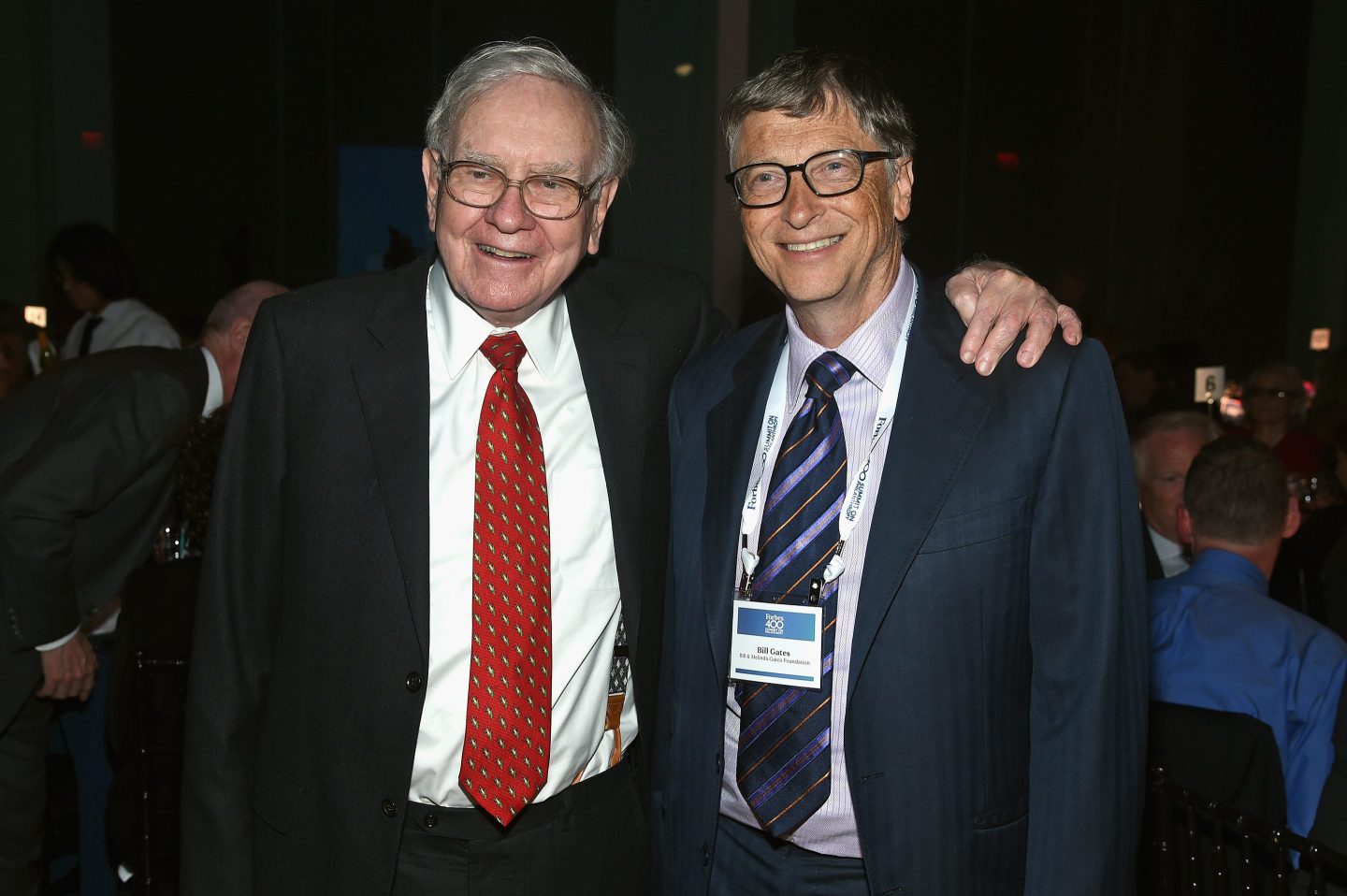
Philanthropy leader at Warren Buffett and Bill Gates’ Giving Pledge says children of billionaires are pushing them to give their wealth away faster

3

Elon Musk on MacKenzie Scott giving away $26 billion of her fortune: 'Sadly,' it makes the world a worse place

1

MacKenzie Scott alone accounted for one-third of America's $19.2 billion in megagifts last year

2

Philanthropy leader at Warren Buffett and Bill Gates’ Giving Pledge says children of billionaires are pushing them to give their wealth away faster

3

Elon Musk on MacKenzie Scott giving away $26 billion of her fortune: 'Sadly,' it makes the world a worse place
EconomyGen Z

The Gen Z hiring nightmare is real, but AI is a ‘lightning strike’ not a ‘house fire,’ Yale economist says

By
Eva Roytburg
Eva Roytburg
Fellow, News
Down Arrow Button Icon
By
Eva Roytburg
Eva Roytburg
Fellow, News
Down Arrow Button Icon
October 2, 2025, 1:20 PM ET
Jerome Powell
Fed Chair Jerome Powell says kids coming out of college really are having a hard time.Sha Hanting—China News Service/VCG/Getty Images
Add Fortune on Google for similar content.

Ever since ChatGPT burst onto the scene in November 2022, predictions of an AI-fueled jobs apocalypse have dominated headlines: Some studies blame the technology for drying up entry-level roles, while others warn it will eventually replace all of us.

Recommended Video

Especially alarming to many has been AI’s effect on entry-level jobs. A blockbuster Stanford study in August was especially rattling, as it claimed to find a “significant and disproportionate impact” on entry-level jobs most exposed to AI automation—like software development and customer service—which have seen steep relative declines in employment. This came out close to the MIT study that said 95% of generative AI pilots were failing and the somewhat sudden realization that AI could be building toward a bubble. Even Federal Reserve Chair Jerome Powell sees something going on, commenting that “kids coming out of college and younger people, minorities, are having a hard time finding jobs.”

But according to a new study from Yale and Brookings researchers, these instances are “lightning strikes,” as opposed to “house fires.” The U.S. labor market just isn’t showing any signs of broad, AI-driven disruption, at least not yet.

Martha Gimbel, a Yale economist and the paper’s lead author, hopes that understanding this data helps people relax. “Take a step back. Take a deep breath,” Gimbel told Fortune. “Try to respond to AI with data, not emotion.”

No apocalypse yet

The new study examined multiple measures of labor market disruption, drawing on Bureau of Labor Statistics data on job losses, spells of unemployment, and shifts in broader occupational composition. The conclusion: There’s movement, but nothing out of the ordinary.

While the mix of occupations has shifted slightly in the past years, the authors stress that this change is still well within historical norms. Right now, the forces driving those shifts appear to be macroeconomic rather than technological.

“The biggest forces hitting the labor market right now are a slowing economy, an aging population, and a decline in immigration—not AI,” Gimbel said.

It’s easy to conflate noise in the economy with the impact of AI, particularly for younger workers, who may already be feeling the pinch from a cooling job market. But Gimbel stressed that these effects are “very specific impacts in very targeted populations” and that AI isn’t having a broad impact on younger workers, whose job search is likely more affected by a macroeconomic slowdown.

Economists—including Fed Chair Jerome Powell—have described current labor market conditions as a “low hire, low-fire” environment, where layoffs are rare, but so are new opportunities. Recent college graduates have been taking the hit: They are struggling to find entry-level roles in white-collar sectors like tech and professional services, and the youth unemployment rate has climbed to 10.5%, the highest since 2016. But the effect has hit older workers, too: More than a quarter of unemployed Americans have been out of work for over six months, the highest level since the mid-2010s, outside of the pandemic years. 

Exposure to AI does not mean job loss

It’s not surprising, then, that many workers assume AI must already be responsible. But Gimbel argues one of the biggest misconceptions is conflating exposure to AI with displacement. Radiologists illustrate the point. Once seen as automation’s prime victims, they are more numerous and better paid than ever, even as their workflows rely heavily on AI-powered imaging tools.

“Exposure to AI doesn’t mean your job disappears,” she said. “It might mean your work changes.”

The same applies to coders and writers, who dominate AI adoption rates on platforms like Claude, the researchers found. Using the tools doesn’t automatically train away your livelihood—it could simply reshape how the work is done.

Molly Kinder, Gimbel’s coauthor at Brookings, added another layer: geography. Americans are used to thinking about automation as something that devastates factory towns in the heartland. With generative AI, Kinder said, the geography is flipped.

“This is not your grandparents’ automation,” Kinder told Fortune. “Gen AI is more likely to disrupt—positively or negatively—big cities with clusters of knowledge and tech jobs, not the industrial heartland.”

In her view, cities like San Francisco, Boston, and New York, dense with coders, analysts, researchers, and creatives, are far more exposed to generative AI than smaller towns. But whether that exposure turns into devastation or growth depends on the future.

“If humans remain in the loop, those cities could reap the most benefits,” Kinder said. “If not, they’ll feel the worst pain.”

The key, she emphasizes, is that exposure doesn’t tell us whether jobs will actually be eliminated, rather, it only tells us which tasks could change. The real story will depend on whether companies treat AI as a helper or as a replacement.

Lightning strikes, not a house fire

Kinder, like Gimbel, stressed that diffusion takes time. Even as AI systems improve quickly, most organizations haven’t redesigned their workflows around them.

“Even though it feels like AI is getting so good, turning that into change in the workplace is time-consuming,” she said. “It’s messy. It’s uneven.”

That’s why the Yale-Brookings analysis is deliberately broad. “It can tell if the house is on fire,” Kinder explained. “It can’t pick up a stove fire in the kitchen. And right now, the labor market as a house is not on fire.”

That doesn’t mean there’s nothing to see here, however.

Kinder called today’s changes, like the ones the Stanford study picked up, “lightning strikes” in specific industries like software development, customer service, and creative work. These early jolts serve as canaries in the coal mine. But they haven’t aggregated into the kind of disruption that reshapes official job statistics.

“Our paper does not say there’s been no impact,” she said. “A translator might be out of work, a creative might be struggling, a customer service rep might be displaced. Those are real. But it’s not big enough to add up to the economy-wide apocalypse people imagine.”

Both Kinder and Gimbel said they expect the first clear, systemic effects to take years, not months, to appear.

What comes next

If and when real displacement arrives, both authors believe it will come from embedded AI in enterprise workflows, not from individual workers casually using chatbots.

“That’s when you’ll see displacement,” Kinder said. “Not when one worker turns to a chatbot, but when the business redesigns the workflow with AI.”

That process is beginning, as more companies integrate AI APIs into core systems. But organizational change is slow. 

“Three years is nothing for a general-purpose technology,” Kinder said. “Gen AI has not defied gravity. It takes time to redesign workflows, and it takes time to diffuse across workplaces. It could end up being phenomenally transformative, but it’s not happening overnight.”


Subscribe to Fortune Gulf Brief. Every Tuesday, this new newsletter delivers clear-eyed, authoritative intelligence on the deals, decisions, policies, and power shifts shaping one of the world’s most consequential regions, written for the people who need to act on it. Sign up here.
About the Author
By Eva RoytburgFellow, News
Instagram iconLinkedIn icon

Eva covers macroeconomics, market-moving news, and the forces shaping the global economy.

See full bioRight Arrow Button Icon
Add Fortune on Google for similar content.

Latest in Economy

Finance
Lorem ipsum dolor sit amet, consectetur adipiscing elit, sed do eiusmod tempor incididunt ut labore et dolore magna aliqua. Ut enim ad minim veniam
By Fortune Editors
October 20, 2025
Finance
Lorem ipsum dolor sit amet, consectetur adipiscing elit, sed do eiusmod tempor incididunt ut labore et dolore magna aliqua. Ut enim ad minim veniam
By Fortune Editors
October 20, 2025
Finance
Lorem ipsum dolor sit amet, consectetur adipiscing elit, sed do eiusmod tempor incididunt ut labore et dolore magna aliqua. Ut enim ad minim veniam
By Fortune Editors
October 20, 2025
Finance
Lorem ipsum dolor sit amet, consectetur adipiscing elit, sed do eiusmod tempor incididunt ut labore et dolore magna aliqua. Ut enim ad minim veniam
By Fortune Editors
October 20, 2025
Finance
Lorem ipsum dolor sit amet, consectetur adipiscing elit, sed do eiusmod tempor incididunt ut labore et dolore magna aliqua. Ut enim ad minim veniam
By Fortune Editors
October 20, 2025
Finance
Lorem ipsum dolor sit amet, consectetur adipiscing elit, sed do eiusmod tempor incididunt ut labore et dolore magna aliqua. Ut enim ad minim veniam
By Fortune Editors
October 20, 2025

Most Popular

Finance
Lorem ipsum dolor sit amet, consectetur adipiscing elit, sed do eiusmod tempor incididunt ut labore et dolore magna aliqua. Ut enim ad minim veniam
By Fortune Editors
October 20, 2025
Finance
Lorem ipsum dolor sit amet, consectetur adipiscing elit, sed do eiusmod tempor incididunt ut labore et dolore magna aliqua. Ut enim ad minim veniam
By Fortune Editors
October 20, 2025
Finance
Lorem ipsum dolor sit amet, consectetur adipiscing elit, sed do eiusmod tempor incididunt ut labore et dolore magna aliqua. Ut enim ad minim veniam
By Fortune Editors
October 20, 2025
Finance
Lorem ipsum dolor sit amet, consectetur adipiscing elit, sed do eiusmod tempor incididunt ut labore et dolore magna aliqua. Ut enim ad minim veniam
By Fortune Editors
October 20, 2025
Finance
Lorem ipsum dolor sit amet, consectetur adipiscing elit, sed do eiusmod tempor incididunt ut labore et dolore magna aliqua. Ut enim ad minim veniam
By Fortune Editors
October 20, 2025
Finance
Lorem ipsum dolor sit amet, consectetur adipiscing elit, sed do eiusmod tempor incididunt ut labore et dolore magna aliqua. Ut enim ad minim veniam
By Fortune Editors
October 20, 2025
Fortune Secondary Logo
Rankings
  • 100 Best Companies
  • Fortune 500
  • Global 500
  • Fortune 500 Europe
  • Most Powerful Women
  • World's Most Admired Companies
  • See All Rankings
  • Lists Calendar
Sections
  • Finance
  • Fortune Crypto
  • Features
  • Leadership
  • Health
  • Commentary
  • Success
  • Retail
  • Mpw
  • Tech
  • Lifestyle
  • CEO Initiative
  • Asia
  • Politics
  • Conferences
  • Europe
  • Newsletters
  • Personal Finance
  • Environment
  • Magazine
  • Education
Customer Support
  • Frequently Asked Questions
  • Customer Service Portal
  • Privacy Policy
  • Terms Of Use
  • Single Issues For Purchase
  • International Print
Commercial Services
  • Advertising
  • Fortune Brand Studio
  • Fortune Analytics
  • Fortune Conferences
  • Business Development
  • Group Subscriptions
About Us
  • About Us
  • Press Center
  • Work At Fortune
  • Terms And Conditions
  • Site Map
  • About Us
  • Press Center
  • Work At Fortune
  • Terms And Conditions
  • Site Map
  • Facebook icon
  • Twitter icon
  • LinkedIn icon
  • Instagram icon
  • Pinterest icon

Latest in Economy

mr
Commentary250 Years of Innovation
America needs 3.8 million manufacturing workers. This CEO has a blueprint to find them
By Mark RayfieldJuly 1, 2026
6 hours ago
Photo: Rocks balancing on driftwood, sea in background.
AIMarkets
Leveraged stock bets are ‘very concentrated in the AI ecosystem,’ Goldman Sachs warns
By Jim EdwardsJuly 1, 2026
7 hours ago
Young couple looking sad in front of a home with a for sale sign
Real EstateHousing
Gen Z and millennials aren’t convinced the American Dream exists anymore: Only 40% of them can afford to buy a home
By Tristan BoveJune 30, 2026
21 hours ago
Russian President Vladimir Putin
EconomyRussia
It started with one viral influencer complaining about Russia’s economy. Now a record 60% of Russians are pessimistic about their country’s outlook
By Tristan BoveJune 30, 2026
23 hours ago
A woman types into a kiosk at an airport.
Travel & LeisureAviation
‘You can expect prices to be high and stay high’: Domestic airfare is skyrocketing faster than international flight costs, despite using less jet fuel
By Sasha RogelbergJune 30, 2026
1 day ago
mill
InvestingWealth
America added more than 1,200 millionaires per day in 2025, but the heyday of the ‘everyday millionaire’ is already over
By Nick LichtenbergJune 30, 2026
1 day ago

Most Popular

MacKenzie Scott alone accounted for one-third of America's $19.2 billion in megagifts last year
Success
MacKenzie Scott alone accounted for one-third of America's $19.2 billion in megagifts last year
By Sydney LakeJune 25, 2026
6 days ago
Philanthropy leader at Warren Buffett and Bill Gates’ Giving Pledge says children of billionaires are pushing them to give their wealth away faster
Success
Philanthropy leader at Warren Buffett and Bill Gates’ Giving Pledge says children of billionaires are pushing them to give their wealth away faster
By Preston ForeJune 27, 2026
4 days ago
Elon Musk on MacKenzie Scott giving away $26 billion of her fortune: 'Sadly,' it makes the world a worse place
Success
Elon Musk on MacKenzie Scott giving away $26 billion of her fortune: 'Sadly,' it makes the world a worse place
By Sydney LakeJune 29, 2026
2 days ago
As Big Tech showers employees with perks to win the talent war, Nvidia built a nearly $5 trillion company by making people pay for their own lunch
Big Tech
As Big Tech showers employees with perks to win the talent war, Nvidia built a nearly $5 trillion company by making people pay for their own lunch
By Marco Quiroz-GutierrezJuly 1, 2026
9 hours ago
The U.S. Army is opening military bases to private billions — here's why that changes everything for the next 250 years
Commentary
The U.S. Army is opening military bases to private billions — here's why that changes everything for the next 250 years
By Marc AndersenJune 30, 2026
1 day ago
The Supreme Court's birthright citizenship ruling hands the U.S. economy a $7.7 trillion win
Newsletters
The Supreme Court's birthright citizenship ruling hands the U.S. economy a $7.7 trillion win
By Diane BradyJuly 1, 2026
7 hours ago

© 2026 Fortune Media IP Limited. All Rights Reserved. Use of this site constitutes acceptance of our Terms of Use and Privacy Policy | CA Notice at Collection and Privacy Notice | Do Not Sell/Share My Personal Information
FORTUNE is a trademark of Fortune Media IP Limited, registered in the U.S. and other countries. FORTUNE may receive compensation for some links to products and services on this website. Offers may be subject to change without notice.