• Home
  • Latest
  • Fortune 500
  • Finance
  • Tech
  • Leadership
  • Lifestyle
  • Rankings
  • Multimedia

Trendingnow

1

MacKenzie Scott alone accounted for one-third of America's $19.2 billion in megagifts last year

2

As Big Tech showers employees with perks to win the talent war, Nvidia built a nearly $5 trillion company by making people pay for their own lunch

3

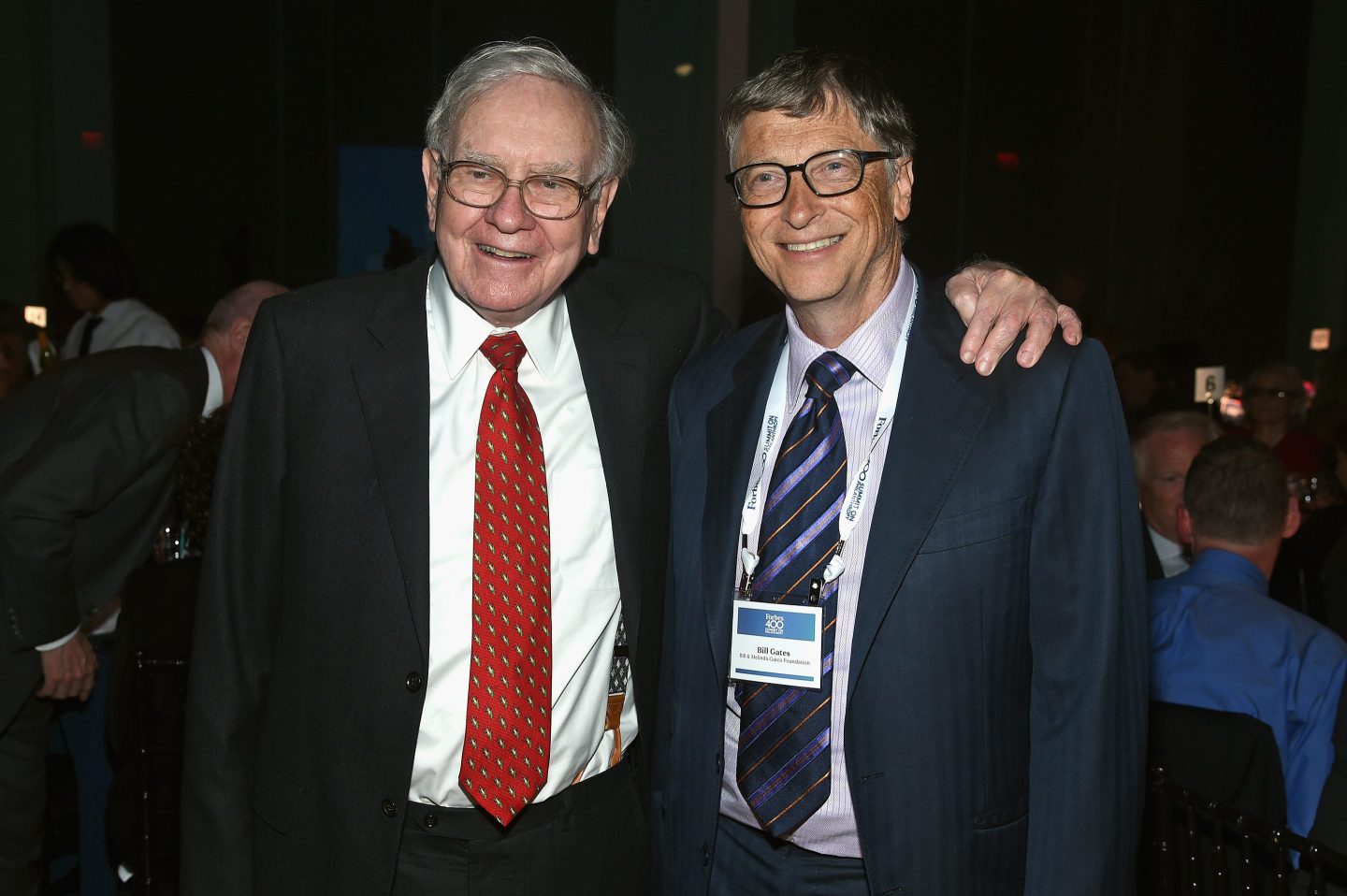
Philanthropy leader at Warren Buffett and Bill Gates’ Giving Pledge says children of billionaires are pushing them to give their wealth away faster

1

MacKenzie Scott alone accounted for one-third of America's $19.2 billion in megagifts last year

2

As Big Tech showers employees with perks to win the talent war, Nvidia built a nearly $5 trillion company by making people pay for their own lunch

3

Philanthropy leader at Warren Buffett and Bill Gates’ Giving Pledge says children of billionaires are pushing them to give their wealth away faster
CommentaryRobotics

How do you trust a robot you’ve never met?

By
Jan Liphardt
Jan Liphardt
Down Arrow Button Icon
By
Jan Liphardt
Jan Liphardt
Down Arrow Button Icon
October 14, 2025, 9:00 AM ET
Jan Liphardt
Jan Liphardt, CEO of OpenMind.courtesy of OpenMind
Add Fortune on Google for similar content.

Imagine you’re walking through your neighborhood and a four-foot-tall robot walks up beside you. It greets you by name, remembers your favorite coffee order, and offers to carry your groceries. You’ve never seen it before. Should you trust it?

Recommended Video

That question isn’t science fiction anymore. Machines are getting smart. Large language models (LLMs) already contain vast amounts of information. They know about the physical world, human behaviors, our history, the nature of human jobs, and the behaviors of our pets. This stored information allows LLMs and other AIs to write books, make us laugh, fix computer code, get perfect scores on medical licensing exams, and file our taxes. LLMs, when given a physical body, are starting to autonomously navigate cities and hospitals, can open doors and get into robotic cars, hold conversations, and learn about the humans around them. Our generation is watching machines wake up. Robots aren’t just inert piles of plastic and metal anymore, but are growing into teachers, co-workers, and health companions. Some humans cry when familiar robots receive LLM or privacy upgrades that change their personality. Soldiers have tried to help robot team members to safety, despite it being (rationally) clear that machines can be fixed or replaced.

The main challenge is how fast AI is improving. People have spent thousands of years developing systems for vetting and reputation. You trust your Uber driver because you can see their rating and ride history. Your family doctor (hopefully) has performed hundreds of successful procedures over years of training. You might trust a teacher because your school district hired them, presumably after extensive vetting. None of this exists yet for robots. A robot in your home or office could be a marvel or a liability. 

The stakes are higher than a buggy app or a hacked email account. We all understand how catastrophic a major cyberattack can be — banks closed, infrastructure disabled, sensitive data stolen. A compromised household robot could be misused from anywhere in the world, such as to remotely open your front door from inside your home. An autonomous delivery bot could be repurposed to harm its recipient. When the software that can already manipulate our digital systems gains the ability to act in the physical world, the potential for harm includes real-world injury and risk.

The importance of transparency

At OpenMind, we think that part of the answer is transparency. The robots we build and the software they run are open source. You don’t have to take my word for what’s inside — you can read the code. Beyond open software, when our robots boot, they download immutable guardrails like Asimov’s Laws of Robotics from the Ethereum blockchain. That way, their rules aren’t hidden in a private database. The rules are public, verifiable, and tamper-resistant. It’s the robot equivalent of knowing that all Uber drivers have agreed to the same rules of conduct, and the same rules of the road. Why go to those lengths? 

Many of the environments where human-facing universal robots can provide benefits — homes, hospitals, schools — are sensitive and personal. A tutoring robot helping your kids with math should have a track record of safe and productive sessions. An elder-care assistant needs a verifiable history of respectful, competent service. A delivery robot approaching your front door should be as predictable and trustworthy as your favorite mail carrier. Without trust, adoption will never take place, or quickly stall.

Trust is built gradually and also reflects common understanding. We design our systems to be explainable: multiple AI modules talk to each other in plain language, and we log their thinking so humans can audit decisions. If a robot makes a mistake — drops the tomato instead of placing it on the counter — you should be able to ask why and get an answer you can understand.

Over time, as more robots connect and share skills, trust will depend on the network too. We learn from peers, and machines will learn from us and from other machines. That’s powerful but just like parents are concerned about what their kids learn on the web, we need good ways to audit and align skill exchange for robots.. Governance for human–machine societies isn’t optional; it’s fundamental infrastructure.

So, how do you trust a robot you’ve never met? With verification and reputation systems we use for humans – but adapted for machines. Public rules, explainable decisions, standards that are visible, enforceable, and human-first. Only then can we get to the future we actually want: one where robots are trusted teammates in the places that matter.

(For readers unfamiliar: Isaac Asimov’s Three Laws of Robotics — first introduced in 1942 — state that a robot may not harm a human or, through inaction, allow a human to come to harm; must obey human orders unless those orders conflict with the first law; and must protect its own existence so long as that protection does not conflict with the first or second laws.)

The opinions expressed in Fortune.com commentary pieces are solely the views of their authors and do not necessarily reflect the opinions and beliefs of Fortune.
About the Author
By Jan Liphardt
See full bioRight Arrow Button Icon
Add Fortune on Google for similar content.

Latest in Commentary

Finance
Lorem ipsum dolor sit amet, consectetur adipiscing elit, sed do eiusmod tempor incididunt ut labore et dolore magna aliqua. Ut enim ad minim veniam
By Fortune Editors
October 20, 2025
Finance
Lorem ipsum dolor sit amet, consectetur adipiscing elit, sed do eiusmod tempor incididunt ut labore et dolore magna aliqua. Ut enim ad minim veniam
By Fortune Editors
October 20, 2025
Finance
Lorem ipsum dolor sit amet, consectetur adipiscing elit, sed do eiusmod tempor incididunt ut labore et dolore magna aliqua. Ut enim ad minim veniam
By Fortune Editors
October 20, 2025
Finance
Lorem ipsum dolor sit amet, consectetur adipiscing elit, sed do eiusmod tempor incididunt ut labore et dolore magna aliqua. Ut enim ad minim veniam
By Fortune Editors
October 20, 2025
Finance
Lorem ipsum dolor sit amet, consectetur adipiscing elit, sed do eiusmod tempor incididunt ut labore et dolore magna aliqua. Ut enim ad minim veniam
By Fortune Editors
October 20, 2025
Finance
Lorem ipsum dolor sit amet, consectetur adipiscing elit, sed do eiusmod tempor incididunt ut labore et dolore magna aliqua. Ut enim ad minim veniam
By Fortune Editors
October 20, 2025

Most Popular

Finance
Lorem ipsum dolor sit amet, consectetur adipiscing elit, sed do eiusmod tempor incididunt ut labore et dolore magna aliqua. Ut enim ad minim veniam
By Fortune Editors
October 20, 2025
Finance
Lorem ipsum dolor sit amet, consectetur adipiscing elit, sed do eiusmod tempor incididunt ut labore et dolore magna aliqua. Ut enim ad minim veniam
By Fortune Editors
October 20, 2025
Finance
Lorem ipsum dolor sit amet, consectetur adipiscing elit, sed do eiusmod tempor incididunt ut labore et dolore magna aliqua. Ut enim ad minim veniam
By Fortune Editors
October 20, 2025
Finance
Lorem ipsum dolor sit amet, consectetur adipiscing elit, sed do eiusmod tempor incididunt ut labore et dolore magna aliqua. Ut enim ad minim veniam
By Fortune Editors
October 20, 2025
Finance
Lorem ipsum dolor sit amet, consectetur adipiscing elit, sed do eiusmod tempor incididunt ut labore et dolore magna aliqua. Ut enim ad minim veniam
By Fortune Editors
October 20, 2025
Finance
Lorem ipsum dolor sit amet, consectetur adipiscing elit, sed do eiusmod tempor incididunt ut labore et dolore magna aliqua. Ut enim ad minim veniam
By Fortune Editors
October 20, 2025
Fortune Secondary Logo
Rankings
  • 100 Best Companies
  • Fortune 500
  • Global 500
  • Fortune 500 Europe
  • Most Powerful Women
  • World's Most Admired Companies
  • See All Rankings
  • Lists Calendar
Sections
  • Finance
  • Fortune Crypto
  • Features
  • Leadership
  • Health
  • Commentary
  • Success
  • Retail
  • Mpw
  • Tech
  • Lifestyle
  • CEO Initiative
  • Asia
  • Politics
  • Conferences
  • Europe
  • Newsletters
  • Personal Finance
  • Environment
  • Magazine
  • Education
Customer Support
  • Frequently Asked Questions
  • Customer Service Portal
  • Privacy Policy
  • Terms Of Use
  • Single Issues For Purchase
  • International Print
Commercial Services
  • Advertising
  • Fortune Brand Studio
  • Fortune Analytics
  • Fortune Conferences
  • Business Development
  • Group Subscriptions
About Us
  • About Us
  • Press Center
  • Work At Fortune
  • Terms And Conditions
  • Site Map
  • About Us
  • Press Center
  • Work At Fortune
  • Terms And Conditions
  • Site Map
  • Facebook icon
  • Twitter icon
  • LinkedIn icon
  • Instagram icon
  • Pinterest icon
Jan Liphardt is the founder & CEO of OpenMind, a San Francisco startup building OM1, an open-source, AI-native operating system for robots. A Stanford bioengineering professor, Jan has worked at the intersection of data, healthcare, and hardware, supported by the NIH, NSF, NCI, the US Department of Energy, and MITRE. His awards include  a Sloan Research Fellowship, a Searle Scholarship, and a Mohr Davidow Ventures Innovator’s Award. Jan likes building things that are useful and helpful.

Latest in Commentary

senate
CommentaryCongress
One rare bipartisan AI bill is moving through Congress. Here’s why it deserves to pass
By Neil Björkman and Betsy BrewerJuly 1, 2026
9 hours ago
I know how Gen Z can survive the ‘jobpocalypse’ because I built an AI company — in 2015
CommentaryCareers
I know how Gen Z can survive the ‘jobpocalypse’ because I built an AI company — in 2015
By Jeremy FainJuly 1, 2026
9 hours ago
mr
Commentary250 Years of Innovation
America needs 3.8 million manufacturing workers. This CEO has a blueprint to find them
By Mark RayfieldJuly 1, 2026
9 hours ago
usa
Commentary250 Years of Innovation
America at 250: why the Constitution was built to restrain government, not celebrate majority rule
By Steve H. HankeJuly 1, 2026
9 hours ago
t
CommentaryMedia
Netflix could turn NBC into its biggest bet yet — and this time, the math actually works
By Jeffrey Sonnenfeld and Steven TianJune 30, 2026
1 day ago
wb
CommentaryLeadership
I grew BDO from $600 million to $3.4 billion. Here’s the 3-part formula that made it possible
By Wayne BersonJune 30, 2026
1 day ago

Most Popular

MacKenzie Scott alone accounted for one-third of America's $19.2 billion in megagifts last year
Success
MacKenzie Scott alone accounted for one-third of America's $19.2 billion in megagifts last year
By Sydney LakeJune 25, 2026
7 days ago
As Big Tech showers employees with perks to win the talent war, Nvidia built a nearly $5 trillion company by making people pay for their own lunch
Big Tech
As Big Tech showers employees with perks to win the talent war, Nvidia built a nearly $5 trillion company by making people pay for their own lunch
By Marco Quiroz-GutierrezJuly 1, 2026
13 hours ago
Philanthropy leader at Warren Buffett and Bill Gates’ Giving Pledge says children of billionaires are pushing them to give their wealth away faster
Success
Philanthropy leader at Warren Buffett and Bill Gates’ Giving Pledge says children of billionaires are pushing them to give their wealth away faster
By Preston ForeJune 27, 2026
4 days ago
Elon Musk on MacKenzie Scott giving away $26 billion of her fortune: 'Sadly,' it makes the world a worse place
Success
Elon Musk on MacKenzie Scott giving away $26 billion of her fortune: 'Sadly,' it makes the world a worse place
By Sydney LakeJune 29, 2026
2 days ago
The Supreme Court's birthright citizenship ruling hands the U.S. economy a $7.7 trillion win
Newsletters
The Supreme Court's birthright citizenship ruling hands the U.S. economy a $7.7 trillion win
By Diane BradyJuly 1, 2026
11 hours ago
The U.S. Army is opening military bases to private billions — here's why that changes everything for the next 250 years
Commentary
The U.S. Army is opening military bases to private billions — here's why that changes everything for the next 250 years
By Marc AndersenJune 30, 2026
1 day ago

© 2026 Fortune Media IP Limited. All Rights Reserved. Use of this site constitutes acceptance of our Terms of Use and Privacy Policy | CA Notice at Collection and Privacy Notice | Do Not Sell/Share My Personal Information
FORTUNE is a trademark of Fortune Media IP Limited, registered in the U.S. and other countries. FORTUNE may receive compensation for some links to products and services on this website. Offers may be subject to change without notice.