• Home
  • Latest
  • Fortune 500
  • Finance
  • Tech
  • Leadership
  • Lifestyle
  • Rankings
  • Multimedia

Trendingnow

1

The U.S. spent $30 billion to ditch textbooks for laptops and tablets: The result is the first generation less cognitively capable than their parents

2

Current price of oil as of July 13, 2026

3

Current price of silver as of Monday, July 13, 2026

1

The U.S. spent $30 billion to ditch textbooks for laptops and tablets: The result is the first generation less cognitively capable than their parents

2

Current price of oil as of July 13, 2026

3

Current price of silver as of Monday, July 13, 2026
CommentaryInsurance

Creating resilient communities to avoid the next housing crisis

By
Pete Walther
Pete Walther
and
Francis Bouchard
Francis Bouchard
Down Arrow Button Icon
By
Pete Walther
Pete Walther
and
Francis Bouchard
Francis Bouchard
Down Arrow Button Icon
November 12, 2025, 9:00 AM ET

Pete Walther is President, Private Client Services, Marsh McLennan Agency. Francis Bouchard is Managing Director, Climate, Marsh McLennan.

House
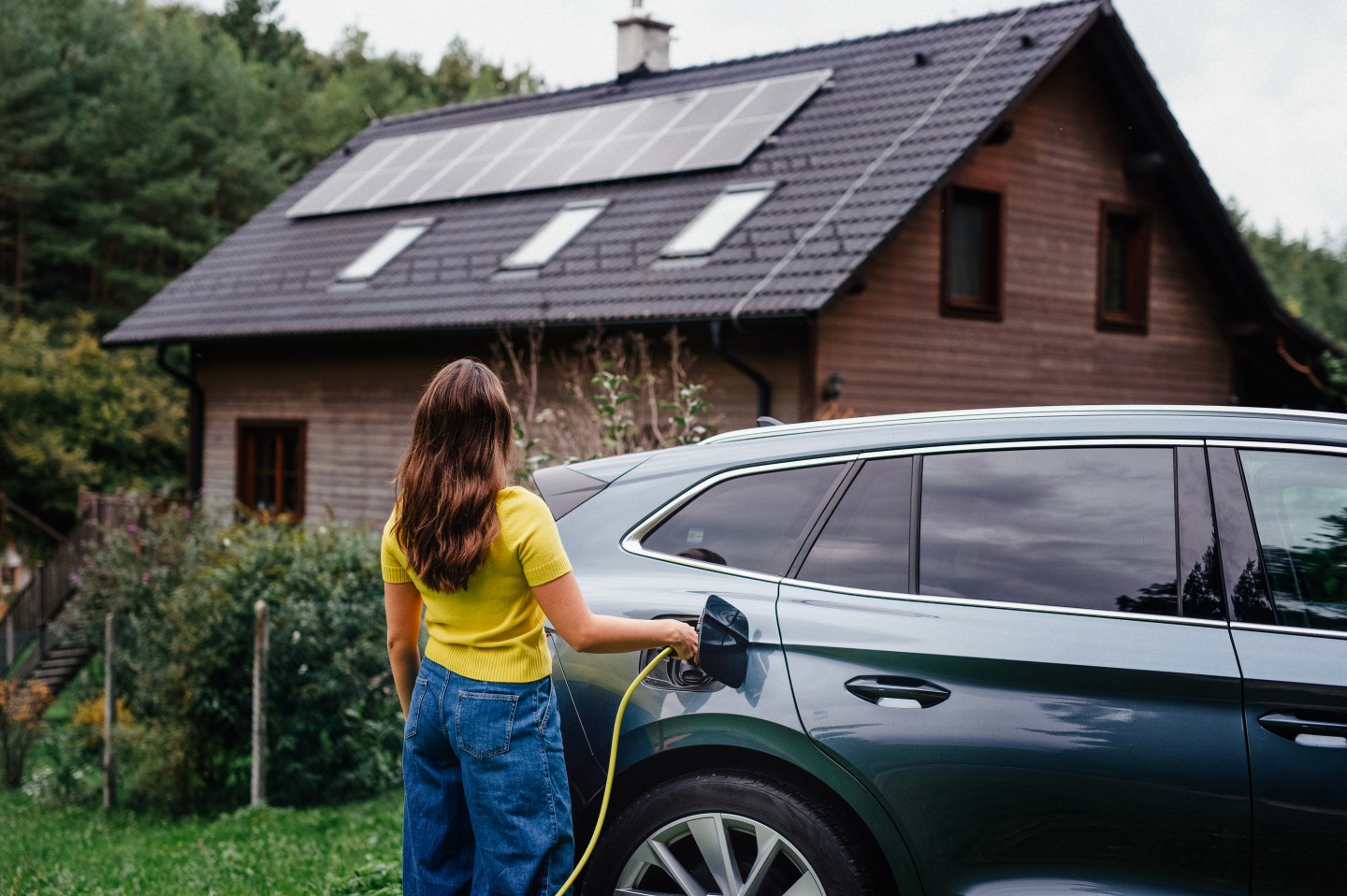
Car culture, meet house culture.Getty Images
Add Fortune on Google for similar content.

We’ve all seen the numbers. Growing dislocation between what consumers pay and expenses incurred by insurance carriers. Challenges accessing affordable insurance solutions. Consumers in Florida and Louisiana paying multiples more for insurance. Replacement materials suffering from run-away inflation. But don’t be fooled; these statements are about auto insurance, not homeowners insurance. 

Recommended Video

So why is there no national auto insurance crisis? In part because about 50 years ago the auto insurance industry established a risk management framework that started with data and ended with safety standards. In between were certain government mandates, narrowly targeted government risk pools and enough consumer demand that even Saturday afternoon truck ads are full of references to 4-star insurance safety ratings. 

If we hope to avoid a housing crisis in America, we need to do that again for the rapidly escalating risks posed by wildfires, hurricanes, extreme heat and flooding. 

The first step – again – would be establishing one source of credible, publicly verifiable data that deepens our collective knowledge of the risks. In other words, we need a crash test dummy for homes, communities, and watersheds to inform and improve local decision-making. Once we have those community-level insights, we can bolster the case for dramatically expanding the effective yet sub-scale deployment of home safety standards like the Institute for Business and Home Safety’s (IBHS) Fortified or Prepared home designations. 

The government, particularly at the state level – where insurance is regulated – should use the same data to steer various forms of capital to the right resilient infrastructure. They should embrace innovation in every form. And they should only put taxpayer funds at risk to address true market failures, not cheap forms of capital.

But the biggest change we need is cultural. We need to instill a consumer demand for home safety that’s at least as effective as the one for cars. 

Climate literacy

Changing the culture starts with greater awareness. For example, there is a significant knowledge gap around flood insurance—96% of U.S. homeowners lack flood coverage, either because it’s excluded from standard homeowner’s policies or because the binary nature of flood zones gives at-risk homeowners a false sense of security. As a result, too many consumers only realize flood damage is not covered until after the event.

Take the recent floods in Texas as an example. FEMA estimates that only 4% of homeowners nationwide have flood insurance, even those in risk-prone areas. In Kerr County, the area hardest hit by flooding, the percentage of homeowners with flood insurance was even lower. Only 2.2% had policies in place. Many in Texas thought flood insurance was an unnecessary expense or only discovered their lack of coverage after the flood waters receded.

The notion of a “once in a hundred-year storm” is a fallacy. Too many families mistakenly believe that surviving one natural catastrophe means the odds of facing another are low. The reality is far more complex. Regardless of recent disaster history, every event should be seen as a critical opportunity to rebuild stronger and smarter. 

Once we all understand the true threat that today’s severe weather poses, we can come to a collective plan of action more effectively. 

Risk mitigation

In many cases, the best offense is defense. The Natural Hazard Mitigation Save Report shows that it’s six times more cost effective to mitigate for a risk than for recovery after an incident.

Facilitating scaled reconstruction at the IBHS standards will better equip homeowners and communities to withstand natural disasters like wildfires and hurricanes, thus enhancing their economic stability. Our first line of defense will always be the tried-and-true structure hardening techniques that have relatively low cost, yet high return, like creating defensible space around homes, upgrading roofing, installing impact-resistant windows, adding backup generators, and deploying low-temperature sensors. 

And like automobiles, there’s also a wave of modern technologies that need to be assessed, scaled and deployed – across consumer and industrial markets – in a similar three-to-five-year market segment cycle that evidenced the adoption of reverse cameras and blind spot monitors as standard equipment.

Public-private partnership

Insurability equals affordability – with affordability offering peace of mind and financial stability for the individuals and families that make up our communities at large. For communities that fail to adapt, the economic consequences will be widespread and profound.

At the end of the day, we need to replicate the value chain approach that made the auto safety framework so successful. Builders, like the OEMs of old, need to embrace safety as a core customer demand. Architects, structural engineers, and developers, like auto parts suppliers from all over the world, need to make resilient design the standard, not bespoke. And realtors, like car dealers pushing the newest safety features, need to understand how to navigate the various analytical tools and disclosure approaches in a quest for greater risk and pricing transparency.

We’ve seen this type of public-private partnership work in the energy efficiency space. Companies work together with communities to audit homes, and communities incentivize homeowners implementing that advice with rebates. The same could work for resilience. Imagine, resilience audits that when implemented not only lower homeowners’ insurance rates, but make the entire neighborhood safer and more insurable.

Most importantly, though, we need to replicate the safety-first mindset that car manufacturers and insurers created in the 1970s. After all, if we can make truck owners demand a 4-star safety rating, we can do it again with homeowners. 

The opinions expressed in Fortune.com commentary pieces are solely the views of their authors and do not necessarily reflect the opinions and beliefs of Fortune.
About the Authors
By Pete Walther
See full bioRight Arrow Button Icon
By Francis Bouchard
See full bioRight Arrow Button Icon
Add Fortune on Google for similar content.

Latest in Commentary

Finance
Lorem ipsum dolor sit amet, consectetur adipiscing elit, sed do eiusmod tempor incididunt ut labore et dolore magna aliqua. Ut enim ad minim veniam
By Fortune Editors
October 20, 2025
Finance
Lorem ipsum dolor sit amet, consectetur adipiscing elit, sed do eiusmod tempor incididunt ut labore et dolore magna aliqua. Ut enim ad minim veniam
By Fortune Editors
October 20, 2025
Finance
Lorem ipsum dolor sit amet, consectetur adipiscing elit, sed do eiusmod tempor incididunt ut labore et dolore magna aliqua. Ut enim ad minim veniam
By Fortune Editors
October 20, 2025
Finance
Lorem ipsum dolor sit amet, consectetur adipiscing elit, sed do eiusmod tempor incididunt ut labore et dolore magna aliqua. Ut enim ad minim veniam
By Fortune Editors
October 20, 2025
Finance
Lorem ipsum dolor sit amet, consectetur adipiscing elit, sed do eiusmod tempor incididunt ut labore et dolore magna aliqua. Ut enim ad minim veniam
By Fortune Editors
October 20, 2025
Finance
Lorem ipsum dolor sit amet, consectetur adipiscing elit, sed do eiusmod tempor incididunt ut labore et dolore magna aliqua. Ut enim ad minim veniam
By Fortune Editors
October 20, 2025

Most Popular

Finance
Lorem ipsum dolor sit amet, consectetur adipiscing elit, sed do eiusmod tempor incididunt ut labore et dolore magna aliqua. Ut enim ad minim veniam
By Fortune Editors
October 20, 2025
Finance
Lorem ipsum dolor sit amet, consectetur adipiscing elit, sed do eiusmod tempor incididunt ut labore et dolore magna aliqua. Ut enim ad minim veniam
By Fortune Editors
October 20, 2025
Finance
Lorem ipsum dolor sit amet, consectetur adipiscing elit, sed do eiusmod tempor incididunt ut labore et dolore magna aliqua. Ut enim ad minim veniam
By Fortune Editors
October 20, 2025
Finance
Lorem ipsum dolor sit amet, consectetur adipiscing elit, sed do eiusmod tempor incididunt ut labore et dolore magna aliqua. Ut enim ad minim veniam
By Fortune Editors
October 20, 2025
Finance
Lorem ipsum dolor sit amet, consectetur adipiscing elit, sed do eiusmod tempor incididunt ut labore et dolore magna aliqua. Ut enim ad minim veniam
By Fortune Editors
October 20, 2025
Finance
Lorem ipsum dolor sit amet, consectetur adipiscing elit, sed do eiusmod tempor incididunt ut labore et dolore magna aliqua. Ut enim ad minim veniam
By Fortune Editors
October 20, 2025
Fortune Secondary Logo
Rankings
  • 100 Best Companies
  • Fortune 500
  • Global 500
  • Fortune 500 Europe
  • Most Powerful Women
  • World's Most Admired Companies
  • See All Rankings
  • Lists Calendar
Sections
  • Finance
  • Fortune Crypto
  • Features
  • Leadership
  • Health
  • Commentary
  • Success
  • Retail
  • Mpw
  • Tech
  • Lifestyle
  • CEO Initiative
  • Asia
  • Politics
  • Conferences
  • Europe
  • Newsletters
  • Personal Finance
  • Environment
  • Magazine
  • Education
Customer Support
  • Frequently Asked Questions
  • Customer Service Portal
  • Privacy Policy
  • Terms Of Use
  • Single Issues For Purchase
  • International Print
Commercial Services
  • Advertising
  • Fortune Brand Studio
  • Fortune Analytics
  • Fortune Conferences
  • Business Development
  • Group Subscriptions
About Us
  • About Us
  • Press Center
  • Work At Fortune
  • Terms And Conditions
  • Site Map
  • About Us
  • Press Center
  • Work At Fortune
  • Terms And Conditions
  • Site Map
  • Facebook icon
  • Twitter icon
  • LinkedIn icon
  • Instagram icon
  • Pinterest icon

Latest in Commentary

b
CommentaryWorld Cup
Columbia Business School professors: What the Balogun red card can teach us about AI and judgment
By Oded Netzer, Christopher Frank and Paul MagnoneJuly 13, 2026
16 hours ago
usa
Commentary250 Years of Innovation
For 250 years, work defined American identity. That era Is ending
By Keith Ferrazzi and Wendy SmithJuly 11, 2026
3 days ago
m
Commentarymedicine
America’s bone health is quietly headed for a $19 billion crisis
By Matthew T. DrakeJuly 9, 2026
5 days ago
t
CommentaryEducation
AI is about to disrupt millions of jobs. A century ago, America’s answer was to build a new high school
By Tim KnowlesJuly 8, 2026
6 days ago
amit
CommentaryVenture Capital
Physical AI’s $50 trillion opportunity requires long-term conviction, but the payoff is huge 
By Amit ChaturvedyJuly 8, 2026
6 days ago
heat
Commentaryclimate change
McKinsey Global Institute: Climate planning has prioritized floods. Heat demands equal attention
By Sylvain Johansson, Mekala Krishnan, Kanmani Chockalingam and Annabel FarrJuly 7, 2026
7 days ago

Most Popular

The U.S. spent $30 billion to ditch textbooks for laptops and tablets: The result is the first generation less cognitively capable than their parents
Innovation
The U.S. spent $30 billion to ditch textbooks for laptops and tablets: The result is the first generation less cognitively capable than their parents
By Sasha RogelbergJuly 12, 2026
2 days ago
Current price of oil as of July 13, 2026
Personal Finance
Current price of oil as of July 13, 2026
By Joseph HostetlerJuly 13, 2026
22 hours ago
Current price of silver as of Monday, July 13, 2026
Personal Finance
Current price of silver as of Monday, July 13, 2026
By Joseph HostetlerJuly 13, 2026
22 hours ago
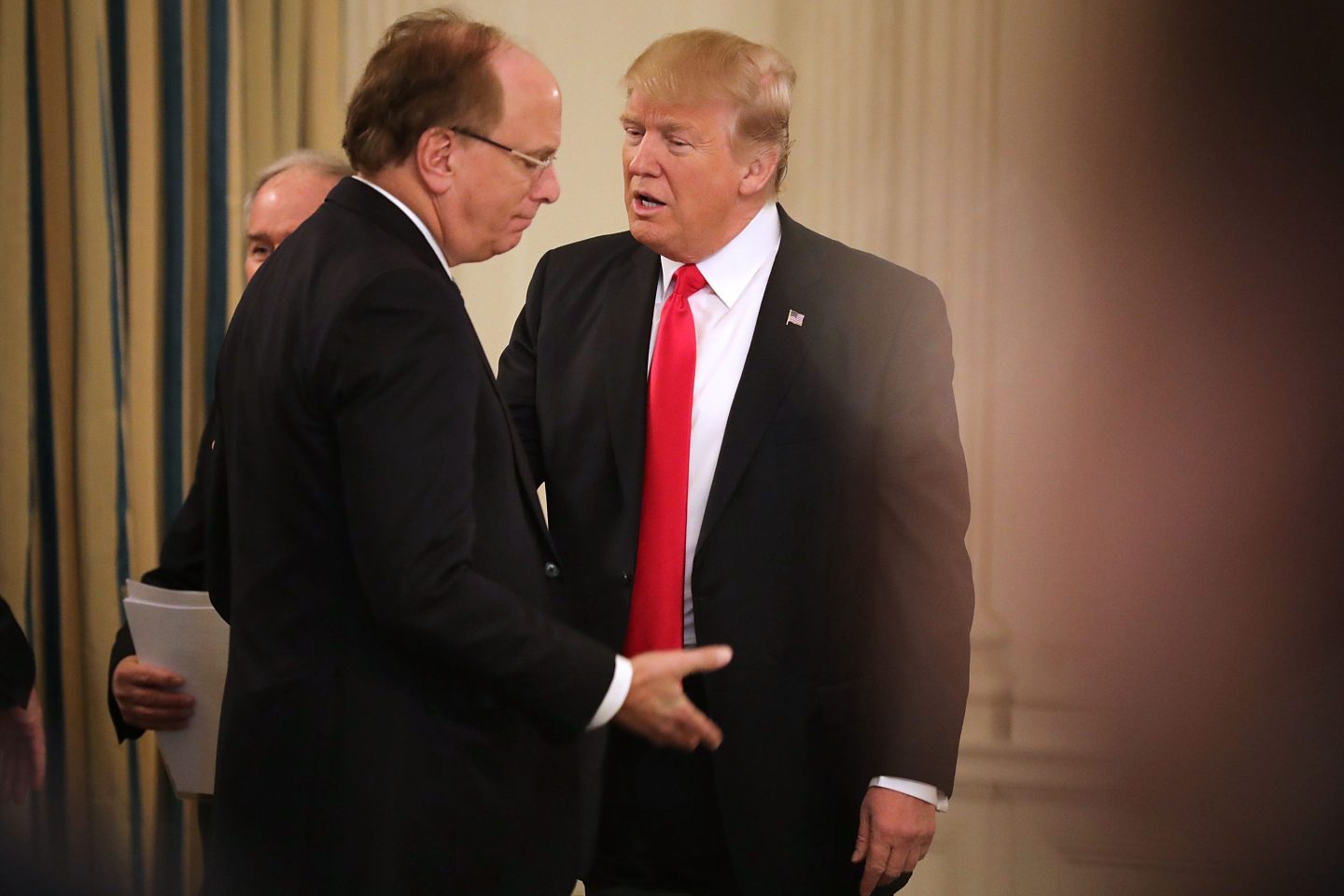
Trump embraces Australian retirement system backed by Larry Fink
Personal Finance
Trump embraces Australian retirement system backed by Larry Fink
By Brianna Sosa and BloombergJuly 12, 2026
1 day ago
How Pete Hegseth's DEI order just put Scouting America's future at stake
North America
How Pete Hegseth's DEI order just put Scouting America's future at stake
By Seth T. Kannarr, Derek H. Alderman and The ConversationJuly 13, 2026
12 hours ago
The U.S. and Iran can't agree on fully reopening the Strait of Hormuz. The solution could be straight out of the Old Testament
Middle East
The U.S. and Iran can't agree on fully reopening the Strait of Hormuz. The solution could be straight out of the Old Testament
By Jason MaJuly 11, 2026
2 days ago

© 2026 Fortune Media IP Limited. All Rights Reserved. Use of this site constitutes acceptance of our Terms of Use and Privacy Policy | CA Notice at Collection and Privacy Notice | Do Not Sell/Share My Personal Information
FORTUNE is a trademark of Fortune Media IP Limited, registered in the U.S. and other countries. FORTUNE may receive compensation for some links to products and services on this website. Offers may be subject to change without notice.