• Home
  • Latest
  • Fortune 500
  • Finance
  • Tech
  • Leadership
  • Lifestyle
  • Rankings
  • Multimedia

Trendingnow

1

As Big Tech showers employees with perks to win the talent war, Nvidia built a nearly $5 trillion company by making people pay for their own lunch

2

MacKenzie Scott alone accounted for one-third of America's $19.2 billion in megagifts last year

3

The Supreme Court's birthright citizenship ruling hands the U.S. economy a $7.7 trillion win

1

As Big Tech showers employees with perks to win the talent war, Nvidia built a nearly $5 trillion company by making people pay for their own lunch

2

MacKenzie Scott alone accounted for one-third of America's $19.2 billion in megagifts last year

3

The Supreme Court's birthright citizenship ruling hands the U.S. economy a $7.7 trillion win
EconomyDebt

‘We are guilty of spending our rainy-day fund in sunny weather’: Top economists, historians unite to urge action on $38 trillion national debt

Nick Lichtenberg
By
Nick Lichtenberg
Nick Lichtenberg
Business Editor
Down Arrow Button Icon
Nick Lichtenberg
By
Nick Lichtenberg
Nick Lichtenberg
Business Editor
Down Arrow Button Icon
November 13, 2025, 9:00 AM ET
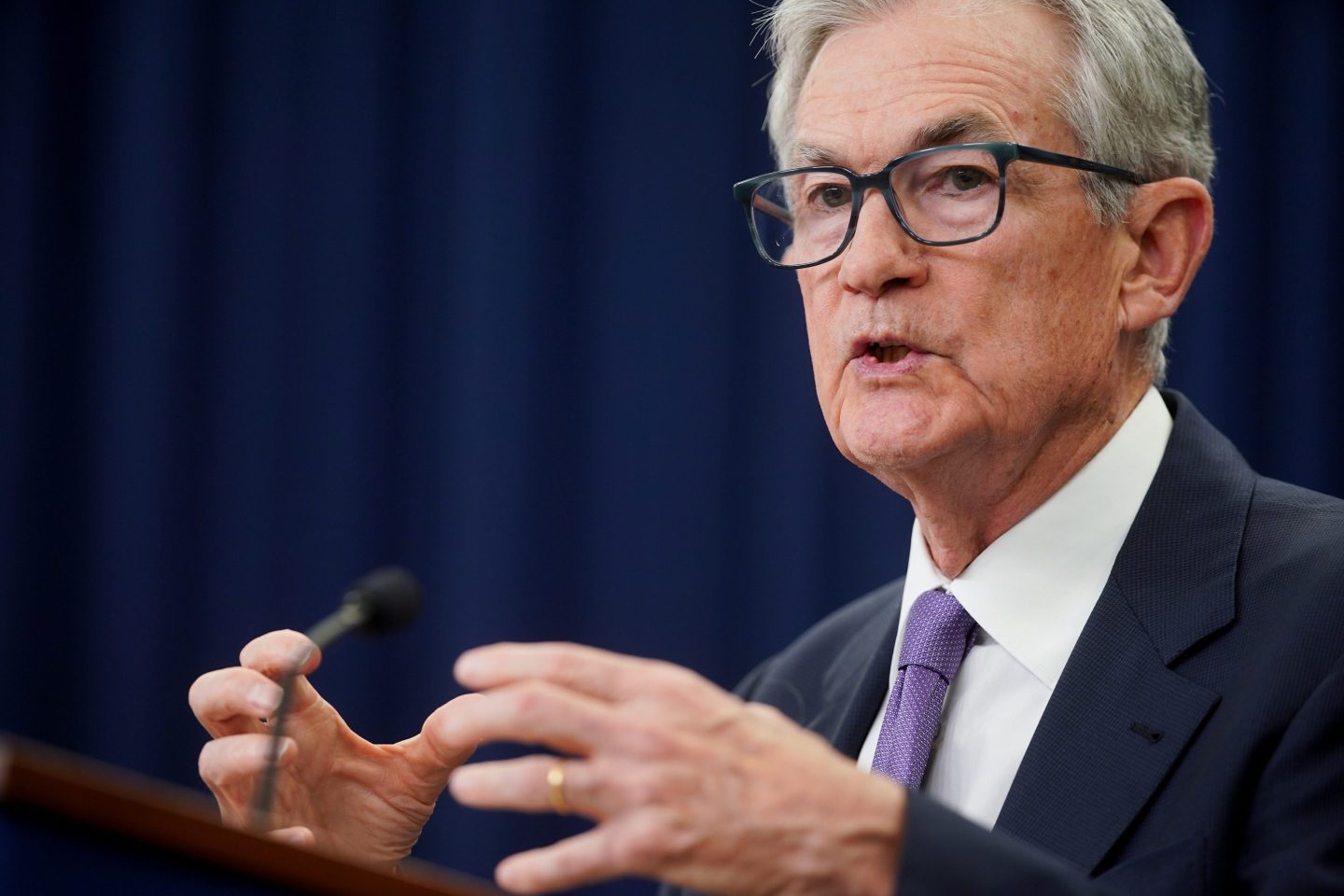
Jerome Powell
The national debt has grown to $38 trillion.Al Drago/Bloomberg via Getty Images
Add Fortune on Google for similar content.

The United States’ national debt, currently standing at $38 trillion and exceeding 120% of annual economic output, demands action, experts warn. The nonpartisan Peter G. Peterson Foundation gathered a series of distinguished national economists and historians from outside the foundation in a collection of essays published Thursday. They analyzed risks to U.S. economic strength, dollar dominance, and global leadership. The experts also explored the national debt’s impact on interest, inflation and financial markets, with some characterizing this moment in history as a crisis. Collectively, they argue that the nation is operating under a dangerous fiscal gamble.

Recommended Video

Assessing the mounting liabilities, Council on Foreign Relations President Emeritus Richard Haass and NYU professor Carolyn Kissane delivered a stark judgment: “In simpler terms, we are guilty of spending our rainy-day fund in sunny weather.” Meaning, the government has little “dry powder” left to fund a major military effort or stimulate the economy during a crisis.

The debt crisis has reached a critical threshold. The U.S. now spends approximately $1 trillion annually on servicing its debt—a figure that surpasses the country’s spending on defense. Economist Heather Long wrote that the 2020s are “fast becoming the era of big permanent deficits” with annual budget gaps projected to remain high (around 6% of GDP) even though unemployment is low, a startling departure from U.S. historical norms.

Economists warn that solutions that worked in the past—such as the post-World War II debt reduction or the 1990s surpluses—are unavailable today. Economist Barry Eichengreen explained that the debt’s steep decline after World War II was supported by a highly favorable interest-rate-growth-rate differential (low real interest rates and fast GDP growth). Likewise, the 1990s reduction was fueled by the “peace dividend,” enabling deep cuts in defense spending. “None of these facilitating conditions is present today.”

The Threat to National Security and the Dollar

Eichengreen, for his part, noted that current security threats from Russia, Iran, and the South China Sea create pressure for defense spending increases, not cuts. Compounding the problem is political polarization, which is cited as the most robust determinant working against successful fiscal consolidation. With major entitlement programs politically protected, this fiscal gridlock leaves raising additional revenue as the most viable path, given that the United States is a low tax-revenue economy compared to its peers.

The debt is framed not just as a financial strain but as a direct threat to security. Haass and Kissane emphasized that money spent on borrowing is “money not available for more productive purposes, from discretionary domestic spending to defense,” a classic crowding-out phenomenon. Other underfunded programs—including cybersecurity and public health—hollow out internal capacities that protect the homeland.

The crisis was characterized by Haass and Kissane as one that is moving in “slow motion,” which is the most difficult type for democratic governments to address effectively. Avoiding a sudden “cliff scenario” where bond markets crash, experts argue, is not avoiding the crisis itself, they added: “The day will come when the boiling water finally kills the frog.”

The institutional integrity undergirding the U.S. dollar is also at risk. Historian Harold James wrote that he sees the situation as “the middle of a very dangerous experiment with the U.S. dollar, and with the international monetary system, whose fundamental driver is a fiscal gamble.” Erosion of rule of law, accountability, and transparency raises the “specter of political risk in U.S. sovereign bond markets,” making dollar dominance harder to maintain. Disturbingly, the potential for political interference in institutions, such as the Federal Reserve or the tampering with national statistics—as seen in Argentina’s cautionary tale—further erodes confidence.

James’ colleague, Princeton politics professor Layna Mosley, cited the famous comment from the French statesman Valéry Giscard d’Estaing, who described the “exorbitant privilege” the U.S. enjoyed on the back of the dollar. She noted that by virtue of the global role of the U.S. dollar and the U.S. leadership of the global financial system, its government has been able to borrow significant amounts, on generous terms. But now, government actions and policy generate uncertainty and instability and “undermine the rules-based liberal international order from which the U.S. benefitted greatly.”

This loss of credibility empowers bond markets, and their displeasure can lead to sudden, painful economic consequences for everyday Americans through surging interest rates on mortgages and loans. Haass and Kissane turned to another metaphor, saying the situation is akin to “forgoing fire or automobile insurance just because the odds are you will not suffer from a fire at home or an accident on the road.”

[This report has been updated to include written remarks from Layna Mosley, of Princeton University.]

Subscribe to Fortune Gulf Brief. Every Tuesday, this new newsletter delivers clear-eyed, authoritative intelligence on the deals, decisions, policies, and power shifts shaping one of the world’s most consequential regions, written for the people who need to act on it. Sign up here.
About the Author
Nick Lichtenberg
By Nick LichtenbergBusiness Editor
LinkedIn icon

Nick Lichtenberg is business editor and was formerly Fortune's executive editor of global news.

See full bioRight Arrow Button Icon
Add Fortune on Google for similar content.

Latest in Economy

Finance
Lorem ipsum dolor sit amet, consectetur adipiscing elit, sed do eiusmod tempor incididunt ut labore et dolore magna aliqua. Ut enim ad minim veniam
By Fortune Editors
October 20, 2025
Finance
Lorem ipsum dolor sit amet, consectetur adipiscing elit, sed do eiusmod tempor incididunt ut labore et dolore magna aliqua. Ut enim ad minim veniam
By Fortune Editors
October 20, 2025
Finance
Lorem ipsum dolor sit amet, consectetur adipiscing elit, sed do eiusmod tempor incididunt ut labore et dolore magna aliqua. Ut enim ad minim veniam
By Fortune Editors
October 20, 2025
Finance
Lorem ipsum dolor sit amet, consectetur adipiscing elit, sed do eiusmod tempor incididunt ut labore et dolore magna aliqua. Ut enim ad minim veniam
By Fortune Editors
October 20, 2025
Finance
Lorem ipsum dolor sit amet, consectetur adipiscing elit, sed do eiusmod tempor incididunt ut labore et dolore magna aliqua. Ut enim ad minim veniam
By Fortune Editors
October 20, 2025
Finance
Lorem ipsum dolor sit amet, consectetur adipiscing elit, sed do eiusmod tempor incididunt ut labore et dolore magna aliqua. Ut enim ad minim veniam
By Fortune Editors
October 20, 2025

Most Popular

Finance
Lorem ipsum dolor sit amet, consectetur adipiscing elit, sed do eiusmod tempor incididunt ut labore et dolore magna aliqua. Ut enim ad minim veniam
By Fortune Editors
October 20, 2025
Finance
Lorem ipsum dolor sit amet, consectetur adipiscing elit, sed do eiusmod tempor incididunt ut labore et dolore magna aliqua. Ut enim ad minim veniam
By Fortune Editors
October 20, 2025
Finance
Lorem ipsum dolor sit amet, consectetur adipiscing elit, sed do eiusmod tempor incididunt ut labore et dolore magna aliqua. Ut enim ad minim veniam
By Fortune Editors
October 20, 2025
Finance
Lorem ipsum dolor sit amet, consectetur adipiscing elit, sed do eiusmod tempor incididunt ut labore et dolore magna aliqua. Ut enim ad minim veniam
By Fortune Editors
October 20, 2025
Finance
Lorem ipsum dolor sit amet, consectetur adipiscing elit, sed do eiusmod tempor incididunt ut labore et dolore magna aliqua. Ut enim ad minim veniam
By Fortune Editors
October 20, 2025
Finance
Lorem ipsum dolor sit amet, consectetur adipiscing elit, sed do eiusmod tempor incididunt ut labore et dolore magna aliqua. Ut enim ad minim veniam
By Fortune Editors
October 20, 2025
Fortune Secondary Logo
Rankings
  • 100 Best Companies
  • Fortune 500
  • Global 500
  • Fortune 500 Europe
  • Most Powerful Women
  • World's Most Admired Companies
  • See All Rankings
  • Lists Calendar
Sections
  • Finance
  • Fortune Crypto
  • Features
  • Leadership
  • Health
  • Commentary
  • Success
  • Retail
  • Mpw
  • Tech
  • Lifestyle
  • CEO Initiative
  • Asia
  • Politics
  • Conferences
  • Europe
  • Newsletters
  • Personal Finance
  • Environment
  • Magazine
  • Education
Customer Support
  • Frequently Asked Questions
  • Customer Service Portal
  • Privacy Policy
  • Terms Of Use
  • Single Issues For Purchase
  • International Print
Commercial Services
  • Advertising
  • Fortune Brand Studio
  • Fortune Analytics
  • Fortune Conferences
  • Business Development
  • Group Subscriptions
About Us
  • About Us
  • Press Center
  • Work At Fortune
  • Terms And Conditions
  • Site Map
  • About Us
  • Press Center
  • Work At Fortune
  • Terms And Conditions
  • Site Map
  • Facebook icon
  • Twitter icon
  • LinkedIn icon
  • Instagram icon
  • Pinterest icon

Latest in Economy

em
Commentary250 Years of Innovation
America’s 250th birthday has Elon Musk and a record IPO. Its 15th had Alexander Hamilton — and a stock market bubble
By Owen LamontJuly 2, 2026
22 minutes ago
paramount
CommentaryAntitrust
How Paramount’s theater commitments could boost local economies across the nation
By Ike BrannonJuly 2, 2026
22 minutes ago
Sam Altman seeks new world order for AI as OpenAI slowly loses ground to Google and Anthropic 
AIMarkets
Sam Altman seeks new world order for AI as OpenAI slowly loses ground to Google and Anthropic 
By Jim EdwardsJuly 2, 2026
2 hours ago
Mark Zandi, Moody's chief economist.
EconomyU.S. economy
‘It’s fair to ask whether it was worth it’: The Iran war has cost Americans $1,000 per household—and that’s a conservative estimate, Mark Zandi says
By Tristan BoveJuly 1, 2026
17 hours ago
mr
Commentary250 Years of Innovation
America needs 3.8 million manufacturing workers. This CEO has a blueprint to find them
By Mark RayfieldJuly 1, 2026
1 day ago
Photo: Rocks balancing on driftwood, sea in background.
AIMarkets
Leveraged stock bets are ‘very concentrated in the AI ecosystem,’ Goldman Sachs warns
By Jim EdwardsJuly 1, 2026
1 day ago

Most Popular

As Big Tech showers employees with perks to win the talent war, Nvidia built a nearly $5 trillion company by making people pay for their own lunch
Big Tech
As Big Tech showers employees with perks to win the talent war, Nvidia built a nearly $5 trillion company by making people pay for their own lunch
By Marco Quiroz-GutierrezJuly 1, 2026
1 day ago
MacKenzie Scott alone accounted for one-third of America's $19.2 billion in megagifts last year
Success
MacKenzie Scott alone accounted for one-third of America's $19.2 billion in megagifts last year
By Sydney LakeJune 25, 2026
7 days ago
The Supreme Court's birthright citizenship ruling hands the U.S. economy a $7.7 trillion win
Newsletters
The Supreme Court's birthright citizenship ruling hands the U.S. economy a $7.7 trillion win
By Diane BradyJuly 1, 2026
1 day ago
Current price of oil as of July 1, 2026
Personal Finance
Current price of oil as of July 1, 2026
By Joseph HostetlerJuly 1, 2026
22 hours ago
Philanthropy leader at Warren Buffett and Bill Gates’ Giving Pledge says children of billionaires are pushing them to give their wealth away faster
Success
Philanthropy leader at Warren Buffett and Bill Gates’ Giving Pledge says children of billionaires are pushing them to give their wealth away faster
By Preston ForeJune 27, 2026
5 days ago
Elon Musk on MacKenzie Scott giving away $26 billion of her fortune: 'Sadly,' it makes the world a worse place
Success
Elon Musk on MacKenzie Scott giving away $26 billion of her fortune: 'Sadly,' it makes the world a worse place
By Sydney LakeJune 29, 2026
3 days ago

© 2026 Fortune Media IP Limited. All Rights Reserved. Use of this site constitutes acceptance of our Terms of Use and Privacy Policy | CA Notice at Collection and Privacy Notice | Do Not Sell/Share My Personal Information
FORTUNE is a trademark of Fortune Media IP Limited, registered in the U.S. and other countries. FORTUNE may receive compensation for some links to products and services on this website. Offers may be subject to change without notice.