• Home
  • Latest
  • Fortune 500
  • Finance
  • Tech
  • Leadership
  • Lifestyle
  • Rankings
  • Multimedia

Trendingnow

1

MacKenzie Scott alone accounted for one-third of America's $19.2 billion in megagifts last year

2

Philanthropy leader at Warren Buffett and Bill Gates’ Giving Pledge says children of billionaires are pushing them to give their wealth away faster

3

Elon Musk on MacKenzie Scott giving away $26 billion of her fortune: 'Sadly,' it makes the world a worse place

1

MacKenzie Scott alone accounted for one-third of America's $19.2 billion in megagifts last year

2

Philanthropy leader at Warren Buffett and Bill Gates’ Giving Pledge says children of billionaires are pushing them to give their wealth away faster

3

Elon Musk on MacKenzie Scott giving away $26 billion of her fortune: 'Sadly,' it makes the world a worse place
CommentaryFederal Reserve

Fed officials like the mystique of being seen as financial technocrats, but it’s time to demystify the central bank

By
Alexander William Salter
Down Arrow Button Icon
By
Alexander William Salter
Down Arrow Button Icon
December 4, 2025, 9:00 AM ET
Jerome Powell
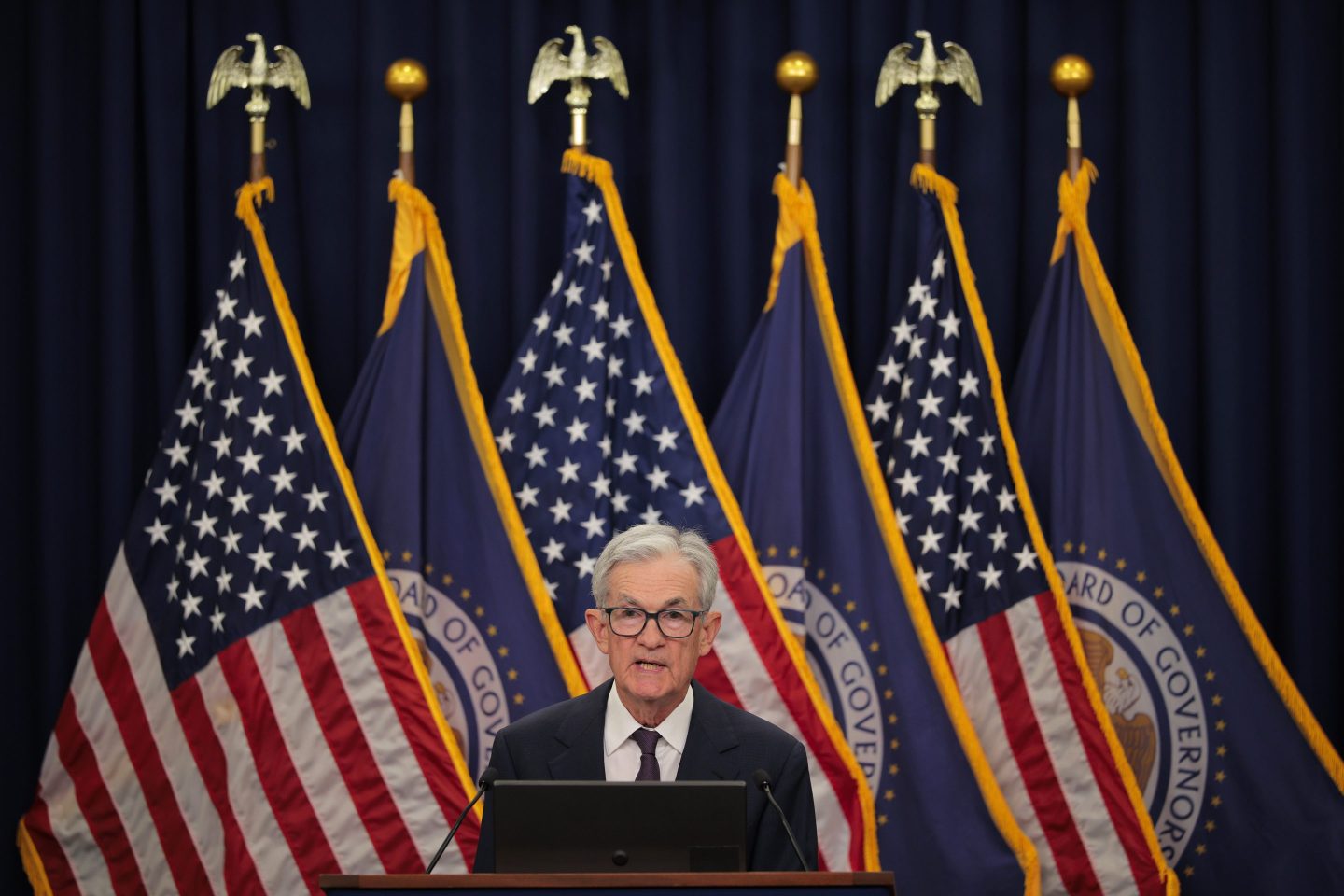
Federal Reserve Chair Jerome Powell speaks during a news conference following a two-day meeting of the Federal Open Market Committee at the Federal Reserve on September 17, 2025 in Washington, DC. In the face of a softening labor market, Powell announced a quarter-point cut to the federal funds rate, bringing rates down to a new range of 4 percent to 4.25 percent.Chip Somodevilla/Getty Images
Add Fortune on Google for similar content.

To cut or not to cut? Fed Chairman Jerome Powell has cautioned markets that lower interest rates might not come in December. But some members of the Fed’s Board of Governors, such as Stephen Miran, an appointee and ally of President Donald Trump, want lower rates. It’s unclear what path the Fed will take.

Recommended Video

Markets want predictable interest rates. However, that isn’t the Fed’s job. Officially, the Fed has a three-part mandate: full employment, price stability, and moderate interest rates. An unspoken agreement between politicians and central bankers has made this a de facto dual mandate focusing on labor markets and price levels. Managing the money supply addresses both concerns.

We need to change how we think about monetary policy, however, or else we’re setting ourselves up to get repeatedly fooled. Adjusting interest rate targets is a means to an end. The interest rate is not the price of money, but rather the price of time. When you borrow, you’re renting capital.  Interest rates reflect the value we place on having capital right now, as opposed to later.

We need interest rates to adjust in response to supply and demand in investment markets. When economic fundamentals change—for example, when the labor market contracts—interest rates should fall. Stability can be a bad thing if it prevents flexibility.

The Fed doesn’t set interest rates. As powerful as America’s central bank is, it’s still just one player in a globe-spanning ocean of financial markets. Instead, the Fed sets targets for short-term interest rates. Those target rates indicate the Fed’s general monetary policy stance, but they are not the substance of monetary policy. The Fed no more “determines” interest rates than a meteorologist determines the weather.

Markets usually interpret falling interest rates as a sign of looser monetary policy. But as economists have long recognized, they could just as easily be an indicator of tighter monetary policy. When the Fed doesn’t meet markets’ liquidity needs, the economy slows down. Demand for capital falls. The price of capital–interest rates–fall, too.

Don’t make the mistake of inferring easy money from low rates. That error cost us dearly in the aftermath of the 2007-08 financial crisis, the Great Recession: rates fell nearly to zero not because money was abundant, but because it was scarce.

When the Fed announces an interest rate target, it’s estimating a short-term capital price that it thinks is compatible with maximum employment and a stable dollar. Whether that projection is correct depends on whether the Fed’s complex economic models accurately capture reality. Sometimes they do. But when background conditions change, they often don’t. So, pre-committing to a specific capital price is a fool’s errand. The Fed doesn’t control investment supply and demand. It controls the money supply.

Unfortunately, the Fed occasionally forgets this. That’s why we got 40-year high inflation following the covid pandemic. The Fed tried to stabilize markets by creating trillions of dollars of new money to purchase securities. In one sense, it worked: financial markets didn’t collapse. But it came with a cost. All that new money at a time when production had contracted, and supply chains had stalled, rapidly drove up prices. The Fed neglected the basic cause of inflation: too much money chasing too few goods. As a result, households saw the cost of living rise faster than their wages for several years.

Fed officials like the mystique of being seen as financial technocrats. Pull a lever here, turn a dial there, adjust market conditions just so, and interest rates will go to where the economy needs them.

But this is silly. The Fed doesn’t have anywhere near this ability to direct markets. Instead, it bumbles along, groping its way through the thick darkness of financial market turmoil—just like the rest of us. We should give it far less deference than we do.

Frankly, there’s no reason to leave Fed policy to the discretion of its top bureaucrats. The economy would work better if there were a strict rule for monetary policy, focusing the Fed on price stability. Congress could enact such a rule by passing legislation to alter the Fed’s mandate. Given how badly the Fed often errs—2007-08 and 2020-21 were both generational blunders—it’s astounding that legislators haven’t acted.

Arguing about what interest rates “should be” when nobody can know that in advance is useless. It cloaks the Fed in a veil of prestige that prevents the public from holding it accountable.

Focus on the money supply, and downstream from that, inflation. Dollar depreciation still hasn’t slowed to pre-pandemic rates. Only by stripping away the illusion of Fed control can we deliver lasting economic prosperity.

The opinions expressed in Fortune.com commentary pieces are solely the views of their authors and do not necessarily reflect the opinions and beliefs of Fortune.

About the Author
By Alexander William Salter
See full bioRight Arrow Button Icon
Add Fortune on Google for similar content.

Latest in Commentary

Finance
Lorem ipsum dolor sit amet, consectetur adipiscing elit, sed do eiusmod tempor incididunt ut labore et dolore magna aliqua. Ut enim ad minim veniam
By Fortune Editors
October 20, 2025
Finance
Lorem ipsum dolor sit amet, consectetur adipiscing elit, sed do eiusmod tempor incididunt ut labore et dolore magna aliqua. Ut enim ad minim veniam
By Fortune Editors
October 20, 2025
Finance
Lorem ipsum dolor sit amet, consectetur adipiscing elit, sed do eiusmod tempor incididunt ut labore et dolore magna aliqua. Ut enim ad minim veniam
By Fortune Editors
October 20, 2025
Finance
Lorem ipsum dolor sit amet, consectetur adipiscing elit, sed do eiusmod tempor incididunt ut labore et dolore magna aliqua. Ut enim ad minim veniam
By Fortune Editors
October 20, 2025
Finance
Lorem ipsum dolor sit amet, consectetur adipiscing elit, sed do eiusmod tempor incididunt ut labore et dolore magna aliqua. Ut enim ad minim veniam
By Fortune Editors
October 20, 2025
Finance
Lorem ipsum dolor sit amet, consectetur adipiscing elit, sed do eiusmod tempor incididunt ut labore et dolore magna aliqua. Ut enim ad minim veniam
By Fortune Editors
October 20, 2025

Most Popular

Finance
Lorem ipsum dolor sit amet, consectetur adipiscing elit, sed do eiusmod tempor incididunt ut labore et dolore magna aliqua. Ut enim ad minim veniam
By Fortune Editors
October 20, 2025
Finance
Lorem ipsum dolor sit amet, consectetur adipiscing elit, sed do eiusmod tempor incididunt ut labore et dolore magna aliqua. Ut enim ad minim veniam
By Fortune Editors
October 20, 2025
Finance
Lorem ipsum dolor sit amet, consectetur adipiscing elit, sed do eiusmod tempor incididunt ut labore et dolore magna aliqua. Ut enim ad minim veniam
By Fortune Editors
October 20, 2025
Finance
Lorem ipsum dolor sit amet, consectetur adipiscing elit, sed do eiusmod tempor incididunt ut labore et dolore magna aliqua. Ut enim ad minim veniam
By Fortune Editors
October 20, 2025
Finance
Lorem ipsum dolor sit amet, consectetur adipiscing elit, sed do eiusmod tempor incididunt ut labore et dolore magna aliqua. Ut enim ad minim veniam
By Fortune Editors
October 20, 2025
Finance
Lorem ipsum dolor sit amet, consectetur adipiscing elit, sed do eiusmod tempor incididunt ut labore et dolore magna aliqua. Ut enim ad minim veniam
By Fortune Editors
October 20, 2025
Fortune Secondary Logo
Rankings
  • 100 Best Companies
  • Fortune 500
  • Global 500
  • Fortune 500 Europe
  • Most Powerful Women
  • World's Most Admired Companies
  • See All Rankings
  • Lists Calendar
Sections
  • Finance
  • Fortune Crypto
  • Features
  • Leadership
  • Health
  • Commentary
  • Success
  • Retail
  • Mpw
  • Tech
  • Lifestyle
  • CEO Initiative
  • Asia
  • Politics
  • Conferences
  • Europe
  • Newsletters
  • Personal Finance
  • Environment
  • Magazine
  • Education
Customer Support
  • Frequently Asked Questions
  • Customer Service Portal
  • Privacy Policy
  • Terms Of Use
  • Single Issues For Purchase
  • International Print
Commercial Services
  • Advertising
  • Fortune Brand Studio
  • Fortune Analytics
  • Fortune Conferences
  • Business Development
  • Group Subscriptions
About Us
  • About Us
  • Press Center
  • Work At Fortune
  • Terms And Conditions
  • Site Map
  • About Us
  • Press Center
  • Work At Fortune
  • Terms And Conditions
  • Site Map
  • Facebook icon
  • Twitter icon
  • LinkedIn icon
  • Instagram icon
  • Pinterest icon
Alexander William Salter, a senior fellow with the Independent Institute, Oakland, Calif., is an economics professor in the Rawls College of Business at Texas Tech University and a research fellow at TTU’s Free Market Institute. He also contributes to the American Institute for Economic Research’s Sound Money Project.

Latest in Commentary

senate
CommentaryCongress
One rare bipartisan AI bill is moving through Congress. Here’s why it deserves to pass
By Neil Björkman and Betsy BrewerJuly 1, 2026
4 minutes ago
I know how Gen Z can survive the ‘jobpocalypse’ because I built an AI company — in 2015
CommentaryCareers
I know how Gen Z can survive the ‘jobpocalypse’ because I built an AI company — in 2015
By Jeremy FainJuly 1, 2026
34 minutes ago
mr
Commentary250 Years of Innovation
America needs 3.8 million manufacturing workers. This CEO has a blueprint to find them
By Mark RayfieldJuly 1, 2026
34 minutes ago
usa
Commentary250 Years of Innovation
America at 250: why the Constitution was built to restrain government, not celebrate majority rule
By Steve H. HankeJuly 1, 2026
34 minutes ago
t
CommentaryMedia
Netflix could turn NBC into its biggest bet yet — and this time, the math actually works
By Jeffrey Sonnenfeld and Steven TianJune 30, 2026
19 hours ago
wb
CommentaryLeadership
I grew BDO from $600 million to $3.4 billion. Here’s the 3-part formula that made it possible
By Wayne BersonJune 30, 2026
23 hours ago

Most Popular

MacKenzie Scott alone accounted for one-third of America's $19.2 billion in megagifts last year
Success
MacKenzie Scott alone accounted for one-third of America's $19.2 billion in megagifts last year
By Sydney LakeJune 25, 2026
6 days ago
Philanthropy leader at Warren Buffett and Bill Gates’ Giving Pledge says children of billionaires are pushing them to give their wealth away faster
Success
Philanthropy leader at Warren Buffett and Bill Gates’ Giving Pledge says children of billionaires are pushing them to give their wealth away faster
By Preston ForeJune 27, 2026
4 days ago
Elon Musk on MacKenzie Scott giving away $26 billion of her fortune: 'Sadly,' it makes the world a worse place
Success
Elon Musk on MacKenzie Scott giving away $26 billion of her fortune: 'Sadly,' it makes the world a worse place
By Sydney LakeJune 29, 2026
2 days ago
'Humanity has chosen to become idiots': This Brown professor switched to take-home exams after a mass shooting and discovered mass cheating
AI
'Humanity has chosen to become idiots': This Brown professor switched to take-home exams after a mass shooting and discovered mass cheating
By Catherina GioinoJune 29, 2026
2 days ago
The U.S. Army is opening military bases to private billions — here's why that changes everything for the next 250 years
Commentary
The U.S. Army is opening military bases to private billions — here's why that changes everything for the next 250 years
By Marc AndersenJune 30, 2026
24 hours ago
The retired college professor fighting a $313 trespassing ticket in Wisconsin thinks he's part of a national struggle
Environment
The retired college professor fighting a $313 trespassing ticket in Wisconsin thinks he's part of a national struggle
By Catherina GioinoJune 28, 2026
3 days ago

© 2026 Fortune Media IP Limited. All Rights Reserved. Use of this site constitutes acceptance of our Terms of Use and Privacy Policy | CA Notice at Collection and Privacy Notice | Do Not Sell/Share My Personal Information
FORTUNE is a trademark of Fortune Media IP Limited, registered in the U.S. and other countries. FORTUNE may receive compensation for some links to products and services on this website. Offers may be subject to change without notice.