• Home
  • Latest
  • Fortune 500
  • Finance
  • Tech
  • Leadership
  • Lifestyle
  • Rankings
  • Multimedia

Trendingnow

1

The Bezos family just donated $100 million to help achieve one of Mayor Zohran Mamdani’s top campaign promises

2

Despite having a $165 million net worth, Scarlett Johansson says work-life balance doesn’t exist—and the first step to success is admitting that

3

Nearly 50,000 Lake Tahoe residents have to find a new power source after their energy source looks to redirect lines to data centers

1

The Bezos family just donated $100 million to help achieve one of Mayor Zohran Mamdani’s top campaign promises

2

Despite having a $165 million net worth, Scarlett Johansson says work-life balance doesn’t exist—and the first step to success is admitting that

3

Nearly 50,000 Lake Tahoe residents have to find a new power source after their energy source looks to redirect lines to data centers
CommentaryChina

China is winning the biotech race. Patent reform is how we catch up

By
Gary Locke
Gary Locke
Down Arrow Button Icon
By
Gary Locke
Gary Locke
Down Arrow Button Icon
December 12, 2025, 9:15 AM ET
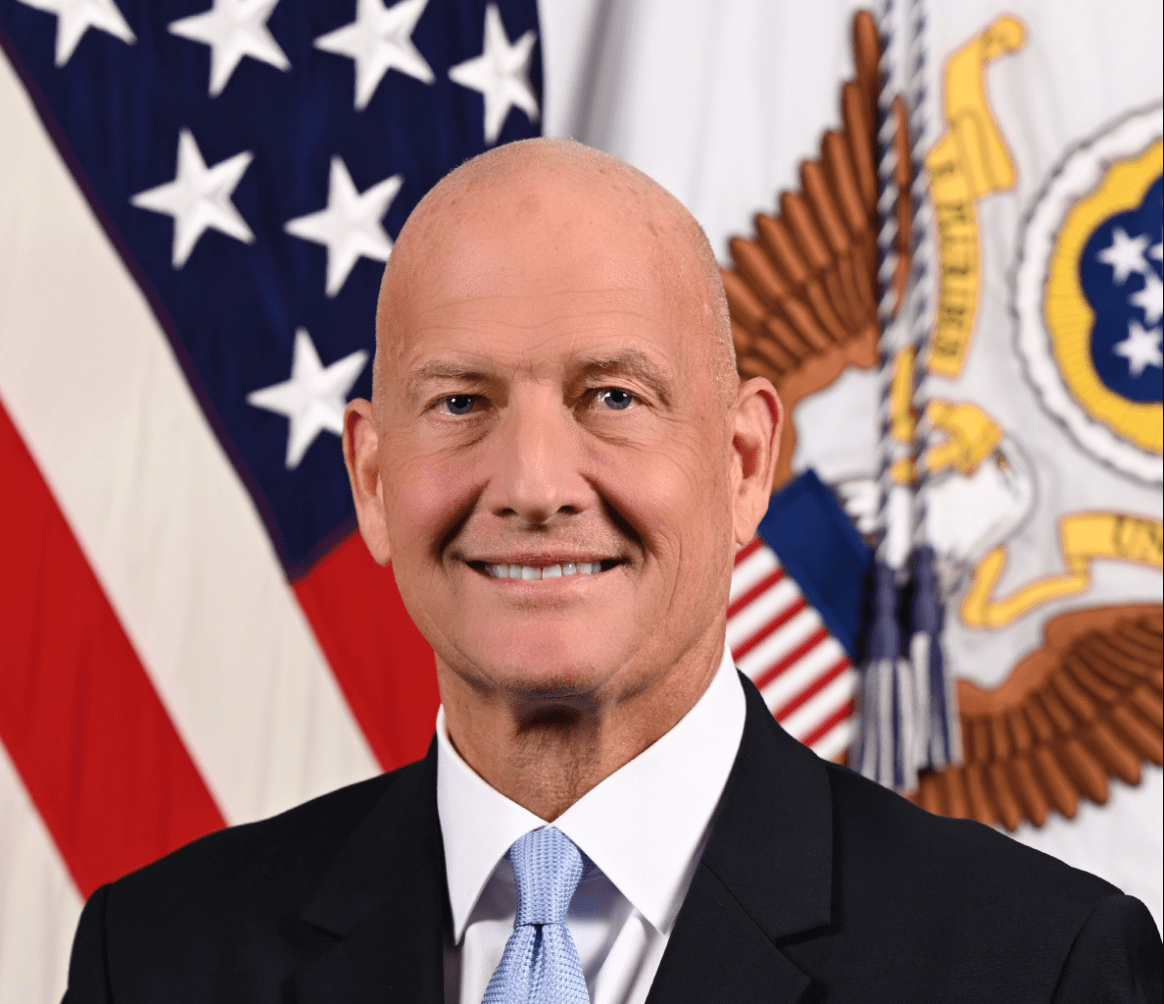
Gary Locke is the former U.S. ambassador to China, U.S. secretary of commerce, and governor of Washington.
Gary Locke is the former U.S. ambassador to China, U.S. secretary of commerce, and governor of Washington.courtesy of Gary Locke

The United States is at risk of losing one of the most important technology races of the 21st century: biotechnology. A 2025 report from a bipartisan, congressionally chartered commission warns that China is closing in on a win, and the United States has only a narrow window to respond.

The report, released by the National Security Commission on Emerging Biotechnology, offers dozens of recommendations, ranging from increasing federal investment and expanding domestic manufacturing to reducing reliance on Chinese suppliers and improving interagency coordination. But one issue receives too little attention. If the United States wants to compete, it must restore trust in the intellectual property rights that enable inventors to turn bold ideas into revolutionary products.

Patents make high-risk innovation financially viable. They allow startups to protect their discoveries, attract capital, and grow. Without reliable patent rights, promising research gets shelved — or picked up and advanced abroad.

This isn’t theoretical. The United States led past waves of innovation — like the explosion of biotech startups after the Bayh-Dole Act of 1980 and the 19th-century surge of invention that brought us the telephone and automobile — precisely because it backed inventors with clear, enforceable IP rights.

In biotech, the stakes are higher. The field is transforming how we treat disease, grow food, and manufacture everything from chemicals to advanced materials. And with artificial intelligence accelerating discovery, the pace is exponential. As the Commission notes, tools like AlphaFold from Google DeepMind can now model hundreds of millions of protein structures in days, a task that once took years.

China saw this future coming. For more than two decades, it has treated biotechnology as a national strategic priority, pouring money into research, building vast biomanufacturing capacity, and acquiring foreign IP through both legal and illicit means.

Today, Chinese firms produce many of the ingredients U.S. drugmakers rely on. According to the Commission, nearly 80% of American drugmakers depend on Chinese contractors for part of their supply chain.

In a crisis, that kind of reliance could leave Americans without access to critical medicine. The Commission outlines a scenario in which Chinese researchers develop a breakthrough cancer therapy and withhold it during a crisis over Taiwan.

Supply chains collapse. Doctors ration care. The White House faces an impossible choice: hold the line on foreign policy or secure access to lifesaving medicine.

The situation is fictional, but the threat is real.

It doesn’t stop there. The report warns that if China stays on its current path, it could soon control the biological data, manufacturing platforms, and AI tools driving the next generation of industrial and defense technologies.

When innovation stays on U.S. soil, so do the jobs, data, and supply chains that protect our citizens. If the technologies that define the future are instead developed under adversarial regimes, the United States risks dependence on foreign powers not only for products but for strategic capabilities. Falling behind wouldn’t just cost the United States market share. It would endanger national security and global influence.

The Commission is right to emphasize the need for a stronger domestic biotech sector. But efforts to achieve that goal will fall short unless we fix the foundation that enables innovation in the first place.

That foundation, our IP system, is under serious strain. Over the past decade, court decisions have blurred the boundaries of what qualifies for patent protection — what is “patent eligible” — especially in medical diagnostics, synthetic biology, and AI-enabled research.

And even when patents are granted, protecting them has become harder. A little-known administrative body called the Patent Trial and Appeal Board (PTAB) lets big corporations repeatedly try to invalidate competitors’ patents, forcing startups into expensive and drawn-out legal battles.

At the same time, a 2006 Supreme Court decision made it harder for courts to issue legal orders called injunctions — which stop infringers from continuing to use others’ inventions — even in cases of clear wrongdoing.

These trends have a chilling effect. Investors hesitate to fund science unless they can count on the underlying IP rights. In biotech, where it can cost billions of dollars and more than a decade to develop a single product, that hesitation can kill entire pipelines of innovation.

The good news is that Congress has tools to change course. Three bipartisan proposals in the House and Senate would help. One bill would restore clarity to patent eligibility standards. Another would reform PTAB procedures to curb duplicative challenges to patents. A third would make it easier for courts to block infringers by issuing injunctions.

Together, these reforms would reduce uncertainty, restore balance, and make the United States a more attractive place to innovate and invest.

We still have significant advantages: world-class research institutions, deep capital markets, and a free market that rewards bold ideas. But as the Commission warns, our lead is slipping — and time is short. To stay ahead in the race for biotech dominance, we need to fix the IP system that makes American innovation possible.

Recommended Video

The opinions expressed in Fortune.com commentary pieces are solely the views of their authors and do not necessarily reflect the opinions and beliefs of Fortune.

Join us at the Fortune Workplace Innovation Summit May 19–20, 2026, in Atlanta. The next era of workplace innovation is here—and the old playbook is being rewritten. At this exclusive, high-energy event, the world’s most innovative leaders will convene to explore how AI, humanity, and strategy converge to redefine, again, the future of work. Register now.
About the Author
By Gary Locke
See full bioRight Arrow Button Icon

Latest in Commentary

Finance
Lorem ipsum dolor sit amet, consectetur adipiscing elit, sed do eiusmod tempor incididunt ut labore et dolore magna aliqua. Ut enim ad minim veniam
By Fortune Editors
October 20, 2025
Finance
Lorem ipsum dolor sit amet, consectetur adipiscing elit, sed do eiusmod tempor incididunt ut labore et dolore magna aliqua. Ut enim ad minim veniam
By Fortune Editors
October 20, 2025
Finance
Lorem ipsum dolor sit amet, consectetur adipiscing elit, sed do eiusmod tempor incididunt ut labore et dolore magna aliqua. Ut enim ad minim veniam
By Fortune Editors
October 20, 2025
Finance
Lorem ipsum dolor sit amet, consectetur adipiscing elit, sed do eiusmod tempor incididunt ut labore et dolore magna aliqua. Ut enim ad minim veniam
By Fortune Editors
October 20, 2025
Finance
Lorem ipsum dolor sit amet, consectetur adipiscing elit, sed do eiusmod tempor incididunt ut labore et dolore magna aliqua. Ut enim ad minim veniam
By Fortune Editors
October 20, 2025
Finance
Lorem ipsum dolor sit amet, consectetur adipiscing elit, sed do eiusmod tempor incididunt ut labore et dolore magna aliqua. Ut enim ad minim veniam
By Fortune Editors
October 20, 2025

Most Popular

Finance
Lorem ipsum dolor sit amet, consectetur adipiscing elit, sed do eiusmod tempor incididunt ut labore et dolore magna aliqua. Ut enim ad minim veniam
By Fortune Editors
October 20, 2025
Finance
Lorem ipsum dolor sit amet, consectetur adipiscing elit, sed do eiusmod tempor incididunt ut labore et dolore magna aliqua. Ut enim ad minim veniam
By Fortune Editors
October 20, 2025
Finance
Lorem ipsum dolor sit amet, consectetur adipiscing elit, sed do eiusmod tempor incididunt ut labore et dolore magna aliqua. Ut enim ad minim veniam
By Fortune Editors
October 20, 2025
Finance
Lorem ipsum dolor sit amet, consectetur adipiscing elit, sed do eiusmod tempor incididunt ut labore et dolore magna aliqua. Ut enim ad minim veniam
By Fortune Editors
October 20, 2025
Finance
Lorem ipsum dolor sit amet, consectetur adipiscing elit, sed do eiusmod tempor incididunt ut labore et dolore magna aliqua. Ut enim ad minim veniam
By Fortune Editors
October 20, 2025
Finance
Lorem ipsum dolor sit amet, consectetur adipiscing elit, sed do eiusmod tempor incididunt ut labore et dolore magna aliqua. Ut enim ad minim veniam
By Fortune Editors
October 20, 2025
Fortune Secondary Logo
Rankings
  • 100 Best Companies
  • Fortune 500
  • Global 500
  • Fortune 500 Europe
  • Most Powerful Women
  • World's Most Admired Companies
  • See All Rankings
  • Lists Calendar
Sections
  • Finance
  • Fortune Crypto
  • Features
  • Leadership
  • Health
  • Commentary
  • Success
  • Retail
  • Mpw
  • Tech
  • Lifestyle
  • CEO Initiative
  • Asia
  • Politics
  • Conferences
  • Europe
  • Newsletters
  • Personal Finance
  • Environment
  • Magazine
  • Education
Customer Support
  • Frequently Asked Questions
  • Customer Service Portal
  • Privacy Policy
  • Terms Of Use
  • Single Issues For Purchase
  • International Print
Commercial Services
  • Advertising
  • Fortune Brand Studio
  • Fortune Analytics
  • Fortune Conferences
  • Business Development
  • Group Subscriptions
About Us
  • About Us
  • Press Center
  • Work At Fortune
  • Terms And Conditions
  • Site Map
  • About Us
  • Press Center
  • Work At Fortune
  • Terms And Conditions
  • Site Map
  • Facebook icon
  • Twitter icon
  • LinkedIn icon
  • Instagram icon
  • Pinterest icon

Latest in Commentary

chase
CommentaryCities
San Francisco has $2 trillion in AI wealth and can’t fix its own city. That’s every city’s problem
By Chase GarbarinoMay 15, 2026
15 hours ago
lori
Commentarymental health
I run Valvoline Instant Oil Change and work with young people every day. They’re in crisis—and we all have to try to help
By Lori FleesMay 15, 2026
16 hours ago
michael
CommentaryEducation
AI is wiping out entry-level jobs. Here’s how colleges can fill the gap
By Michael HansenMay 15, 2026
16 hours ago
krishna
Commentaryregulation
The U.S. has 1,200 AI bills and no good test for any of them
By Jeffrey Sonnenfeld, Gary Marcus and Stephen HenriquesMay 15, 2026
18 hours ago
gene
Commentarybatteries
I helped design the original Tesla battery. Here’s how America can lead the world again
By Gene BerdichevskyMay 14, 2026
2 days ago
newman
Commentaryphilanthropy
Newman’s Own Foundation CEO on steward ownership: succession when you don’t want to sell
By Alex AmouyelMay 14, 2026
2 days ago

Most Popular

The Bezos family just donated $100 million to help achieve one of Mayor Zohran Mamdani’s top campaign promises
Politics
The Bezos family just donated $100 million to help achieve one of Mayor Zohran Mamdani’s top campaign promises
By Jake AngeloMay 12, 2026
3 days ago
Despite having a $165 million net worth, Scarlett Johansson says work-life balance doesn’t exist—and the first step to success is admitting that
Success
Despite having a $165 million net worth, Scarlett Johansson says work-life balance doesn’t exist—and the first step to success is admitting that
By Preston ForeMay 13, 2026
3 days ago
Nearly 50,000 Lake Tahoe residents have to find a new power source after their energy source looks to redirect lines to data centers
Travel & Leisure
Nearly 50,000 Lake Tahoe residents have to find a new power source after their energy source looks to redirect lines to data centers
By Catherina GioinoMay 12, 2026
3 days ago
The airplane fuel shortage is a myth propagated by airlines who want to cancel unprofitable flights, says private jet CEO
Energy
The airplane fuel shortage is a myth propagated by airlines who want to cancel unprofitable flights, says private jet CEO
By Jim EdwardsMay 14, 2026
2 days ago
Current price of oil as of May 14, 2026
Personal Finance
Current price of oil as of May 14, 2026
By Joseph HostetlerMay 14, 2026
2 days ago
Top economist says $39 trillion national debt leaves government worse prepared for recession than ever
Economy
Top economist says $39 trillion national debt leaves government worse prepared for recession than ever
By Eva RoytburgMay 14, 2026
2 days ago

© 2026 Fortune Media IP Limited. All Rights Reserved. Use of this site constitutes acceptance of our Terms of Use and Privacy Policy | CA Notice at Collection and Privacy Notice | Do Not Sell/Share My Personal Information
FORTUNE is a trademark of Fortune Media IP Limited, registered in the U.S. and other countries. FORTUNE may receive compensation for some links to products and services on this website. Offers may be subject to change without notice.