• Home
  • Latest
  • Fortune 500
  • Finance
  • Tech
  • Leadership
  • Lifestyle
  • Rankings
  • Multimedia

Trendingnow

1

Egg companies made $1.22 billion in profit off a $6 carton — now they’re buying their way out of a price-fixing case with 53 million donated eggs

2

Meet the Zillennials: The luckiest micro-generation in the workforce, born between 1993 and 1998

3

Economists have found an answer to slowing cognitive decline: Avoid retiring early, study finds

1

Egg companies made $1.22 billion in profit off a $6 carton — now they’re buying their way out of a price-fixing case with 53 million donated eggs

2

Meet the Zillennials: The luckiest micro-generation in the workforce, born between 1993 and 1998

3

Economists have found an answer to slowing cognitive decline: Avoid retiring early, study finds
AIstatistics

It’s starting to look like we’ll never come up with a good way to tell what was written by AI and what was written by humans

By
Ambuj Tewari
Ambuj Tewari
and
The Conversation
The Conversation
Down Arrow Button Icon
By
Ambuj Tewari
Ambuj Tewari
and
The Conversation
The Conversation
Down Arrow Button Icon
December 22, 2025, 9:05 AM ET
man
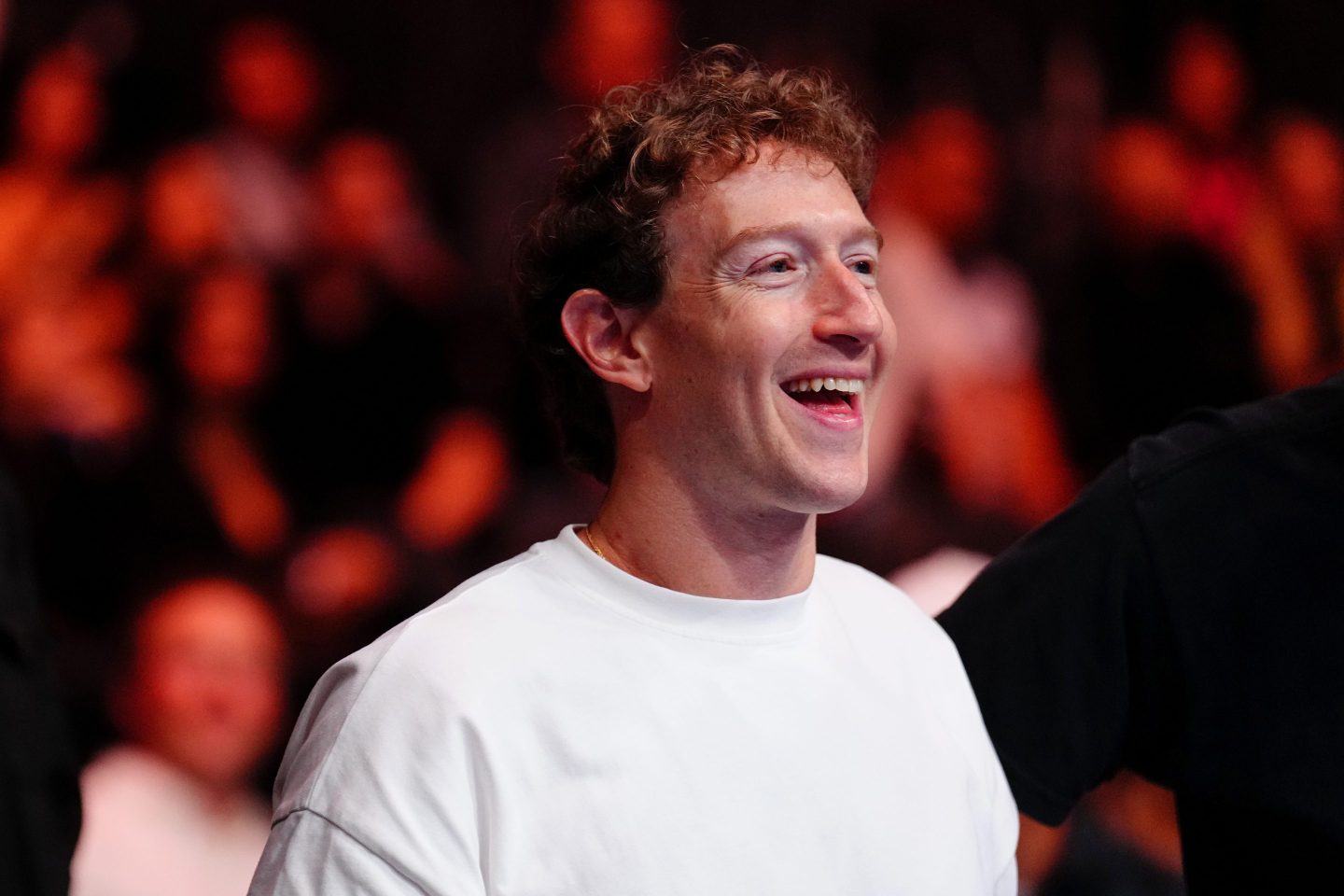
Who — or what — really wrote this?Getty Images
Add Fortune on Google for similar content.

People and institutions are grappling with the consequences of AI-written text. Teachers want to know whether students’ work reflects their own understanding; consumers want to know whether an advertisement was written by a human or a machine.

Recommended Video

Writing rules to govern the use of AI-generated content is relatively easy. Enforcing them depends on something much harder: reliably detecting whether a piece of text was generated by artificial intelligence.

Some studies have investigated whether humans can detect AI-generated text. For example, people who themselves use AI writing tools heavily have been shown to accurately detect AI-written text. A panel of human evaluators can even outperform automated tools in a controlled setting. However, such expertise is not widespread, and individual judgment can be inconsistent. Institutions that need consistency at a large scale therefore turn to automated AI text detectors.

The problem of AI text detection

The basic workflow behind AI text detection is easy to describe. Start with a piece of text whose origin you want to determine. Then apply a detection tool, often an AI system itself, that analyzes the text and produces a score, usually expressed as a probability, indicating how likely the text is to have been AI-generated. Use the score to inform downstream decisions, such as whether to impose a penalty for violating a rule.

This simple description, however, hides a great deal of complexity. It glosses over a number of background assumptions that need to be made explicit. Do you know which AI tools might have plausibly been used to generate the text? What kind of access do you have to these tools? Can you run them yourself, or inspect their inner workings? How much text do you have? Do you have a single text or a collection of writings gathered over time? What AI detection tools can and cannot tell you depends critically on the answers to questions like these.

There is one additional detail that is especially important: Did the AI system that generated the text deliberately embed markers to make later detection easier?

These indicators are known as watermarks. Watermarked text looks like ordinary text, but the markers are embedded in subtle ways that do not reveal themselves to casual inspection. Someone with the right key can later check for the presence of these markers and verify that the text came from a watermarked AI-generated source. This approach, however, relies on cooperation from AI vendors and is not always available.

How AI text detection tools work

One obvious approach is to use AI itself to detect AI-written text. The idea is straightforward. Start by collecting a large corpus, meaning collection of writing, of examples labeled as human-written or AI-generated, then train a model to distinguish between the two. In effect, AI text detection is treated as a standard classification problem, similar in spirit to spam filtering. Once trained, the detector examines new text and predicts whether it more closely resembles the AI-generated examples or the human-written ones it has seen before.

The learned-detector approach can work even if you know little about which AI tools might have generated the text. The main requirement is that the training corpus be diverse enough to include outputs from a wide range of AI systems.

But if you do have access to the AI tools you are concerned about, a different approach becomes possible. This second strategy does not rely on collecting large labeled datasets or training a separate detector. Instead, it looks for statistical signals in the text, often in relation to how specific AI models generate language, to assess whether the text is likely to be AI-generated. For example, some methods examine the probability that an AI model assigns to a piece of text. If the model assigns an unusually high probability to the exact sequence of words, this can be a signal that the text was, in fact, generated by that model.

Finally, in the case of text that is generated by an AI system that embeds a watermark, the problem shifts from detection to verification. Using a secret key provided by the AI vendor, a verification tool can assess whether the text is consistent with having been generated by a watermarked system. This approach relies on information that is not available from the text alone, rather than on inferences drawn from the text itself. https://www.youtube.com/embed/oUgfQAaRL6Y?wmode=transparent&start=0 AI engineer Tom Dekan demonstrates how easily commercial AI text detectors can be defeated.

Limitations of detection tools

Each family of tools comes with its own limitations, making it difficult to declare a clear winner. Learning-based detectors, for example, are sensitive to how closely new text resembles the data they were trained on. Their accuracy drops when the text differs substantially from the training corpus, which can quickly become outdated as new AI models are released. Continually curating fresh data and retraining detectors is costly, and detectors inevitably lag behind the systems they are meant to identify.

Statistical tests face a different set of constraints. Many rely on assumptions about how specific AI models generate text, or on access to those models’ probability distributions. When models are proprietary, frequently updated or simply unknown, these assumptions break down. As a result, methods that work well in controlled settings can become unreliable or inapplicable in the real world.

Watermarking shifts the problem from detection to verification, but it introduces its own dependencies. It relies on cooperation from AI vendors and applies only to text generated with watermarking enabled.

More broadly, AI text detection is part of an escalating arms race. Detection tools must be publicly available to be useful, but that same transparency enables evasion. As AI text generators grow more capable and evasion techniques more sophisticated, detectors are unlikely to gain a lasting upper hand.

Hard reality

The problem of AI text detection is simple to state but hard to solve reliably. Institutions with rules governing the use of AI-written text cannot rely on detection tools alone for enforcement.

As society adapts to generative AI, we are likely to refine norms around acceptable use of AI-generated text and improve detection techniques. But ultimately, we’ll have to learn to live with the fact that such tools will never be perfect.

Ambuj Tewari, Professor of Statistics, University of Michigan

This article is republished from The Conversation under a Creative Commons license. Read the original article.


The Conversation
Subscribe to Fortune Gulf Brief. Every Tuesday, this new newsletter delivers clear-eyed, authoritative intelligence on the deals, decisions, policies, and power shifts shaping one of the world’s most consequential regions, written for the people who need to act on it. Sign up here.
About the Authors
By Ambuj Tewari
See full bioRight Arrow Button Icon
By The Conversation
See full bioRight Arrow Button Icon
Add Fortune on Google for similar content.

Latest in AI

Finance
Lorem ipsum dolor sit amet, consectetur adipiscing elit, sed do eiusmod tempor incididunt ut labore et dolore magna aliqua. Ut enim ad minim veniam
By Fortune Editors
October 20, 2025
Finance
Lorem ipsum dolor sit amet, consectetur adipiscing elit, sed do eiusmod tempor incididunt ut labore et dolore magna aliqua. Ut enim ad minim veniam
By Fortune Editors
October 20, 2025
Finance
Lorem ipsum dolor sit amet, consectetur adipiscing elit, sed do eiusmod tempor incididunt ut labore et dolore magna aliqua. Ut enim ad minim veniam
By Fortune Editors
October 20, 2025
Finance
Lorem ipsum dolor sit amet, consectetur adipiscing elit, sed do eiusmod tempor incididunt ut labore et dolore magna aliqua. Ut enim ad minim veniam
By Fortune Editors
October 20, 2025
Finance
Lorem ipsum dolor sit amet, consectetur adipiscing elit, sed do eiusmod tempor incididunt ut labore et dolore magna aliqua. Ut enim ad minim veniam
By Fortune Editors
October 20, 2025
Finance
Lorem ipsum dolor sit amet, consectetur adipiscing elit, sed do eiusmod tempor incididunt ut labore et dolore magna aliqua. Ut enim ad minim veniam
By Fortune Editors
October 20, 2025

Most Popular

Finance
Lorem ipsum dolor sit amet, consectetur adipiscing elit, sed do eiusmod tempor incididunt ut labore et dolore magna aliqua. Ut enim ad minim veniam
By Fortune Editors
October 20, 2025
Finance
Lorem ipsum dolor sit amet, consectetur adipiscing elit, sed do eiusmod tempor incididunt ut labore et dolore magna aliqua. Ut enim ad minim veniam
By Fortune Editors
October 20, 2025
Finance
Lorem ipsum dolor sit amet, consectetur adipiscing elit, sed do eiusmod tempor incididunt ut labore et dolore magna aliqua. Ut enim ad minim veniam
By Fortune Editors
October 20, 2025
Finance
Lorem ipsum dolor sit amet, consectetur adipiscing elit, sed do eiusmod tempor incididunt ut labore et dolore magna aliqua. Ut enim ad minim veniam
By Fortune Editors
October 20, 2025
Finance
Lorem ipsum dolor sit amet, consectetur adipiscing elit, sed do eiusmod tempor incididunt ut labore et dolore magna aliqua. Ut enim ad minim veniam
By Fortune Editors
October 20, 2025
Finance
Lorem ipsum dolor sit amet, consectetur adipiscing elit, sed do eiusmod tempor incididunt ut labore et dolore magna aliqua. Ut enim ad minim veniam
By Fortune Editors
October 20, 2025
Fortune Secondary Logo
Rankings
  • 100 Best Companies
  • Fortune 500
  • Global 500
  • Fortune 500 Europe
  • Most Powerful Women
  • World's Most Admired Companies
  • See All Rankings
  • Lists Calendar
Sections
  • Finance
  • Fortune Crypto
  • Features
  • Leadership
  • Health
  • Commentary
  • Success
  • Retail
  • Mpw
  • Tech
  • Lifestyle
  • CEO Initiative
  • Asia
  • Politics
  • Conferences
  • Europe
  • Newsletters
  • Personal Finance
  • Environment
  • Magazine
  • Education
Customer Support
  • Frequently Asked Questions
  • Customer Service Portal
  • Privacy Policy
  • Terms Of Use
  • Single Issues For Purchase
  • International Print
Commercial Services
  • Advertising
  • Fortune Brand Studio
  • Fortune Analytics
  • Fortune Conferences
  • Business Development
  • Group Subscriptions
About Us
  • About Us
  • Press Center
  • Work At Fortune
  • Terms And Conditions
  • Site Map
  • About Us
  • Press Center
  • Work At Fortune
  • Terms And Conditions
  • Site Map
  • Facebook icon
  • Twitter icon
  • LinkedIn icon
  • Instagram icon
  • Pinterest icon

Latest in AI

‘Devin-kun’: Japan embraces agents as legacy code and a shrinking workforce create a perfect market for an AI software engineer 
AsiaAI agents
‘Devin-kun’: Japan embraces agents as legacy code and a shrinking workforce create a perfect market for an AI software engineer 
By Nicholas GordonJuly 3, 2026
4 hours ago
ds
CommentarySoftware
I argued with the father of open source for 2 years. Now the AI fight is the same — only bigger
By David SiegelJuly 3, 2026
12 hours ago
ashok
Commentary250 Years of Innovation
The greatest startup in history: What we can learn from America’s founders at today’s AI frontier
By Ashok N. SrivastavaJuly 3, 2026
12 hours ago
Microsoft’s next big bet isn’t on a model but on becoming the Swiss Army knife of enterprise AI
AIMicrosoft
Microsoft’s next big bet isn’t on a model but on becoming the Swiss Army knife of enterprise AI
By Sheryl Estrada and Sebastian HerreraJuly 3, 2026
17 hours ago
z
AIdisruption
Meet the Zillennials: The luckiest micro-generation in the workforce, born between 1993 and 1998
By Nick LichtenbergJuly 3, 2026
18 hours ago
A man in an orange vest opens door to a cargo truck.
AIData centers
Organized crime is building an AI hardware cargo theft economy: ‘The economics have become just crazy from the criminal opportunistic perspective’
By Sasha RogelbergJuly 3, 2026
18 hours ago

Most Popular

Egg companies made $1.22 billion in profit off a $6 carton — now they’re buying their way out of a price-fixing case with 53 million donated eggs
Law
Egg companies made $1.22 billion in profit off a $6 carton — now they’re buying their way out of a price-fixing case with 53 million donated eggs
By Wyatte Grantham-Philips and The Associated PressJuly 2, 2026
1 day ago
Meet the Zillennials: The luckiest micro-generation in the workforce, born between 1993 and 1998
AI
Meet the Zillennials: The luckiest micro-generation in the workforce, born between 1993 and 1998
By Nick LichtenbergJuly 3, 2026
18 hours ago
Economists have found an answer to slowing cognitive decline: Avoid retiring early, study finds
Economy
Economists have found an answer to slowing cognitive decline: Avoid retiring early, study finds
By Sasha RogelbergJuly 2, 2026
1 day ago
On Wall Street, analysts increasingly don’t believe the U.S. government’s 'misleading' job numbers
Economy
On Wall Street, analysts increasingly don’t believe the U.S. government’s 'misleading' job numbers
By Jim EdwardsJuly 3, 2026
13 hours ago
Current price of oil as of July 2, 2026
Personal Finance
Current price of oil as of July 2, 2026
By Joseph HostetlerJuly 2, 2026
1 day ago
$25 billion CEO says one-hour interviews are a waste of time—he puts candidates through six hours of tests and wants them to order wine at lunch
Success
$25 billion CEO says one-hour interviews are a waste of time—he puts candidates through six hours of tests and wants them to order wine at lunch
By Orianna Rosa RoyleJuly 3, 2026
18 hours ago

© 2026 Fortune Media IP Limited. All Rights Reserved. Use of this site constitutes acceptance of our Terms of Use and Privacy Policy | CA Notice at Collection and Privacy Notice | Do Not Sell/Share My Personal Information
FORTUNE is a trademark of Fortune Media IP Limited, registered in the U.S. and other countries. FORTUNE may receive compensation for some links to products and services on this website. Offers may be subject to change without notice.