
• Home
  • Latest
  • Fortune 500
  • Finance
  • Tech
  • Leadership
  • Lifestyle
  • Rankings
  • Multimedia

Trendingnow

1

MacKenzie Scott alone accounted for one-third of America's $19.2 billion in megagifts last year

2

Philanthropy leader at Warren Buffett and Bill Gates’ Giving Pledge says children of billionaires are pushing them to give their wealth away faster

3

Elon Musk on MacKenzie Scott giving away $26 billion of her fortune: 'Sadly,' it makes the world a worse place

1

MacKenzie Scott alone accounted for one-third of America's $19.2 billion in megagifts last year

2

Philanthropy leader at Warren Buffett and Bill Gates’ Giving Pledge says children of billionaires are pushing them to give their wealth away faster

3

Elon Musk on MacKenzie Scott giving away $26 billion of her fortune: 'Sadly,' it makes the world a worse place
CommentaryGoogle

Google Meet exec on the knowledge engine hiding in your calendar: meetings become IP

By
Awaneesh Verma
Awaneesh Verma
Down Arrow Button Icon
By
Awaneesh Verma
Awaneesh Verma
Down Arrow Button Icon
January 16, 2026, 9:05 AM ET
Awaneesh Verma is Senior Director of Product, Real Time Communication, Google.
verma
Awaneesh Verma, Senior Director of Product, Real Time Communication.courtesy of Google
Add Fortune on Google for similar content.

Meetings are the dark energy of business: common, powerful, and largely invisible. The reasoning and judgments that shape a company’s direction happen in meetings, but then disappear. Email turned situational communication into organizational working memory; AI is now doing the same for meetings, making conversations usable beyond the meeting itself. It turns meetings from moments in time to a new kind of organizational asset.

Recommended Video

Beyond the Transcript

Meetings contain information that rarely makes it into a formal system: how a leader weighs trade-offs, why a decision went one way instead of another, who deferred to whom, and how objections were resolved. Companies treat strategy documents as critical intellectual property, but the central decision-making process is just as valuable, and harder to capture. Leaders often try to approximate this in writing, but it rarely captures how decisions actually unfold.

The IP of leadership happens in the meeting room. And then it’s gone. 

There is also the simple loss we already feel: decisions made but not recorded. Commitments that fade. Debates rehashed because people forget, not just what was decided, but how. Manual meeting notes are subjective and record only a small portion of this. Even complete transcripts aren’t very useful in capturing meeting meaning; the important information is rarely synthesized, analyzed, or distributed. 

Many people today use AI to summarize meeting recordings and generate (and sometimes share) useful meeting data: who’s on the hook for what, where the disagreements were, who had convincing arguments, and what the agenda should include in the next meeting. This, however, is just the beginning of AI’s application to meetings. All this information can benefit a business on a much larger scale.

Business Value

The information in unrecorded meetings begins melting once the meeting ends.  AI extraction, though, solidifies it into foundational data. Decisions, rationales, and patterns become durable. Their knowledge value stacks like bricks, not ice cubes. For the first time, what gets said in meetings becomes knowledge that an organization can actually build on – just as email made everyday communication archival and durable. 

We can combine this data with the rest of what an organization knows: its documents, CRM, email, and contracts. This joining is where new value surfaces. When meeting intelligence flows into the same corpus as everything else, its signals become amplified.

Some organizations are doing this today. At a large payments and financial services company, leaders aggregate team and customer meeting recordings to analyze patterns across conversations, to surface emerging needs and product ideas that would be difficult or impossible to spot meeting by meeting. Instead of relying on anecdotal recollection, leadership looks across interactions to understand shifting customer signals to inform product development. 

A recurring executive decision-making meeting can become a living archive not just of what decisions are made, but also of how they are made: what kind of arguments and data factor in. It can lead to smoother and more aligned decisions across the company.  As organizations begin systematically capturing meeting intelligence, team dynamics will shift. At first, decision re-litigation decreases, because the capability preserves reasoning. Onboarding accelerates, because new hires can see how the team actually thinks, not just the written policies. 

Individuals adopt AI meeting transcribers because they make their meetings better. But the business value is much larger than better meetings; it is organizational knowledge that we can build on.

What Leaders Should Do Now

Every durable knowledge system eventually reshapes how decisions are made and how work gets done. Consider how email changed the shape of work. AI meeting intelligence will follow the same path, and leaders can accelerate the transition. 

Left to individual adoption, meeting intelligence can stay fragmented. The value, while significant, remains confined to productivity, short of business transformation. The strategic payoff doesn’t materialize. 

To unlock the business value of meeting intelligence, leaders need to treat meeting capture as infrastructure, not as a tool some employees happen to use. When capture, recap, and sharing normalize across the organization, early benefits follow: more transparent accountability, less rework, and better decision follow-through. 

The transformation starts by providing AI meeting tools, explaining their direct benefits to employees, and encouraging their use. At first, the benefits of widespread AI use for capture, recap, and sharing should lead to a growing accountability culture and other employee benefits, such as reduced rework and easier follow-through.

Treating meeting capture as infrastructure means more than using it to improve meeting productivity for individuals and teams. When meeting intelligence is captured consistently, organizations can apply AI analysis to that data to discern business cause-and-effect across decisions, debates, and trade-offs.

This kind of synthesis needs a shared, reliable base of meeting data to draw on. The companies that start capturing meeting data now will be positioned to use advanced analysis as tools mature; those that leave meeting AI tools to individuals and teams won’t have the shared context to build on.

Second, we need to decide how meeting information should be shared and used. We have navigated similar questions with email and documents: as soon as a new form of knowledge becomes durable, norms and governance follow. The same will happen here. 

Meeting data will only become an enterprise asset if people understand how it is being used and can see benefits for themselves. We must be thoughtful about what’s being captured, how it’s retained, and how we manage access. When these choices are clear, meeting intelligence is more likely to strengthen collaboration and analysis, rather than create friction. 

Finally, leaders need to be deliberate about building processes that visibly leverage this new asset. The opportunity is not just capturing conversations, it’s building new rhythms that convert into reusable guidance, behaviors, and institutional memory.

From Ephemeral to Enduring

Managing cumulative meeting intelligence is new territory. There’s no established playbook for how to synthesize it or build on it over time. The organizations that figure this out first will compound their advantage, just as the companies that quickly transitioned to email did. Those that don’t will keep losing the same knowledge they’ve always lost – just with better transcripts. 

This transition won’t happen on its own. It requires leaders who recognize that meetings have crossed from ephemeral to durable, and who are ready to build the systems and culture to capture that value.

The opinions expressed in Fortune.com commentary pieces are solely the views of their authors and do not necessarily reflect the opinions and beliefs of Fortune.

About the Author
By Awaneesh Verma
See full bioRight Arrow Button Icon
Add Fortune on Google for similar content.

Latest in Commentary

Finance
Lorem ipsum dolor sit amet, consectetur adipiscing elit, sed do eiusmod tempor incididunt ut labore et dolore magna aliqua. Ut enim ad minim veniam
By Fortune Editors
October 20, 2025
Finance
Lorem ipsum dolor sit amet, consectetur adipiscing elit, sed do eiusmod tempor incididunt ut labore et dolore magna aliqua. Ut enim ad minim veniam
By Fortune Editors
October 20, 2025
Finance
Lorem ipsum dolor sit amet, consectetur adipiscing elit, sed do eiusmod tempor incididunt ut labore et dolore magna aliqua. Ut enim ad minim veniam
By Fortune Editors
October 20, 2025
Finance
Lorem ipsum dolor sit amet, consectetur adipiscing elit, sed do eiusmod tempor incididunt ut labore et dolore magna aliqua. Ut enim ad minim veniam
By Fortune Editors
October 20, 2025
Finance
Lorem ipsum dolor sit amet, consectetur adipiscing elit, sed do eiusmod tempor incididunt ut labore et dolore magna aliqua. Ut enim ad minim veniam
By Fortune Editors
October 20, 2025
Finance
Lorem ipsum dolor sit amet, consectetur adipiscing elit, sed do eiusmod tempor incididunt ut labore et dolore magna aliqua. Ut enim ad minim veniam
By Fortune Editors
October 20, 2025

Most Popular

Finance
Lorem ipsum dolor sit amet, consectetur adipiscing elit, sed do eiusmod tempor incididunt ut labore et dolore magna aliqua. Ut enim ad minim veniam
By Fortune Editors
October 20, 2025
Finance
Lorem ipsum dolor sit amet, consectetur adipiscing elit, sed do eiusmod tempor incididunt ut labore et dolore magna aliqua. Ut enim ad minim veniam
By Fortune Editors
October 20, 2025
Finance
Lorem ipsum dolor sit amet, consectetur adipiscing elit, sed do eiusmod tempor incididunt ut labore et dolore magna aliqua. Ut enim ad minim veniam
By Fortune Editors
October 20, 2025
Finance
Lorem ipsum dolor sit amet, consectetur adipiscing elit, sed do eiusmod tempor incididunt ut labore et dolore magna aliqua. Ut enim ad minim veniam
By Fortune Editors
October 20, 2025
Finance
Lorem ipsum dolor sit amet, consectetur adipiscing elit, sed do eiusmod tempor incididunt ut labore et dolore magna aliqua. Ut enim ad minim veniam
By Fortune Editors
October 20, 2025
Finance
Lorem ipsum dolor sit amet, consectetur adipiscing elit, sed do eiusmod tempor incididunt ut labore et dolore magna aliqua. Ut enim ad minim veniam
By Fortune Editors
October 20, 2025
Fortune Secondary Logo
Rankings
  • 100 Best Companies
  • Fortune 500
  • Global 500
  • Fortune 500 Europe
  • Most Powerful Women
  • World's Most Admired Companies
  • See All Rankings
  • Lists Calendar
Sections
  • Finance
  • Fortune Crypto
  • Features
  • Leadership
  • Health
  • Commentary
  • Success
  • Retail
  • Mpw
  • Tech
  • Lifestyle
  • CEO Initiative
  • Asia
  • Politics
  • Conferences
  • Europe
  • Newsletters
  • Personal Finance
  • Environment
  • Magazine
  • Education
Customer Support
  • Frequently Asked Questions
  • Customer Service Portal
  • Privacy Policy
  • Terms Of Use
  • Single Issues For Purchase
  • International Print
Commercial Services
  • Advertising
  • Fortune Brand Studio
  • Fortune Analytics
  • Fortune Conferences
  • Business Development
  • Group Subscriptions
About Us
  • About Us
  • Press Center
  • Work At Fortune
  • Terms And Conditions
  • Site Map
  • About Us
  • Press Center
  • Work At Fortune
  • Terms And Conditions
  • Site Map
  • Facebook icon
  • Twitter icon
  • LinkedIn icon
  • Instagram icon
  • Pinterest icon

Latest in Commentary

senate
CommentaryCongress
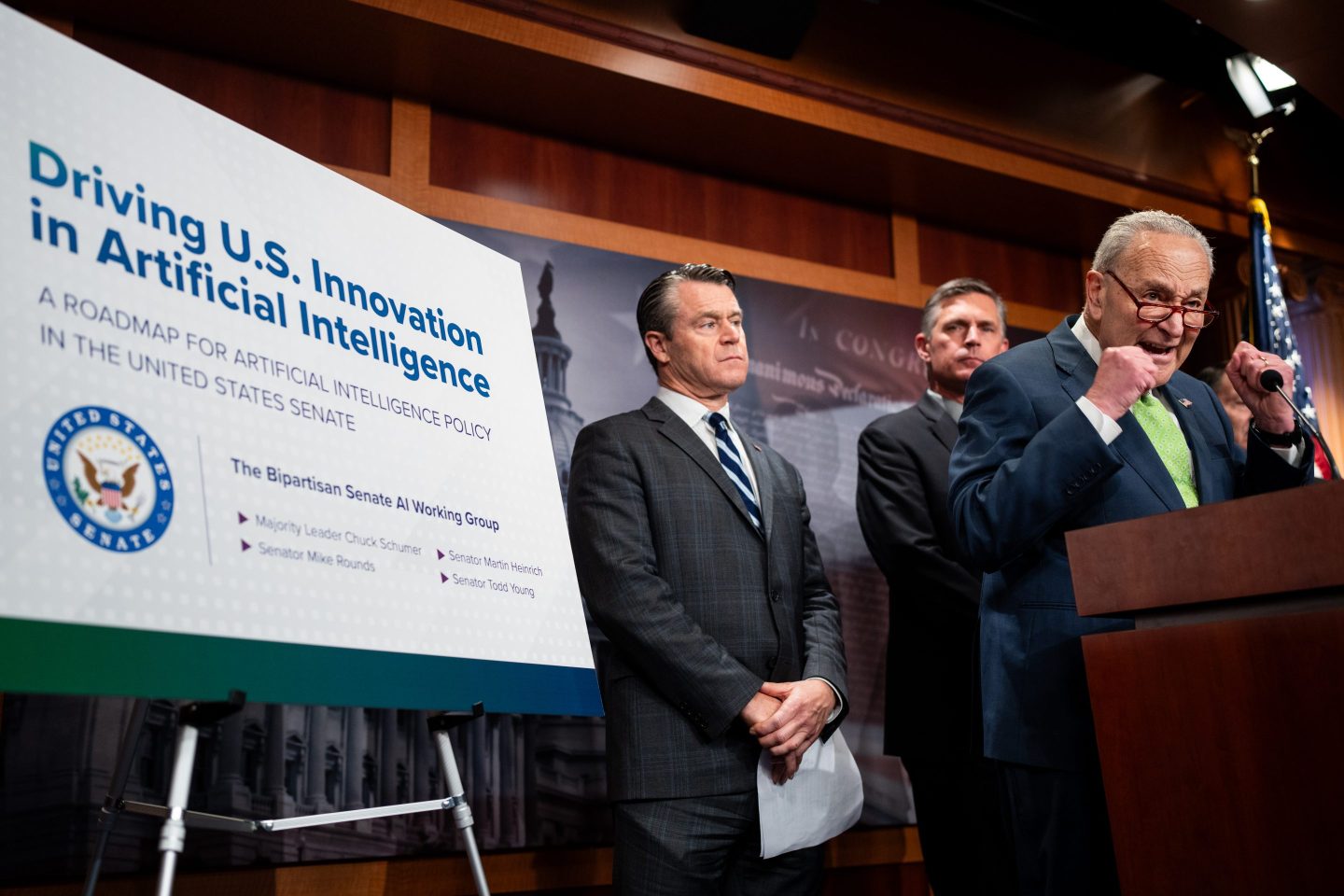
One rare bipartisan AI bill is moving through Congress. Here’s why it deserves to pass
By Neil Björkman and Betsy BrewerJuly 1, 2026
7 hours ago
I know how Gen Z can survive the ‘jobpocalypse’ because I built an AI company — in 2015
CommentaryCareers
I know how Gen Z can survive the ‘jobpocalypse’ because I built an AI company — in 2015
By Jeremy FainJuly 1, 2026
8 hours ago
mr
Commentary250 Years of Innovation
America needs 3.8 million manufacturing workers. This CEO has a blueprint to find them
By Mark RayfieldJuly 1, 2026
8 hours ago
usa
Commentary250 Years of Innovation
America at 250: why the Constitution was built to restrain government, not celebrate majority rule
By Steve H. HankeJuly 1, 2026
8 hours ago
t
CommentaryMedia
Netflix could turn NBC into its biggest bet yet — and this time, the math actually works
By Jeffrey Sonnenfeld and Steven TianJune 30, 2026
1 day ago
wb
CommentaryLeadership
I grew BDO from $600 million to $3.4 billion. Here’s the 3-part formula that made it possible
By Wayne BersonJune 30, 2026
1 day ago

Most Popular

MacKenzie Scott alone accounted for one-third of America's $19.2 billion in megagifts last year
Success
MacKenzie Scott alone accounted for one-third of America's $19.2 billion in megagifts last year
By Sydney LakeJune 25, 2026
6 days ago
Philanthropy leader at Warren Buffett and Bill Gates’ Giving Pledge says children of billionaires are pushing them to give their wealth away faster
Success
Philanthropy leader at Warren Buffett and Bill Gates’ Giving Pledge says children of billionaires are pushing them to give their wealth away faster
By Preston ForeJune 27, 2026
4 days ago
Elon Musk on MacKenzie Scott giving away $26 billion of her fortune: 'Sadly,' it makes the world a worse place
Success
Elon Musk on MacKenzie Scott giving away $26 billion of her fortune: 'Sadly,' it makes the world a worse place
By Sydney LakeJune 29, 2026
2 days ago
As Big Tech showers employees with perks to win the talent war, Nvidia built a nearly $5 trillion company by making people pay for their own lunch
Big Tech
As Big Tech showers employees with perks to win the talent war, Nvidia built a nearly $5 trillion company by making people pay for their own lunch
By Marco Quiroz-GutierrezJuly 1, 2026
11 hours ago
The U.S. Army is opening military bases to private billions — here's why that changes everything for the next 250 years
Commentary
The U.S. Army is opening military bases to private billions — here's why that changes everything for the next 250 years
By Marc AndersenJune 30, 2026
1 day ago
The Supreme Court's birthright citizenship ruling hands the U.S. economy a $7.7 trillion win
Newsletters
The Supreme Court's birthright citizenship ruling hands the U.S. economy a $7.7 trillion win
By Diane BradyJuly 1, 2026
9 hours ago

© 2026 Fortune Media IP Limited. All Rights Reserved. Use of this site constitutes acceptance of our Terms of Use and Privacy Policy | CA Notice at Collection and Privacy Notice | Do Not Sell/Share My Personal Information
FORTUNE is a trademark of Fortune Media IP Limited, registered in the U.S. and other countries. FORTUNE may receive compensation for some links to products and services on this website. Offers may be subject to change without notice.