
• Home
  • Latest
  • Fortune 500
  • Finance
  • Tech
  • Leadership
  • Lifestyle
  • Rankings
  • Multimedia
Economynational debt

‘Some form of crisis is almost inevitable’: The $38 trillion national debt will soon be growing faster than the U.S. economy itself, watchdog warns

Nick Lichtenberg
By
Nick Lichtenberg
Nick Lichtenberg
Business Editor
Down Arrow Button Icon
Nick Lichtenberg
By
Nick Lichtenberg
Nick Lichtenberg
Business Editor
Down Arrow Button Icon
January 22, 2026, 1:08 PM ET
trump
President Donald Trump during the World Economic Forum (WEF) annual meeting in Davos on January 22, 2026. Mandel NGAN / AFP via Getty Images

The United States national debt has reached a precarious milestone, hitting 100% of Gross Domestic Product (GDP) and placing the nation on a trajectory that could trigger six distinct types of fiscal crises, according to an ominous new warning issued Thursday by the Committee for a Responsible Federal Budget (CRFB).

Recommended Video

With the national debt now effectively equal to the size of the entire U.S. economy, the nonpartisan watchdog’s latest report, “What Would a Fiscal Crisis Look Like?” outlined a dangerous future ahead. “If the national debt continues to grow faster than the economy,” the report said, “the country could ultimately experience a financial crisis, an inflation crisis, an austerity crisis, a currency crisis, a default crisis, a gradual crisis, or some combination of crises. Any of these would cause massive disruption and substantially reduce living standards for Americans and people across the world.”

The report warned that unless policymakers enact a “thoughtful pro-growth deficit reduction package,” disaster likely lies ahead.”The United States is deeply indebted, and its finances are on an unsustainable long-term trajectory,” the report concluded. While it’s “impossible” to know when disaster will strike, “some form of crisis is almost inevitable” without a course correction, the CRFB said.

The “Austerity Crisis”: Historic economic collapse

Among the most alarming scenarios detailed is the “Austerity Crisis.” In this potential future, a loss of market confidence would force lawmakers to enact abrupt, massive spending cuts or tax hikes to quell panic. While deficit reduction is necessary, the CRFB warned that rapid implementation of such austerity measures during a weak economy could trigger the worst economic contraction in nearly a century.

The report estimated that a fiscal contraction equivalent to 5% of GDP could reverse modest growth into a 3% economic shrinkage. This would mark a recession deeper than any recorded in the postwar era, with U.S. output not shrinking by more than 2% year over year since 1950. Such a scenario would likely cause unemployment to spike and business closures to multiply, creating a self-reinforcing depression.

As an example of such an austerity crisis, the CRFB pointed to Greece in the 2010s during the Great Recession, when economic weakness led to an “untenable spike” in borrowing and bond yields, prompting a painful set of austerity measures that decimated the economy and pushed the unemployment rate to record levels. Portugal and Spain had similar, less severe crises during this period. Yanis Varoufakis, the former Greek Finance Minister, who opposed these austerity measures and resigned in protest, spoke with Fortune in February 2024 about the odd mutations of the modern economy in a world with low aggregate demand, warning of a “depressed society” and even the onset of “technofeudalism.”

Crisis scenarios: five more potential outcomes

Beyond forced austerity, the watchdog identified five other crisis scenarios:

1. Financial Crisis: If investors lose confidence in the U.S. Treasury market, interest rates could spike uncontrollably. This would devalue existing bonds, potentially triggering cascading failures at banks and financial institutions.

The report cited the 2023 collapse of Silicon Valley Bank as a “small-scale” preview of how rapid rate increases can destabilize the banking sector. More broadly, though, it pointed to 2007 as a famous example of a financial crisis, driven by collapsing valuations of subprime mortgage-backed securities, leading to a Global Financial Crisis where hundreds of financial institutions closed, housing values declined by one-quarter, output shrank 4%, unemployment rose to 10%, and the economy took years to recover.

“Fiscal irresponsibility has contributed to financial crises several times around the world, including in Argentina in 1998, Greece and others in Europe around 2009, and Brazil in 2016,” the CRFB noted, warning that while financial markets appear able to bear current levels of U.S. debt, markets are rarely predictable, and investor confidence can shift quickly.

2. Inflation Crisis: To avoid default or bank failures, the Federal Reserve might be pressured to “monetize” the debt—printing money to buy Treasury bonds. This could spark spiraling inflation, eroding savings and purchasing power, similar to historical crises in Argentina or the Weimar Republic.

Hedge fund billionaire Ray Dalio has been consistently warning, including in conversation this week with Fortune from Davos, Switzerland, about the risks of the U.S. monetizing its debt. When it comes to the U.S. economy, Dalio has long been a vocal critic of the rapidly rising national debt, and told Fortune that he now thinks the crisis is so great that we are dealing with the “breakdown of the monetary order,” bringing up the grim choice: “Do you print money or do you let a debt crisis happen?”

3. Currency Crisis: Reckless fiscal policy could lead to a sudden depreciation of the U.S. dollar, undermining its status as the world’s dominant reserve currency. A weakened dollar would erode American geopolitical power and make imports significantly more expensive.

4. Default Crisis: Although considered “very unlikely,” a failure to pay interest or principal on the approximately $31 trillion in debt held by the public would be “catastrophic.” A default would freeze global credit markets, crash stock markets, and likely plunge the world into a deep recession.

A number of countries throughout history have defaulted on their debt, including Mexico, Brazil, Peru and Argentina in Latin America and Russia in the late 1990s. Argentina is still dealing with the aftermath of its default, having taken a controversial $20 billion line of credit from the U.S. in 2025, though it repaid it in full soon thereafter, per Treasury Secretary Scott Bessent.

5. Gradual Crisis: Perhaps the most insidious scenario is a slow decline where no acute event occurs. Instead, high debt crowds out investment, slowing growth over decades. Congressional Budget Office (CBO) models suggest this trajectory could leave real income per person 8% lower by 2050 than it would be otherwise.

Japan is the classic example of a gradual crisis, with the CRFB noting that it has sustained extremely high levels of debt for several decades, avoiding an acute crisis but with real GDP only growing 10% (0.5% per year) over the past two decades. Société Générale global strategist Albert Edwards, a self-described “permabear,” has long advocated an “Ice Age” theory of financial markets in which every developed country suffers a fate similar to Japan’s. Edwards told Fortune in November 2025 that the Ice Age Theory held until 25 years ago, when the dotcom bubble burst, at which point “the relationship broke” between the economy and asset prices, as the Fed began “throwing money” at the resulting recession and low growth via quantitative easing. This is exactly the 25-year period that the CRFB warns is building toward an inevitable crisis of some kind. The CRFB noted that Western European economies such as France and the UK exhibit signs of a gradual crisis, with slow growth and inflexible fiscal policy, driven in part by high borrowing rates.

Triggers and warning signs

The report noted that a crisis does not require a single “tipping point” but can be sparked by various catalysts, including a recession, a “poor” Treasury auction in which demand for U.S. debt falters, or a breach of the debt limit.

The warning comes as the fiscal situation deteriorates. Interest costs on the debt surged to roughly $1 trillion last year, consuming a near-record 18% of federal revenue—an amount comparable to the entire Medicare budget. “With debt at 100% of GDP,” the report argued, “the U.S. has less fiscal space than any time in history in case of another war, pandemic, or recession.”


The Fortune 500 Innovation Forum will convene Fortune 500 executives, U.S. policy officials, top founders, and thought leaders to help define what’s next for the American economy, Nov. 16-17 in Detroit. Apply here.
About the Author
Nick Lichtenberg
By Nick LichtenbergBusiness Editor
LinkedIn icon

Nick Lichtenberg is business editor and was formerly Fortune's executive editor of global news.

See full bioRight Arrow Button Icon

Latest in Economy

Finance
Lorem ipsum dolor sit amet, consectetur adipiscing elit, sed do eiusmod tempor incididunt ut labore et dolore magna aliqua. Ut enim ad minim veniam
By Fortune Editors
October 20, 2025
Finance
Lorem ipsum dolor sit amet, consectetur adipiscing elit, sed do eiusmod tempor incididunt ut labore et dolore magna aliqua. Ut enim ad minim veniam
By Fortune Editors
October 20, 2025
Finance
Lorem ipsum dolor sit amet, consectetur adipiscing elit, sed do eiusmod tempor incididunt ut labore et dolore magna aliqua. Ut enim ad minim veniam
By Fortune Editors
October 20, 2025
Finance
Lorem ipsum dolor sit amet, consectetur adipiscing elit, sed do eiusmod tempor incididunt ut labore et dolore magna aliqua. Ut enim ad minim veniam
By Fortune Editors
October 20, 2025
Finance
Lorem ipsum dolor sit amet, consectetur adipiscing elit, sed do eiusmod tempor incididunt ut labore et dolore magna aliqua. Ut enim ad minim veniam
By Fortune Editors
October 20, 2025
Finance
Lorem ipsum dolor sit amet, consectetur adipiscing elit, sed do eiusmod tempor incididunt ut labore et dolore magna aliqua. Ut enim ad minim veniam
By Fortune Editors
October 20, 2025

Most Popular

Finance
Lorem ipsum dolor sit amet, consectetur adipiscing elit, sed do eiusmod tempor incididunt ut labore et dolore magna aliqua. Ut enim ad minim veniam
By Fortune Editors
October 20, 2025
Finance
Lorem ipsum dolor sit amet, consectetur adipiscing elit, sed do eiusmod tempor incididunt ut labore et dolore magna aliqua. Ut enim ad minim veniam
By Fortune Editors
October 20, 2025
Finance
Lorem ipsum dolor sit amet, consectetur adipiscing elit, sed do eiusmod tempor incididunt ut labore et dolore magna aliqua. Ut enim ad minim veniam
By Fortune Editors
October 20, 2025
Finance
Lorem ipsum dolor sit amet, consectetur adipiscing elit, sed do eiusmod tempor incididunt ut labore et dolore magna aliqua. Ut enim ad minim veniam
By Fortune Editors
October 20, 2025
Finance
Lorem ipsum dolor sit amet, consectetur adipiscing elit, sed do eiusmod tempor incididunt ut labore et dolore magna aliqua. Ut enim ad minim veniam
By Fortune Editors
October 20, 2025
Finance
Lorem ipsum dolor sit amet, consectetur adipiscing elit, sed do eiusmod tempor incididunt ut labore et dolore magna aliqua. Ut enim ad minim veniam
By Fortune Editors
October 20, 2025
Fortune Secondary Logo
Rankings
  • 100 Best Companies
  • Fortune 500
  • Global 500
  • Fortune 500 Europe
  • Most Powerful Women
  • Future 50
  • World’s Most Admired Companies
  • See All Rankings
Sections
  • Finance
  • Fortune Crypto
  • Features
  • Leadership
  • Health
  • Commentary
  • Success
  • Retail
  • Mpw
  • Tech
  • Lifestyle
  • CEO Initiative
  • Asia
  • Politics
  • Conferences
  • Europe
  • Newsletters
  • Personal Finance
  • Environment
  • Magazine
  • Education
Customer Support
  • Frequently Asked Questions
  • Customer Service Portal
  • Privacy Policy
  • Terms Of Use
  • Single Issues For Purchase
  • International Print
Commercial Services
  • Advertising
  • Fortune Brand Studio
  • Fortune Analytics
  • Fortune Conferences
  • Business Development
  • Group Subscriptions
About Us
  • About Us
  • Editorial Calendar
  • Press Center
  • Work At Fortune
  • Diversity And Inclusion
  • Terms And Conditions
  • Site Map
  • About Us
  • Editorial Calendar
  • Press Center
  • Work At Fortune
  • Diversity And Inclusion
  • Terms And Conditions
  • Site Map
  • Facebook icon
  • Twitter icon
  • LinkedIn icon
  • Instagram icon
  • Pinterest icon

Latest in Economy

Covid gave us hybrid work. The Iran War might give us a four-day week—and this time, experts say it could stick
SuccessFour day work week
Covid gave us hybrid work. The Iran War might give us a four-day week—and this time, experts say it could stick
By Orianna Rosa RoyleApril 1, 2026
2 hours ago
trump
CommentaryEPA
The EPA just valued a human life at $0. That’s not just a moral crisis — it’s a market crisis
By Andrew BeharApril 1, 2026
2 hours ago
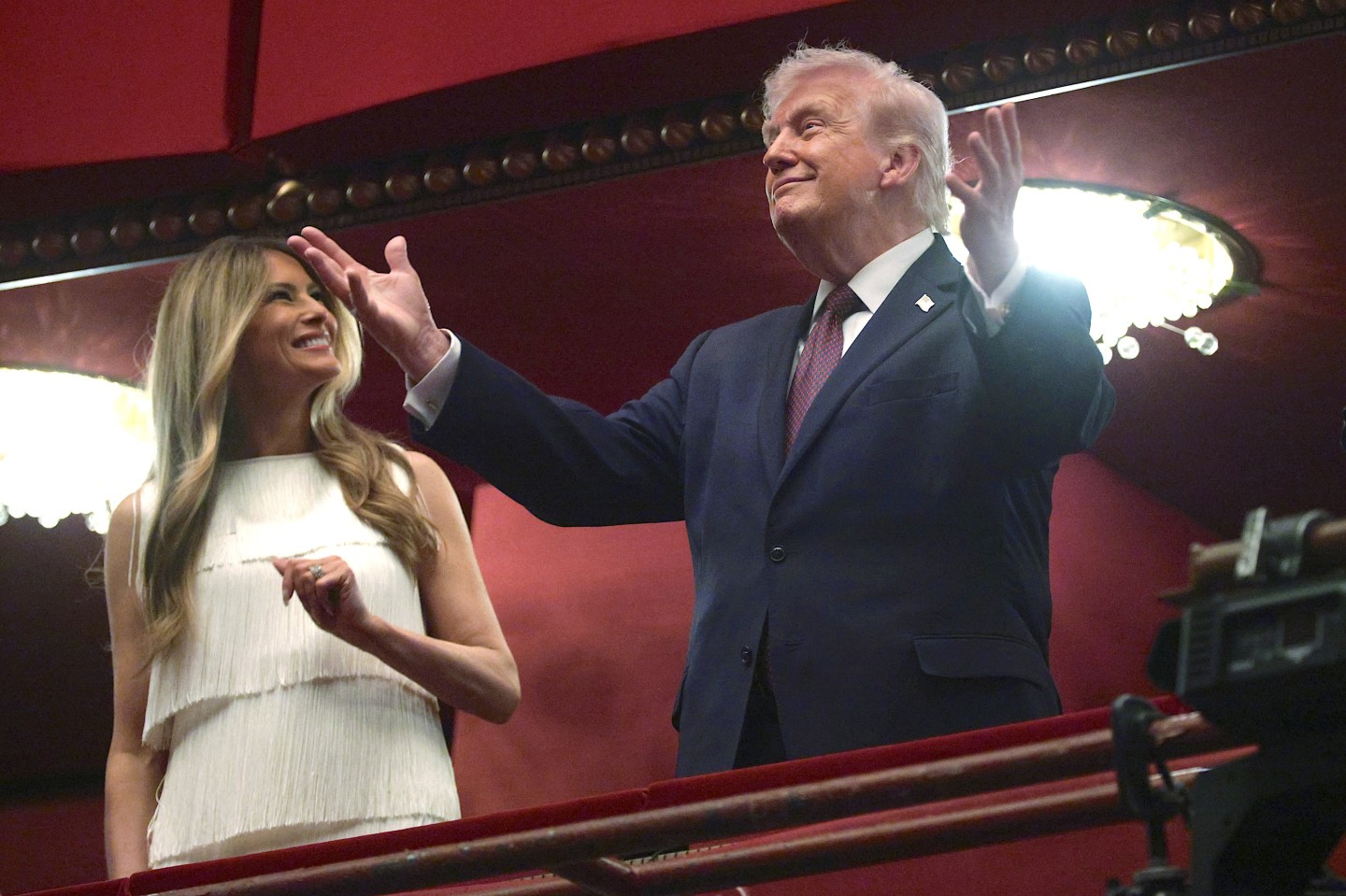
Photo: Donald and Melania Trump.
PoliticsMarkets
Trump has no good options in Iran—here are 5 of them ahead of his speech to the nation tonight
By Jim EdwardsApril 1, 2026
4 hours ago
The more women earn, the more housework they do: inside the paradox a Wharton economist calls ‘an existential problem for men’
SuccessLabor
The more women earn, the more housework they do: inside the paradox a Wharton economist calls ‘an existential problem for men’
By Catherina GioinoApril 1, 2026
6 hours ago
MUSCAT, OMAN - MARCH 22: The Albina Bulk carrier sits anchored on March 22, 2026 at Sultan Qaboos Port in Muscat, Oman.President Donald Trump had threatened to attack Iran's energy infrastructure if it did not end its de facto blockade of the Strait of Hormuz by just before midnight GMT of March 23. A subsequent statement from President Trump said the U.S. and Iran had held "very good and productive conversations regarding a complete and total resolution of our hostilities in the Middle East," and that he would postpone any attacks on Iranian energy infrastructure for five days. Maritime traffic through the strait, which conveys about 20% of the world's oil and gas, has mostly come to a halt after the joint U.S.-Israeli war with Iran that began on February 28.
EnergyIran
Trump has a labyrinth of bad options in the Strait of Hormuz. Here’s why some warn that walking away could transcend ‘our defeat in Vietnam’
By Jordan BlumMarch 31, 2026
16 hours ago
Wall Street just had its best day in nearly a year over a rumor
EconomyMarkets
Wall Street just had its best day in nearly a year over a rumor
By Eva RoytburgMarch 31, 2026
17 hours ago

Most Popular

Jerome Powell says the $39 trillion national debt is ‘not unsustainable,’ but warns the trajectory ‘will not end well’
Economy
Jerome Powell says the $39 trillion national debt is ‘not unsustainable,’ but warns the trajectory ‘will not end well’
By Fortune EditorsMarch 30, 2026
2 days ago
Markets cheer as Trump threatens to abandon Iran war, but Jamie Dimon sides with allies: ‘Win this thing and clean up the straits’
Energy
Markets cheer as Trump threatens to abandon Iran war, but Jamie Dimon sides with allies: ‘Win this thing and clean up the straits’
By Fortune EditorsMarch 31, 2026
23 hours ago
A man used AI to call 3,000 Irish bartenders to track the cost of Guinness. Now pubs are lowering their prices to compete
AI
A man used AI to call 3,000 Irish bartenders to track the cost of Guinness. Now pubs are lowering their prices to compete
By Fortune EditorsMarch 30, 2026
2 days ago
Kevin O'Leary says if you earn $68,000 a year and follow this rule, you'll retire a millionaire
Personal Finance
Kevin O'Leary says if you earn $68,000 a year and follow this rule, you'll retire a millionaire
By Fortune EditorsMarch 31, 2026
22 hours ago
The federal government shed 385,000 employees last year. Now the Trump administration is on a blitz to hire Gen Z workers
Politics
The federal government shed 385,000 employees last year. Now the Trump administration is on a blitz to hire Gen Z workers
By Fortune EditorsMarch 31, 2026
1 day ago
Two-thirds of parents say their adult Gen Z kids still rely on them financially  for support—even though it's putting them under strain
Success
Two-thirds of parents say their adult Gen Z kids still rely on them financially  for support—even though it's putting them under strain
By Fortune EditorsMarch 31, 2026
22 hours ago

© 2026 Fortune Media IP Limited. All Rights Reserved. Use of this site constitutes acceptance of our Terms of Use and Privacy Policy | CA Notice at Collection and Privacy Notice | Do Not Sell/Share My Personal Information
FORTUNE is a trademark of Fortune Media IP Limited, registered in the U.S. and other countries. FORTUNE may receive compensation for some links to products and services on this website. Offers may be subject to change without notice.