• Home
  • Latest
  • Fortune 500
  • Finance
  • Tech
  • Leadership
  • Lifestyle
  • Rankings
  • Multimedia
CommentaryConsulting

AI makes human intelligence more important, not less 

By
Bob Sternfels
Bob Sternfels
and
Lucy Perez
Lucy Perez
Down Arrow Button Icon
By
Bob Sternfels
Bob Sternfels
and
Lucy Perez
Lucy Perez
Down Arrow Button Icon
January 22, 2026, 1:55 PM ET
Bob Sternfels is the global managing partner of McKinsey & Company. Lucy Pérez is a senior partner at McKinsey & Company and a global leader of the McKinsey Health Institute. 
sternfels
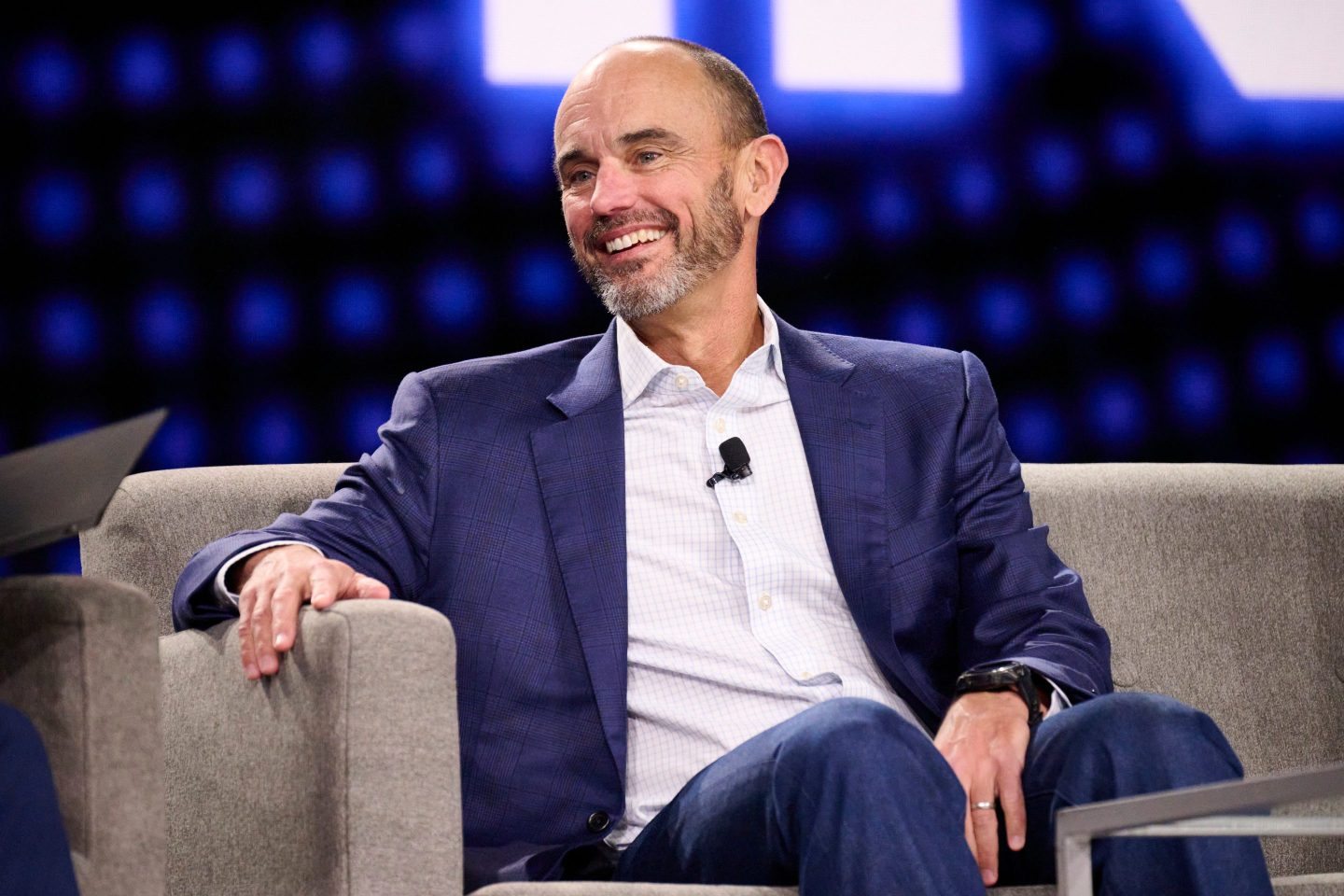
Bob Sternfels, global managing partner at McKinsey & Co. Inc.Bridget Bennett/Bloomberg via Getty Images

Many of our clients ask, “How can we rewire our organizations for artificial intelligence (AI)?”  

Recommended Video

Almost none ask the question that will ultimately determine whether AI delivers value: “Are we investing in the human advantage: our brains?”  

In today’s workforce, access to technology is no longer the differentiator—human capability is. As AI transforms work in an era of compounding disruption and uncertainty, organizations will increasingly rely on employees who excel in qualities like resilience, empathy, and creativity. But the pace of change brought about by AI threatens to dull these capabilities, just when they are needed most. Recent research by the McKinsey Health Institute and the World Economic Forum argues that the winners in the AI era will invest in “brain capital” with the same ambition that they bring to technology.  

Brain capital is an economic asset as essential as physical or financial capital. It is built on two foundations. “Brain health” refers to a state of optimal brain functioning, supported by prevention and treatment of mental, neurological, and substance use conditions. “Brain skills” are the cognitive, interpersonal, self-leadership and technological literacy abilities that enable people to adapt, innovate, and lead. The two elements are interdependent; better brain health supports stronger brain skills, and vice versa.   

Given rising medical costs and sharp increases in brain-related disability burden, the economic case for building brain capital is stronger than ever. The McKinsey Health Institute has estimated that addressing brain health conditions through known interventions could generate up to $6.2 trillion in cumulative global GDP by 2050 annually, while reclaiming millions of years of healthier life. And this only scratches the surface—true economic impact stands to be even higher when considering what future scientific breakthroughs could achieve.  

But that is only the start. In business, companies that develop their workforce’s brain capital will have stronger, more agile, and more productive workforces. Employers that proactively invest in employee health, including brain health, could boost global GDP by 12%. Individually, employees with stronger overall health report that they are more innovative, with improved performance and work-life balance. And the need for people to work well with AI—an element of “brain skills”—is an important piece of the AI transformation puzzle.  

In many ways, employers already understand this. In a 2025 WEF global survey, employers estimated that 59% of employees will need new skills by 2030. Of the top 10 most desired attributes for the future; brain skills such as curiosity and analytical thinking accounted for six of them. Learning and adapting skills for tomorrow’s workplace will depend on strong, healthy brains.  

Building brain capital, then, is a competitive advantage; indeed, it should be seen as a strategic leadership priority so that human intelligence and AI can work together to boost productivity and performance. Even when leaders recognize this, however, they often don’t know where to begin. Here are three approaches that can help.  

First, provide support to help employees improve their brain capital. For example, digital nudges can remind them to take breaks, helping people sustain energy and focus. Brain health literacy for managers can help them identify risk and protective factors in the workplace to better support teams. Research has found that training that addresses psychological flexibility is associated with greater stress resilience, less burnout, and improved sense of personal accomplishment.  

Second, embed AI into workflows, rather than mapping it to individual tasks or pilot programs that are piled onto other work. AI-native workflows that consider cognitive ergonomics can help employees learn new skills, practice tasks that matter, and manage cognitive load. This helps employees build confidence, not only in the new tools but in their ability to use them. There’s a lot of room for improvement here: last year, only 1% of leaders reported that AI was fully integrated into their ways of working.  

Finally, redesign work systems such as meeting norms and targets in a way that fosters brain capital. Ensure people have time for thinking, learning, and experimenting. The goal is to forge true partnerships between people, agents, and robots. For example, an organization might use AI for scheduling, translations, or administrative tasks, while people remain responsible for communication, mentoring, and critical thinking—the things that matter most for trust and performance. 

AI can deliver a lot for business, and for humanity at large—but only if humans remain at the center.  Organizations that invest in technology while neglecting brain capital will find themselves constrained not by algorithms, but by insufficient attention, leadership, and adaptability. Those that systematically invest in building brain capital, on the other hand, will be better equipped to innovate, retain top talent, and thrive. 

The organizations that win won’t be the ones using AI the most, but the ones powered by people with brains healthy and skilled enough to use it to its full potential.  

The opinions expressed in Fortune.com commentary pieces are solely the views of their authors and do not necessarily reflect the opinions and beliefs of Fortune.

Join us at the Fortune Workplace Innovation Summit May 19–20, 2026, in Atlanta. The next era of workplace innovation is here—and the old playbook is being rewritten. At this exclusive, high-energy event, the world’s most innovative leaders will convene to explore how AI, humanity, and strategy converge to redefine, again, the future of work. Register now.
About the Authors
By Bob Sternfels
See full bioRight Arrow Button Icon
By Lucy Perez
See full bioRight Arrow Button Icon

Latest in Commentary

Finance
Lorem ipsum dolor sit amet, consectetur adipiscing elit, sed do eiusmod tempor incididunt ut labore et dolore magna aliqua. Ut enim ad minim veniam
By Fortune Editors
October 20, 2025
Finance
Lorem ipsum dolor sit amet, consectetur adipiscing elit, sed do eiusmod tempor incididunt ut labore et dolore magna aliqua. Ut enim ad minim veniam
By Fortune Editors
October 20, 2025
Finance
Lorem ipsum dolor sit amet, consectetur adipiscing elit, sed do eiusmod tempor incididunt ut labore et dolore magna aliqua. Ut enim ad minim veniam
By Fortune Editors
October 20, 2025
Finance
Lorem ipsum dolor sit amet, consectetur adipiscing elit, sed do eiusmod tempor incididunt ut labore et dolore magna aliqua. Ut enim ad minim veniam
By Fortune Editors
October 20, 2025
Finance
Lorem ipsum dolor sit amet, consectetur adipiscing elit, sed do eiusmod tempor incididunt ut labore et dolore magna aliqua. Ut enim ad minim veniam
By Fortune Editors
October 20, 2025
Finance
Lorem ipsum dolor sit amet, consectetur adipiscing elit, sed do eiusmod tempor incididunt ut labore et dolore magna aliqua. Ut enim ad minim veniam
By Fortune Editors
October 20, 2025

Most Popular

Finance
Lorem ipsum dolor sit amet, consectetur adipiscing elit, sed do eiusmod tempor incididunt ut labore et dolore magna aliqua. Ut enim ad minim veniam
By Fortune Editors
October 20, 2025
Finance
Lorem ipsum dolor sit amet, consectetur adipiscing elit, sed do eiusmod tempor incididunt ut labore et dolore magna aliqua. Ut enim ad minim veniam
By Fortune Editors
October 20, 2025
Finance
Lorem ipsum dolor sit amet, consectetur adipiscing elit, sed do eiusmod tempor incididunt ut labore et dolore magna aliqua. Ut enim ad minim veniam
By Fortune Editors
October 20, 2025
Finance
Lorem ipsum dolor sit amet, consectetur adipiscing elit, sed do eiusmod tempor incididunt ut labore et dolore magna aliqua. Ut enim ad minim veniam
By Fortune Editors
October 20, 2025
Finance
Lorem ipsum dolor sit amet, consectetur adipiscing elit, sed do eiusmod tempor incididunt ut labore et dolore magna aliqua. Ut enim ad minim veniam
By Fortune Editors
October 20, 2025
Finance
Lorem ipsum dolor sit amet, consectetur adipiscing elit, sed do eiusmod tempor incididunt ut labore et dolore magna aliqua. Ut enim ad minim veniam
By Fortune Editors
October 20, 2025
Fortune Secondary Logo
Rankings
  • 100 Best Companies
  • Fortune 500
  • Global 500
  • Fortune 500 Europe
  • Most Powerful Women
  • Future 50
  • World’s Most Admired Companies
  • See All Rankings
Sections
  • Finance
  • Fortune Crypto
  • Features
  • Leadership
  • Health
  • Commentary
  • Success
  • Retail
  • Mpw
  • Tech
  • Lifestyle
  • CEO Initiative
  • Asia
  • Politics
  • Conferences
  • Europe
  • Newsletters
  • Personal Finance
  • Environment
  • Magazine
  • Education
Customer Support
  • Frequently Asked Questions
  • Customer Service Portal
  • Privacy Policy
  • Terms Of Use
  • Single Issues For Purchase
  • International Print
Commercial Services
  • Advertising
  • Fortune Brand Studio
  • Fortune Analytics
  • Fortune Conferences
  • Business Development
  • Group Subscriptions
About Us
  • About Us
  • Editorial Calendar
  • Press Center
  • Work At Fortune
  • Diversity And Inclusion
  • Terms And Conditions
  • Site Map
  • About Us
  • Editorial Calendar
  • Press Center
  • Work At Fortune
  • Diversity And Inclusion
  • Terms And Conditions
  • Site Map
  • Facebook icon
  • Twitter icon
  • LinkedIn icon
  • Instagram icon
  • Pinterest icon

Latest in Commentary

gary
Commentaryregulation
The biggest mistake CEOs make with AI has nothing to do with the technology
By Gary ShapiroApril 1, 2026
2 hours ago
trump
CommentaryEPA
The EPA just valued a human life at $0. That’s not just a moral crisis — it’s a market crisis
By Andrew BeharApril 1, 2026
3 hours ago
dressel
Commentaryhistory
AI can’t remember what your company learned the hard way 
By Jason DresselApril 1, 2026
4 hours ago
pelosi
CommentaryElections
Congress has a lower approval rating than Hitler in some polls. And we just keep voting for the same 2 parties
By Stu StrumwasserApril 1, 2026
6 hours ago
gen z
CommentaryGen Z
Gen Z is engineering an analog future — and it’s at least a $5 billion opportunity
By Luba KassovaApril 1, 2026
7 hours ago
brian
CommentaryCulture
The real engine of innovation is trust
By Brian DoublesMarch 31, 2026
20 hours ago

Most Popular

Jerome Powell says the $39 trillion national debt is ‘not unsustainable,’ but warns the trajectory ‘will not end well’
Economy
Jerome Powell says the $39 trillion national debt is ‘not unsustainable,’ but warns the trajectory ‘will not end well’
By Fortune EditorsMarch 30, 2026
2 days ago
Markets cheer as Trump threatens to abandon Iran war, but Jamie Dimon sides with allies: ‘Win this thing and clean up the straits’
Energy
Markets cheer as Trump threatens to abandon Iran war, but Jamie Dimon sides with allies: ‘Win this thing and clean up the straits’
By Fortune EditorsMarch 31, 2026
1 day ago
A man used AI to call 3,000 Irish bartenders to track the cost of Guinness. Now pubs are lowering their prices to compete
AI
A man used AI to call 3,000 Irish bartenders to track the cost of Guinness. Now pubs are lowering their prices to compete
By Fortune EditorsMarch 30, 2026
2 days ago
Kevin O'Leary says if you earn $68,000 a year and follow this rule, you'll retire a millionaire
Personal Finance
Kevin O'Leary says if you earn $68,000 a year and follow this rule, you'll retire a millionaire
By Fortune EditorsMarch 31, 2026
24 hours ago
Two-thirds of parents say their adult Gen Z kids still rely on them financially  for support—even though it's putting them under strain
Success
Two-thirds of parents say their adult Gen Z kids still rely on them financially  for support—even though it's putting them under strain
By Fortune EditorsMarch 31, 2026
24 hours ago
The federal government shed 385,000 employees last year. Now the Trump administration is on a blitz to hire Gen Z workers
Politics
The federal government shed 385,000 employees last year. Now the Trump administration is on a blitz to hire Gen Z workers
By Fortune EditorsMarch 31, 2026
1 day ago

© 2026 Fortune Media IP Limited. All Rights Reserved. Use of this site constitutes acceptance of our Terms of Use and Privacy Policy | CA Notice at Collection and Privacy Notice | Do Not Sell/Share My Personal Information
FORTUNE is a trademark of Fortune Media IP Limited, registered in the U.S. and other countries. FORTUNE may receive compensation for some links to products and services on this website. Offers may be subject to change without notice.