• Home
  • Latest
  • Fortune 500
  • Finance
  • Tech
  • Leadership
  • Lifestyle
  • Rankings
  • Multimedia

Trendingnow

1

Despite having a $165 million net worth, Scarlett Johansson says work-life balance doesn’t exist—and the first step to success is admitting that

2

The Bezos family just donated $100 million to help achieve one of Mayor Zohran Mamdani’s top campaign promises

3

Current price of oil as of May 15, 2026

1

Despite having a $165 million net worth, Scarlett Johansson says work-life balance doesn’t exist—and the first step to success is admitting that

2

The Bezos family just donated $100 million to help achieve one of Mayor Zohran Mamdani’s top campaign promises

3

Current price of oil as of May 15, 2026
Commentarytourism

Millennials invented the experience economy and Gen Z is reinventing travel itself

By
Nick Filatov
Nick Filatov
Down Arrow Button Icon
By
Nick Filatov
Nick Filatov
Down Arrow Button Icon
March 4, 2026, 3:30 AM ET
gen z
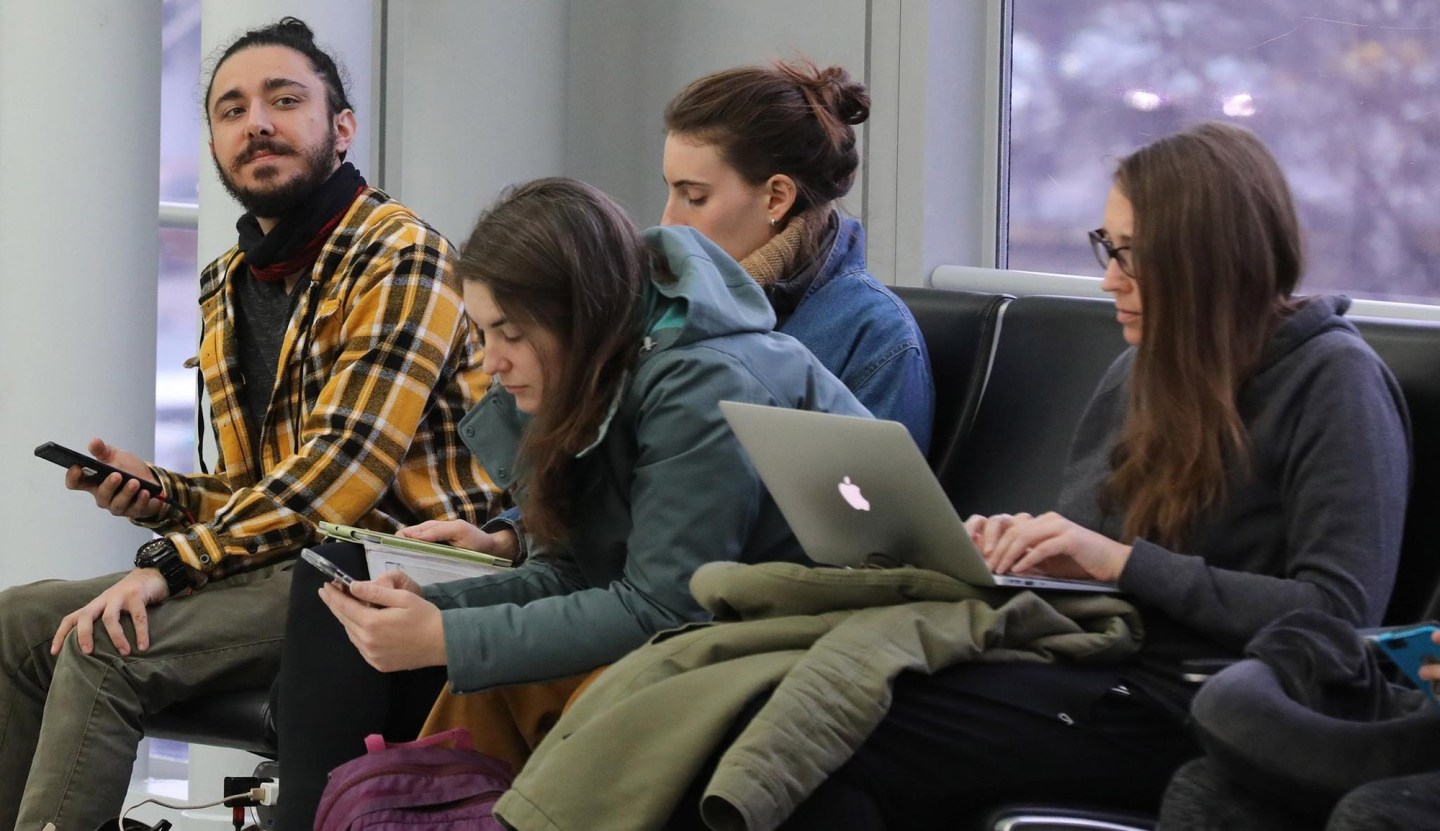
Travel hits differently with Gen Z.Antonio Perez/Chicago Tribune/Tribune News Service via Getty Images

Millennials and Gen Z have grown up in environments defined by permanent connectivity, fast-moving technology, and constant exposure to global information. For them, digital tools are not optional add-ons, they are embedded in how decisions are made. Access, choice, and immediate feedback are assumed by default, shaping expectations for any service, including travel.

Recommended Video

This shift did not emerge in a vacuum. It coincided with the rise of the experience economy, often associated with millennial consumers who prioritized moments over possessions and flexibility over long-term commitments. While the behavior has now spread across age groups, it was this generation that helped normalize travel as an ongoing lifestyle choice rather than a rare, fixed event.

As a result, travel is no longer seen as a single, fixed event requiring long-term planning. Instead, it is approached as a continuous process, where searching, booking, changing plans, and cancelling are all parts of one ongoing cycle. In this context, a ticket purchase is not necessarily a firm commitment; it is often treated as an option that preserves flexibility and control. This mindset reflects a broader behavioral shift: planning is no longer a static decision, but an evolving activity influenced by real-time information and changing circumstances.

Travel as a Lifestyle, Not an Occasional Trip

Behavioral research demonstrates that Millennials and Gen Z place greater value on flexibility, adaptability, and experiences than on brand loyalty or long-term commitment. Decisions are made earlier, adjusted more frequently, and changed with much less hesitation than in previous generations. Loyalty to a specific airline or itinerary is therefore weaker, not only due to price considerations but because variety and adaptability outweigh stability.

Quantitative data reinforces this trend. McKinsey reports that Millennials and Gen Z travel more frequently than older cohorts, averaging close to five trips per year compared to fewer than four among Gen X and Baby Boomers. They also allocate approximately 29% of their income to travel, highlighting that travel has become a regular part of lifestyle rather than an occasional activity. 

Moreover, younger travelers increasingly prioritize experiences over comfort or traditional sightseeing, with Gen Z consistently ranking experiences above material consumption.

A clear manifestation of this behavior is “gig-tripping,” where travel plans are anchored around attending live events such as concerts or festivals. Flights and accommodations are arranged to support the event rather than the other way around. Data from sources like Skyscanner shows a growing willingness among younger travelers to take both short- and long-haul trips specifically for live events. These patterns reflect broader expectations for control, immediacy, and highly personalized experiences that now shape decision-making across the industry.

Flexibility as the Baseline Expectation

What began as a generational preference has evolved into a broader industry norm. The idea that plans are provisional, adjustable, and continuously optimized was first visible among digitally native, experience-driven travelers. Today, that logic shapes expectations across leisure and corporate segments alike.

Across both leisure and corporate segments, flexibility has shifted from a “nice-to-have” to a baseline expectation. Multiple industry analyses indicate that most global travelers now prioritize flexible cancellation and rebooking over traditional purchase incentives, such as price discounts or loyalty benefits. 

In corporate travel, 41% of business travelers proactively select flexible fares at booking, nearly half monitor updates more frequently, and many companies now require flexible ticketing and cancellation coverage as standard policy.

This structural shift has direct operational implications. Cancellation rates and rebooking patterns are increasingly shaped not only by operational disruptions but also by travelers’ assumptions that cancellation, rebooking, and compensation are integral components of the journey, rather than exceptional edge cases. 

Revenue tied to passenger claims and compensation is expanding and projected to grow alongside rising travel volumes, reflecting the operational impact of this behavioral change.

Flexible travel is therefore no longer optional. It now fundamentally influences demand, operational workflows, and system design, requiring airlines and travel providers to adapt both processes and technology to meet baseline expectations.

How Legacy Airline Systems Turn Disruptions into Friction

Despite rising flexibility expectations, legacy systems remain structured around linear, static booking flows. Historically, airlines treated cancellations, last-minute changes, and rebookings as exceptions. Today, these events reveal themselves as systemic expressions of traveler behavior rather than anomalies.

Survey data underscores this shift. In 2025, over 90% of business travelers reported altering how they approach travel in response to disruptions, including adjusting timing, monitoring updates more frequently, and explicitly prioritizing flexible cancellation options. These behaviors are consistent across regions and traveler segments, highlighting that what was once considered operational noise is now a new behavioral baseline.

For airlines, this translates into measurable operational consequences. Flexible tickets with free cancellation or low-friction change options are increasingly influencing purchase decisions, often outweighing traditional fare or loyalty incentives. 

Travelers under conditions of uncertainty, whether economic volatility, personal scheduling complexity, or broader global instability, favor options that preserve control and reversibility, a psychological pattern now embedded in the majority of bookings.

Designing Airline Systems for Continuous Change

The collision between traveler expectations and legacy airline systems is particularly visible in network operations. Airlines experience persistent systemic stress as cancellation rates fluctuate by region and carrier strategy. 

Carriers that reduce delays often do so at the cost of higher cancellations, while lower-tier carriers in some markets report sustained increases. These trade-offs highlight the growing complexity of network operations in an environment where travelers assume real-time recovery and seamless rerouting as standard.

From a psychological perspective, this is predictable. Travelers conditioned by digital systems interpret disruptions not as isolated failures, but as failures of system design. The resulting behaviors (frequent plan changes, self-service rebooking, and expectation of automated recovery) place additional pressure on monolithic reservation architectures, sequential workflows, and exception-driven processes.

Addressing these challenges requires a conceptual shift: cancellations, changes, and recovery must be treated as core system states, not exceptions. Even incremental measures, such as event-driven servicing, real-time inventory visibility, and modular rebooking workflows, can reduce operational strain while aligning airline infrastructure with traveler expectations. 

Without this adaptation, improvements in customer experience will remain constrained by systems originally designed for a world in which flexibility and disruption were anomalies rather than the norm.

The opinions expressed in Fortune.com commentary pieces are solely the views of their authors and do not necessarily reflect the opinions and beliefs of Fortune.


Join us at the Fortune Workplace Innovation Summit May 19–20, 2026, in Atlanta. The next era of workplace innovation is here—and the old playbook is being rewritten. At this exclusive, high-energy event, the world’s most innovative leaders will convene to explore how AI, humanity, and strategy converge to redefine, again, the future of work. Register now.
About the Author
By Nick Filatov
See full bioRight Arrow Button Icon

Latest in Commentary

Finance
Lorem ipsum dolor sit amet, consectetur adipiscing elit, sed do eiusmod tempor incididunt ut labore et dolore magna aliqua. Ut enim ad minim veniam
By Fortune Editors
October 20, 2025
Finance
Lorem ipsum dolor sit amet, consectetur adipiscing elit, sed do eiusmod tempor incididunt ut labore et dolore magna aliqua. Ut enim ad minim veniam
By Fortune Editors
October 20, 2025
Finance
Lorem ipsum dolor sit amet, consectetur adipiscing elit, sed do eiusmod tempor incididunt ut labore et dolore magna aliqua. Ut enim ad minim veniam
By Fortune Editors
October 20, 2025
Finance
Lorem ipsum dolor sit amet, consectetur adipiscing elit, sed do eiusmod tempor incididunt ut labore et dolore magna aliqua. Ut enim ad minim veniam
By Fortune Editors
October 20, 2025
Finance
Lorem ipsum dolor sit amet, consectetur adipiscing elit, sed do eiusmod tempor incididunt ut labore et dolore magna aliqua. Ut enim ad minim veniam
By Fortune Editors
October 20, 2025
Finance
Lorem ipsum dolor sit amet, consectetur adipiscing elit, sed do eiusmod tempor incididunt ut labore et dolore magna aliqua. Ut enim ad minim veniam
By Fortune Editors
October 20, 2025

Most Popular

Finance
Lorem ipsum dolor sit amet, consectetur adipiscing elit, sed do eiusmod tempor incididunt ut labore et dolore magna aliqua. Ut enim ad minim veniam
By Fortune Editors
October 20, 2025
Finance
Lorem ipsum dolor sit amet, consectetur adipiscing elit, sed do eiusmod tempor incididunt ut labore et dolore magna aliqua. Ut enim ad minim veniam
By Fortune Editors
October 20, 2025
Finance
Lorem ipsum dolor sit amet, consectetur adipiscing elit, sed do eiusmod tempor incididunt ut labore et dolore magna aliqua. Ut enim ad minim veniam
By Fortune Editors
October 20, 2025
Finance
Lorem ipsum dolor sit amet, consectetur adipiscing elit, sed do eiusmod tempor incididunt ut labore et dolore magna aliqua. Ut enim ad minim veniam
By Fortune Editors
October 20, 2025
Finance
Lorem ipsum dolor sit amet, consectetur adipiscing elit, sed do eiusmod tempor incididunt ut labore et dolore magna aliqua. Ut enim ad minim veniam
By Fortune Editors
October 20, 2025
Finance
Lorem ipsum dolor sit amet, consectetur adipiscing elit, sed do eiusmod tempor incididunt ut labore et dolore magna aliqua. Ut enim ad minim veniam
By Fortune Editors
October 20, 2025
Fortune Secondary Logo
Rankings
  • 100 Best Companies
  • Fortune 500
  • Global 500
  • Fortune 500 Europe
  • Most Powerful Women
  • World's Most Admired Companies
  • See All Rankings
  • Lists Calendar
Sections
  • Finance
  • Fortune Crypto
  • Features
  • Leadership
  • Health
  • Commentary
  • Success
  • Retail
  • Mpw
  • Tech
  • Lifestyle
  • CEO Initiative
  • Asia
  • Politics
  • Conferences
  • Europe
  • Newsletters
  • Personal Finance
  • Environment
  • Magazine
  • Education
Customer Support
  • Frequently Asked Questions
  • Customer Service Portal
  • Privacy Policy
  • Terms Of Use
  • Single Issues For Purchase
  • International Print
Commercial Services
  • Advertising
  • Fortune Brand Studio
  • Fortune Analytics
  • Fortune Conferences
  • Business Development
  • Group Subscriptions
About Us
  • About Us
  • Press Center
  • Work At Fortune
  • Terms And Conditions
  • Site Map
  • About Us
  • Press Center
  • Work At Fortune
  • Terms And Conditions
  • Site Map
  • Facebook icon
  • Twitter icon
  • LinkedIn icon
  • Instagram icon
  • Pinterest icon

Nick Filatov is a technology executive and entrepreneur with 25 years in tech, including 14 in TravelTech. He built and exited a major online travel agency, gaining deep insight into both legacy systems and modern digital platforms. As CEO and founder of GDS42, he focuses on using AI and automation to transform travel operations and align traditional infrastructure with the expectations of next-generation travelers.


Latest in Commentary

liberman
Commentarystart-ups
We watched social media concentrate. The same thing is happening in AI, only at a deeper layer
By David Liberman and Daniil LibermanMay 16, 2026
4 hours ago
olivier
CommentaryAnthropic
I’ve been studying Big Tech for a long time. What just happened with Anthropic and the Pentagon terrifies me
By Olivier SylvainMay 16, 2026
5 hours ago
lawyer
CommentaryLaw
Would you hire the lawyer who just got sanctioned for using AI?
By Alexandra SmythMay 16, 2026
7 hours ago
greg
Personal FinanceAviation
Mamdani’s New York is coming to tax your private jet. Here’s how to prepare
By Greg RaiffMay 16, 2026
8 hours ago
chase
CommentaryCities
San Francisco has $2 trillion in AI wealth and can’t fix its own city. That’s every city’s problem
By Chase GarbarinoMay 15, 2026
1 day ago
lori
Commentarymental health
I run Valvoline Instant Oil Change and work with young people every day. They’re in crisis—and we all have to try to help
By Lori FleesMay 15, 2026
1 day ago

Most Popular

Despite having a $165 million net worth, Scarlett Johansson says work-life balance doesn’t exist—and the first step to success is admitting that
Success
Despite having a $165 million net worth, Scarlett Johansson says work-life balance doesn’t exist—and the first step to success is admitting that
By Preston ForeMay 13, 2026
3 days ago
The Bezos family just donated $100 million to help achieve one of Mayor Zohran Mamdani’s top campaign promises
Politics
The Bezos family just donated $100 million to help achieve one of Mayor Zohran Mamdani’s top campaign promises
By Jake AngeloMay 12, 2026
4 days ago
Current price of oil as of May 15, 2026
Personal Finance
Current price of oil as of May 15, 2026
By Joseph HostetlerMay 15, 2026
1 day ago
Microsoft AI chief gives it 18 months—for all white-collar work to be automated by AI
AI
Microsoft AI chief gives it 18 months—for all white-collar work to be automated by AI
By Jake AngeloMay 16, 2026
5 hours ago
Nearly 50,000 Lake Tahoe residents have to find a new power source after their energy source looks to redirect lines to data centers
Travel & Leisure
Nearly 50,000 Lake Tahoe residents have to find a new power source after their energy source looks to redirect lines to data centers
By Catherina GioinoMay 12, 2026
4 days ago
Debbie Gibson, Geezer Butler of Black Sabbath want you to adopt a beagle rescued from an experimental lab in Wisconsin
North America
Debbie Gibson, Geezer Butler of Black Sabbath want you to adopt a beagle rescued from an experimental lab in Wisconsin
By Scott Bauer and The Associated PressMay 13, 2026
3 days ago

© 2026 Fortune Media IP Limited. All Rights Reserved. Use of this site constitutes acceptance of our Terms of Use and Privacy Policy | CA Notice at Collection and Privacy Notice | Do Not Sell/Share My Personal Information
FORTUNE is a trademark of Fortune Media IP Limited, registered in the U.S. and other countries. FORTUNE may receive compensation for some links to products and services on this website. Offers may be subject to change without notice.