• Home
  • Latest
  • Fortune 500
  • Finance
  • Tech
  • Leadership
  • Lifestyle
  • Rankings
  • Multimedia
Middle Eastgas prices

So, what happens during a gas crisis, anyway? Your older relatives have a reason to bring up what could come next

Catherina Gioino
By
Catherina Gioino
Catherina Gioino
News Editor
Down Arrow Button Icon
Catherina Gioino
By
Catherina Gioino
Catherina Gioino
News Editor
Down Arrow Button Icon
March 15, 2026, 4:02 AM ET
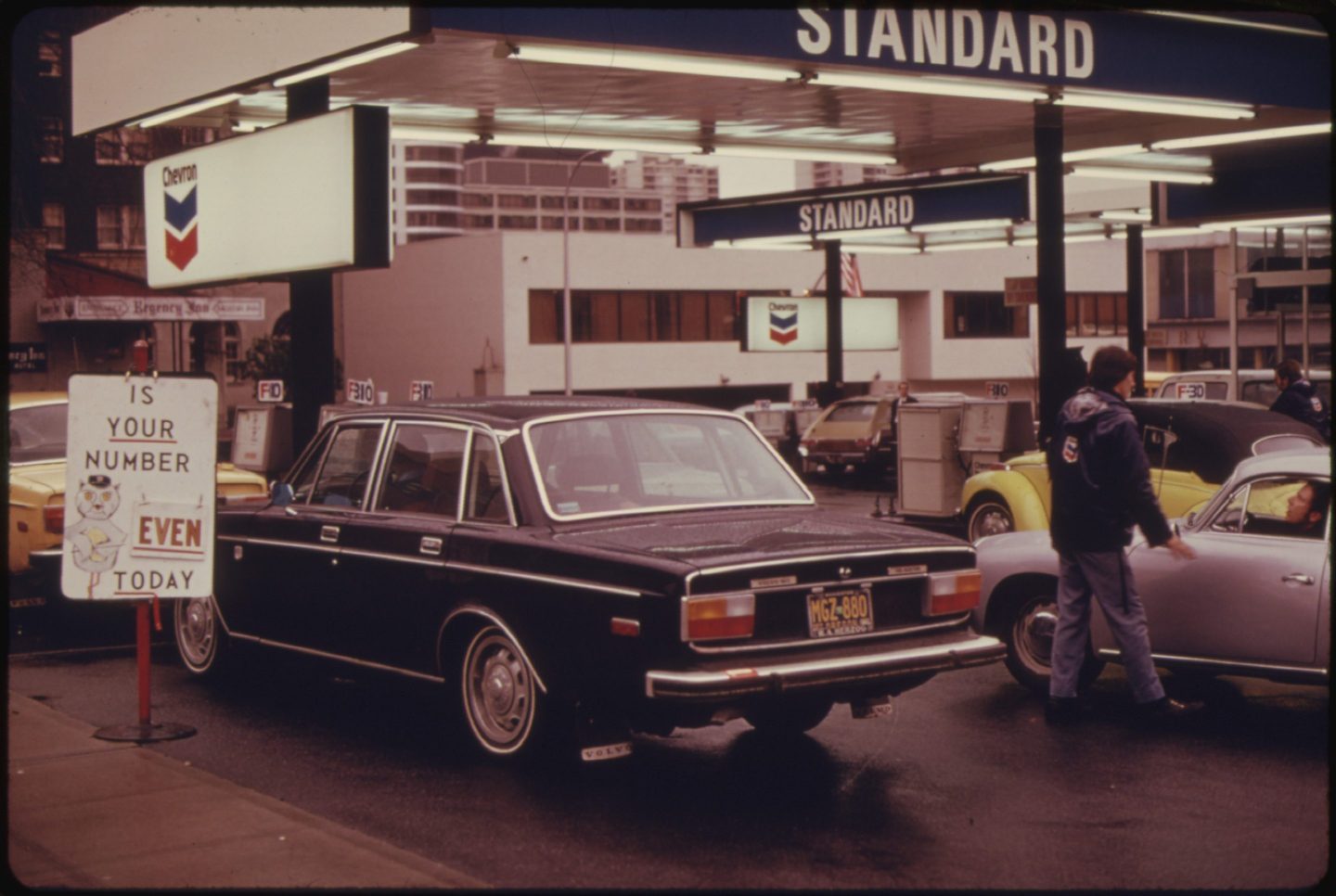
1970s car waiting for gas during the gas crisis of the 1970s.
The gas crisis of the 1970s meant people with even license plates went on even days, odd on odd, to fill up gas—if there was any.Smith Collection/Gado/Getty Images

Picture this: you’re running out of the house to go see Blazing Saddles at the drive-in with friends. You hop in your car, turn on the ignition, flick on the radio and Elton John’s rhythmic vocals flow through the air as “Bennie and the Jets” starts playing. It’s the perfect kind of night, save for one issue: your car is a little low on gas, and it means you’re going to wake up at 4 am just to wait on a gas line for hours to fuel up, if you’re lucky.

Recommended Video

For most of us, a gas crisis is an abstraction. We know prices go up. We complain. We maybe drive less. What we don’t know—perhaps because some of us never lived it—is the other kind of gas crisis, where the price doesn’t matter because there’s nothing to buy. The kind where your license plate number determined what days you were allowed to leave home. The kind where a green, yellow, or red flag hanging outside a gas station was the most important piece of information in your day. That America actually existed, and it may be closer than we think.

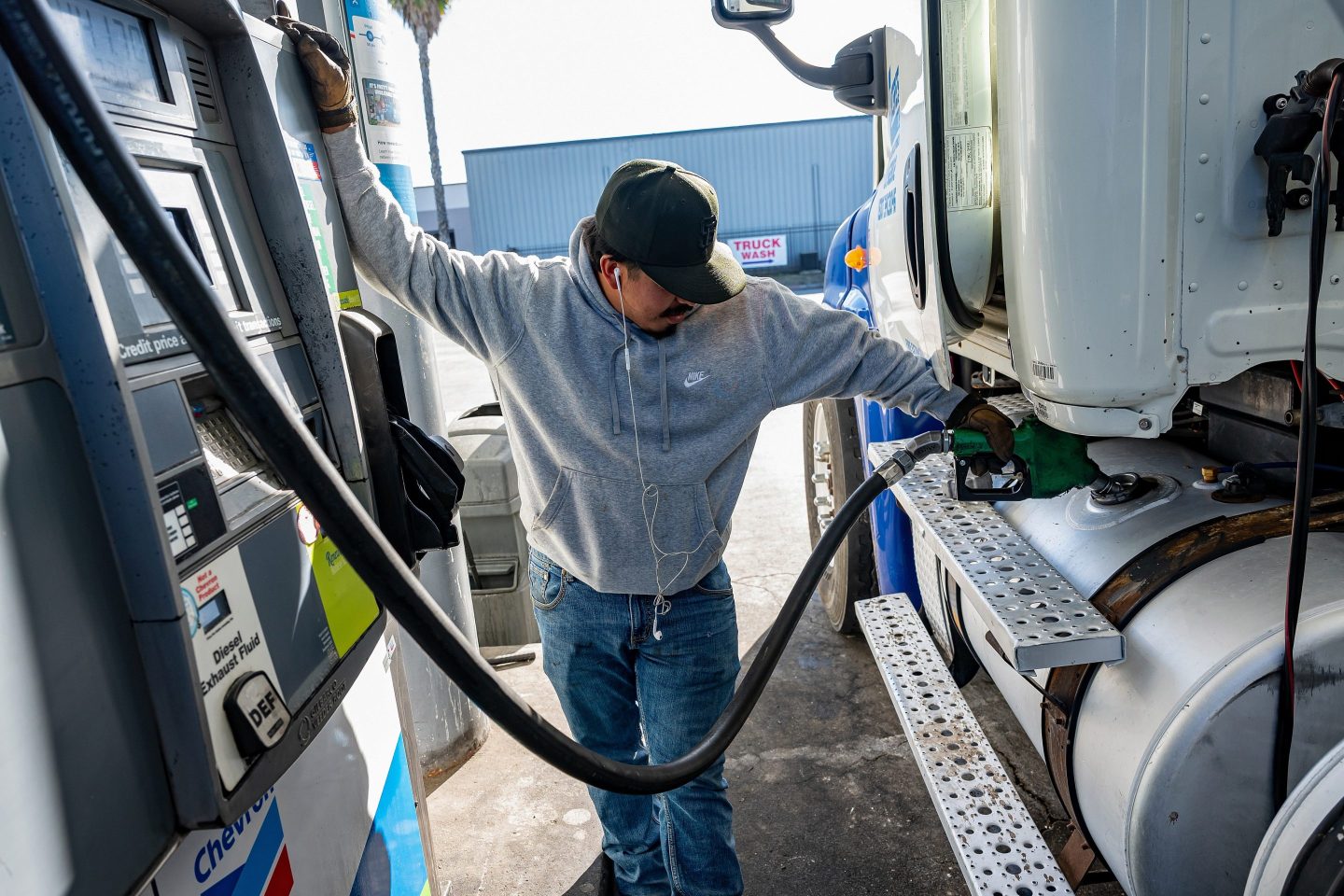
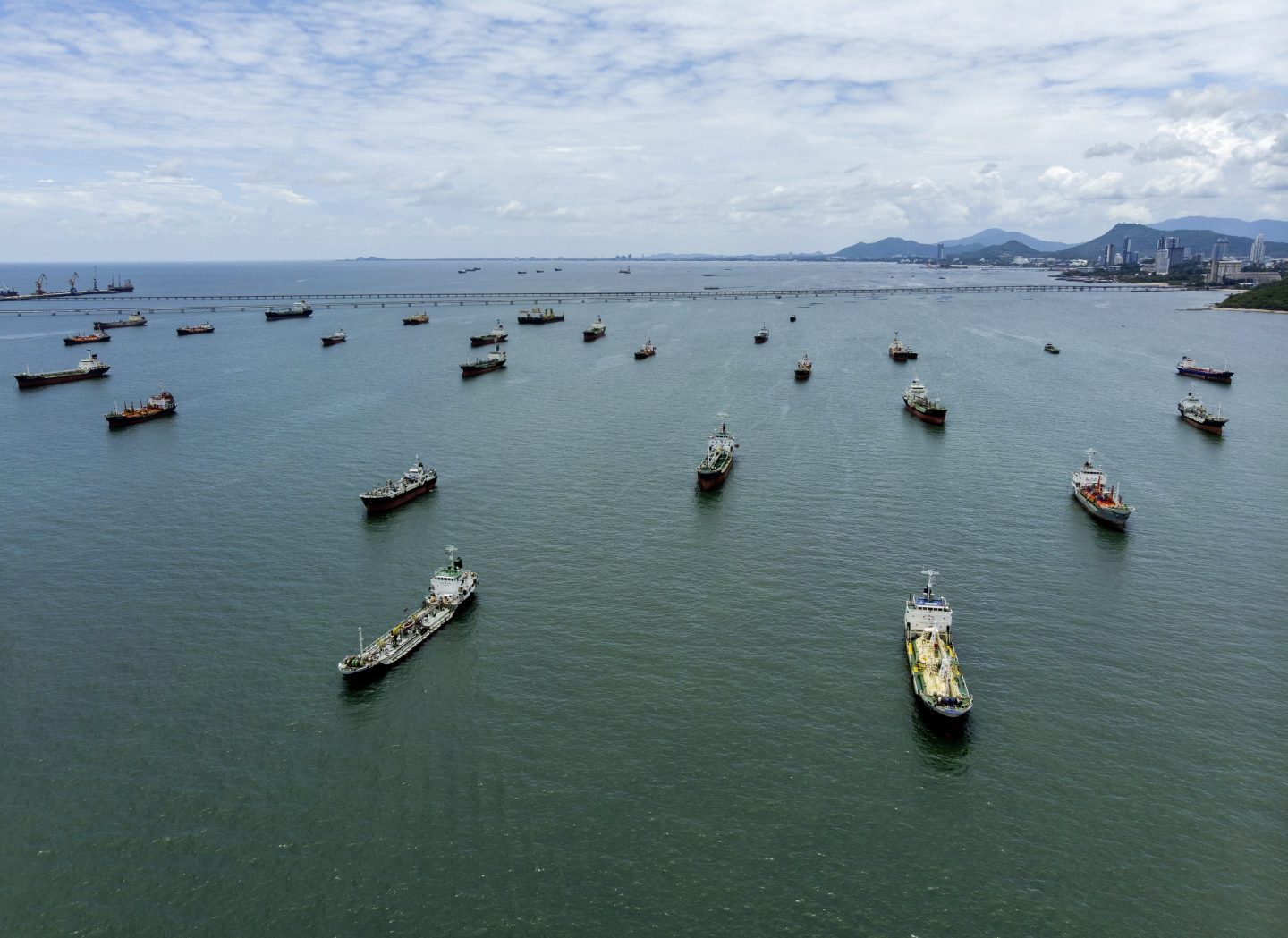
Gas prices in the U.S. have jumped nearly 11% since this time last year. The conflict with Iran has pinched the Strait of Hormuz—the narrow waterway through which about 20% of the world’s oil and liquefied natural gas travels every day—while Qatar, which produces 20% of global LNG, has halted production entirely. For most Americans, the immediate instinct is to watch the number on the pump climb and feel vaguely powerless. But for people over 65, the current moment carries a different kind of dread.

What happened during the 1970s gas crisis?

In October 1973, Arab members of the Organization of the Petroleum Exporting Countries (OPEC) announced an embargo on the United States in retaliation for American military support of Israel during the Yom Kippur War. But they didn’t just raise prices: they cut supply. Within weeks, gas prices at the pump surged 40% in a single month. By mid-1974, the effective price had tripled, and fuel availability had collapsed.

Let’s go back to that night out with friends. You offer to pick up two of them on the way to the drive-in (carpooling, which first become prominent during the rationing days of World War II, had already become popularized by this point, doubly so because of the gas crisis). The drive-in looks a little sparse; you can’t tell if that’s because people carpooled or not. Either way, you make it through the Mel Brooks classic, get home and set your alarm for 4 am.

Before it’s even light out, you’re back in your car the next morning, hoping there’s enough gas to get to the nearest station with a green flag. To know whether a station had fuel before committing to an hours-long wait, you learn to read the flags. Green means gas available. Yellow means rationing in effect—you’d get some, but not a full tank. Red means don’t bother. 

You pass by your local spot, but no one’s there as a red flag billows in the wind. You drive to the next, hoping to beat the line, which has already stretched down the road. Turning off the engine to save fuel, you shift into neutral, and push your car forward a few feet every few minutes. You sit like that for an hour, then two, then three. Finally, three cars away from the pump, a station attendant hangs a handwritten sign: Out of Gas.​

As gas lines started getting longer, states started rolling out odd-even license plate rationing, where the last digit of your plate determined which days you could buy gas. Odd numbers meant you bought on odd-numbered calendar days, even on even. Some states capped each purchase at $1 worth of fuel (about $8.47 today), translating to roughly four gallons. People made two or three of these rationing-day trips per week just to keep their tanks half full. If you forgot your day, you waited 48 hours, and hoped your station still had supply.

In addition to the above measures, this is right around the time the U.S. imposed a nationwide 55 mph speed limit to increase fuel efficiency, and when federal fuel economy standards were enacted, increasing the average car efficiency by 81% between 1975 and 1988. The Strategic Petroleum Reserve was also created in 1975 as an emergency buffer.

What about today?

This does seem like a repetition of the 1970s: a Middle East conflict disrupts a critical oil-producing region, global supply tightens, and American consumers bear the cost. But there are meaningful differences. The U.S. was a net oil importer in 1973. Today, the country is the world’s largest oil producer.

That sounds like we shouldn’t be affected (or at least, that much), but oil is a global market, and gas prices follow the international benchmark, Brent crude. And while the U.S. has plenty of oil, many domestic refineries that churn out gasoline are geared for oil that’s imported, not the light, sweet crude that’s plentiful in the Permian Basin.

Although rationing isn’t making a comeback to the U.S. just yet, Myanmar has already reimposed odd-even driving rules. You also don’t have to go as far back as the 1970s to remember what a gas crisis felt like. When Superstorm Sandy hit the Northeast in October 2012, it knocked out seven petroleum terminals in New Jersey and New York and crippled the distribution infrastructure needed to move gas from storage to pumps. Within just a few days, only about a quarter of New York City gas stations were operational. New Jersey saw lines stretching up to 1.5 miles. People slept in their cars overnight to hold their spot. In New Jersey, odd-even rationing was imposed almost immediately, while New York City and Long Island implemented the practice a week later. The gas crisis lasted 21 days, and was due to a storm, not a global geopolitical event.
The Fortune 500 Innovation Forum will convene Fortune 500 executives, U.S. policy officials, top founders, and thought leaders to help define what’s next for the American economy, Nov. 16-17 in Detroit. Apply here.
About the Author
Catherina Gioino
By Catherina GioinoNews Editor
Instagram iconLinkedIn iconTwitter icon

Catherina covers markets, the economy, energy, tech, and AI.

See full bioRight Arrow Button Icon

Latest in Middle East

Finance
Lorem ipsum dolor sit amet, consectetur adipiscing elit, sed do eiusmod tempor incididunt ut labore et dolore magna aliqua. Ut enim ad minim veniam
By Fortune Editors
October 20, 2025
Finance
Lorem ipsum dolor sit amet, consectetur adipiscing elit, sed do eiusmod tempor incididunt ut labore et dolore magna aliqua. Ut enim ad minim veniam
By Fortune Editors
October 20, 2025
Finance
Lorem ipsum dolor sit amet, consectetur adipiscing elit, sed do eiusmod tempor incididunt ut labore et dolore magna aliqua. Ut enim ad minim veniam
By Fortune Editors
October 20, 2025
Finance
Lorem ipsum dolor sit amet, consectetur adipiscing elit, sed do eiusmod tempor incididunt ut labore et dolore magna aliqua. Ut enim ad minim veniam
By Fortune Editors
October 20, 2025
Finance
Lorem ipsum dolor sit amet, consectetur adipiscing elit, sed do eiusmod tempor incididunt ut labore et dolore magna aliqua. Ut enim ad minim veniam
By Fortune Editors
October 20, 2025
Finance
Lorem ipsum dolor sit amet, consectetur adipiscing elit, sed do eiusmod tempor incididunt ut labore et dolore magna aliqua. Ut enim ad minim veniam
By Fortune Editors
October 20, 2025

Most Popular

Finance
Lorem ipsum dolor sit amet, consectetur adipiscing elit, sed do eiusmod tempor incididunt ut labore et dolore magna aliqua. Ut enim ad minim veniam
By Fortune Editors
October 20, 2025
Finance
Lorem ipsum dolor sit amet, consectetur adipiscing elit, sed do eiusmod tempor incididunt ut labore et dolore magna aliqua. Ut enim ad minim veniam
By Fortune Editors
October 20, 2025
Finance
Lorem ipsum dolor sit amet, consectetur adipiscing elit, sed do eiusmod tempor incididunt ut labore et dolore magna aliqua. Ut enim ad minim veniam
By Fortune Editors
October 20, 2025
Finance
Lorem ipsum dolor sit amet, consectetur adipiscing elit, sed do eiusmod tempor incididunt ut labore et dolore magna aliqua. Ut enim ad minim veniam
By Fortune Editors
October 20, 2025
Finance
Lorem ipsum dolor sit amet, consectetur adipiscing elit, sed do eiusmod tempor incididunt ut labore et dolore magna aliqua. Ut enim ad minim veniam
By Fortune Editors
October 20, 2025
Finance
Lorem ipsum dolor sit amet, consectetur adipiscing elit, sed do eiusmod tempor incididunt ut labore et dolore magna aliqua. Ut enim ad minim veniam
By Fortune Editors
October 20, 2025
Fortune Secondary Logo
Rankings
  • 100 Best Companies
  • Fortune 500
  • Global 500
  • Fortune 500 Europe
  • Most Powerful Women
  • Future 50
  • World’s Most Admired Companies
  • See All Rankings
Sections
  • Finance
  • Fortune Crypto
  • Features
  • Leadership
  • Health
  • Commentary
  • Success
  • Retail
  • Mpw
  • Tech
  • Lifestyle
  • CEO Initiative
  • Asia
  • Politics
  • Conferences
  • Europe
  • Newsletters
  • Personal Finance
  • Environment
  • Magazine
  • Education
Customer Support
  • Frequently Asked Questions
  • Customer Service Portal
  • Privacy Policy
  • Terms Of Use
  • Single Issues For Purchase
  • International Print
Commercial Services
  • Advertising
  • Fortune Brand Studio
  • Fortune Analytics
  • Fortune Conferences
  • Business Development
  • Group Subscriptions
About Us
  • About Us
  • Editorial Calendar
  • Press Center
  • Work At Fortune
  • Diversity And Inclusion
  • Terms And Conditions
  • Site Map
  • About Us
  • Editorial Calendar
  • Press Center
  • Work At Fortune
  • Diversity And Inclusion
  • Terms And Conditions
  • Site Map
  • Facebook icon
  • Twitter icon
  • LinkedIn icon
  • Instagram icon
  • Pinterest icon

Latest in Middle East

Current price of oil as of March 31, 2026
Personal FinanceOil
Current price of oil as of March 31, 2026
By Joseph HostetlerMarch 31, 2026
1 day ago
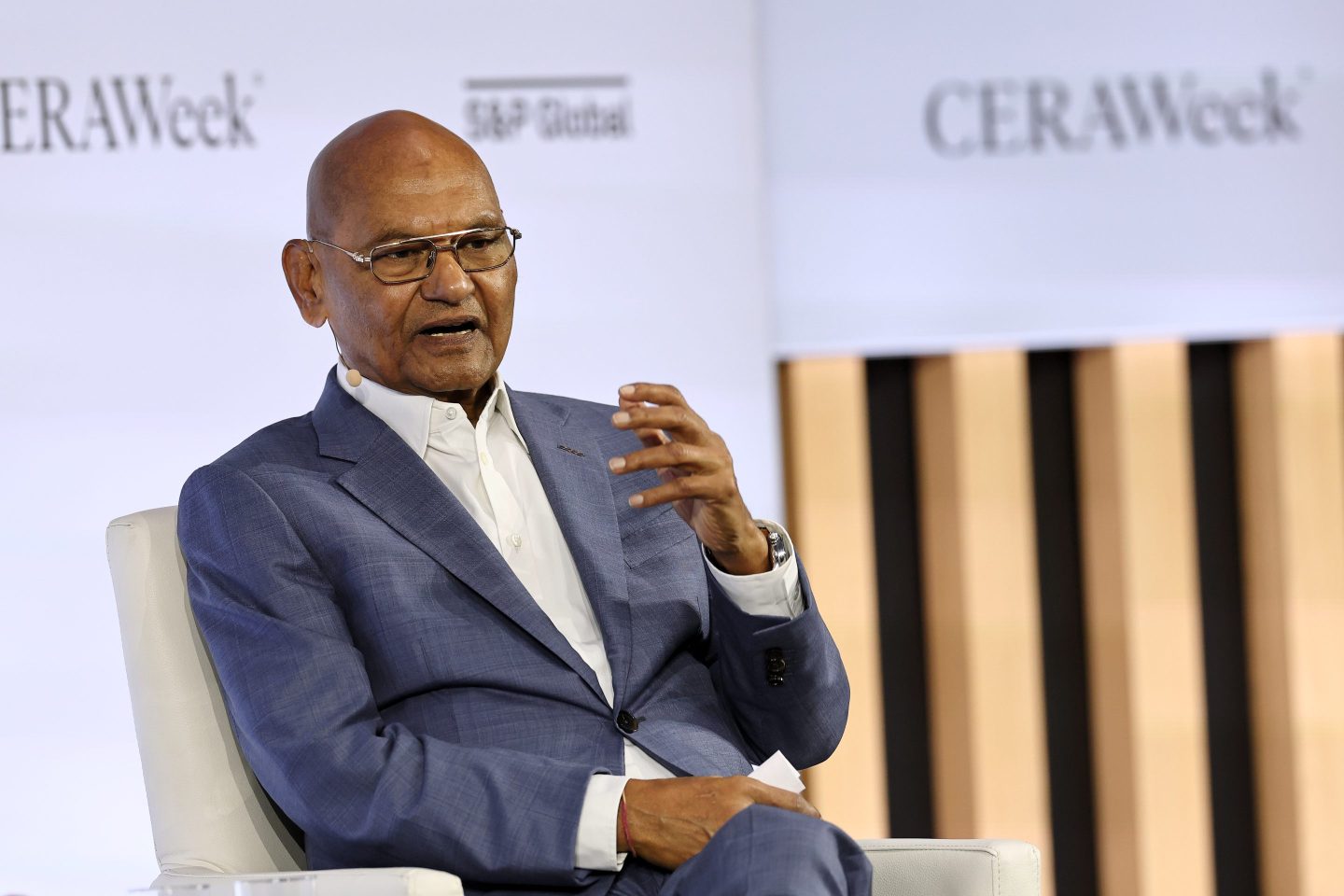
Anil Agarwal, founder and chairman of Vedanta Group, at the CERAWeek by S&P Global conference in Houston, Texas, US, on Wednesday, March 25, 2026. The event convenes more than 10,000 participants from over 2,350 companies across 89 countries for dialogue on the agenda ahead as the world enters a new era of energy transition. Photographer: Aaron M. Sprecher/Bloomberg via Getty Images
EnergyIndia
Energy ‘vulnerable’ India seeks U.S. help to produce more oil and wean itself off Russia, Middle East reliance amid geopolitical turmoil
By Jordan BlumMarch 31, 2026
1 day ago
Bond yields are falling even as oil tops $102, showing that Wall Street fears recession more than inflation
EnergyOil
Bond yields are falling even as oil tops $102, showing that Wall Street fears recession more than inflation
By Jason MaMarch 30, 2026
2 days ago
War against Iran to escalate as we approach six-week ‘TACO’ timetable, analysts say
EconomyMarkets
War against Iran to escalate as we approach six-week ‘TACO’ timetable, analysts say
By Jim EdwardsMarch 30, 2026
2 days ago
hormuz
CommentaryOil
Iran’s Hormuz toll booth points toward an L-shaped price plateau, not the V-shaped recovery traders want
By Siddharth MisraMarch 28, 2026
4 days ago
The Iran war could drag into 2027, analyst warns. The economic fallout is just getting started
Middle EastIran
The Iran war could drag into 2027, analyst warns. The economic fallout is just getting started
By Jason MaMarch 27, 2026
5 days ago

Most Popular

Jerome Powell says the $39 trillion national debt is ‘not unsustainable,’ but warns the trajectory ‘will not end well’
Economy
Jerome Powell says the $39 trillion national debt is ‘not unsustainable,’ but warns the trajectory ‘will not end well’
By Fortune EditorsMarch 30, 2026
2 days ago
A man used AI to call 3,000 Irish bartenders to track the cost of Guinness. Now pubs are lowering their prices to compete
AI
A man used AI to call 3,000 Irish bartenders to track the cost of Guinness. Now pubs are lowering their prices to compete
By Fortune EditorsMarch 30, 2026
2 days ago
Markets cheer as Trump threatens to abandon Iran war, but Jamie Dimon sides with allies: ‘Win this thing and clean up the straits’
Energy
Markets cheer as Trump threatens to abandon Iran war, but Jamie Dimon sides with allies: ‘Win this thing and clean up the straits’
By Fortune EditorsMarch 31, 2026
22 hours ago
The federal government shed 385,000 employees last year. Now the Trump administration is on a blitz to hire Gen Z workers
Politics
The federal government shed 385,000 employees last year. Now the Trump administration is on a blitz to hire Gen Z workers
By Fortune EditorsMarch 31, 2026
1 day ago
Kevin O'Leary says if you earn $68,000 a year and follow this rule, you'll retire a millionaire
Personal Finance
Kevin O'Leary says if you earn $68,000 a year and follow this rule, you'll retire a millionaire
By Fortune EditorsMarch 31, 2026
21 hours ago
A CEO trying to reindustrialize America says blue-collar pay is headed for 'massive hyperinflation' and kids should skip college to become welders
Success
A CEO trying to reindustrialize America says blue-collar pay is headed for 'massive hyperinflation' and kids should skip college to become welders
By Fortune EditorsMarch 30, 2026
2 days ago

© 2026 Fortune Media IP Limited. All Rights Reserved. Use of this site constitutes acceptance of our Terms of Use and Privacy Policy | CA Notice at Collection and Privacy Notice | Do Not Sell/Share My Personal Information
FORTUNE is a trademark of Fortune Media IP Limited, registered in the U.S. and other countries. FORTUNE may receive compensation for some links to products and services on this website. Offers may be subject to change without notice.