• Home
  • Latest
  • Fortune 500
  • Finance
  • Tech
  • Leadership
  • Lifestyle
  • Rankings
  • Multimedia

Trendingnow

1

Despite having a $165 million net worth, Scarlett Johansson says work-life balance doesn’t exist—and the first step to success is admitting that

2

The Bezos family just donated $100 million to help achieve one of Mayor Zohran Mamdani’s top campaign promises

3

Current price of oil as of May 15, 2026

1

Despite having a $165 million net worth, Scarlett Johansson says work-life balance doesn’t exist—and the first step to success is admitting that

2

The Bezos family just donated $100 million to help achieve one of Mayor Zohran Mamdani’s top campaign promises

3

Current price of oil as of May 15, 2026
Commentarycorporate boards of directors

What avalanche safety training can teach corporate boards about bad decisions

By
Jane Sadowsky
Jane Sadowsky
Down Arrow Button Icon
By
Jane Sadowsky
Jane Sadowsky
Down Arrow Button Icon
March 28, 2026, 7:30 AM ET
dog
Everyone could use some avalanche training.Getty Images

When everyone agrees, that might be the biggest warning sign of all. Unanimous decisions often reveal as much about group dynamics as genuine agreement.

Recommended Video

There is an unlikely field that studies this problem with unusual clarity: avalanche safety.

In avalanche safety training, there is one rule that overrides all others: if a single person in the group says “no,” everyone turns around. Corporate boards could learn something from that.

Corporate boards make some of the most consequential decisions in business — acquisitions, strategic pivots, leadership transitions, major capital allocations. Yet when those decisions appear in board minutes, they are almost always recorded as unanimous. Research suggests dissent occurs in only about 1% of board decisions. That unanimity often reveals as much about group dynamics as it does about genuine agreement.

The rule exists because of a pattern instructors see again and again. Someone senses something is wrong — unstable snow, deteriorating conditions, a risky route — but speaking up means challenging the plan and slowing everyone down. In larger groups especially, that voice often stays quiet.

The most dangerous variable, instructors often say, is not the snowpack. It is the group.

Corporate boardrooms operate under strikingly similar conditions. Directors must make consequential decisions with incomplete information: often within the compressed time frame of a board meeting. The question isn’t whether boards face pressure to align. It’s whether that pressure is silencing the most important voices in the room.

Consensus has obvious virtues. Boards function best when directors ultimately align behind a course of action. A unified board gives management clarity and confidence in execution.

But consensus can be a signal. It can also be a warning.

Anyone who has spent time in boardrooms recognizes how quickly the momentum of a conversation can tilt toward agreement. Management presents a proposal. A director offers a supportive observation. Another suggests refinement. Gradually, the discussion shifts from whether the proposal is sound to how it should be implemented.

Eventually the chair looks around the table and asks a familiar question: “Is everyone comfortable moving forward?”

Directors sometimes recognize the dynamic only after the meeting ends. Following a unanimous decision on a major initiative, someone may quietly remark in the hallway, “I had some reservations about that.” Another director admits they did as well. In the room itself, however, those doubts never surfaced.

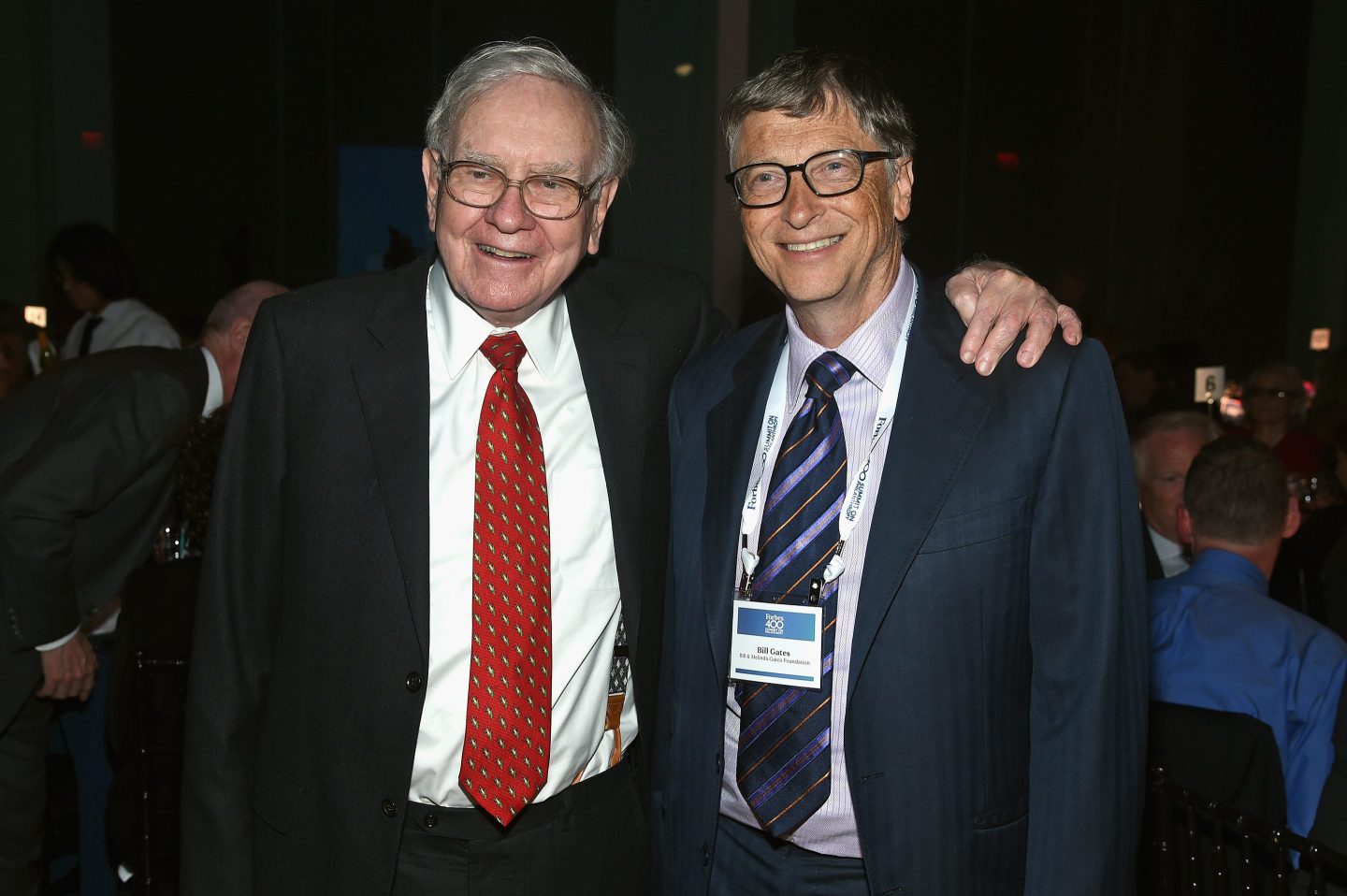
Seasoned investors understand the value of dissent. Warren Buffett has long argued that the best boards are those where directors are willing to challenge assumptions rather than simply ratify them. But even strong boards can find that once a discussion begins to converge, raising a late objection becomes psychologically difficult.

Psychologists call this dynamic groupthink: the tendency of cohesive groups to suppress disagreement in pursuit of harmony. Boardrooms are particularly susceptible: — directors meet periodically, relationships are collegial, and open disagreement can feel unnecessarily disruptive.

Avalanche educators warn about the same pattern. As groups become larger, responsibility diffuses and individuals become less likely to challenge the emerging consensus. The very structure of the discussion can begin to suppress caution.

If that dynamic shows up in boardrooms — and the evidence suggests it does — improving board decisions isn’t only about who sits at the table. It’s about how decisions are made once everyone is there. Boards have spent decades focused on composition: independence, diversity, expertise. The next frontier is deliberation.

Some boards already experiment with structured disagreement. In evaluating major transactions, directors may organize “red team/blue team” exercises, assigning one group to argue for a deal while another is tasked with challenging it. The objective is to stress-test assumptions before committing capital.

Yet most board deliberation still takes place in a single conversation around a table. That format encourages the emergence of a dominant narrative before competing analyses have had time to develop.

Boards might consider what could be called parallel deliberation: briefly breaking into smaller groups before reconvening to compare conclusions.

After management presents a proposal, the chair divides directors into small groups and asks each to answer the same three questions: What assumptions must be true for this plan to succeed? What could cause it to fail? Under what circumstances would we say no? Fifteen minutes later, the board reconvenes and compares conclusions before continuing the discussion.

Such a structure introduces several useful dynamics. Smaller groups lower the social cost of dissent. Independent discussions generate multiple lines of analysis rather than a single conversational path. And by interrupting the momentum of a room-wide consensus, the structure helps surface concerns that might otherwise remain unspoken.

The goal is not to manufacture disagreement. Boards ultimately need alignment. But alignment reached through rigorous debate is far stronger than consensus that emerges quietly around the table.

In avalanche training, the group turns around when one person says no.

In boardrooms, that same voice is the one most likely to stay quiet — and the one most worth hearing.

The opinions expressed in Fortune.com commentary pieces are solely the views of their authors and do not necessarily reflect the opinions and beliefs of Fortune.


Join us at the Fortune Workplace Innovation Summit May 19–20, 2026, in Atlanta. The next era of workplace innovation is here—and the old playbook is being rewritten. At this exclusive, high-energy event, the world’s most innovative leaders will convene to explore how AI, humanity, and strategy converge to redefine, again, the future of work. Register now.
About the Author
By Jane Sadowsky
See full bioRight Arrow Button Icon

Latest in Commentary

Finance
Lorem ipsum dolor sit amet, consectetur adipiscing elit, sed do eiusmod tempor incididunt ut labore et dolore magna aliqua. Ut enim ad minim veniam
By Fortune Editors
October 20, 2025
Finance
Lorem ipsum dolor sit amet, consectetur adipiscing elit, sed do eiusmod tempor incididunt ut labore et dolore magna aliqua. Ut enim ad minim veniam
By Fortune Editors
October 20, 2025
Finance
Lorem ipsum dolor sit amet, consectetur adipiscing elit, sed do eiusmod tempor incididunt ut labore et dolore magna aliqua. Ut enim ad minim veniam
By Fortune Editors
October 20, 2025
Finance
Lorem ipsum dolor sit amet, consectetur adipiscing elit, sed do eiusmod tempor incididunt ut labore et dolore magna aliqua. Ut enim ad minim veniam
By Fortune Editors
October 20, 2025
Finance
Lorem ipsum dolor sit amet, consectetur adipiscing elit, sed do eiusmod tempor incididunt ut labore et dolore magna aliqua. Ut enim ad minim veniam
By Fortune Editors
October 20, 2025
Finance
Lorem ipsum dolor sit amet, consectetur adipiscing elit, sed do eiusmod tempor incididunt ut labore et dolore magna aliqua. Ut enim ad minim veniam
By Fortune Editors
October 20, 2025

Most Popular

Finance
Lorem ipsum dolor sit amet, consectetur adipiscing elit, sed do eiusmod tempor incididunt ut labore et dolore magna aliqua. Ut enim ad minim veniam
By Fortune Editors
October 20, 2025
Finance
Lorem ipsum dolor sit amet, consectetur adipiscing elit, sed do eiusmod tempor incididunt ut labore et dolore magna aliqua. Ut enim ad minim veniam
By Fortune Editors
October 20, 2025
Finance
Lorem ipsum dolor sit amet, consectetur adipiscing elit, sed do eiusmod tempor incididunt ut labore et dolore magna aliqua. Ut enim ad minim veniam
By Fortune Editors
October 20, 2025
Finance
Lorem ipsum dolor sit amet, consectetur adipiscing elit, sed do eiusmod tempor incididunt ut labore et dolore magna aliqua. Ut enim ad minim veniam
By Fortune Editors
October 20, 2025
Finance
Lorem ipsum dolor sit amet, consectetur adipiscing elit, sed do eiusmod tempor incididunt ut labore et dolore magna aliqua. Ut enim ad minim veniam
By Fortune Editors
October 20, 2025
Finance
Lorem ipsum dolor sit amet, consectetur adipiscing elit, sed do eiusmod tempor incididunt ut labore et dolore magna aliqua. Ut enim ad minim veniam
By Fortune Editors
October 20, 2025
Fortune Secondary Logo
Rankings
  • 100 Best Companies
  • Fortune 500
  • Global 500
  • Fortune 500 Europe
  • Most Powerful Women
  • World's Most Admired Companies
  • See All Rankings
  • Lists Calendar
Sections
  • Finance
  • Fortune Crypto
  • Features
  • Leadership
  • Health
  • Commentary
  • Success
  • Retail
  • Mpw
  • Tech
  • Lifestyle
  • CEO Initiative
  • Asia
  • Politics
  • Conferences
  • Europe
  • Newsletters
  • Personal Finance
  • Environment
  • Magazine
  • Education
Customer Support
  • Frequently Asked Questions
  • Customer Service Portal
  • Privacy Policy
  • Terms Of Use
  • Single Issues For Purchase
  • International Print
Commercial Services
  • Advertising
  • Fortune Brand Studio
  • Fortune Analytics
  • Fortune Conferences
  • Business Development
  • Group Subscriptions
About Us
  • About Us
  • Press Center
  • Work At Fortune
  • Terms And Conditions
  • Site Map
  • About Us
  • Press Center
  • Work At Fortune
  • Terms And Conditions
  • Site Map
  • Facebook icon
  • Twitter icon
  • LinkedIn icon
  • Instagram icon
  • Pinterest icon
Jane Sadowsky has served as an independent director on corporate and non-profit boards for more than a decade and currently serves on three global boards. She retired from a career in investment banking as a Senior Managing Director and head of the Power & Utility Group for Evercore Partners and is currently a Senior Advisor at Moelis & Co. 

Latest in Commentary

liberman
Commentarystart-ups
We watched social media concentrate. The same thing is happening in AI, only at a deeper layer
By David Liberman and Daniil LibermanMay 16, 2026
2 hours ago
olivier
CommentaryAnthropic
I’ve been studying Big Tech for a long time. What just happened with Anthropic and the Pentagon terrifies me
By Olivier SylvainMay 16, 2026
3 hours ago
lawyer
CommentaryLaw
Would you hire the lawyer who just got sanctioned for using AI?
By Alexandra SmythMay 16, 2026
5 hours ago
greg
Personal FinanceAviation
Mamdani’s New York is coming to tax your private jet. Here’s how to prepare
By Greg RaiffMay 16, 2026
6 hours ago
chase
CommentaryCities
San Francisco has $2 trillion in AI wealth and can’t fix its own city. That’s every city’s problem
By Chase GarbarinoMay 15, 2026
1 day ago
lori
Commentarymental health
I run Valvoline Instant Oil Change and work with young people every day. They’re in crisis—and we all have to try to help
By Lori FleesMay 15, 2026
1 day ago

Most Popular

Despite having a $165 million net worth, Scarlett Johansson says work-life balance doesn’t exist—and the first step to success is admitting that
Success
Despite having a $165 million net worth, Scarlett Johansson says work-life balance doesn’t exist—and the first step to success is admitting that
By Preston ForeMay 13, 2026
3 days ago
The Bezos family just donated $100 million to help achieve one of Mayor Zohran Mamdani’s top campaign promises
Politics
The Bezos family just donated $100 million to help achieve one of Mayor Zohran Mamdani’s top campaign promises
By Jake AngeloMay 12, 2026
4 days ago
Current price of oil as of May 15, 2026
Personal Finance
Current price of oil as of May 15, 2026
By Joseph HostetlerMay 15, 2026
1 day ago
Nearly 50,000 Lake Tahoe residents have to find a new power source after their energy source looks to redirect lines to data centers
Travel & Leisure
Nearly 50,000 Lake Tahoe residents have to find a new power source after their energy source looks to redirect lines to data centers
By Catherina GioinoMay 12, 2026
4 days ago
The airplane fuel shortage is a myth propagated by airlines who want to cancel unprofitable flights, says private jet CEO
Energy
The airplane fuel shortage is a myth propagated by airlines who want to cancel unprofitable flights, says private jet CEO
By Jim EdwardsMay 14, 2026
2 days ago
Debbie Gibson, Geezer Butler of Black Sabbath want you to adopt a beagle rescued from an experimental lab in Wisconsin
North America
Debbie Gibson, Geezer Butler of Black Sabbath want you to adopt a beagle rescued from an experimental lab in Wisconsin
By Scott Bauer and The Associated PressMay 13, 2026
3 days ago

© 2026 Fortune Media IP Limited. All Rights Reserved. Use of this site constitutes acceptance of our Terms of Use and Privacy Policy | CA Notice at Collection and Privacy Notice | Do Not Sell/Share My Personal Information
FORTUNE is a trademark of Fortune Media IP Limited, registered in the U.S. and other countries. FORTUNE may receive compensation for some links to products and services on this website. Offers may be subject to change without notice.