Today’s U.S. unemployment rate is low by historical standards, yet the national mood feels far from secure. War in Iran, stubbornly high prices, and the drumbeat of AI-as-job-killer stories have made the economy feel fragile.
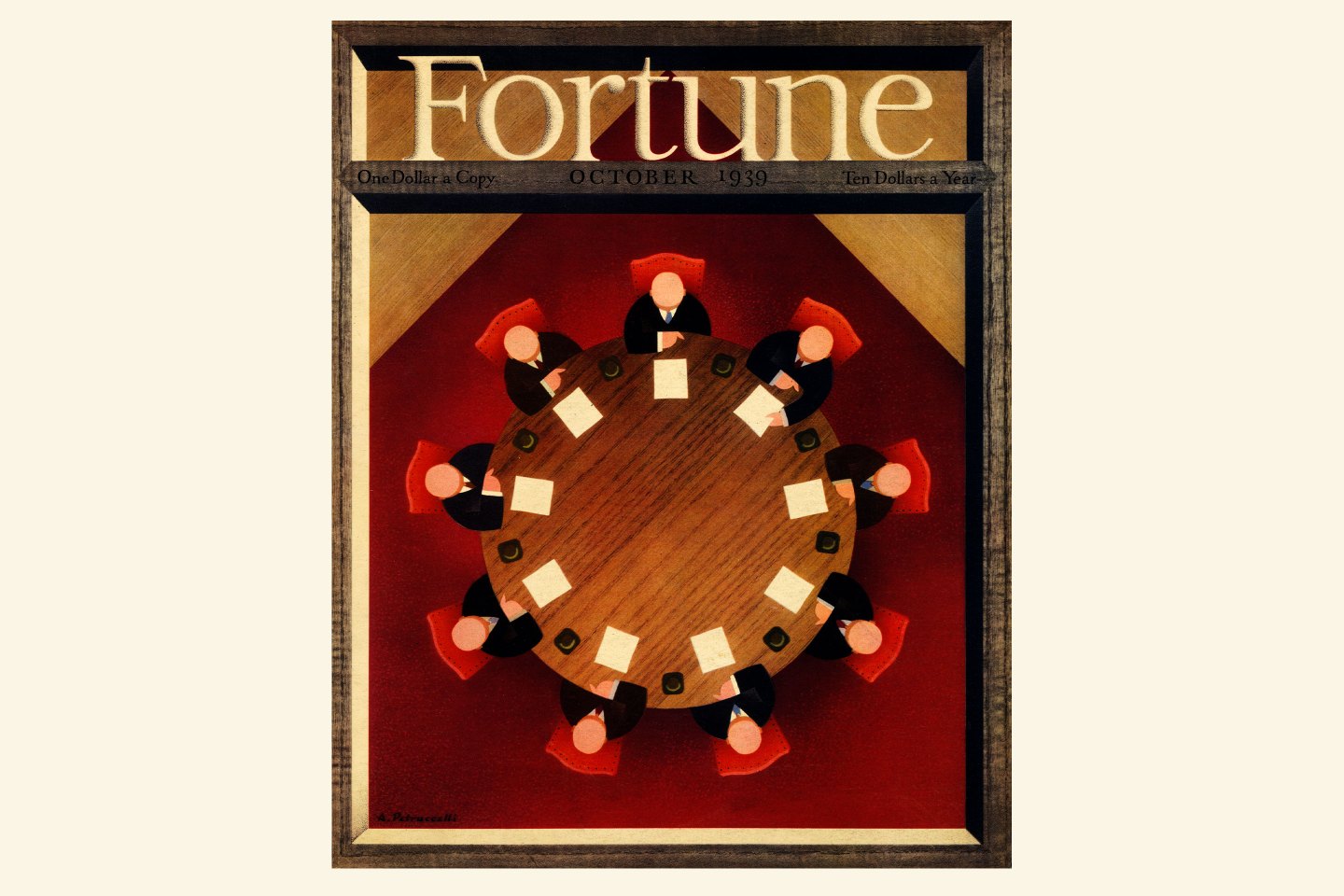
This Fortune magazine cover from October 1939 by Antonio Petruccelli depicts one of the magazine’s famous roundtable discussions. In this issue, which the editor letter described as “one of the most important issues Fortune has ever sent to press,” the topic of the roundtable was unemployment, which was still in the doldrums of the Great Depression. Described in the magazine’s typically wry terms as “seventeen men in big jobs discuss 10,000,000 without any,” the discussion brought together corporate chiefs, economists, bankers, labor leaders, and a U.S. senator, among others, in a barn in the Berkshires owned by Fortune editor Raymond L. Buell.
The challenge: Define an “area of agreement” to address the question, “How can the U.S. achieve full employment?” The participants found that common ground in a way that’s hard to imagine from the vantage point of this politically divided era: They reached an “exciting acceptance of a prime ‘liberal’ thesis,” the edition’s editor’s letter reports, and disposed of “the myth that business is immovably reactionary.” Indeed, Fortune reported, “the businessmen could agree with the laborites and farmers that government subsidy of the unemployed is indispensable, even if it means deficit financing.” The roundtable, along with a large-scale survey that Fortune undertook to ask “what business thinks,” showed surprisingly broad support of Franklin D. Roosevelt’s New Deal legislation, the editor’s letter remarks: “For here were the businessmen of the nation, although they are sick of Roosevelt, saying that they don’t want to wipe out his reforms.”
Petruccelli’s cover (his 22nd for the magazine) shows identical faceless men, apparently in calm agreement—“a dramatic, dignified thing,” as the editor’s letter in that issue put it, “only the Round Table never looks like that.” The real one, the letter explained, was a raucous discussion that happened “not around a glistening mahogany board, but around whatever tables Mr. and Mrs. Buell could spare, which happened to include a couple of fine ping-pong tables.”
The reasons for today’s pressures on the job market are quite different, but as one expert told Fortune’s Claire Zillman this week, “it’s brutal out there right now”—especially for college graduates entering a job market being reshaped in real time by AI.
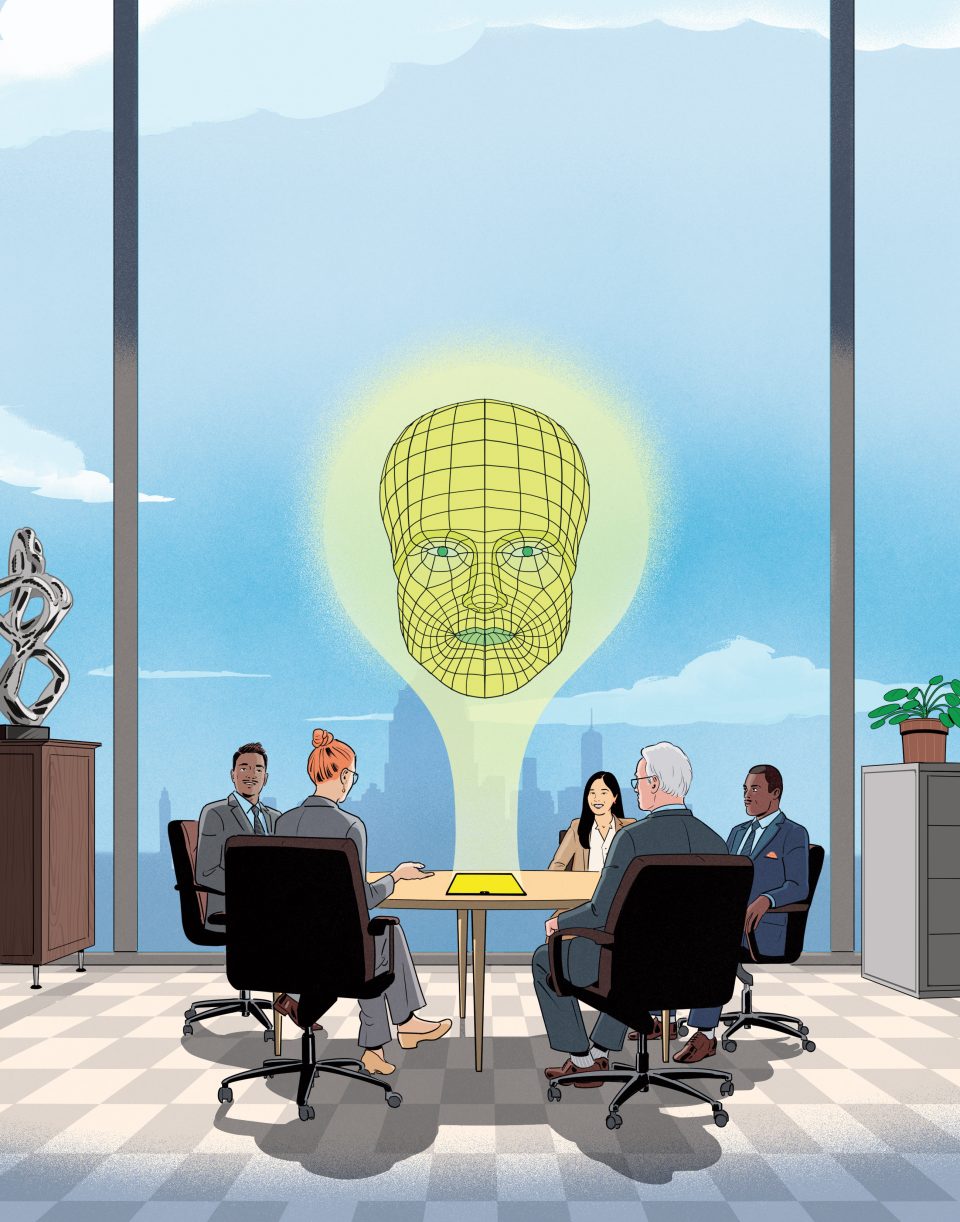
Perhaps what we need, in 2026 as in 1939, is a frank and robust discussion of how to address the needs of the humans that this new technology may displace.
A version of this article appears in the April/May 2026 issue of Fortune with the headline “Who gets a seat at the table?”