• Home
  • Latest
  • Fortune 500
  • Finance
  • Tech
  • Leadership
  • Lifestyle
  • Rankings
  • Multimedia

Trendingnow

1

The U.S. spent $30 billion to ditch textbooks for laptops and tablets: The result is the first generation less cognitively capable than their parents

2

Current price of oil as of July 13, 2026

3

Current price of silver as of Monday, July 13, 2026

1

The U.S. spent $30 billion to ditch textbooks for laptops and tablets: The result is the first generation less cognitively capable than their parents

2

Current price of oil as of July 13, 2026

3

Current price of silver as of Monday, July 13, 2026
CommentaryTariffs

Millions of Americans paid billions in tariffs later ruled illegal — and they won’t see a dime back

By
Robert Hormats
Robert Hormats
Down Arrow Button Icon
By
Robert Hormats
Robert Hormats
Down Arrow Button Icon
April 6, 2026, 9:24 AM ET
trump
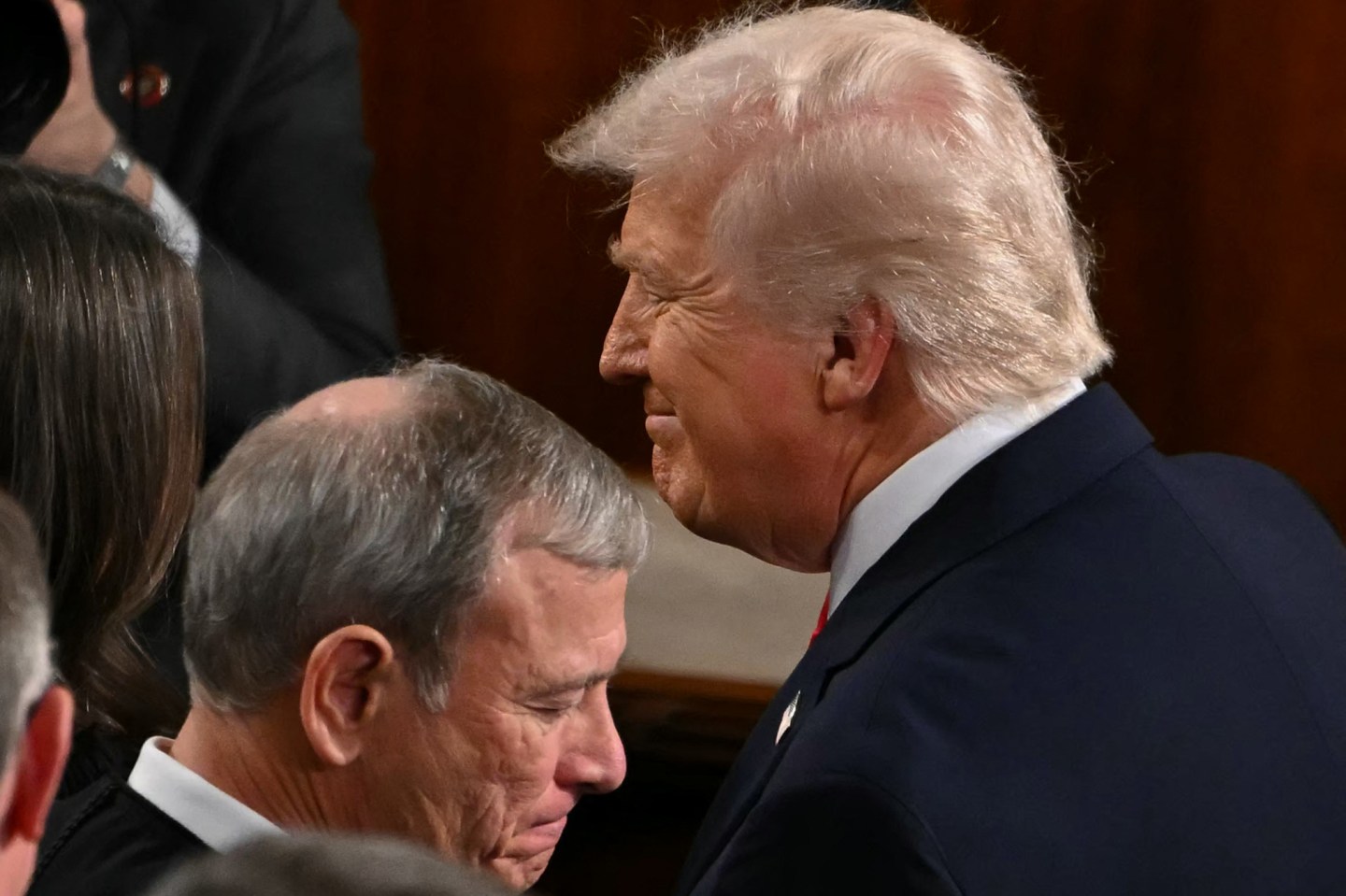
US President Donald Trump walks by Supreme Court Chief Justice John Roberts as he arrives to deliver his State of the Union address in the House Chamber of the US Capitol in Washington, DC, on February 24, 2026. ANDREW CABALLERO-REYNOLDS / AFP via Getty Images
Add Fortune on Google for similar content.

Low- and Middle-Income American families, and small businesses, accounting for well over half of our country’s population, paid out a disproportionate share of their incomes to the government due to IEEPA Tariffs recently struck down by the Supreme Court. Total payments amounted to roughly $175 billion. Now these families and small businesses face the prospect of receiving no rebates. Thus, the system is regressive for them on both the front and back ends — the burden of the original high tariffs and now the denial of rebates to compensate them.

Recommended Video

As the result of the so-called “Liberation Day” tariffs announced April 2, 2025, retail prices rose by between 6 and 7 percentage points, costing the average American household between $400 and $600 — and many considerably more. For low-income families especially, this was a painful gouge into their incomes.

One might imagine that in the interest of fairness, rebates would automatically go to these families and small businesses. That is not the case. The way our system works, rebates go ONLY to importers who DIRECTLY paid the tariffs to the Customs and Border Protection agency (CBP) in the first place. The CBP estimates that 330,000 American importers actually paid the tariffs.

In contrast, 300 million-plus Americans assumed most of the burden virtually every time they went to the grocery store, bought a car, or purchased a pair of shoes, a dress, or a home appliance. Small businesses lost as well because most of the costs of the tariffs paid by larger importers or wholesalers were passed on to them. Most consumers and small businesses have NO clear recourse to getting any of their money back.

America’s importers that accounted for most of the tariff revenue were generally large retailers, big wholesalers, shippers, and companies that import components and raw materials to be incorporated in their manufactured goods. This group, accordingly, will receive the lion’s share of rebates from the U.S. Government through a relatively smooth, computerized process for which they are pre-registered.

Those American consumers who bought imported products after “Liberation Day” in stores, through websites, or in auto showrooms — who probably didn’t feel very “liberated” then — will feel even less so now. They will have NO access to the rebates. If they benefit at all, it would only be because some importing companies that DID receive rebates chose to pass the funds on to them. But this is not easy.

Doing so on a case-by-case, buyer-by-buyer, product-by-product basis would be highly complicated if not impossible for most companies. Restoring even a semblance of an equitable outcome would require a large company to use a broader approach — e.g., discounting consumer prices for a period of time, issuing gift credit cards to customers, or providing equivalent amounts to small retailers who sell their products in order to enable them to recoup their losses or pass the benefits on to their own customers.

U.S. Customs and Border Protection officials say they are now working on new arrangements, but these may take a long time. Likewise, small businesses may consider engaging in lawsuits to recover their tariff costs, but these could be expensive and time-consuming. Many will go bankrupt waiting.

To be clear, this rebate conundrum, at its roots, is not the fault of large companies or importers, or of this administration. It is a byproduct of an older rebate system and a multi-layered distribution system.

But the perception — and reality — of unfairness is highly palpable. It needs to be addressed by a wide range of companies and government officials. CNN has done an especially good job interviewing small business owners who have been painfully harmed and forced to lay off employees. This overall unfairness and pain must be confronted. To make matters worse, unreturned money will be kept by the Treasury.

In the 2008–09 financial crisis, the government provided enormous support to large financial institutions but virtually none to small businesses, leaving a bitter taste in the mouths of many such businesses and their employees, and millions of everyday, hard-working Americans. As was the case then, an inequitable solution now will further widen social and economic divisions and foment bitterness in this country.

Coming in tandem with currently skyrocketing oil prices and new sets of tariffs imposed by the president to replace the earlier ones, this situation is an especially bitter pill for low-income and even average families whose budgets are already stressed.

This situation fans the flames of social stress in this country. Businesses and the government must devise measures to address it. Whatever the government claims to be planning should be speeded up. In addition, several large companies that have constructively addressed this inequity already could share their techniques with others that have not. Both steps would make a bad situation better. Failure to do so would further pull apart our already highly divided society. All will suffer.

The opinions expressed in Fortune.com commentary pieces are solely the views of their authors and do not necessarily reflect the opinions and beliefs of Fortune.

About the Author
By Robert Hormats
See full bioRight Arrow Button Icon
Add Fortune on Google for similar content.

Latest in Commentary

Finance
Lorem ipsum dolor sit amet, consectetur adipiscing elit, sed do eiusmod tempor incididunt ut labore et dolore magna aliqua. Ut enim ad minim veniam
By Fortune Editors
October 20, 2025
Finance
Lorem ipsum dolor sit amet, consectetur adipiscing elit, sed do eiusmod tempor incididunt ut labore et dolore magna aliqua. Ut enim ad minim veniam
By Fortune Editors
October 20, 2025
Finance
Lorem ipsum dolor sit amet, consectetur adipiscing elit, sed do eiusmod tempor incididunt ut labore et dolore magna aliqua. Ut enim ad minim veniam
By Fortune Editors
October 20, 2025
Finance
Lorem ipsum dolor sit amet, consectetur adipiscing elit, sed do eiusmod tempor incididunt ut labore et dolore magna aliqua. Ut enim ad minim veniam
By Fortune Editors
October 20, 2025
Finance
Lorem ipsum dolor sit amet, consectetur adipiscing elit, sed do eiusmod tempor incididunt ut labore et dolore magna aliqua. Ut enim ad minim veniam
By Fortune Editors
October 20, 2025
Finance
Lorem ipsum dolor sit amet, consectetur adipiscing elit, sed do eiusmod tempor incididunt ut labore et dolore magna aliqua. Ut enim ad minim veniam
By Fortune Editors
October 20, 2025

Most Popular

Finance
Lorem ipsum dolor sit amet, consectetur adipiscing elit, sed do eiusmod tempor incididunt ut labore et dolore magna aliqua. Ut enim ad minim veniam
By Fortune Editors
October 20, 2025
Finance
Lorem ipsum dolor sit amet, consectetur adipiscing elit, sed do eiusmod tempor incididunt ut labore et dolore magna aliqua. Ut enim ad minim veniam
By Fortune Editors
October 20, 2025
Finance
Lorem ipsum dolor sit amet, consectetur adipiscing elit, sed do eiusmod tempor incididunt ut labore et dolore magna aliqua. Ut enim ad minim veniam
By Fortune Editors
October 20, 2025
Finance
Lorem ipsum dolor sit amet, consectetur adipiscing elit, sed do eiusmod tempor incididunt ut labore et dolore magna aliqua. Ut enim ad minim veniam
By Fortune Editors
October 20, 2025
Finance
Lorem ipsum dolor sit amet, consectetur adipiscing elit, sed do eiusmod tempor incididunt ut labore et dolore magna aliqua. Ut enim ad minim veniam
By Fortune Editors
October 20, 2025
Finance
Lorem ipsum dolor sit amet, consectetur adipiscing elit, sed do eiusmod tempor incididunt ut labore et dolore magna aliqua. Ut enim ad minim veniam
By Fortune Editors
October 20, 2025
Fortune Secondary Logo
Rankings
  • 100 Best Companies
  • Fortune 500
  • Global 500
  • Fortune 500 Europe
  • Most Powerful Women
  • World's Most Admired Companies
  • See All Rankings
  • Lists Calendar
Sections
  • Finance
  • Fortune Crypto
  • Features
  • Leadership
  • Health
  • Commentary
  • Success
  • Retail
  • Mpw
  • Tech
  • Lifestyle
  • CEO Initiative
  • Asia
  • Politics
  • Conferences
  • Europe
  • Newsletters
  • Personal Finance
  • Environment
  • Magazine
  • Education
Customer Support
  • Frequently Asked Questions
  • Customer Service Portal
  • Privacy Policy
  • Terms Of Use
  • Single Issues For Purchase
  • International Print
Commercial Services
  • Advertising
  • Fortune Brand Studio
  • Fortune Analytics
  • Fortune Conferences
  • Business Development
  • Group Subscriptions
About Us
  • About Us
  • Press Center
  • Work At Fortune
  • Terms And Conditions
  • Site Map
  • About Us
  • Press Center
  • Work At Fortune
  • Terms And Conditions
  • Site Map
  • Facebook icon
  • Twitter icon
  • LinkedIn icon
  • Instagram icon
  • Pinterest icon
Robert Hormats has been a senior official in the administrations of five different American presidents, a top executive on Wall Street and major business leader working with companies in the United States and throughout the world. His most recent government job was Under Secretary of State for Economic Growth, Energy and the Environment. He is currently Vice Chairman of Kissinger Associates, Inc., as well as a lecturer at the Yale School of Management.  He played a major role in the opening up of U.S. relations with China as Senior White House Economic Advisor to Dr. Henry Kissinger during the early 1970s, the American response to the global energy crisis of the 1970s, international trade negotiations and resolving a number of financial crises involving Asia, Russia, Latin America and the U.S. In 1982, Bob joined Goldman Sachs where he started out as a Vice President, moved up to Managing Director and ultimately became Vice Chairman Goldman Sachs (International), ultimately remaining at the firm for over 25 years.

Latest in Commentary

b
CommentaryWorld Cup
Columbia Business School professors: What the Balogun red card can teach us about AI and judgment
By Oded Netzer, Christopher Frank and Paul MagnoneJuly 13, 2026
15 hours ago
usa
Commentary250 Years of Innovation
For 250 years, work defined American identity. That era Is ending
By Keith Ferrazzi and Wendy SmithJuly 11, 2026
3 days ago
m
Commentarymedicine
America’s bone health is quietly headed for a $19 billion crisis
By Matthew T. DrakeJuly 9, 2026
5 days ago
t
CommentaryEducation
AI is about to disrupt millions of jobs. A century ago, America’s answer was to build a new high school
By Tim KnowlesJuly 8, 2026
6 days ago
amit
CommentaryVenture Capital
Physical AI’s $50 trillion opportunity requires long-term conviction, but the payoff is huge 
By Amit ChaturvedyJuly 8, 2026
6 days ago
heat
Commentaryclimate change
McKinsey Global Institute: Climate planning has prioritized floods. Heat demands equal attention
By Sylvain Johansson, Mekala Krishnan, Kanmani Chockalingam and Annabel FarrJuly 7, 2026
7 days ago

Most Popular

The U.S. spent $30 billion to ditch textbooks for laptops and tablets: The result is the first generation less cognitively capable than their parents
Innovation
The U.S. spent $30 billion to ditch textbooks for laptops and tablets: The result is the first generation less cognitively capable than their parents
By Sasha RogelbergJuly 12, 2026
2 days ago
Current price of oil as of July 13, 2026
Personal Finance
Current price of oil as of July 13, 2026
By Joseph HostetlerJuly 13, 2026
20 hours ago
Current price of silver as of Monday, July 13, 2026
Personal Finance
Current price of silver as of Monday, July 13, 2026
By Joseph HostetlerJuly 13, 2026
20 hours ago
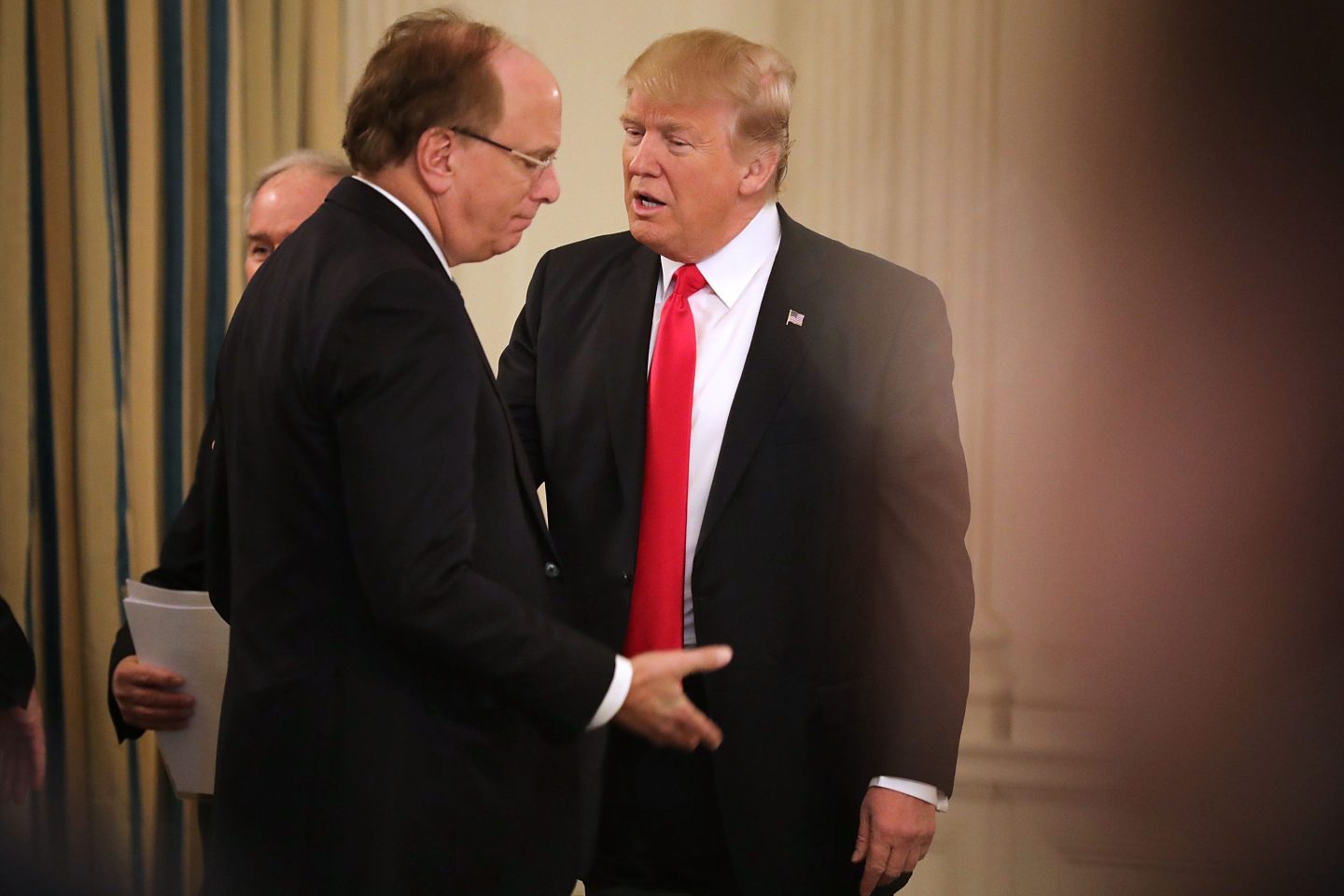
Trump embraces Australian retirement system backed by Larry Fink
Personal Finance
Trump embraces Australian retirement system backed by Larry Fink
By Brianna Sosa and BloombergJuly 12, 2026
1 day ago
How Pete Hegseth's DEI order just put Scouting America's future at stake
North America
How Pete Hegseth's DEI order just put Scouting America's future at stake
By Seth T. Kannarr, Derek H. Alderman and The ConversationJuly 13, 2026
11 hours ago
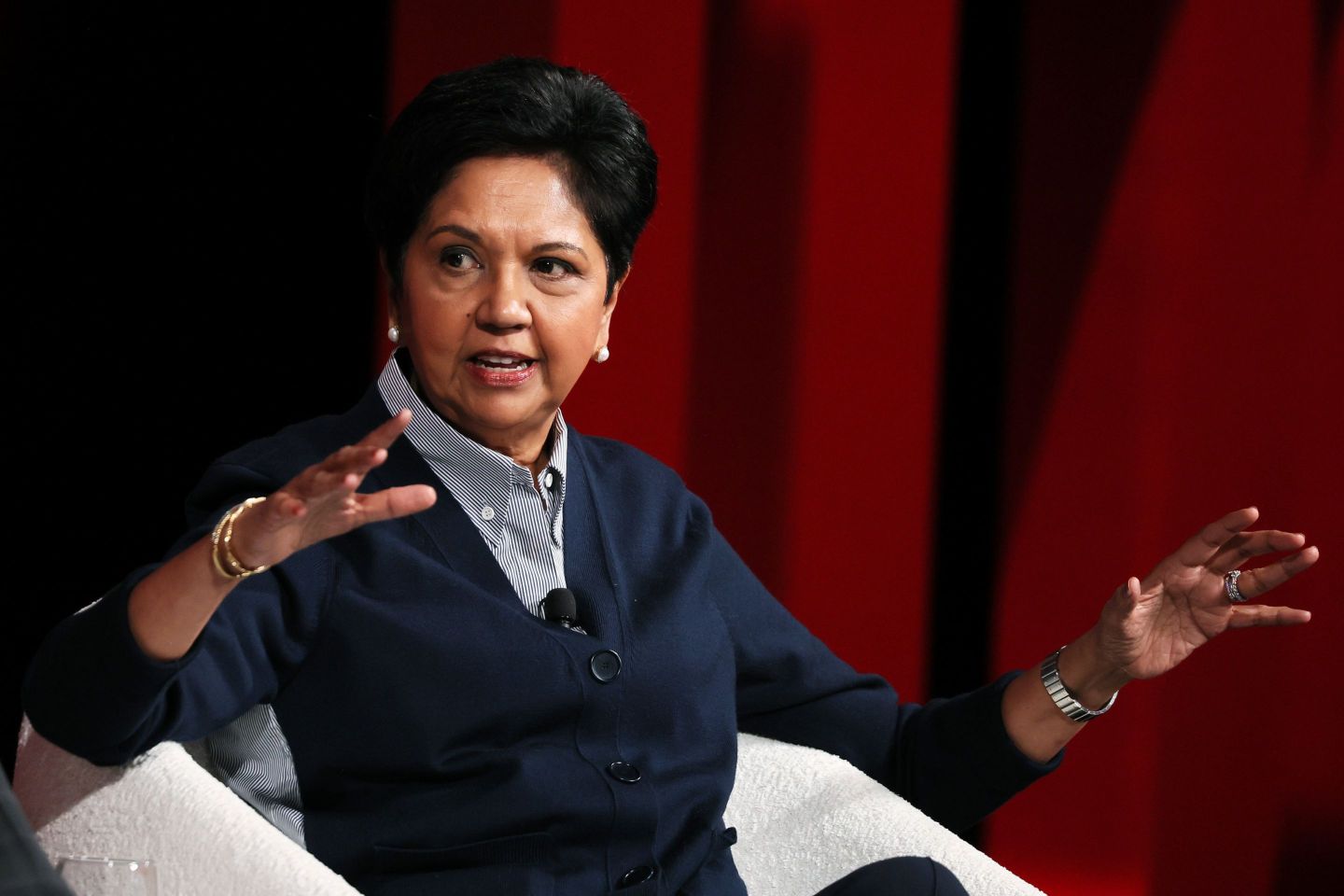
Ex-PepsiCo CEO Indra Nooyi worked from midnight until 5 a.m. as a receptionist to pay for her Yale degree—and she says ‘respect went up’ because of it
Success
Ex-PepsiCo CEO Indra Nooyi worked from midnight until 5 a.m. as a receptionist to pay for her Yale degree—and she says ‘respect went up’ because of it
By Preston ForeJuly 6, 2026
8 days ago

© 2026 Fortune Media IP Limited. All Rights Reserved. Use of this site constitutes acceptance of our Terms of Use and Privacy Policy | CA Notice at Collection and Privacy Notice | Do Not Sell/Share My Personal Information
FORTUNE is a trademark of Fortune Media IP Limited, registered in the U.S. and other countries. FORTUNE may receive compensation for some links to products and services on this website. Offers may be subject to change without notice.