Brent crude is set to average more than $100 a barrel through 2026 if the Strait of Hormuz remains closed for another month, according to Goldman Sachs Group Inc.
“The situation remains fluid,” analysts including Daan Struyven said in a note after the start of a two-week ceasefire between the US and Iran, noting comments from Vice President JD Vance that the truce was fragile. “We continue to see the risks to our price forecast as skewed to the upside.”
The oil market remains fixated on the strait, which has been largely closed since the US and Israeli attack on Iran in February that ignited the war. While Tehran and Washington said they paused the fighting in exchange for a reopening of the conduit, there’s little clarity on what was agreed.
At present, Goldman’s base-case outlook is for flows through the strait to start picking up this weekend, followed by a gradual, one-month recovery in Persian Gulf exports to pre-war levels. Under that scenario, Brent is seen averaging $82 a barrel in the third quarter and $80 in the fourth.
Under the bank’s so-called adverse view, including the reopening being “postponed” for one month, Brent was expected to average above $100 a barrel in the second half, the analysts said.
Another outcome, based on a longer closure and the loss of some regional production, came with even higher forecasts, with Brent seen at $120 a barrel in the third quarter and $115 in the fourth.
Read More: How Iran’s Chokehold on Hormuz Is Upending Oil: Explainer
US President Donald Trump said it had been “agreed, a long time ago” that the Strait of Hormuz would be open and safe, according to a social-media post, while also threatening that there would be a resumption of military hostilities against Iran if the agreement were not complied with in full.
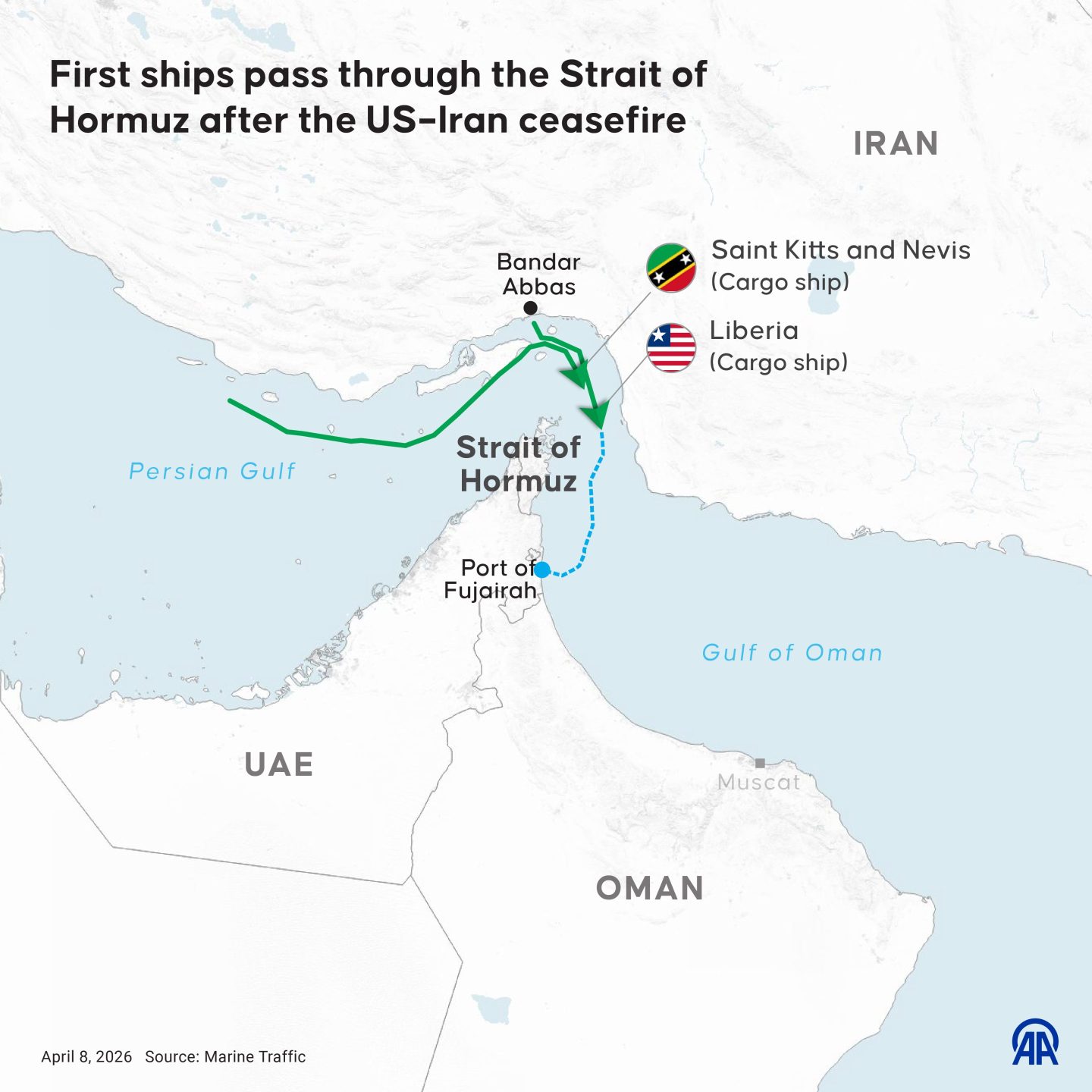
Meanwhile, Iran’s Ports and Maritime Organization announced two so-called designated safe routes for vessels entering and exiting the strait, according to state-run Nour News. The revised pattern centers around Larak Island, about 30 kilometers (19 miles) off Iran’s coast at Bandar Abbas, it said.
With Iran to its north, the Strait of Hormuz connects the Persian Gulf to global markets. The waterway is an essential passage for the energy market, handling about a quarter of the world’s seaborne oil trade in peacetime.
Brent was last above $98 a barrel, after sinking 13% on Wednesday as the truce was announced. Futures rose as high as $119.50 during the crisis.