Are you feeling out of control? A perusal of this edition of Fortune Europe will suggest that, if you are, you’re not alone. In this, our bumper AI special, we have story after story exploring how technology is moving faster than the systems designed to control it, and how organizations, from courts, cities, and regulators, to boards and business leaders, are all trying to catch up.
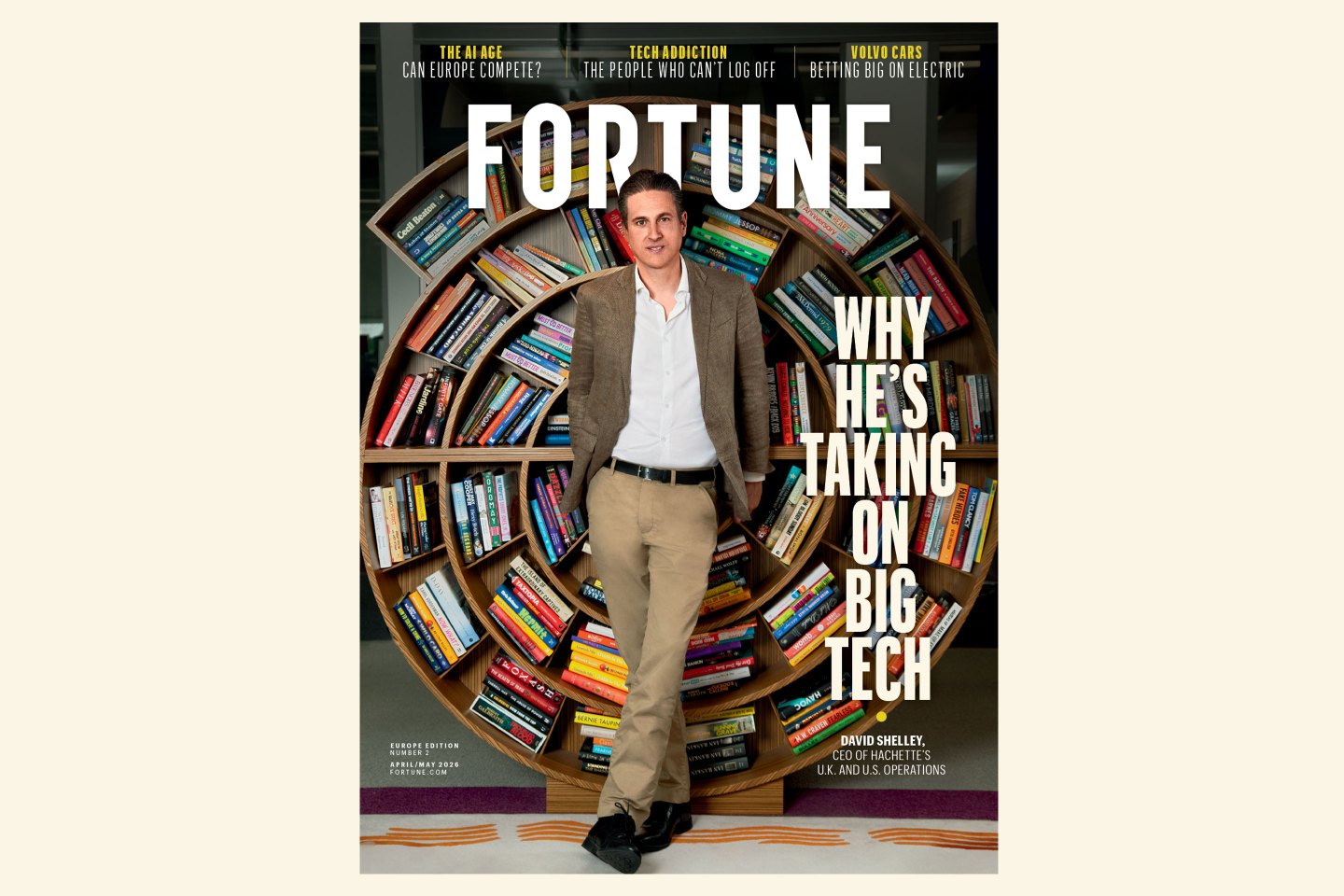
On what felt like the first day of sunshine we have seen in London this year, I spoke with David Shelley, the U.K.-U.S. CEO of Hachette, about how the global publishing giant is wresting control over its authors’ work from the jaws of Big Tech. The publisher is joining a class action lawsuit against Google, claiming the company stole its writers’ work to train its LLMs. If Shelley and his team win, it will be a stake in the ground for the wider creative industry, many denizens of which are nervous over who will get to own ideas in the future.
Big Tech is certainly getting the most out of its lawyers lately. Kristin Stoller discusses the rise of tech addiction as a slew of landmark legal cases are brought against Meta, YouTube, and TikTok—an unforeseen consequence of winning the battle for our attention.
Just as the tussle for control of our minds and ideas heats up, so does one for physical space, particularly in cities which now find themselves overrun by Airbnbs. Vivienne Walt takes us to Paris and beyond as she examines how the world’s favorite short-term rental platform became one of Europe’s newest villains.
“One person’s lack of control, however, is another person’s creative freedom.”
Back in the business world, our executive editorial director, Kamal Ahmed, explores whether controlling the EV market is truly the only way to win in the future of car manufacturing, while Beatrice Nolan questions which force is driving your company: the vision of your leaders or the pace of technology.
This feeling of a loss of control is perhaps most palpable when surveying the landscape of European business today. I spoke to a number of leaders, across industries from telecommunications to financial services, to delve into what it would take to increase European competitiveness in 2026.
Read more: A year in the life at HP: What matters to its Northern European chief in April 2026?
When Mario Draghi (former Italian prime minister and former president of the European Central Bank) published his seminal report on the subject, he captured worries and frustrations that had plagued business leaders for years. Draghi’s warning, that Europe was heading toward “slow agony” unless there were radical reforms to investment and regulation, echoed that of leaders struggling to regain control through innovation and the embracing of AI. In this piece, executives at some of Europe’s most successful businesses describe how they are reshaping their strategies to win in spite of the uncertainty.
One person’s lack of control, however, is another person’s creative freedom. Leaders from Snap, Reckitt, and Experian share their advice on how to cultivate a culture of innovation, even as the pace of change and the demands of the board are increasing.
Finally, in this issue’s installment of Letter from London, Ahmed highlights concerns raised by AI research professor Kate Crawford. Her warnings remind us all just how high the stakes are in an era of AI-powered warfare, and encourage us to step into this new technological future with our eyes wide open. Perhaps we all must confront the idea that any sense of control is illusory in the AI age.
This article appears in the April/May 2026: Europe issue of Fortune with the headline “Racing to catch up with tech.”
Join us for the second virtual event in Fortune 500 Europe’s C-Suite Conversations series. This exclusive session will bring together senior technology executives and industry experts for a candid discussion on what truly drives successful AI adoption. Register now.